Loading...
Gordon Brown vs Khaled Mashal
Gordon Brown leads by 0.6 pts · 2 figures compared
…
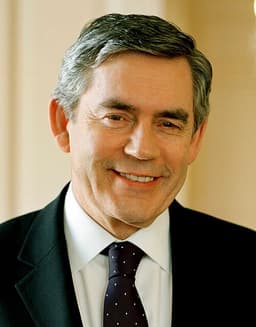
Gordon Brown
Politician · Modern
53.1Total

Khaled Mashal
Politician · Modern
52.5Total
Basic Information
Born
1951
1956
Died
—
—
Era
Modern
Modern
Nationality
United Kingdom
Palestine
Occupation
Politician
Politician
Civilization
Western
Middle Eastern
Score Comparison
Military (10%)
50.0
40.8
Political (20%)
55.0
43.7
Influence (20%)
55.0
58.0
Legacy (20%)
48.3
47.5
Leadership (15%)
66.0
74.0
Strategy (15%)
41.7
43.6
TOTAL
53.1
52.5
Gordon Brown — Complete Timeline
1997 AD
Introduced the Fiscal Rules as ChancellorReform◆ Major
As Chancellor, Brown introduced the 'Golden Rule' and 'Sustainable Investment Rule' for fiscal policy. These rules aimed to ensure responsible public finances and were credited with maintaining economic stability during his tenure.
Economic PolicyFiscal RulesChancellor
Impact: nationalconstructive
2007 AD
Appointed Prime MinisterPolitical Action◆ Major
Brown succeeded Tony Blair as Prime Minister of the United Kingdom without a general election. He had served as Chancellor of the Exchequer for ten years and was widely expected to take over the leadership of the Labour Party.
Political TransitionLabour PartyPrime Minister
Impact: national
2008 AD
Led the G20 Response to the Global Financial CrisisPolitical Action
Brown played a leading role in coordinating the international response to the global financial crisis. He hosted the G20 summit in London in 2009, securing commitments for fiscal stimulus and financial regulation reforms.
Financial CrisisG20International Cooperation
Impact: globalconstructive
Nationalization of Northern RockPolitical Action◆ Major
Brown's government nationalized the failing bank Northern Rock after a bank run. The decision was controversial but aimed at stabilizing the financial system. It was the first nationalization of a UK bank in decades.
Financial CrisisBank NationalizationEconomic Intervention
Impact: national
2010 AD
Lost the 2010 General ElectionPolitical Action◆ Major
Brown led the Labour Party to defeat in the 2010 general election, resulting in a hung parliament. He resigned as prime minister after failing to form a coalition government with the Liberal Democrats, ending 13 years of Labour government.
General ElectionLabour DefeatHung Parliament
Impact: nationaltragic
Khaled Mashal — Complete Timeline
1996 AD
Became Hamas Political Bureau ChiefPolitical Action◆ Major
Mashal was elected head of Hamas's political bureau in 1996, based in Jordan. He became the movement's top political leader, overseeing diplomacy, fundraising, and strategy from exile.
HamasPolitical BureauExile
Impact: global
1997 AD
Assassination Attempt by MossadPolitical Action
Mashal survived a Mossad assassination attempt in Amman, Jordan, in September 1997. Israeli agents injected him with poison, but Jordanian authorities captured the agents. In exchange for their release, Israel provided an antidote and released Ahmed Yassin from prison.
Assassination AttemptMossadJordan
Impact: regional
2012 AD
Relocation to QatarPolitical Action◆ Major
Mashal moved Hamas's political bureau to Qatar in 2012, after leaving Syria due to the civil war. From Doha, he continued to lead Hamas's diplomatic efforts, securing financial and political support from Gulf states.
HamasQatarExile
Impact: regional
2017 AD
Stepped Down as Political Bureau ChiefPolitical Action◆ Major
Mashal stepped down as Hamas political bureau chief in 2017, succeeded by Ismail Haniyeh. He remained a senior figure in the movement, focusing on reconciliation efforts with Fatah and maintaining Hamas's international relations.
HamasLeadership ChangeReconciliation
Impact: regional
Expert Analysis
Origins
**Gordon Brown** was born on February 20, 1951, in Giffnock, Scotland, to a Church of Scotland minister father and a teacher mother. He excelled academically, earning a PhD in history from the University of Edinburgh at age 22. His early political career began as a student activist, and he was elected as a Member of Parliament for Dunfermline East in 1983. Brown's formative years were marked by a strong sense of social justice, shaped by his father's ministry and his own research on the Labour Party's history.
**Khaled Mashal** was born in 1956 in Silwad, a village near Ramallah, then under Jordanian rule. His family was displaced in 1967 during the Six-Day War. Mashal studied physics at Kuwait University, where he became involved with the Muslim Brotherhood. He later taught in Kuwait and Qatar before dedicating himself to the Palestinian cause. His early experiences as a refugee and exposure to Islamist activism shaped his worldview and commitment to armed resistance.
Rise to Power
Brown rose through the Labour ranks as a key ally of Tony Blair. After Labour's 1997 landslide, he became Chancellor of the Exchequer, a post he held for ten years. His early popularity stemmed from granting the Bank of England independence in 1997 and introducing fiscal rules. Brown's political influence grew as he oversaw sustained economic growth, but his rivalry with Blair created tensions. He finally became Prime Minister on June 27, 2007, after Blair resigned.
Mashal became Hamas's political bureau chief in 1996, succeeding Mousa Abu Marzook. His rise was marked by his survival of a Mossad assassination attempt in Amman in 1997. The botched operation, which involved injecting poison into his ear, led to a diplomatic crisis and Mashal's elevation as a symbol of resilience. He consolidated power by managing Hamas's external relations and fundraising, eventually relocating the political bureau to Qatar in 2012 after leaving Syria.
Leadership & Governance
Brown's leadership style was technocratic and detail-oriented. As Prime Minister during the 2008 financial crisis, he orchestrated a £500 billion bank bailout and hosted the G20 London summit in April 2009, securing coordinated stimulus. His governance approach focused on fiscal stimulus and international cooperation. However, his premiership was short-lived; he called a general election in 2010, which resulted in a hung parliament, and he resigned after failing to form a coalition.
Mashal led Hamas's political wing from exile, overseeing diplomacy and strategy. He advocated for a pragmatic approach, including temporary ceasefires and participation in Palestinian elections. He supported the 2006 electoral victory and subsequent governance of the Gaza Strip. Mashal's leadership was less about day-to-day administration and more about representing Hamas internationally. He maintained unity among factions but faced criticism for the movement's hardline stance.
Triumph & Tragedy
Brown's greatest triumph was his handling of the financial crisis. His leadership at the G20 secured a global response, preventing a deeper depression. He also introduced the Child Trust Fund and increased NHS spending. However, his tragedy was the loss of the 2010 election, despite his crisis management. His decision not to call a snap election in 2007 was seen as a strategic error. Additionally, his fiscal rules were later criticized for not preventing the deficit.
Mashal's greatest achievement was surviving the assassination attempt and turning it into a political victory. He also secured Hamas's role as a key Palestinian actor. His tragedy includes the 2014 Gaza war, which caused massive destruction, and his failure to achieve Palestinian unity. His leadership saw Hamas isolated internationally, and his move to Qatar was seen as a retreat from the front lines.
Character & Destiny
Brown was known for his intellect and seriousness, but also for a brooding and often indecisive personality. His rivalry with Blair led to internal Labour conflicts. His character shaped his fate: his cautiousness prevented him from seizing the moment to call an early election, and his inability to connect with voters cost him the 2010 election. Historians often view him as a competent chancellor but a flawed prime minister.
Mashal is characterized as pragmatic and resilient. His survival of the assassination attempt gave him an aura of invincibility. He balanced militancy with political pragmatism, but his exile meant he was disconnected from Gaza's daily realities. His destiny was tied to Hamas's fortunes: as the movement evolved, he stepped down in 2017, handing over to Ismail Haniyeh.
Legacy
Brown's legacy is mixed. He is credited with preventing a global depression through coordinated action, and his fiscal rules influenced UK economic policy. However, his premiership is often seen as a failure due to the electoral loss. His influence on international financial regulation, such as the Financial Stability Board, endures. His total score of 53.1 reflects his moderate impact across domains.
Mashal's legacy is as a key figure in Hamas's political evolution. He helped transform the movement from a purely militant group to a political entity. His influence score of 58.0 reflects his role in international diplomacy. However, his legacy is contested: he is seen as a leader who kept Hamas relevant but failed to achieve Palestinian statehood. His leadership score of 74.0 indicates strong command.
Conclusion
Gordon Brown had a greater overall impact due to his role in the global financial crisis, which affected billions. His political and influence scores (55.0 each) slightly edge Mashal's (43.7 and 58.0). While Mashal's leadership was strong, his impact was more regional and contested. Brown's legacy in financial regulation and crisis management is more tangible and widely recognized. Therefore, Brown's total score of 53.1 vs. Mashal's 52.5 is justified, and Brown emerges as the more impactful figure.
Rankings
🥇
Gordon BrownLeader
Mil: 50.0Pol: 55.0Inf: 55.0
53.1
🥈
Khaled Mashal
Mil: 40.8Pol: 43.7Inf: 58.0
52.5
+0.6 behind
How This Comparison Works
Algorithm
Each figure is scored on 6 dimensions (0—100 scale) based on structured historical data: Military (10%), Political (20%), Influence (20%), Legacy (20%), Leadership (15%), Strategy (15%). The weighted total produces the final ranking.
Data Sources
Scores are computed from structured sub-indicators in the database. Scale factors adjust for era (Ancient ×0.85, Modern ×1.0) and civilization size (Eastern ×1.05, Other ×0.80) to account for differences in population and military scale.
Maximum 3 Figures
Comparisons are limited to 2—3 figures to ensure readability and statistical meaningfulness.
Error Margins
±5 points per dimension — Sub-scores are derived from historical records with inherent uncertainty. Two figures within 5 points on a dimension should be considered roughly equivalent in that area.
Total Score Accuracy
±3 points overall — The weighted combination of 6 dimensions produces a total score with approximately ±3 points of uncertainty. Differences of less than 3 points are not statistically significant— the figures are effectively tied.
Known Limitations
- Historical records are incomplete and uneven across civilizations
- Figures from oral-tradition societies may be underrepresented
- Occupation labels can misclassify multi-role figures
- Scores measure capability and impact, not moral character
- Quantitative scoring is a comparison tool, not absolute truth
Capability Radar
Military (10%) — Battles & Warfare
Battles
29
21
Win Rate
30
27
Expansion
32
25
Political (20%) — Governance & Reform
Reform
60
30
Diplomacy
55
55
Economy
70
20
Influence (20%) — Cultural & Global Reach
Cultural
30
40
Global
55
50
Legacy (20%) — Historical Impact
Historical
40
45
Longevity
30
40
Leadership (15%) — Power & Stability
Tenure
65
60
Stability
50
25
Strategy (15%) — Tactics & Innovation
Strategy
38
29
Tactics
40
32
Reform
43
36
Similar Comparisons
Comments & Discussion
No comments yet. Be the first to share your thoughts!