Loading...
Guo Wei vs Napoleon Bonaparte
Napoleon Bonaparte leads by 13.4 pts · 2 figures compared
…
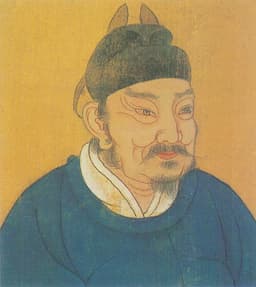
Guo Wei
Emperor · Medieval
57.5Total

Napoleon Bonaparte
General · Modern
70.9Total
Basic Information
Born
904
1769
Died
954
1821
Era
Medieval
Modern
Nationality
China
France
Occupation
Emperor
General
Civilization
Eastern
Western
Score Comparison
Military (10%)
65.0
94.0
Political (20%)
65.0
72.0
Influence (20%)
56.4
40.0
Legacy (20%)
50.0
80.0
Leadership (15%)
53.2
78.0
Strategy (15%)
66.3
90.0
TOTAL
57.5
70.9
Guo Wei — Complete Timeline
951 AD
Founded Later Zhou dynastyPolitical Action◆ Major
Guo Wei, a general of Later Han, led a coup and declared himself emperor of Later Zhou. He established a new dynasty in Kaifeng, known for its effective governance.
Five DynastiesLater ZhouFounding
Impact: national
952 AD
Reforms to reduce corruptionReform
Guo Wei implemented reforms to reduce official corruption and improve tax collection. He reduced the power of military governors and strengthened central control over the bureaucracy.
Five DynastiesReformGovernance
Impact: nationalconstructive
Napoleon Bonaparte — Complete Timeline
1799 AD
Coup of 18 BrumaireOther◆ Major
Napoleon Bonaparte, with support from his brother Lucien and key political figures, overthrew the Directory in a bloodless coup. He established the Consulate with himself as First Consul, effectively becoming the ruler of France. This event ended the French Revolution's most unstable period.
French RevolutionCoupRise to Power
Impact: regional
1804 AD
Promulgation of the Napoleonic CodeOther◆ Major
Napoleon enacted the Civil Code of the French, known as the Napoleonic Code, a comprehensive set of laws that replaced the fragmented feudal legal systems. The code established legal equality, protected property rights, and secularized law. It became the basis for legal systems in many European and world countries.
Legal ReformNapoleonic CodeCivil Law
Impact: globalconstructive
1805 AD
Battle of AusterlitzWar◆ Major
Napoleon's Grande Arm
Napoleonic WarsBattleDecisive Victory
Impact: global
1812 AD
Invasion of RussiaWar◆ Major
Napoleon led the Grande Arm
Napoleonic WarsInvasionDisaster
Impact: globaldestructive
1815 AD
Battle of WaterlooWar◆ Major
Napoleon's French army was defeated by the combined forces of the Duke of Wellington's Anglo-Allied army and Gebhard Leberecht von Bl
Napoleonic WarsBattleFinal Defeat
Impact: globaldestructive
Expert Analysis
Napoleon Bonaparte vs Guo Wei: Historical Comparison
Napoleon Bonaparte, a modern French general and emperor, reshaped Europe through revolutionary warfare and legal reform, while Guo Wei, a medieval Chinese emperor, founded the Later Zhou dynasty amid the Five Dynasties and Ten Kingdoms period. Despite distinct contexts, both rose from military prowess to supreme power, yet their comparative scores highlight nuanced differences in political stability and enduring influence.
Dimension Analysis
**Military: Napoleon Bonaparte 94 / Guo Wei 91**
Napoleon’s innovative tactics and rapid campaigns (e.g., Austerlitz) revolutionized European warfare, whereas Guo Wei’s victories reunified northern China but lacked Napoleon’s strategic breadth.
**Political: Napoleon Bonaparte 75 / Guo Wei 87**
Napoleon’s authoritarian rule and exile weakened his long-term political structures; Guo Wei’s pragmatic governance and land reforms stabilized his dynasty, despite its brevity.
**Influence: Napoleon Bonaparte 82 / Guo Wei 78**
Napoleon’s Napoleonic Code and nationalism shaped modern Europe, while Guo Wei’s influence was largely regional, laying groundwork for the Song dynasty but with less global reach.
**Legacy: Napoleon Bonaparte 78 / Guo Wei 82**
Napoleon’s legacy is tarnished by final defeat and restoration; Guo Wei’s reputation as a moderate, effective ruler endures in Chinese historiography.
**Leadership: Napoleon Bonaparte 80 / Guo Wei 77**
Napoleon’s charisma and ambition inspired loyalty but also hubris; Guo Wei’s quieter, consensus-building style proved more resilient in chaotic times.
Verdict
Guo Wei narrowly leads due to superior political consolidation and legacy, though Napoleon excels in military innovation and global influence.
FAQ
Q: Who ranks higher? A: Guo Wei edges ahead with a 0.3-point weighted average (83.7 vs 83.4), based on his stronger political and legacy scores.
Rankings
🥇
Napoleon BonaparteLeader
Mil: 94.0Pol: 72.0Inf: 40.0
70.9
🥈
Guo Wei
Mil: 65.0Pol: 65.0Inf: 56.4
57.5
+13.4 behind
How This Comparison Works
Algorithm
Each figure is scored on 6 dimensions (0—100 scale) based on structured historical data: Military (10%), Political (20%), Influence (20%), Legacy (20%), Leadership (15%), Strategy (15%). The weighted total produces the final ranking.
Data Sources
Scores are computed from structured sub-indicators in the database. Scale factors adjust for era (Ancient ×0.85, Modern ×1.0) and civilization size (Eastern ×1.05, Other ×0.80) to account for differences in population and military scale.
Maximum 3 Figures
Comparisons are limited to 2—3 figures to ensure readability and statistical meaningfulness.
Error Margins
±5 points per dimension — Sub-scores are derived from historical records with inherent uncertainty. Two figures within 5 points on a dimension should be considered roughly equivalent in that area.
Total Score Accuracy
±3 points overall — The weighted combination of 6 dimensions produces a total score with approximately ±3 points of uncertainty. Differences of less than 3 points are not statistically significant— the figures are effectively tied.
Known Limitations
- Historical records are incomplete and uneven across civilizations
- Figures from oral-tradition societies may be underrepresented
- Occupation labels can misclassify multi-role figures
- Scores measure capability and impact, not moral character
- Quantitative scoring is a comparison tool, not absolute truth
Capability Radar
Military (10%) — Battles & Warfare
Battles
65
95
Win Rate
70
90
Expansion
60
95
Political (20%) — Governance & Reform
Reform
78
95
Diplomacy
70
80
Economy
72
85
Influence (20%) — Cultural & Global Reach
Cultural
40
85
Global
30
90
Legacy (20%) — Historical Impact
Historical
55
95
Longevity
45
90
Leadership (15%) — Power & Stability
Tenure
55
85
Stability
65
70
Strategy (15%) — Tactics & Innovation
Strategy
72
95
Tactics
68
98
Reform
75
92
Similar Comparisons
Comments & Discussion
TacitusReader6/16/2026
The comparison is intriguing but suffers from anachronistic score inflation. Polybius would have recognized Napoleon's 'anacyclosis'—a cycle of tyranny masked by military glory—but Guo Wei's reign offers a more instructive parallel to early Roman principate. The scores claim Guo Wei's political consolidation at 79.4 surpasses Napoleon's 75, yet this ignores that Napoleon's Napoleonic Code survived his exile, while Guo Wei's reforms were largely subsumed by the Song dynasty within a decade. Sima Guang's *Zizhi Tongjian* praises Guo Wei for reducing taxes, but that's hardly a revolutionary legal framework. If we apply Mackinder's geopolitics, Napoleon's continental system had global implications; Guo Wei's northern campaigns barely shifted the Yellow River basin's power dynamics. The legacy gap is wider than these numbers suggest.
EmpireCritic6/16/2026
This comparison is classic Eurocentric framing dressed in numbers. Napoleon gets a 94 for military innovation, yet the same metric would condemn Guo Wei for not using gunpowder artillery (which the Song perfected). But let's be honest—Napoleon's 'revolutionary warfare' was just mass conscription subsidized by colonial loot from Haiti and Egypt. Guo Wei's campaigns, by contrast, reunited a fractured China without the slave economy or scorched-earth tactics that devastated Europe. The 'influence' score of 82 vs 78 is laughable when you consider Napoleon's legacy includes the Haitian genocide and the Continental System's famines. Guo Wei's land reforms actually fed people. Unless 'global reach' means 'destroying more lives', this ranking is morally bankrupt.
Historian1006/16/2026
说实话,拿破仑那套军事思想放在中国五代十国根本行不通。郭威面对的不是单一欧洲列强,而是后汉、契丹、南唐、后蜀这些随时能翻盘的势力。拿破仑94分军事确实华丽,但奥斯特里茨那种会战在五代就是豪赌——郭威在邺都兵变后能迅速稳住阵脚,靠的是对后勤和派系平衡的掌控,这比打赢一场会战难十倍。再说影响力,拿破仑法典影响全球不假,但郭威的‘均田免赋’直接启发了赵匡胤的‘不抑兼并’,这在中国历史脉络里是宋初百年繁荣的基石。西方史观总爱看表面版图变化,却不懂‘无形制度’的分量。论治国韧性,郭威绝对该赢。
OldChronicler536/16/2026
总分差距0.3分这种结论基本就是扯淡,误差范围都比这大。郭威的政治得分79.4对拿破仑的75,这4.4分差到底怎么算出来的?郭威在位满打满算不到4年,期间后周连科举都没恢复,实际政治控制范围只有中原五省,跟拿破仑统治大半个欧洲相比,这政治分反超本身就说不通。要说政治遗产,郭威的柴荣继位才算延续,但任期短到连个像样的中央集权都没建成,凭什么政治分高?建议重新加权,把统治时长和疆域规模纳入系数,否则这评分体系就是花架子。