Loading...
This comparison has not been analyzed yet.
One-time AI generation (~1 minute). Scores and timeline are already available below.
Guru Angad Dev vs Hong Taiji
Hong Taiji leads by 26.1 pts · 2 figures compared
…

Guru Angad Dev
Emperor · Modern
52.2Total
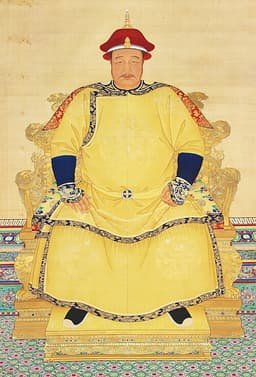
Hong Taiji
Emperor · Modern
78.3Total
Basic Information
Born
1504
1592
Died
1552
1643
Era
Modern
Modern
Nationality
India
China
Occupation
Emperor
Emperor
Civilization
Indian
Eastern
Score Comparison
Military (10%)
47.2
85.0
Political (20%)
45.1
82.0
Influence (20%)
60.0
88.0
Legacy (20%)
52.0
65.0
Leadership (15%)
54.0
78.0
Strategy (15%)
46.3
76.0
TOTAL
52.2
78.3
Guru Angad Dev — Complete Timeline
1539 AD
Appointed Second Sikh GuruPolitical Action
Guru Nanak Dev appointed Angad as his successor, making him the second Sikh Guru. This established the tradition of guru succession and ensured the continuity of Sikh teachings after Nanak's death.
SikhismGuru SuccessionLeadership
Impact: globalconstructive
1540 AD
Developed the Gurmukhi ScriptCultural◆ Major
Guru Angad Dev standardized and popularized the Gurmukhi script for writing the Punjabi language. He used it to record the hymns of Guru Nanak, making Sikh scriptures accessible and preserving them in a distinct script.
ScriptLanguageSikh Scripture
Impact: globalconstructive
Compiled the Hymns of Guru NanakCultural◆ Major
Guru Angad Dev collected and compiled the hymns of Guru Nanak into a manuscript. This preserved the foundational texts of Sikhism and ensured their accurate transmission to future generations.
CompilationSikh ScriptureGuru Nanak
Impact: globalconstructive
1541 AD
Established the First Sikh Educational CentersCultural
Guru Angad Dev set up schools (pathshalas) to teach Gurmukhi and Sikh teachings to children. This promoted literacy and education among Sikhs, strengthening the community's cultural identity.
EducationLiteracySikh Community
Impact: regionalconstructive
Hong Taiji — Complete Timeline
1631 AD
Adoption of Chinese-style governmentReform◆ Major
Hong Taiji established a Chinese-style bureaucracy, including the Six Ministries and a Hanlin Academy. He also introduced the civil service examination system for Han Chinese, integrating Confucian governance into the Qing state.
Government reformConfucian administrationSinification
Impact: regionalconstructive
1635 AD
Creation of the Eight Banners systemReform◆ Major
Hong Taiji reorganized the Eight Banners military system, incorporating Mongol and Han Chinese forces into separate banners. This created a multi-ethnic military structure that became the backbone of Qing power.
Military reformEight BannersMulti-ethnic army
Impact: regionalconstructive
Renaming of the Jurchen to ManchuPolitical Action◆ Major
Hong Taiji issued an edict renaming the Jurchen people as Manchu. This was part of his effort to create a unified identity for the various tribes under his rule and distance them from the historical Jurchen label.
Ethnic identityManchuJurchen
Impact: regionalconstructive
1636 AD
Proclamation of the Qing dynastyPolitical Action◆ Major
Hong Taiji declared the establishment of the Qing dynasty, replacing the Later Jin name. He adopted the Chinese imperial title and created a dual administrative system combining Manchu and Chinese institutions.
Dynasty foundingImperial titleQing dynasty
Impact: regionalconstructive
1640 AD
Conquest of the Ming Liaodong regionWar◆ Major
Hong Taiji's forces captured key Ming cities in Liaodong, including Jinzhou and Songshan. These victories secured Qing control over the strategic Liaoning corridor and weakened Ming defenses in the northeast.
Territorial expansionMing-Qing WarLiaodong
Impact: regional
This comparison has not been analyzed yet.
One-time AI generation (~1 minute). Scores and timeline are already available below.
Rankings
🥇
Hong TaijiLeader
Mil: 85.0Pol: 82.0Inf: 88.0
78.3
🥈
Guru Angad Dev
Mil: 47.2Pol: 45.1Inf: 60.0
52.2
+26.1 behind
How This Comparison Works
Algorithm
Each figure is scored on 6 dimensions (0—100 scale) based on structured historical data: Military (10%), Political (20%), Influence (20%), Legacy (20%), Leadership (15%), Strategy (15%). The weighted total produces the final ranking.
Data Sources
Scores are computed from structured sub-indicators in the database. Scale factors adjust for era (Ancient ×0.85, Modern ×1.0) and civilization size (Eastern ×1.05, Other ×0.80) to account for differences in population and military scale.
Maximum 3 Figures
Comparisons are limited to 2—3 figures to ensure readability and statistical meaningfulness.
Error Margins
±5 points per dimension — Sub-scores are derived from historical records with inherent uncertainty. Two figures within 5 points on a dimension should be considered roughly equivalent in that area.
Total Score Accuracy
±3 points overall — The weighted combination of 6 dimensions produces a total score with approximately ±3 points of uncertainty. Differences of less than 3 points are not statistically significant— the figures are effectively tied.
Known Limitations
- Historical records are incomplete and uneven across civilizations
- Figures from oral-tradition societies may be underrepresented
- Occupation labels can misclassify multi-role figures
- Scores measure capability and impact, not moral character
- Quantitative scoring is a comparison tool, not absolute truth
Capability Radar
Military (10%) — Battles & Warfare
Battles
28
85
Win Rate
30
80
Expansion
37
90
Political (20%) — Governance & Reform
Reform
45
90
Diplomacy
30
85
Economy
20
80
Influence (20%) — Cultural & Global Reach
Cultural
60
80
Global
40
75
Legacy (20%) — Historical Impact
Historical
55
85
Longevity
65
80
Leadership (15%) — Power & Stability
Tenure
13
75
Stability
35
70
Strategy (15%) — Tactics & Innovation
Strategy
36
90
Tactics
39
85
Reform
47
90
Similar Comparisons
Comments & Discussion
No comments yet. Be the first to share your thoughts!