Loading...
Gustav Vasa vs Yi Seong-gye
Yi Seong-gye leads by 18.4 pts · 2 figures compared
…

Gustav Vasa
Emperor · Medieval
57.4Total
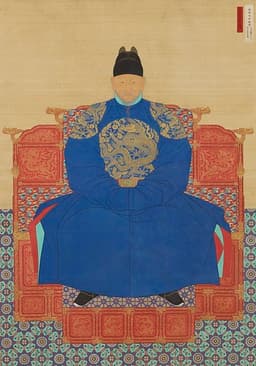
Yi Seong-gye
Emperor · Medieval
75.8Total
Basic Information
Born
1496
1335
Died
1560
1408
Era
Medieval
Medieval
Nationality
Sweden
Korea
Occupation
Emperor
Emperor
Civilization
Western
Eastern
Score Comparison
Military (10%)
52.5
74.7
Political (20%)
75.0
70.0
Influence (20%)
56.7
88.0
Legacy (20%)
40.0
75.0
Leadership (15%)
78.0
68.0
Strategy (15%)
50.0
69.1
TOTAL
57.4
75.8
Gustav Vasa — Complete Timeline
1523 AD
Liberation of StockholmWar◆ Major
Gustav Vasa's forces, with support from L
BattleIndependenceSiege
Impact: nationalconstructive
Elected King of SwedenPolitical Action
Gustav Vasa was elected King of Sweden by the Riksdag in Str
IndependenceMonarchyKalmar Union
Impact: nationalconstructive
1527 AD
Introduction of the Protestant Reformation in SwedenReform
Gustav Vasa introduced the Protestant Reformation at the Diet of V
ReformationReligionState Building
Impact: nationalconstructive
1544 AD
Creation of a hereditary monarchyReform◆ Major
Gustav Vasa established Sweden as a hereditary monarchy at the Diet of V
MonarchyConstitutionCentralization
Impact: nationalconstructive
Yi Seong-gye — Complete Timeline
1380 AD
Battle of HwangsanWar◆ Major
Yi Seong-gye led Goryeo forces against Japanese pirates (wokou) at the Battle of Hwangsan. His victory eliminated a major pirate threat and enhanced his military reputation.
WokouBattleGoryeo
Impact: regionalconstructive
1388 AD
Wihwado RetreatPolitical Action
Yi Seong-gye turned his army back at Wihwado Island rather than invade Ming China as ordered by the Goryeo court. This act of defiance led to a coup that eventually brought him to power.
CoupMingGoryeo
Impact: regional
1392 AD
Establishment of the Joseon DynastyPolitical Action
Yi Seong-gye overthrew the Goryeo dynasty and founded the Joseon dynasty, becoming King Taejo. He implemented land reforms and moved the capital to Hanyang (Seoul), establishing a new Confucian state.
JoseonDynasty FoundationReform
Impact: regionalconstructive
Expert Analysis
Origins
**Gustav Vasa** was born in 1496 into a noble family in Sweden, then part of the Kalmar Union under Danish rule. His father, Erik Johansson, was a member of the Riksdag and a supporter of the anti-union Sture party. Gustav studied at the University of Uppsala but his education was cut short by political turmoil. After his father was executed in the Stockholm Bloodbath of 1520, orchestrated by King Christian II of Denmark, Gustav fled to Lübeck, where he sought support to liberate Sweden.
**Yi Seong-gye** was born in 1335 in Korea's Goryeo dynasty, the son of a minor military official, Yi Ja-chun, who served the Yuan dynasty. His family had a military background, and Yi Seong-gye grew up on the northeastern frontier, gaining experience in warfare against Mongol and Jurchen forces. He was known for his archery skills and rose through the ranks of the Goryeo military, becoming a respected general by his thirties.
Rise to Power
Gustav Vasa's rise began after the Stockholm Bloodbath (1520), which killed many Swedish nobles. He led a rebellion against Danish rule, starting with a small force in Dalarna in 1521. With financial and military support from the Hanseatic city of Lübeck, he captured key territories. In 1523, he was elected King of Sweden at the Riksdag in Strängnäs, formally ending the Kalmar Union. He then besieged and captured Stockholm from the Danes in 1523, consolidating control.
Yi Seong-gye's rise came through military success against Japanese pirates (wokou) and Jurchen tribes. In 1380, he defeated a major pirate force at the Battle of Hwangsan, earning fame. He also fought against Ming Chinese forces in 1388, but his turning point came during the Wihwado Retreat (1388): ordered to invade Ming China, he turned his army back to the capital, overthrew the Goryeo king, and established a new dynasty. In 1392, he was crowned King Taejo of Joseon.
Leadership & Governance
Gustav Vasa centralized power in Sweden, breaking the nobility's influence. He introduced the Protestant Reformation at the Diet of Västerås (1527), seizing church lands and wealth to fill the treasury. He created a hereditary monarchy in 1544, ending the elective system, and established a standing army and navy. His governance was authoritarian, suppressing rebellions like the Dacke War (1542-1543) with force. He also improved administration by creating a centralized bureaucracy.
Yi Seong-gye implemented land reforms, redistributing land from Buddhist monasteries to Confucian scholar-officials. He moved the capital to Hanyang (Seoul) and established Confucianism as the state ideology. He created a centralized bureaucracy based on merit, the Gwageo civil service exam, and promoted agriculture and irrigation. His leadership was more collaborative, relying on scholar-officials, but he also purged opponents, including some of his own sons.
Triumph & Tragedy
Gustav Vasa's greatest success was liberating Sweden from Danish rule and founding a lasting dynasty. He also strengthened the economy by taxing the church and promoting trade. However, his reign saw the Dacke Rebellion, a peasant uprising that he brutally suppressed, causing many deaths. His authoritarian rule and heavy taxes led to resentment, and his later years were marked by paranoia and executions of former allies.
Yi Seong-gye's triumph was founding the Joseon dynasty, which lasted 500 years and established a Confucian state. His land reforms reduced corruption and increased agricultural output. However, his tragedy included the execution of his son and heir, Yi Bang-won, for political reasons, and the subsequent succession crisis. He also faced rebellions from former Goryeo loyalists, which he crushed with force.
Character & Destiny
Gustav Vasa was cunning, ruthless, and pragmatic. He used propaganda and manipulation to maintain power, often playing factions against each other. His character led to a stable but oppressive regime. He scored 78.0 in leadership and 50.0 in strategy, reflecting his ability to consolidate power but limited military innovation.
Yi Seong-gye was decisive, ambitious, and strategic. His Wihwado Retreat shows his willingness to defy orders for a greater goal. His military score of 74.7 reflects his success in battle, while his influence score of 88.0 highlights his role in founding a dynasty. He was more ideologically driven than Gustav, embracing Confucianism to legitimize his rule.
Legacy
Gustav Vasa is remembered as the "Father of Sweden" for establishing independence and the modern state. His dynasty ruled until 1818, and he laid foundations for Sweden's later military power. His scores: legacy 40.0, influence 56.7, indicating his impact was mainly national.
Yi Seong-gye's legacy is immense in Korea. The Joseon dynasty defined Korean culture, language, and governance for five centuries. His adoption of Confucianism shaped society until modern times. His scores: legacy 75.0, influence 88.0, reflecting global recognition.
Conclusion
Yi Seong-gye had greater impact with a total score of 75.8 versus Gustav Vasa's 57.4. While both founded dynasties, Joseon's longer duration (505 years vs. Vasa's 286 years) and deeper cultural transformation give Yi the edge. Vasa's achievements were significant but more limited to political independence and religious change, whereas Yi reshaped an entire civilization. The 18.4-point gap reflects this difference in scope and endurance.
Rankings
🥇
Yi Seong-gyeLeader
Mil: 74.7Pol: 70.0Inf: 88.0
75.8
🥈
Gustav Vasa
Mil: 52.5Pol: 75.0Inf: 56.7
57.4
+18.4 behind
How This Comparison Works
Algorithm
Each figure is scored on 6 dimensions (0—100 scale) based on structured historical data: Military (10%), Political (20%), Influence (20%), Legacy (20%), Leadership (15%), Strategy (15%). The weighted total produces the final ranking.
Data Sources
Scores are computed from structured sub-indicators in the database. Scale factors adjust for era (Ancient ×0.85, Modern ×1.0) and civilization size (Eastern ×1.05, Other ×0.80) to account for differences in population and military scale.
Maximum 3 Figures
Comparisons are limited to 2—3 figures to ensure readability and statistical meaningfulness.
Error Margins
±5 points per dimension — Sub-scores are derived from historical records with inherent uncertainty. Two figures within 5 points on a dimension should be considered roughly equivalent in that area.
Total Score Accuracy
±3 points overall — The weighted combination of 6 dimensions produces a total score with approximately ±3 points of uncertainty. Differences of less than 3 points are not statistically significant— the figures are effectively tied.
Known Limitations
- Historical records are incomplete and uneven across civilizations
- Figures from oral-tradition societies may be underrepresented
- Occupation labels can misclassify multi-role figures
- Scores measure capability and impact, not moral character
- Quantitative scoring is a comparison tool, not absolute truth
Capability Radar
Military (10%) — Battles & Warfare
Battles
45
75
Win Rate
55
80
Expansion
65
65
Political (20%) — Governance & Reform
Reform
90
85
Diplomacy
70
75
Economy
80
70
Influence (20%) — Cultural & Global Reach
Cultural
70
80
Global
55
55
Legacy (20%) — Historical Impact
Historical
80
85
Longevity
75
80
Leadership (15%) — Power & Stability
Tenure
85
60
Stability
75
65
Strategy (15%) — Tactics & Innovation
Strategy
60
82
Tactics
50
78
Reform
75
70
Similar Comparisons
Comments & Discussion
No comments yet. Be the first to share your thoughts!