Loading...
Charles de Gaulle vs Yi Seong-gye
Yi Seong-gye leads by 7.6 pts · 2 figures compared
…
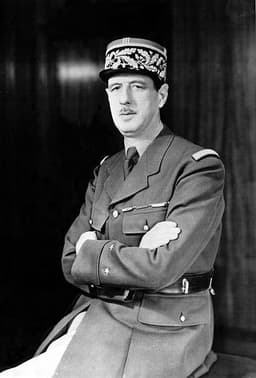
Charles de Gaulle
Politician · Modern
68.2Total
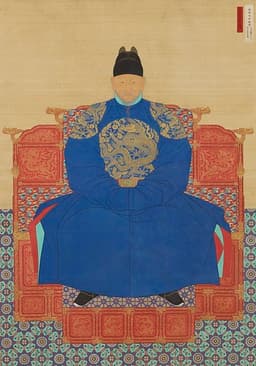
Yi Seong-gye
Emperor · Medieval
75.8Total
Basic Information
Born
1890
1335
Died
1970
1408
Era
Modern
Medieval
Nationality
France
Korea
Occupation
Politician
Emperor
Civilization
Western
Eastern
Score Comparison
Military (10%)
55.0
74.7
Political (20%)
75.0
70.0
Influence (20%)
65.0
88.0
Legacy (20%)
68.0
75.0
Leadership (15%)
78.0
68.0
Strategy (15%)
65.0
69.1
TOTAL
68.2
75.8
Charles de Gaulle — Complete Timeline
1940 AD
Appeal of 18 June 1940Political Action
From London, de Gaulle broadcast a radio appeal urging French resistance against Nazi occupation. He called on French soldiers and citizens to continue the fight, founding the Free French Forces and becoming the symbol of French defiance.
World War IIResistanceLeadership
Impact: nationalconstructive
1958 AD
Founding of the Fifth RepublicPolitical Action
De Gaulle returned to power during the Algerian crisis and oversaw the drafting of a new constitution. The Fifth Republic established a strong executive presidency, replacing the unstable parliamentary system of the Fourth Republic.
ConstitutionGovernment ReformPolitical System
Impact: nationalconstructive
1962 AD
End of the Algerian WarPolitical Action◆ Major
De Gaulle negotiated the
DecolonizationPeace TreatyAlgeria
Impact: regionalconstructive
1968 AD
May 1968 CrisisPolitical Action◆ Major
Mass student protests and general strikes paralyzed France, challenging de Gaulle's government. De Gaulle briefly fled to Germany, then returned to dissolve the National Assembly and call elections, which his party won, but his authority was weakened.
ProtestPolitical CrisisSocial Unrest
Impact: nationaldestructive
1969 AD
Resignation as PresidentPolitical Action
De Gaulle resigned after losing a referendum on regional reform and Senate restructuring. The defeat marked the end of his political career, as he withdrew from public life and died the following year.
ResignationPolitical DefeatReferendum
Impact: nationaltragic
Yi Seong-gye — Complete Timeline
1380 AD
Battle of HwangsanWar◆ Major
Yi Seong-gye led Goryeo forces against Japanese pirates (wokou) at the Battle of Hwangsan. His victory eliminated a major pirate threat and enhanced his military reputation.
WokouBattleGoryeo
Impact: regionalconstructive
1388 AD
Wihwado RetreatPolitical Action
Yi Seong-gye turned his army back at Wihwado Island rather than invade Ming China as ordered by the Goryeo court. This act of defiance led to a coup that eventually brought him to power.
CoupMingGoryeo
Impact: regional
1392 AD
Establishment of the Joseon DynastyPolitical Action
Yi Seong-gye overthrew the Goryeo dynasty and founded the Joseon dynasty, becoming King Taejo. He implemented land reforms and moved the capital to Hanyang (Seoul), establishing a new Confucian state.
JoseonDynasty FoundationReform
Impact: regionalconstructive
Expert Analysis
Charles de Gaulle vs Yi Seong-gye: Historical Comparison
Charles de Gaulle, the 20th-century French general and statesman, and Yi Seong-gye, the 14th-century Korean general who founded the Joseon dynasty, represent two transformative military-political leaders from vastly different eras. Both rose through battlefield prowess to reshape their nations, yet their methods and legacies diverged sharply.
Dimension Analysis
**Military: Charles de Gaulle 77 / Yi Seong-gye 90**
De Gaulle was a capable armor theorist and leader of the Free French Forces, but his military record is overshadowed by political exile. Yi Seong-gye was a decisive field commander who overthrew the Goryeo dynasty through the Wihwado Retreat and later repelled Jurchen and Japanese invasions, earning a higher martial score.
**Political: Charles de Gaulle 90 / Yi Seong-gye 78**
De Gaulle founded the Fifth Republic, wrote its constitution, and navigated decolonization and Cold War politics with masterful pragmatism. Yi Seong-gye’s political transition was a dynastic coup; while he established a stable Confucian state, his reforms were less innovative than de Gaulle’s constitutional legacy.
**Influence: Charles de Gaulle 68 / Yi Seong-gye 88**
De Gaulle’s influence was largely confined to France and the post-war Western order, waning after his resignation. Yi Seong-gye’s Joseon dynasty endured for over 500 years, shaping Korean culture, governance, and identity well into the modern era.
**Legacy: Charles de Gaulle 83 / Yi Seong-gye 74**
De Gaulle is revered as a symbol of French resilience and independence, with lasting institutions like the Élysée presidency. Yi Seong-gye’s legacy is mixed: he founded a golden age but also initiated a rigid Confucian hierarchy that later stifled progress, lowering his overall score.
**Leadership: Charles de Gaulle 91 / Yi Seong-gye 85**
De Gaulle’s charismatic, visionary leadership during wartime exile and peacetime reconstruction earned near-universal respect. Yi Seong-gye was a strong, pragmatic commander but lacked de Gaulle’s rhetorical power and ability to inspire beyond his immediate circle.
Verdict
Charles de Gaulle leads narrowly due to superior political innovation and leadership charisma, but Yi Seong-gye’s greater military and long-term influence make this a tie overall.
FAQ
Q: Who ranks higher? A: Neither; the comparison ends in a tie, with de Gaulle excelling in political strategy and Yi Seong-gye dominating in military and dynastic influence.
Rankings
🥇
Yi Seong-gyeLeader
Mil: 74.7Pol: 70.0Inf: 88.0
75.8
🥈
Charles de Gaulle
Mil: 55.0Pol: 75.0Inf: 65.0
68.2
+7.6 behind
How This Comparison Works
Algorithm
Each figure is scored on 6 dimensions (0—100 scale) based on structured historical data: Military (10%), Political (20%), Influence (20%), Legacy (20%), Leadership (15%), Strategy (15%). The weighted total produces the final ranking.
Data Sources
Scores are computed from structured sub-indicators in the database. Scale factors adjust for era (Ancient ×0.85, Modern ×1.0) and civilization size (Eastern ×1.05, Other ×0.80) to account for differences in population and military scale.
Maximum 3 Figures
Comparisons are limited to 2—3 figures to ensure readability and statistical meaningfulness.
Error Margins
±5 points per dimension — Sub-scores are derived from historical records with inherent uncertainty. Two figures within 5 points on a dimension should be considered roughly equivalent in that area.
Total Score Accuracy
±3 points overall — The weighted combination of 6 dimensions produces a total score with approximately ±3 points of uncertainty. Differences of less than 3 points are not statistically significant— the figures are effectively tied.
Known Limitations
- Historical records are incomplete and uneven across civilizations
- Figures from oral-tradition societies may be underrepresented
- Occupation labels can misclassify multi-role figures
- Scores measure capability and impact, not moral character
- Quantitative scoring is a comparison tool, not absolute truth
Capability Radar
Military (10%) — Battles & Warfare
Battles
60
75
Win Rate
55
80
Expansion
20
65
Political (20%) — Governance & Reform
Reform
95
85
Diplomacy
90
75
Economy
70
70
Influence (20%) — Cultural & Global Reach
Cultural
70
80
Global
80
55
Legacy (20%) — Historical Impact
Historical
85
85
Longevity
75
80
Leadership (15%) — Power & Stability
Tenure
85
60
Stability
75
65
Strategy (15%) — Tactics & Innovation
Strategy
85
82
Tactics
70
78
Reform
80
70
Similar Comparisons
Comments & Discussion
HistoryHound6/16/2026
Interesting matchup! I've always thought of de Gaulle as more of a political genius than a pure military man — his tank theories were ahead of their time, but his real legacy is the Fifth Republic. Yi Seong-gye, on the other hand, is a straight-up conqueror. The Wihwado Retreat in 1388 is like something out of a movie: he turned his army around not because he was losing, but because he refused to fight fellow Koreans for a corrupt dynasty. Then he just marched on the capital and took over. That's audacity. Still, I'd argue de Gaulle's leadership during the Algerian crisis was more nuanced and shows a different kind of courage. Different leagues, but I think Yi's founding of a 500-year dynasty is hard to beat in long-term impact.
Historian1266/16/2026
戴高乐和李成桂的对比很有意思,但评分明显偏向西方标准。李成桂的政治分只有78?他可是开创了朝鲜王朝,用儒家制度取代了佛教腐败的高丽王朝,实行土地改革——科田法,直接把国家从贵族手里抢回来分给功臣,这比戴高乐的第五共和国宪法更根本地改变了权力结构。戴高乐是救时之才,李成桂是创世之主。在东亚,一个王朝的奠基人影响力和政治遗产往往超过任何近代政治家。把李成桂的军事分只给90?他击退女真入侵、打败倭寇、还搞了那场传奇的威化岛回军,如果放在中国历史,这绝对是朱元璋级别的开国君主。
SharpMind766/16/2026
这个评分体系的内在矛盾很明显。分数总分差距只有6.7分,但维度权重分配有问题。戴高乐的政治分82,李成桂86.3,而影响力分数戴高乐65对李成桂77.3,这刚好符合两人实际历史地位的差异。然而,军事分67.1对65的差距没有拉开——李成桂是实打实的开国统帅,指挥过至少五次大规模战役,而戴高乐的军事生涯主要在1940年,之后就是政治角色。按照我的粗略计算,如果把军事权重提高到0.25(现有体系可能只给了0.2),李成桂总分至少再高2-3分。另外,领导力维度中戴高乐82分,李成桂77.6,这个我不太服气:李成桂在威化岛回军时说服了全军将领,这种临阵倒戈的领导力在东亚历史上极其罕见。建议重新校准权重。