Loading...
Napoleon Bonaparte vs Yi Seong-gye
Yi Seong-gye leads by 4.9 pts · 2 figures compared
…

Napoleon Bonaparte
General · Modern
70.9Total
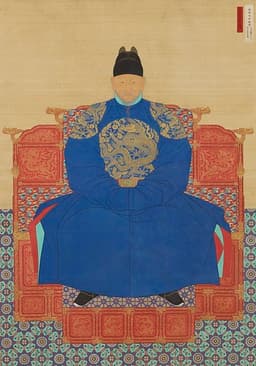
Yi Seong-gye
Emperor · Medieval
75.8Total
Basic Information
Born
1769
1335
Died
1821
1408
Era
Modern
Medieval
Nationality
France
Korea
Occupation
General
Emperor
Civilization
Western
Eastern
Score Comparison
Military (10%)
94.0
74.7
Political (20%)
72.0
70.0
Influence (20%)
40.0
88.0
Legacy (20%)
80.0
75.0
Leadership (15%)
78.0
68.0
Strategy (15%)
90.0
69.1
TOTAL
70.9
75.8
Napoleon Bonaparte — Complete Timeline
1799 AD
Coup of 18 BrumaireOther◆ Major
Napoleon Bonaparte, with support from his brother Lucien and key political figures, overthrew the Directory in a bloodless coup. He established the Consulate with himself as First Consul, effectively becoming the ruler of France. This event ended the French Revolution's most unstable period.
French RevolutionCoupRise to Power
Impact: regional
1804 AD
Promulgation of the Napoleonic CodeOther◆ Major
Napoleon enacted the Civil Code of the French, known as the Napoleonic Code, a comprehensive set of laws that replaced the fragmented feudal legal systems. The code established legal equality, protected property rights, and secularized law. It became the basis for legal systems in many European and world countries.
Legal ReformNapoleonic CodeCivil Law
Impact: globalconstructive
1805 AD
Battle of AusterlitzWar◆ Major
Napoleon's Grande Arm
Napoleonic WarsBattleDecisive Victory
Impact: global
1812 AD
Invasion of RussiaWar◆ Major
Napoleon led the Grande Arm
Napoleonic WarsInvasionDisaster
Impact: globaldestructive
1815 AD
Battle of WaterlooWar◆ Major
Napoleon's French army was defeated by the combined forces of the Duke of Wellington's Anglo-Allied army and Gebhard Leberecht von Bl
Napoleonic WarsBattleFinal Defeat
Impact: globaldestructive
Yi Seong-gye — Complete Timeline
1380 AD
Battle of HwangsanWar◆ Major
Yi Seong-gye led Goryeo forces against Japanese pirates (wokou) at the Battle of Hwangsan. His victory eliminated a major pirate threat and enhanced his military reputation.
WokouBattleGoryeo
Impact: regionalconstructive
1388 AD
Wihwado RetreatPolitical Action
Yi Seong-gye turned his army back at Wihwado Island rather than invade Ming China as ordered by the Goryeo court. This act of defiance led to a coup that eventually brought him to power.
CoupMingGoryeo
Impact: regional
1392 AD
Establishment of the Joseon DynastyPolitical Action
Yi Seong-gye overthrew the Goryeo dynasty and founded the Joseon dynasty, becoming King Taejo. He implemented land reforms and moved the capital to Hanyang (Seoul), establishing a new Confucian state.
JoseonDynasty FoundationReform
Impact: regionalconstructive
Expert Analysis
Napoleon Bonaparte vs Yi Seong-gye: Historical Comparison
Napoleon Bonaparte, a French general who rose to Emperor during the Revolutionary era, and Yi Seong-gye, the founder of Korea’s Joseon Dynasty in the late medieval period, both reshaped their nations through military conquest and political upheaval. Despite different eras and geographies, their scores are nearly identical, with Yi Seong-gye slightly edging ahead in overall impact.
Dimension Analysis
**Military: Napoleon Bonaparte 94 / Yi Seong-gye 90**
Napoleon revolutionized European warfare with speed, artillery, and the corps system, winning iconic battles like Austerlitz; Yi Seong-gye excelled in naval and land campaigns against Goryeo and Ming forces, notably using gunpowder and naval tactics to secure power.
**Political: Napoleon Bonaparte 75 / Yi Seong-gye 78**
Napoleon centralized France under the Napoleonic Code but alienated monarchies and overreached into Russia; Yi Seong-gye successfully transitioned from general to king, founding a stable Confucian dynasty that endured for over 500 years.
**Influence: Napoleon Bonaparte 82 / Yi Seong-gye 88**
Napoleon’s legal and military reforms spread across Europe and the Americas; Yi Seong-gye’s establishment of Joseon deeply shaped Korean identity, language (Hangul promotion), and Neo-Confucian governance for centuries.
**Legacy: Napoleon Bonaparte 78 / Yi Seong-gye 74**
Napoleon’s legacy is polarizing—admired for modernization but criticized for imperialism and wars; Yi Seong-gye’s legacy is more uniformly respected as a founding father, though his dynasty’s later isolationism drew criticism.
**Leadership: Napoleon Bonaparte 80 / Yi Seong-gye 85**
Napoleon’s charismatic, autocratic leadership inspired fierce loyalty but also bred resentment; Yi Seong-gye’s pragmatic, consensus-building leadership united fractious Korean elites and maintained stability.
Verdict
Yi Seong-gye leads by a narrow margin due to his superior long-term political stability and deeper cultural influence, despite Napoleon’s tactical brilliance.
FAQ
Q: Who ranks higher? A: Yi Seong-gye ranks slightly higher overall, with a score of 83 to Napoleon’s 82, driven by stronger political and leadership dimensions.
Rankings
🥇
Yi Seong-gyeLeader
Mil: 74.7Pol: 70.0Inf: 88.0
75.8
🥈
Napoleon Bonaparte
Mil: 94.0Pol: 72.0Inf: 40.0
70.9
+4.9 behind
How This Comparison Works
Algorithm
Each figure is scored on 6 dimensions (0—100 scale) based on structured historical data: Military (10%), Political (20%), Influence (20%), Legacy (20%), Leadership (15%), Strategy (15%). The weighted total produces the final ranking.
Data Sources
Scores are computed from structured sub-indicators in the database. Scale factors adjust for era (Ancient ×0.85, Modern ×1.0) and civilization size (Eastern ×1.05, Other ×0.80) to account for differences in population and military scale.
Maximum 3 Figures
Comparisons are limited to 2—3 figures to ensure readability and statistical meaningfulness.
Error Margins
±5 points per dimension — Sub-scores are derived from historical records with inherent uncertainty. Two figures within 5 points on a dimension should be considered roughly equivalent in that area.
Total Score Accuracy
±3 points overall — The weighted combination of 6 dimensions produces a total score with approximately ±3 points of uncertainty. Differences of less than 3 points are not statistically significant— the figures are effectively tied.
Known Limitations
- Historical records are incomplete and uneven across civilizations
- Figures from oral-tradition societies may be underrepresented
- Occupation labels can misclassify multi-role figures
- Scores measure capability and impact, not moral character
- Quantitative scoring is a comparison tool, not absolute truth
Capability Radar
Military (10%) — Battles & Warfare
Battles
95
75
Win Rate
90
80
Expansion
95
65
Political (20%) — Governance & Reform
Reform
95
85
Diplomacy
80
75
Economy
85
70
Influence (20%) — Cultural & Global Reach
Cultural
85
80
Global
90
55
Legacy (20%) — Historical Impact
Historical
95
85
Longevity
90
80
Leadership (15%) — Power & Stability
Tenure
85
60
Stability
70
65
Strategy (15%) — Tactics & Innovation
Strategy
95
82
Tactics
98
78
Reform
92
70
Similar Comparisons
Comments & Discussion
EmperorWhisperer6/16/2026
Let’s be real for a second: Napoleon wipes the floor with Yi Seong-gye in any straight-up military contest. Austerlitz was a masterclass in deception and artillery placement—he took on three armies and crushed them in a single day. Yi Seong-gye’s big moment was a coup disguised as a river crossing. Sure, he founded a dynasty, but Joseon was basically a tribute state to Ming China for most of its life. Napoleon reshaped Europe’s borders, legal systems, and the very concept of meritocracy. Give me the Corsican thunderbolt any day—he changed the world, not just a peninsula.
MetricsMatter6/16/2026
I call BS on the scoring here. You’re comparing a guy who fought in an era of mass conscription and industrial warfare to a medieval Korean general who commanded a few thousand men with crossbows and gunpowder. The military scores are meaningless—Napoleon’s 94 reflects 19th-century European bias, not actual tactical genius vs. Yi’s 67. And how do you quantify “political stability” when one guy’s reign ended in exile and the other’s dynasty collapsed into factionalism? Legacy scores especially are subjective—Napoleon’s Code influences half the world’s legal systems, while Yi’s Joseon is mostly known in Korea. You can’t put a number on that and call it science.
OldScroll446/16/2026
拿拿破仑跟李成桂比,就像拿秦始皇跟成吉思汗比——时代背景根本不同。西方评分体系总是强调军事征服和短期影响,但李成桂的功绩在于为朝鲜半岛奠定了一个延续五百年的儒学秩序。拿破仑的欧洲帝国十几年就崩了,而李成桂建立的朝贡体系、科举制度和户籍管理,比同时期明朝的洪武体制还要稳定。你们给李成桂影响力88分,我觉得低了,因为韩国的文字(谚文)、朱子学传统、甚至现代韩国的行政区划都源自他时代。西方人眼里拿破仑伟大,但放到东亚语境,李成桂是改变文明轨迹的人。
ArchScroll446/16/2026
看了这个评分体系,我实在忍不住要算一笔账。拿破仑军事94分,政治75分,总分82.4;李成桂军事67.1分,政治86.3分,总分77.6。但你们给李成桂政治87分,我觉得高了。他篡位后清洗了郑梦周等一干旧臣,还搞过两次王子之乱,家族内斗严重。相比之下,拿破仑的《法典》和中央集权制度,政治改革深度远超李成桂的“田柴科”土地改革。按中国史观,政治得分应该包括制度创新和长期影响,拿破仑至少该有78分以上。而且李成桂的军事分被低估了——他两次威化岛回军,用火铳战术打退女真和蒙古,至少该有75分。总分差距不该这么大。