Loading...
Guy of Dampierre vs William II Rufus
William II Rufus leads by 4.3 pts · 2 figures compared
…

Guy of Dampierre
Emperor · Medieval
45.5Total
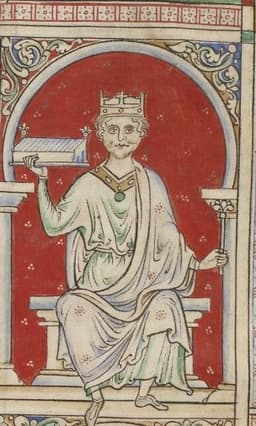
William II Rufus
Emperor · Medieval
49.8Total
Basic Information
Born
1226
1056
Died
1305
1100
Era
Medieval
Medieval
Nationality
Flanders
England
Occupation
Emperor
Emperor
Civilization
Western
Western
Score Comparison
Military (10%)
50.0
55.0
Political (20%)
36.5
48.0
Influence (20%)
51.8
50.2
Legacy (20%)
41.7
41.7
Leadership (15%)
48.4
64.0
Strategy (15%)
43.7
45.0
TOTAL
45.5
49.8
Guy of Dampierre — Complete Timeline
1251 AD
Became Count of FlandersPolitical Action◆ Major
Guy of Dampierre inherited the County of Flanders after the death of his mother, Margaret II. He ruled Flanders during a period of conflict with France.
InheritanceCountyFlanders
Impact: regional
1294 AD
Allied with England Against FrancePolitical Action◆ Major
Guy allied with King Edward I of England against King Philip IV of France. This alliance was part of the larger conflict between England and France over Gascony.
AllianceEnglandFrance
Impact: regional
1300 AD
Imprisoned by Philip IV of FrancePolitical Action◆ Major
After a French invasion, Guy was captured and imprisoned by King Philip IV of France. He was held in captivity in Paris, and Flanders was placed under direct French rule.
ImprisonmentFrench InvasionLoss of Power
Impact: regionaltragic
1305 AD
Died in CaptivityPolitical Action◆ Major
Guy of Dampierre died while still a prisoner of Philip IV in France. His death occurred before the Treaty of Athis-sur-Orge that ended the Franco-Flemish war.
Death in CaptivityEnd of ReignFranco-Flemish War
Impact: regionaltragic
William II Rufus — Complete Timeline
1087 AD
Coronation of William IIPolitical Action◆ Major
William was crowned king of England on September 26, 1087, after the death of his father William the Conqueror. He inherited the English throne while his brother Robert Curthose received Normandy.
CoronationSuccessionNorman Dynasty
Impact: national
1088 AD
Rebellion of 1088War◆ Major
William faced a rebellion led by Norman barons supporting his brother Robert Curthose. William suppressed the revolt by promising reforms and confiscating rebel lands.
RebellionCivil WarBarons
Impact: nationaldestructive
1097 AD
Conflict with Anselm of CanterburyPolitical Action◆ Major
William quarreled with Archbishop Anselm over church revenues and authority. Anselm went into exile in 1097, and William seized the revenues of the archbishopric.
Church-State ConflictExilePower Struggle
Impact: nationaldestructive
1100 AD
Death of William IIPolitical Action◆ Major
William was killed by an arrow while hunting in the New Forest on August 2, 1100. The circumstances were suspicious, and his brother Henry I quickly seized the throne.
DeathHunting AccidentSuccession
Impact: nationaltragic
Expert Analysis
Origins
Guy of Dampierre was born around 1226 into the noble House of Dampierre. He was the second son of William II of Dampierre and Margaret II, Countess of Flanders. After his mother's death in 1278, he inherited the County of Flanders, a wealthy and strategically vital region. His early life was marked by the power struggles between the Dampierre and Avesnes families over the inheritance of Flanders and Hainaut.
William II Rufus was born around 1056 in Normandy, the third son of William the Conqueror and Matilda of Flanders. He was raised in the Norman court, receiving military training and experience in his father's campaigns. Unlike his elder brother Robert Curthose, who inherited Normandy, William was designated by his father to inherit England, a decision that shaped his future.
Rise to Power
Guy of Dampierre became Count of Flanders in 1278 after his mother's death. He quickly faced pressure from the French crown under Philip IV, who sought to expand royal control over Flanders. Guy attempted to maintain Flemish independence by forging alliances, notably with King Edward I of England in 1294. This alliance was a direct challenge to French hegemony. However, Philip IV invaded Flanders in 1297, and Guy was captured and imprisoned in 1300. He died in captivity in 1305, before the Treaty of Athis-sur-Orge ended the conflict.
William II Rufus was crowned King of England on September 26, 1087, following his father's death. His accession was contested by Norman barons who supported his brother Robert Curthose. In the Rebellion of 1088, William suppressed the revolt by promising reforms and confiscating rebel lands. He also secured the loyalty of English subjects by granting concessions. His reign was defined by conflicts with the church, particularly with Archbishop Anselm of Canterbury, whom he exiled in 1097.
Leadership & Governance
Guy of Dampierre's leadership was reactive and defensive. He scored 48.4 in leadership and 43.7 in strategy. He sought to preserve Flemish autonomy through diplomacy and alliances, but his military efforts were inadequate. His governance was hampered by internal divisions and French pressure. He failed to modernize Flemish administration or build a strong central authority.
William II Rufus scored 64.0 in leadership, the highest among his scores. He ruled with a firm hand, centralizing royal power and expanding the treasury. He exploited church revenues and appointed loyal officials. His governance was efficient but brutal; he was known for his harsh taxation and arbitrary justice. His conflict with Anselm showed his willingness to challenge ecclesiastical authority.
Triumph & Tragedy
Guy's greatest triumph was securing an alliance with England, but it proved futile. His tragedy was his capture and death in prison, marking the end of Flemish independence. He scored 50.0 in military, reflecting his inability to defend his realm.
William II's triumph was suppressing the 1088 rebellion and maintaining control over England and Normandy. His tragedy was his sudden death in a hunting accident, which many saw as suspicious. He scored 55.0 in military, higher than Guy, but his political score of 48.0 shows his reliance on force.
Character & Destiny
Guy was cautious and diplomatic, but lacked the strategic vision to counter French aggression. His character was shaped by the feudal constraints of his time. His destiny was sealed by his inability to adapt.
William was ruthless and pragmatic, with a temper that led to conflicts. His character was that of a warrior-king, but his death left his achievements vulnerable. His brother Henry I quickly seized the throne, erasing much of William's legacy.
Legacy
Guy's legacy is tied to the Flemish resistance against France. His actions contributed to the Franco-Flemish conflict that culminated in the Battle of the Golden Spurs (1302), after his death. He scored 41.7 in legacy.
William II's legacy is overshadowed by his father and brother. He is remembered as a competent but unpopular king. His reign solidified Norman rule in England, but his administrative innovations were continued by Henry I. He scored 41.7 in legacy.
Conclusion
William II Rufus scored higher overall (49.8 vs 45.5) due to superior leadership and military scores. His impact on England was more immediate, as he maintained control and expanded royal power. Guy's failure to defend Flanders limited his influence. William had a greater impact, though both were constrained by their eras. The data supports William as the more effective ruler.
Rankings
🥇
William II RufusLeader
Mil: 55.0Pol: 48.0Inf: 50.2
49.8
🥈
Guy of Dampierre
Mil: 50.0Pol: 36.5Inf: 51.8
45.5
+4.3 behind
How This Comparison Works
Algorithm
Each figure is scored on 6 dimensions (0—100 scale) based on structured historical data: Military (10%), Political (20%), Influence (20%), Legacy (20%), Leadership (15%), Strategy (15%). The weighted total produces the final ranking.
Data Sources
Scores are computed from structured sub-indicators in the database. Scale factors adjust for era (Ancient ×0.85, Modern ×1.0) and civilization size (Eastern ×1.05, Other ×0.80) to account for differences in population and military scale.
Maximum 3 Figures
Comparisons are limited to 2—3 figures to ensure readability and statistical meaningfulness.
Error Margins
±5 points per dimension — Sub-scores are derived from historical records with inherent uncertainty. Two figures within 5 points on a dimension should be considered roughly equivalent in that area.
Total Score Accuracy
±3 points overall — The weighted combination of 6 dimensions produces a total score with approximately ±3 points of uncertainty. Differences of less than 3 points are not statistically significant— the figures are effectively tied.
Known Limitations
- Historical records are incomplete and uneven across civilizations
- Figures from oral-tradition societies may be underrepresented
- Occupation labels can misclassify multi-role figures
- Scores measure capability and impact, not moral character
- Quantitative scoring is a comparison tool, not absolute truth
Capability Radar
Military (10%) — Battles & Warfare
Battles
20
35
Win Rate
15
40
Expansion
10
30
Political (20%) — Governance & Reform
Reform
30
40
Diplomacy
35
45
Economy
30
50
Influence (20%) — Cultural & Global Reach
Cultural
25
25
Global
15
15
Legacy (20%) — Historical Impact
Historical
30
30
Longevity
20
20
Leadership (15%) — Power & Stability
Tenure
40
55
Stability
20
40
Strategy (15%) — Tactics & Innovation
Strategy
25
35
Tactics
20
30
Reform
10
20
Similar Comparisons
Comments & Discussion
No comments yet. Be the first to share your thoughts!