Loading...
This comparison has not been analyzed yet.
One-time AI generation (~1 minute). Scores and timeline are already available below.
Han Kuo-yu vs Yasuhiro Nakasone
Yasuhiro Nakasone leads by 18.8 pts · 2 figures compared
…

Han Kuo-yu
Politician · Modern
37.4Total
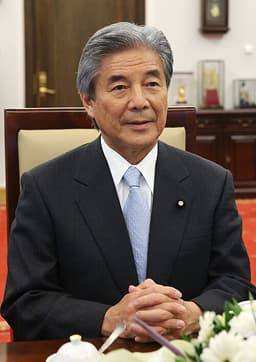
Yasuhiro Nakasone
Politician · Modern
56.2Total
Basic Information
Born
1957
1918
Died
—
2019
Era
Modern
Modern
Nationality
China
Japan
Occupation
Politician
Politician
Civilization
Eastern
Eastern
Score Comparison
Military (10%)
13.3
11.4
Political (20%)
27.9
72.0
Influence (20%)
48.6
62.0
Legacy (20%)
37.5
52.0
Leadership (15%)
31.2
79.8
Strategy (15%)
56.8
38.2
TOTAL
37.4
56.2
Han Kuo-yu — Complete Timeline
2018 AD
Elected Mayor of KaohsiungPolitical Action◆ Major
Han Kuo-yu, a relatively unknown KMT politician, was elected Mayor of Kaohsiung, a traditional DPP stronghold. His populist campaign, focused on economic revival and closer ties with China, won him a landslide victory and made him a national political figure.
Kaohsiung MayorPopulismElection Upset
Impact: nationalconstructive
2019 AD
Ran for President of TaiwanPolitical Action◆ Major
Han Kuo-yu won the KMT primary and became the party's candidate for the 2020 presidential election. He campaigned on a platform of economic growth and cross-strait engagement. He lost to incumbent Tsai Ing-wen by a significant margin, receiving 38% of the vote.
Presidential ElectionKuomintangDefeat
Impact: nationaltragic
2020 AD
Recalled as Mayor of KaohsiungPolitical Action◆ Major
Han Kuo-yu was recalled as Mayor of Kaohsiung in a recall election, the first such successful recall of a mayor in Taiwanese history. The recall was driven by dissatisfaction with his performance and his decision to run for president while serving as mayor.
Recall ElectionKaohsiungPolitical Setback
Impact: regionaltragic
2024 AD
Elected Legislative SpeakerPolitical Action◆ Major
Han Kuo-yu was elected Speaker of the Legislative Yuan after the KMT became the largest party in the 2024 legislative elections. This marked a political comeback after his recall, positioning him as a key figure in Taiwan's legislature.
Legislative YuanSpeakerPolitical Comeback
Impact: nationalconstructive
Yasuhiro Nakasone — Complete Timeline
1981 AD
Administrative Reform and Fiscal ReconstructionReform
Nakasone launched a major administrative reform aimed at reducing government spending and streamlining bureaucracy. He established the Second Provisional Commission for Administrative Reform, which recommended cuts to public works, subsidies, and the number of civil servants, contributing to fiscal consolidation.
Administrative ReformFiscal PolicyJapan
Impact: nationalconstructive
1983 AD
Strengthening of the US-Japan AlliancePolitical Action◆ Major
Nakasone deepened the US-Japan security alliance, notably by declaring Japan an 'unsinkable aircraft carrier' and increasing defense spending. He also agreed to share military technology with the US and supported the deployment of US forces in Japan, solidifying the bilateral partnership during the Cold War.
AllianceDefenseCold War
Impact: regionalconstructive
1986 AD
Hosting the 1986 Tokyo SummitPolitical Action
Nakasone hosted the 12th G7 summit in Tokyo in May 1986, where leaders discussed economic coordination, terrorism, and the Chernobyl disaster. The summit enhanced Japan's international profile and showcased Nakasone's leadership on the global stage.
DiplomacyG7International Summit
Impact: global
1987 AD
Privatization of Japanese National RailwaysReform◆ Major
As prime minister, Yasuhiro Nakasone oversaw the privatization of the debt-ridden Japanese National Railways (JNR), splitting it into regional passenger companies and a freight company. The reform, implemented in April 1987, aimed to improve efficiency and service quality, and is credited with revitalizing Japan's railway system.
PrivatizationInfrastructureEconomic Reform
Impact: nationalconstructive
This comparison has not been analyzed yet.
One-time AI generation (~1 minute). Scores and timeline are already available below.
Rankings
🥇
Yasuhiro NakasoneLeader
Mil: 11.4Pol: 72.0Inf: 62.0
56.2
🥈
Han Kuo-yu
Mil: 13.3Pol: 27.9Inf: 48.6
37.4
+18.8 behind
How This Comparison Works
Algorithm
Each figure is scored on 6 dimensions (0—100 scale) based on structured historical data: Military (10%), Political (20%), Influence (20%), Legacy (20%), Leadership (15%), Strategy (15%). The weighted total produces the final ranking.
Data Sources
Scores are computed from structured sub-indicators in the database. Scale factors adjust for era (Ancient ×0.85, Modern ×1.0) and civilization size (Eastern ×1.05, Other ×0.80) to account for differences in population and military scale.
Maximum 3 Figures
Comparisons are limited to 2—3 figures to ensure readability and statistical meaningfulness.
Error Margins
±5 points per dimension — Sub-scores are derived from historical records with inherent uncertainty. Two figures within 5 points on a dimension should be considered roughly equivalent in that area.
Total Score Accuracy
±3 points overall — The weighted combination of 6 dimensions produces a total score with approximately ±3 points of uncertainty. Differences of less than 3 points are not statistically significant— the figures are effectively tied.
Known Limitations
- Historical records are incomplete and uneven across civilizations
- Figures from oral-tradition societies may be underrepresented
- Occupation labels can misclassify multi-role figures
- Scores measure capability and impact, not moral character
- Quantitative scoring is a comparison tool, not absolute truth
Capability Radar
Military (10%) — Battles & Warfare
Battles
53
15
Win Rate
57
18
Expansion
59
21
Political (20%) — Governance & Reform
Reform
5
70
Diplomacy
15
80
Economy
10
60
Influence (20%) — Cultural & Global Reach
Cultural
20
40
Global
10
60
Legacy (20%) — Historical Impact
Historical
15
55
Longevity
10
45
Leadership (15%) — Power & Stability
Tenure
10
65
Stability
5
65
Strategy (15%) — Tactics & Innovation
Strategy
59
23
Tactics
66
24
Reform
67
26
Similar Comparisons
Comments & Discussion
No comments yet. Be the first to share your thoughts!