Loading...
Harun al-Rashid vs Napoleon Bonaparte
Harun al-Rashid leads by 0.4 pts · 2 figures compared
…
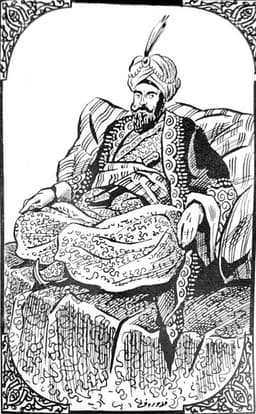
Harun al-Rashid
Emperor · Medieval
71.3Total

Napoleon Bonaparte
General · Modern
70.9Total
Basic Information
Born
763
1769
Died
809
1821
Era
Medieval
Modern
Nationality
Abbasid Caliphate
France
Occupation
Emperor
General
Civilization
Middle Eastern
Western
Score Comparison
Military (10%)
72.5
94.0
Political (20%)
70.0
72.0
Influence (20%)
71.0
40.0
Legacy (20%)
80.0
80.0
Leadership (15%)
72.0
78.0
Strategy (15%)
50.0
90.0
TOTAL
71.3
70.9
Harun al-Rashid — Complete Timeline
786 AD
Accession to the CaliphatePolitical Action◆ Major
Harun al-Rashid became the fifth Abbasid caliph after the death of his brother Al-Hadi. His reign marked the beginning of a period of cultural and economic flourishing, often considered the zenith of Abbasid power.
SuccessionCaliphateGolden Age
Impact: regionalconstructive
Patronage of the Arts and SciencesCultural◆ Major
Harun al-Rashid's court in Baghdad became a center of learning and culture, attracting poets, scholars, and musicians. His patronage fostered the development of Arabic literature, including the tales later compiled as One Thousand and One Nights.
CulturePatronageLiterature
Impact: globalconstructive
790 AD
Military Campaigns Against ByzantiumWar
Harun al-Rashid led several campaigns into Byzantine Anatolia, capturing fortresses and extracting tribute. These raids, though not resulting in permanent conquest, demonstrated Abbasid military strength and secured the frontier.
Byzantine WarsMilitary CampaignFrontier
Impact: regional
797 AD
Diplomatic Exchange with CharlemagnePolitical Action◆ Major
Harun al-Rashid sent an embassy to the Frankish emperor Charlemagne, including gifts such as an elephant named Abul-Abbas. This exchange established diplomatic relations between the Abbasid Caliphate and the Carolingian Empire, facilitating trade and cultural contact.
DiplomacyCharlemagneInternational Relations
Impact: globalconstructive
803 AD
Suppression of the BarmakidsPolitical Action◆ Major
Harun al-Rashid ordered the execution of the powerful Barmakid family, who had served as viziers for decades. This purge removed a major political faction and consolidated Harun's personal authority, but also disrupted the administration.
PurgeBarmakidsPower Struggle
Impact: regionaldestructive
Napoleon Bonaparte — Complete Timeline
1799 AD
Coup of 18 BrumaireOther◆ Major
Napoleon Bonaparte, with support from his brother Lucien and key political figures, overthrew the Directory in a bloodless coup. He established the Consulate with himself as First Consul, effectively becoming the ruler of France. This event ended the French Revolution's most unstable period.
French RevolutionCoupRise to Power
Impact: regional
1804 AD
Promulgation of the Napoleonic CodeOther◆ Major
Napoleon enacted the Civil Code of the French, known as the Napoleonic Code, a comprehensive set of laws that replaced the fragmented feudal legal systems. The code established legal equality, protected property rights, and secularized law. It became the basis for legal systems in many European and world countries.
Legal ReformNapoleonic CodeCivil Law
Impact: globalconstructive
1805 AD
Battle of AusterlitzWar◆ Major
Napoleon's Grande Arm
Napoleonic WarsBattleDecisive Victory
Impact: global
1812 AD
Invasion of RussiaWar◆ Major
Napoleon led the Grande Arm
Napoleonic WarsInvasionDisaster
Impact: globaldestructive
1815 AD
Battle of WaterlooWar◆ Major
Napoleon's French army was defeated by the combined forces of the Duke of Wellington's Anglo-Allied army and Gebhard Leberecht von Bl
Napoleonic WarsBattleFinal Defeat
Impact: globaldestructive
Expert Analysis
harun-al-rashid-vs-napoleon-bonaparte
# The Conqueror and the Caliph
In the year 807, a magnificent elephant named Abul-Abba trudged through the snow-covered passes of the Alps, a living gift from the most powerful ruler in the East to the most powerful ruler in the West. Harun al-Rashid, Caliph of Baghdad, had sent this astonishing beast to Charlemagne, Emperor of the Franks, as a symbol of their diplomatic alliance. Half a continent away, in a small town on the island of Corsica, a boy named Napoleone Buonaparte would not be born for another thirty-eight years. Yet these two figures—one a medieval caliph who presided over a golden age of culture, the other a modern general who remade Europe through fire and steel—both sought to conquer their worlds. Why did one leave behind poetry and philosophy, while the other left behind battlefields and codes of law? The answer lies not merely in their talents, but in the very nature of the civilizations they led.
Origins
Harun al-Rashid was born in 763 into the heart of the Abbasid dynasty, a family that had risen to power by promising justice and religious legitimacy. His father, Caliph al-Mahdi, ruled over an empire that stretched from Spain to India, a realm where Persian administrators, Arab warriors, and Greek scholars mingled in the great city of Baghdad. Harun grew up surrounded by the opulence of the caliphal court, tutored in the Quran, poetry, and the arts of governance. His world was one of intricate diplomacy, where a caliph’s power rested not on his sword alone, but on his ability to balance factions, patronize learning, and project an aura of divine authority.
Napoleon Bonaparte, born in 1769 on the French island of Corsica, came from a far humbler world. His family were minor Italian nobles, but their island had only recently been conquered by France. Young Napoleon spoke Corsican Italian before he learned French, and he carried the resentments of a conquered people into his teenage years. Sent to military school in mainland France, he was a small, intense outsider mocked for his accent and his poverty. Where Harun inherited a throne, Napoleon inherited a revolution. The old order of kings and nobles had been shattered in 1789, and the young artillery officer saw opportunity in chaos.
Rise to Power
Harun al-Rashid’s path to power was relatively smooth by the standards of medieval succession. In 786, after the sudden death of his brother Caliph al-Hadi—rumored to have been poisoned by his own mother—Harun ascended the throne at the age of twenty-three. He was already experienced, having led military campaigns against the Byzantine Empire and served as governor of distant provinces. His rise was a matter of birth and court maneuvering, not popular revolution. The machinery of the Abbasid state was already in place; Harun simply had to operate it.
Napoleon’s rise was a story of genius meeting opportunity. In 1793, at the age of twenty-four, he distinguished himself at the Siege of Toulon, where he devised the artillery plan that drove the British fleet from the harbor. Four years later, in 1796, he was given command of a starving, unpaid army in Italy and transformed it into a conquering force. His 1796 Italian campaign was a masterpiece of speed and deception—he defeated larger Austrian armies by moving faster than they could react, living off the land, and striking at their supply lines. Within a year, he had forced Austria to sue for peace. He returned to France a national hero, and in 1799, with the government in chaos, he seized power in a coup. At thirty years old, he was First Consul of France.
Leadership & Governance
Harun al-Rashid ruled as a caliph, which meant he was both political leader and religious figurehead. His governance was characterized by delegation and patronage. He relied heavily on the Barmakid family, Persian viziers who had served the Abbasids for decades, to manage the empire’s vast bureaucracy. Under their administration, Baghdad became the intellectual capital of the world. The House of Wisdom, a library and translation center, attracted scholars from India, Persia, and Greece who translated works on mathematics, astronomy, and medicine. Harun’s court inspired the tales of *One Thousand and One Nights*—a world of poets, musicians, and philosophers where power was exercised through wealth and culture rather than direct force.
Yet Harun’s rule had a darker side. In 803, he ordered the brutal suppression of the Barmakids, executing his most trusted viziers and confiscating their vast wealth. The reasons remain murky—some say they had grown too powerful, others whisper of personal betrayal. This purge weakened the administrative apparatus that had made his reign successful, and it revealed the precarious nature of autocratic power. Harun’s military campaigns against Byzantium were more about raiding and extracting tribute than conquest. His strategy score of 45 reflects a ruler who fought to maintain borders and prestige, not to redraw maps.
Napoleon governed in a completely different key. As First Consul and later Emperor, he centralized power in his own hands while simultaneously modernizing the state. His greatest achievement was the Napoleonic Code of 1804, a comprehensive legal system that abolished feudal privileges, established equality before the law, and protected property rights. This code would influence legal systems across Europe and the world. He reformed education, created the Bank of France to stabilize the currency, and built roads and canals that connected his empire.
Militarily, Napoleon was a revolutionary. His strategy score of 93 places him among history’s greatest commanders. He perfected the use of artillery as a mobile striking force, the division of armies into independent corps that could converge rapidly on a battlefield, and the exploitation of interior lines to defeat larger coalitions. At Austerlitz in 1805, he destroyed a combined Russian and Austrian army by feinting weakness on his right flank, then crushing the Allied center with a massive assault. His political score of 75, however, reveals a man who was brilliant at conquest but less adept at building lasting institutions. He placed his brothers on thrones across Europe, but these puppet kingdoms lacked legitimacy and crumbled when his military power waned.
Triumph & Tragedy
Harun al-Rashid’s greatest triumph was the cultural flourishing of his reign. The Abbasid Caliphate under his rule was a beacon of civilization—a place where Muslim, Christian, Jewish, and Zoroastrian scholars worked side by side, where the works of Aristotle and Galen were preserved and expanded upon, where algebra and astronomy advanced by leaps. His diplomatic exchange with Charlemagne in 797, complete with the gift of the elephant Abul-Abba, symbolized the reach of his influence.
His tragedy was the fragility of his achievements. The Barmakid purge in 803 shattered the trust that held his administration together. After his death in 809, a civil war erupted between his sons al-Amin and al-Ma’mun, leading to the Siege of Baghdad in 812-813 that devastated the city. The golden age he had presided over gave way to decline.
Napoleon’s triumph was the conquest of Europe. By 1810, he controlled an empire that stretched from Spain to Poland, and his relatives sat on thrones from Naples to Holland. He had defeated every major power on the continent except Britain, and his reforms had shattered the old feudal order wherever his armies marched.
His tragedy was the Russian campaign of 1812. Napoleon invaded Russia with over 600,000 men, the largest army Europe had ever seen. The Russians refused to give battle, retreating deeper into their vast territory and burning everything behind them. When Napoleon reached Moscow in September, he found the city abandoned and in flames. He waited five weeks for a surrender that never came, then ordered a retreat in October. The Russian winter, combined with hunger and constant attacks, destroyed his army. Fewer than 100,000 men returned. This disaster emboldened his enemies, and by 1814, he was forced to abdicate. He returned from exile in 1815 for a final, desperate gamble—the Hundred Days—but was defeated at Waterloo in June 1815 by the Duke of Wellington and Gebhard Leberecht von Blücher. He died in exile on the remote island of Saint Helena in 1821.
Character & Destiny
Harun al-Rashid was a figure of immense self-control and calculation. He understood that power in the Abbasid world was about perception—the caliph had to appear wise, just, and generous. His patronage of the arts was not merely personal taste but a political strategy to legitimize his rule. Yet his decision to destroy the Barmakids reveals a paranoid streak, a fear of being overshadowed by his own servants. His character was suited to a stable empire where the greatest dangers came from court intrigue, not external invasion.
Napoleon was driven by an insatiable hunger for glory. “I am not an ordinary man,” he once said, and he proved it through relentless ambition. He worked eighteen-hour days, read voraciously, and demanded absolute loyalty from his subordinates. His character was forged in the crucible of revolution—he was a man who believed that will and intelligence could overcome any obstacle. This made him unstoppable in victory but incapable of accepting limits. He could not stop conquering, and this inability to consolidate his gains led to his downfall.
Legacy
Harun al-Rashid left behind a civilization, not an empire. The Abbasid golden age he presided over produced works of science and literature that would influence the world for centuries. The House of Wisdom’s translations preserved Greek philosophy for Europe, and Arab mathematicians gave us the concept of zero and the foundations of algebra. His legacy score of 70 reflects a ruler remembered more for the culture he fostered than for his political or military achievements.
Napoleon left behind a transformed Europe. The Napoleonic Code remains the basis of civil law in many countries. He destroyed the Holy Roman Empire, sparked the rise of nationalism in Germany and Italy, and introduced the concept of meritocracy to military and civil service. His legacy score of 78 acknowledges both his achievements and the catastrophic wars that cost millions of lives. He is remembered as both a genius and a tyrant, a man who liberated Europe from feudalism only to enslave it to his ambition.
Conclusion
Standing at the opposite ends of history, Harun al-Rashid and Napoleon Bonaparte reveal the different paths to power in different eras. The caliph ruled a world where legitimacy came from tradition and religion, where the greatest achievements were intellectual and cultural. The emperor ruled a world where legitimacy came from conquest and popular will, where the greatest achievements were military and legal. One built a library; the other built an empire. One died in his bed, mourned by poets; the other died on a lonely island, remembered by historians. Their different outcomes were not merely a matter of personal genius, but of the civilizations that shaped them, the opportunities they seized, and the limits they could not see. In the end, both men remind us that power is always a reflection of its time—and that the most enduring empires are not those carved by the sword, but those written in the minds of men.
Rankings
🥇
Harun al-RashidLeader
Mil: 72.5Pol: 70.0Inf: 71.0
71.3
🥈
Napoleon Bonaparte
Mil: 94.0Pol: 72.0Inf: 40.0
70.9
+0.4 behind
How This Comparison Works
Algorithm
Each figure is scored on 6 dimensions (0—100 scale) based on structured historical data: Military (10%), Political (20%), Influence (20%), Legacy (20%), Leadership (15%), Strategy (15%). The weighted total produces the final ranking.
Data Sources
Scores are computed from structured sub-indicators in the database. Scale factors adjust for era (Ancient ×0.85, Modern ×1.0) and civilization size (Eastern ×1.05, Other ×0.80) to account for differences in population and military scale.
Maximum 3 Figures
Comparisons are limited to 2—3 figures to ensure readability and statistical meaningfulness.
Error Margins
±5 points per dimension — Sub-scores are derived from historical records with inherent uncertainty. Two figures within 5 points on a dimension should be considered roughly equivalent in that area.
Total Score Accuracy
±3 points overall — The weighted combination of 6 dimensions produces a total score with approximately ±3 points of uncertainty. Differences of less than 3 points are not statistically significant— the figures are effectively tied.
Known Limitations
- Historical records are incomplete and uneven across civilizations
- Figures from oral-tradition societies may be underrepresented
- Occupation labels can misclassify multi-role figures
- Scores measure capability and impact, not moral character
- Quantitative scoring is a comparison tool, not absolute truth
Capability Radar
Military (10%) — Battles & Warfare
Battles
60
95
Win Rate
65
90
Expansion
55
95
Political (20%) — Governance & Reform
Reform
70
95
Diplomacy
80
80
Economy
85
85
Influence (20%) — Cultural & Global Reach
Cultural
90
85
Global
85
90
Legacy (20%) — Historical Impact
Historical
85
95
Longevity
90
90
Leadership (15%) — Power & Stability
Tenure
75
85
Stability
70
70
Strategy (15%) — Tactics & Innovation
Strategy
60
95
Tactics
55
98
Reform
50
92
Similar Comparisons
Comments & Discussion
BaghdadSwordsmith6/17/2026
Comparing Harun to Napoleon is like comparing a silk merchant to a blacksmith. Harun never fought a single major battle himself—he sent generals while he lounged in Baghdad composing poetry. Napoleon led 60+ battles personally, from Austerlitz to Borodino. One was a manager, the other was a warrior. That's the difference between a courtier's "golden age" and a conqueror's empire.
沙漠史官6/17/2026
说哈伦是中世纪伟人?他不过是个会讲故事的寺庙管理者。他的"黄金时代"全靠波斯官僚和阿拉伯奴隶撑着,自己连马都没骑稳过。拿破仑在30岁前就打赢了意大利战役,推翻了威尼斯共和国,建立了现代法律体系。一个沉醉于天方夜谭,一个改写了历史教科书。谁更配称"大帝",不言自明。
LegioDecima6/17/2026
Fun fact: Harun's empire produced exactly zero lasting military innovations, while Napoleon revolutionized artillery tactics, introduced the corps system, and created the first modern conscript army. The Abbasids peaked with Harun, then crumbled; Napoleon's conquests reshaped Europe for a century. Cultural production is nice, but history remembers those who change how war is fought.
新罗马骑手6/17/2026
你们都被《一千零一夜》骗了。真实历史上,哈伦朝政腐败,财政靠奴隶贸易,文化只有宫廷奢侈。拿破仑带来的民法典、现代教育、度量衡统一,才是真正的遗产。巴格达在中世纪确实辉煌,但那是波斯文明的余晖,不是哈伦个人的功劳。拿破仑用十年做的事,哈伦一辈子没想明白。
CounterCulture6/17/2026
Both were products of their civilizations, but let's be honest: Napoleon face-planted in Russia and ended up on Saint Helena. Harun ruled for 23 years, died in power, and his reign became the benchmark for Islamic Golden Age. Cultural legacy isn't "soft"—it's the reason we still talk about him. Napoleon's carcass got moved to Les Invalides, but Harun's Baghdad set the standard for urban civilization. Who's the real loser?