Loading...
Henri Guisan vs Qin Shi Huang
Qin Shi Huang leads by 26.9 pts · 2 figures compared
…

Henri Guisan
General · Modern
58.3Total
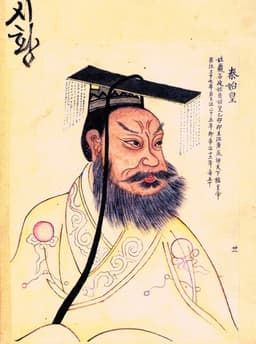
Qin Shi Huang
Emperor · Ancient
85.2Total
Basic Information
Born
1874
-259
Died
1960
-210
Era
Modern
Ancient
Nationality
Switzerland
China
Occupation
General
Emperor
Civilization
Western
Eastern
Score Comparison
Military (10%)
22.6
80.0
Political (20%)
68.0
90.0
Influence (20%)
56.4
85.0
Legacy (20%)
56.0
90.0
Leadership (15%)
77.2
78.0
Strategy (15%)
61.2
82.0
TOTAL
58.3
85.2
Henri Guisan — Complete Timeline
1939 AD
Appointment as General of the Swiss ArmyPolitical Action◆ Major
Guisan was appointed General of the Swiss Armed Forces at the outbreak of World War II, a position only held during wartime. He was tasked with defending Swiss neutrality against potential invasion by Nazi Germany.
World War IIMilitaryNeutrality
Impact: national
1940 AD
Implementation of the National Redoubt StrategyWar◆ Major
Guisan ordered the construction of fortifications in the Swiss Alps, concentrating the army in the mountainous 'Reduit'. This strategy aimed to make invasion costly and deter Germany, while sacrificing the industrial heartland.
Military StrategyFortificationWorld War II
Impact: national
Rütli Report SpeechPolitical Action◆ Major
Guisan delivered the R
Military StrategyWorld War IIDefense
Impact: national
1945 AD
Demobilization of the Swiss ArmyPolitical Action◆ Major
After the end of World War II, Guisan oversaw the demobilization of the Swiss army. He stepped down as General, returning the country to a peacetime posture, having successfully maintained Swiss neutrality.
DemobilizationWorld War IINeutrality
Impact: nationalconstructive
Qin Shi Huang — Complete Timeline
246 BC
Construction of the Mausoleum and Terracotta ArmyOther◆ Major
Qin Shi Huang commissioned a vast mausoleum complex near Xi'an, guarded by thousands of life-sized terracotta soldiers, horses, and chariots. The project employed hundreds of thousands of workers and reflected his obsession with immortality and imperial power.
Impact: global
230 BC
Conquest of the Six Warring StatesWar
From 230 to 221 BCE, Ying Zheng led the Qin state in a series of campaigns that conquered the Han, Zhao, Wei, Chu, Yan, and Qi states. This unified China under a single ruler for the first time, ending the Warring States period.
Impact: global
221 BC
Standardization of Writing, Currency, and MeasurementsReform◆ Major
Qin Shi Huang ordered the standardization of Chinese script, currency, and weights and measures across the unified empire. This facilitated administration, trade, and cultural integration, laying a foundation for future dynasties.
Impact: globalconstructive
Proclamation of the Qin DynastyPolitical Action
After conquering the last independent state, Ying Zheng declared himself Shi Huangdi (First Emperor), founding the Qin Dynasty. He adopted a new title to signify his supreme authority and initiated centralized imperial rule.
Impact: global
214 BC
Initiation of the Great Wall ConstructionOther◆ Major
Qin Shi Huang ordered the connection and extension of existing northern fortifications to create a unified defensive wall against nomadic Xiongnu raids. This project involved massive conscripted labor and became the precursor to the later Great Wall.
Impact: regional
213 BC
Burning of Books and Burying of ScholarsPolitical Action◆ Major
On the advice of Li Si, Qin Shi Huang ordered the burning of historical records and philosophical texts not aligned with Legalist doctrine. He also had 460 Confucian scholars buried alive to suppress dissent and consolidate ideological control.
Impact: nationaldestructive
Expert Analysis
henri-guisan-vs-qin-shi-huang
# The Emperor and the General
On a July morning in 1940, as German tanks rolled across France, a Swiss farmer-turned-general stood before his officers on a grassy meadow called Rütli. Henri Guisan spoke not of conquest, but of retreat—into the mountains, into the very heart of his small nation. Two thousand years earlier and half a world away, another leader had stood before his armies after decades of war, not to announce a defensive redoubt, but to declare himself the First Emperor of all China. Both men faced existential threats; both chose radically different paths. The question is why.
Origins
Qin Shi Huang was born into blood and steel. The year was 259 BC, and the Zhou dynasty had collapsed into centuries of chaos known as the Warring States period. His father was king of Qin, a western state hardened by constant conflict with nomadic tribes. Young Ying Zheng grew up surrounded by Legalist advisers who taught him that human nature was selfish and that only harsh laws could create order. His mother’s political intrigues and a regency marked by assassination attempts forged in him a cold, calculating will. He learned early that trust was a luxury, and power the only currency that mattered.
Henri Guisan entered the world in 1874, in the quiet Swiss village of Mézières. His family were farmers and landowners, rooted in a land that had known no war for generations. Switzerland was a patchwork of cantons, languages, and religions, held together not by a strong central ruler but by a shared desire to be left alone. Guisan studied agriculture, served as a cavalry officer in peacetime, and rose through the ranks of a militia army where every soldier was also a citizen. His Switzerland had no emperor, no standing army, no ambition beyond its borders. It was a country built on consensus, not conquest.
Rise to Power
Ying Zheng’s ascent was swift and brutal. At thirteen he inherited the throne; by twenty-two he had crushed a rebellion led by his own mother’s lover. He then turned outward. From 230 to 221 BC, his armies devoured the six rival kingdoms one by one—Han, Zhao, Wei, Chu, Yan, Qi. Each victory was followed by systematic destruction of the defeated state’s nobility, walls, and records. He left nothing behind that could rise again. When the last king surrendered, Ying Zheng did something unprecedented: he invented a new title. He called himself *Shi Huangdi*—the First Emperor—and declared that his dynasty would last ten thousand generations.
Guisan’s rise was quieter, but no less decisive. In August 1939, as Europe tensed for war, the Swiss Federal Assembly did something it had not done since the Napoleonic Wars: it elected a general. Guisan was chosen not for his brilliance but for his steadiness. He was a farmer who understood the land, a soldier who knew his men, and a politician who could speak to Germans, French, and Italians in their own languages. When Hitler’s armies smashed through the Low Countries in May 1940, Guisan faced a choice that would define his legacy: surrender, negotiate, or fight.
Leadership & Governance
Qin Shi Huang ruled through terror and uniformity. He standardized writing so that a decree from the capital could be read from the Yellow River to the Pearl River. He fixed currency, weights, and measures so that trade could flow without confusion. He built roads and canals to bind his empire together. But he also burned books that disagreed with his philosophy and buried scholars alive who criticized his rule. His Legalist minister Li Si advised him that the people must be kept ignorant and afraid. The emperor agreed. He created a bureaucracy that answered only to him, and he moved hundreds of thousands of families to break old loyalties. Unity was his goal; fear was his tool.
Henri Guisan governed through persuasion and shared sacrifice. He knew he could not command Swiss soldiers the way Qin commanded Chinese conscripts. These were men with rifles in their own homes, citizens who had elected the politicians who had appointed him. So on July 25, 1940, he gathered his officers on the Rütli meadow—the legendary birthplace of the Swiss Confederacy—and told them the truth. Switzerland could not defend its borders. The plains were indefensible. But the Alps were a fortress. He ordered the army to withdraw into the mountains, to blow up tunnels and bridges behind them, and to fight from the National Redoubt until the last bullet. He did not promise victory. He promised that Switzerland would not surrender.
Triumph & Tragedy
Qin Shi Huang’s greatest triumph was the unification itself—a feat no Chinese ruler had accomplished before. His greatest tragedy was that he could not hold it. Obsessed with immortality, he consumed mercury pills prescribed by alchemists and died in 210 BC at the age of forty-nine. Within three years, his dynasty collapsed in rebellion. The terracotta army he built to guard his tomb still stands, but the empire he forged was torn apart by the very forces he tried to crush. His standardization survived; his dynasty did not.
Guisan’s triumph was that Switzerland survived the war without being invaded. His National Redoubt strategy made the cost of conquest too high: the Swiss would destroy their own infrastructure, starve their own cities, and fight from caves and peaks until the Germans bled for every kilometer. Hitler’s generals advised against invasion, and the plan was never tested. But the tragedy was that Switzerland’s survival came at a moral cost. The country traded with Nazi Germany, turned away Jewish refugees, and maintained neutrality while Europe burned. Guisan did not set these policies, but he did not stop them. His duty was to the nation, not to justice, and he fulfilled that duty perfectly.
Character & Destiny
Qin Shi Huang was a man who could not stop. His ambition was infinite, his paranoia absolute. He believed that he alone could impose order on chaos, and that any means were justified. His personality shaped a centralized, authoritarian state that would define China for two millennia. But his inability to trust anyone—not his generals, not his ministers, not even his own sons—doomed his dynasty. The First Emperor built a machine that could only run with him at the controls.
Guisan was a man who knew his limits. He understood that his power was temporary and conditional. When the war ended in 1945, he demobilized the army and returned to his farm. He did not seek to become a dictator or to extend his command. He went home. His personality shaped a nation that survived by knowing when to bend and when to stand firm. Switzerland remained neutral, democratic, and intact because Guisan understood that leadership is not about holding power, but about knowing when to let it go.
Legacy
Qin Shi Huang is remembered as the father of China. Every schoolchild learns that he unified the writing system, built the Great Wall, and created the template for imperial rule. But he is also remembered as a tyrant who burned books and buried scholars. His legacy is the paradox of Chinese civilization: order achieved through oppression, unity purchased with blood.
Henri Guisan is remembered as the savior of Switzerland. His image appears on stamps and coins; his Rütli speech is taught as a model of civic courage. But his legacy is also complicated. Did he save Switzerland, or did he merely preserve a neutrality that allowed evil to flourish? The question lingers, unresolved.
Conclusion
Two men, two worlds, two visions of leadership. Qin Shi Huang built an empire with iron and fire, and it crumbled the moment he died. Henri Guisan preserved a republic with patience and principle, and it outlasted him by decades. One believed that power must be absolute to be effective; the other believed that power must be limited to be legitimate. History offers no clear verdict on which was right. Perhaps the answer depends on what you value most: the unity of a civilization, or the freedom of a people. Or perhaps the deepest lesson is that both men, in their own ways, did exactly what their times demanded—and that is the only measure of leadership that truly matters.
Rankings
🥇
Qin Shi HuangLeader
Mil: 80.0Pol: 90.0Inf: 85.0
85.2
🥈
Henri Guisan
Mil: 22.6Pol: 68.0Inf: 56.4
58.3
+26.9 behind
How This Comparison Works
Algorithm
Each figure is scored on 6 dimensions (0—100 scale) based on structured historical data: Military (10%), Political (20%), Influence (20%), Legacy (20%), Leadership (15%), Strategy (15%). The weighted total produces the final ranking.
Data Sources
Scores are computed from structured sub-indicators in the database. Scale factors adjust for era (Ancient ×0.85, Modern ×1.0) and civilization size (Eastern ×1.05, Other ×0.80) to account for differences in population and military scale.
Maximum 3 Figures
Comparisons are limited to 2—3 figures to ensure readability and statistical meaningfulness.
Error Margins
±5 points per dimension — Sub-scores are derived from historical records with inherent uncertainty. Two figures within 5 points on a dimension should be considered roughly equivalent in that area.
Total Score Accuracy
±3 points overall — The weighted combination of 6 dimensions produces a total score with approximately ±3 points of uncertainty. Differences of less than 3 points are not statistically significant— the figures are effectively tied.
Known Limitations
- Historical records are incomplete and uneven across civilizations
- Figures from oral-tradition societies may be underrepresented
- Occupation labels can misclassify multi-role figures
- Scores measure capability and impact, not moral character
- Quantitative scoring is a comparison tool, not absolute truth
Capability Radar
Military (10%) — Battles & Warfare
Battles
10
85
Win Rate
10
90
Expansion
5
90
Political (20%) — Governance & Reform
Reform
50
95
Diplomacy
65
75
Economy
30
90
Influence (20%) — Cultural & Global Reach
Cultural
40
95
Global
30
85
Legacy (20%) — Historical Impact
Historical
60
95
Longevity
50
95
Leadership (15%) — Power & Stability
Tenure
55
70
Stability
80
65
Strategy (15%) — Tactics & Innovation
Strategy
75
85
Tactics
60
80
Reform
70
95
Similar Comparisons
Comments & Discussion
Shieldwall6/17/2026
Comparing Guisan to Qin Shi Huang is like comparing a Swiss Army knife to a siege crossbow. Guisan’s genius was in accepting that Switzerland couldn’t win a direct fight against the Wehrmacht, so he turned 100,000 Swiss francs and a national park into a fortress of alpine guerilla warfare. The Emperor built the Great Wall to keep out the Xiongnu; Guisan built the Réduit to keep *himself* inside. That’s not weakness—it’s tactical humility born from a farmer’s sense of terrain, not a tyrant’s ego.
真秦粉6/17/2026
把秦始皇和吉桑放在一起比,简直是对帝国逻辑的侮辱。始皇帝统一六国靠的是铁血律法与中央集权,而吉桑只不过是在瑞士小山坡上画了个避难圈。你告诉我,一个靠躲进山里苟活的将军,怎么能和一个横扫天下、书同文车同轨的千古一帝相提并论?请记住:吉桑的“胜利”在于瑞士没被占领,而秦始皇的胜利在于他让一个文明真正成为帝国。这叫降维打击。
SkepticalEye6/17/2026
Let’s talk numbers: Guisan’s Réduit was defended by about 100,000 men against a potential 1.5 million Axis troops. Realistically, the Germans never seriously planned to invade Switzerland after 1940 because they needed the rail tunnels. So Guisan’s “great defense” was mostly performance art for morale. Meanwhile, Qin Shi Huang mobilized over 300,000 laborers for the Great Wall and forced millions into militarized service. One guy bluffed with a national park; the other built the world’s largest
乡愁考据6/17/2026
你们都被宏大叙事骗了。秦始皇的“伟大”背后是人肉白骨:征发七十万刑徒修陵墓,坑杀四百六十名儒生,焚尽天下诗书。吉桑在1940年发表的《吕特利誓言》不仅保全了瑞士,还确保了难民接收与红十字会的中立。帝国的铁血文明固然彪炳史册,但一个将军让四百万人在炮火中活下去,这难道不比陵墓里埋兵马俑更有人性的温度?
LegionaryCritic6/17/2026
Oh, spare me the “humanist general” nonsense. Guisan was a career officer who spent the 1930s warning about bolshevism while cozying up to Hitler’s trade deals. When war came, he chose a symbolic redoubt that would have been a massacre pit if Germany actually attacked. Qin Shi Huang at least had the guts to end civil war with absolute force—not hide in mountains playing martyr. One created a unified state with standardized scripts and roads; the other gave speeches on a meadow. Guess