Loading...
Henry Bolingbroke vs Hisham ibn Abd al-Malik
Hisham ibn Abd al-Malik leads by 18.0 pts · 2 figures compared
…
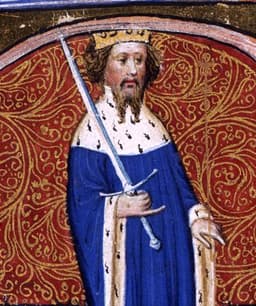
Henry Bolingbroke
Emperor · Medieval
52.6Total
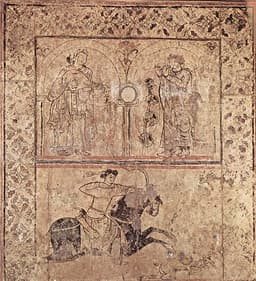
Hisham ibn Abd al-Malik
Emperor · Medieval
70.6Total
Basic Information
Born
1367
691
Died
1413
743
Era
Medieval
Medieval
Nationality
England
Umayyad Caliphate
Occupation
Emperor
Emperor
Civilization
Western
Middle Eastern
Score Comparison
Military (10%)
25.0
74.7
Political (20%)
48.0
78.0
Influence (20%)
58.0
72.0
Legacy (20%)
50.0
58.0
Leadership (15%)
65.7
80.0
Strategy (15%)
60.0
69.1
TOTAL
52.6
70.6
Henry Bolingbroke — Complete Timeline
1398 AD
Exiled by Richard IIPolitical Action◆ Major
Henry Bolingbroke was exiled from England by King Richard II following a dispute with Thomas de Mowbray. The exile was initially for ten years, later commuted to life, stripping Henry of his inheritance and prompting his return to claim the throne.
ExilePower StruggleLancaster
Impact: nationaldestructive
1399 AD
Returned from Exile and Deposed Richard IIPolitical Action
Henry landed at Ravenspur in Yorkshire with a small force while Richard II was in Ireland. He gathered support from nobles, captured Richard, and forced his abdication. Parliament then accepted Henry as King Henry IV, establishing the Lancastrian dynasty.
CoupDepositionLancastrian Dynasty
Impact: national
1403 AD
Battle of ShrewsburyWar◆ Major
Henry IV's forces defeated a rebellion led by Henry Percy (Hotspur) and the Earl of Worcester. The battle was the first major engagement between English armies using longbows. Hotspur was killed, ending the Percy rebellion and securing Henry's throne.
RebellionBattlePercy
Impact: nationaldestructive
1409 AD
Suppressed the Welsh RebellionWar◆ Major
Henry IV's forces captured Harlech Castle, the headquarters of Owain Glynd
Welsh RebellionMilitary Campaign
Impact: regionaldestructive
1412 AD
Suffered from Illness and Political InstabilityOther
Henry IV suffered from a debilitating illness, possibly leprosy or epilepsy, which weakened his ability to govern. Factional struggles between his son Prince Henry and Archbishop Arundel intensified. The king's health declined further, leading to his death in 1413.
IllnessSuccession Crisis
Impact: nationaltragic
Hisham ibn Abd al-Malik — Complete Timeline
724 AD
Accession as CaliphPolitical Action◆ Major
Hisham ibn Abd al-Malik became the Umayyad caliph after the death of his brother, Yazid II. His reign was the longest of the later Umayyads, lasting 19 years.
SuccessionCaliphate
Impact: global
726 AD
Military campaigns against the ByzantinesWar◆ Major
Hisham launched annual raids into Byzantine Anatolia, capturing several fortresses. These campaigns were costly but maintained pressure on the Byzantine Empire, though they did not achieve decisive conquest.
Byzantine WarsRaidsAnatolia
Impact: regional
730 AD
Administrative and economic reformsReform◆ Major
Hisham implemented administrative reforms to improve tax collection and centralize control over the provinces. He also invested in irrigation projects in Iraq, boosting agricultural productivity.
AdministrationEconomyAgriculture
Impact: globalconstructive
732 AD
Defeat at the Battle of ToursWar
Umayyad forces under Hisham's reign were defeated by the Franks under Charles Martel at the Battle of Tours. This halted the northward expansion of the Umayyad Caliphate into Western Europe.
BattleDefeatFranks
Impact: global
Expert Analysis
Origins
Henry Bolingbroke (1367-1413) was born the son of John of Gaunt, Duke of Lancaster, and Blanche of Lancaster, making him a grandson of King Edward III. His early life was steeped in the high politics of the English court, and he was educated in chivalric and administrative traditions. His father's wealth and influence positioned him as a major nobleman from birth.
Hisham ibn Abd al-Malik (691-743) was born into the Umayyad dynasty, the son of Caliph Abd al-Malik ibn Marwan. Growing up in Damascus, he was immersed in the administrative and military machinery of the expanding Islamic empire. His early career included governing the province of Jazira, where he gained experience in frontier warfare against the Byzantines.
Rise to Power
Henry Bolingbroke's rise was dramatic and controversial. In 1398, he was exiled by King Richard II after a dispute with Thomas de Mowbray. Following his father John of Gaunt's death in 1399, Richard II seized the Lancastrian estates, prompting Henry to return from exile while the king was in Ireland. Landing at Ravenspur with a small force, he quickly gathered support, captured Richard, and forced his abdication. On September 30, 1399, Henry was crowned King Henry IV, founding the Lancastrian dynasty.
Hisham ibn Abd al-Malik became caliph in 724 after the death of his brother Yazid II. Unlike Henry's upheaval, Hisham's accession was a peaceful transition within the Umayyad family. He inherited an empire stretching from Spain to India, but faced internal dissent and external threats. His rise was not marked by personal ambition but by dynastic succession, and he focused on consolidating power through administrative reforms.
Leadership & Governance
Henry IV's leadership was characterized by constant struggle. He faced rebellions from powerful nobles, including the Percy family, culminating in the Battle of Shrewsbury in 1403 where he defeated Henry 'Hotspur' Percy. He also contended with the Welsh rebellion led by Owain Glyndŵr, which lasted until 1409. His governance was hampered by financial difficulties and a weak claim to the throne, leading to reliance on Parliament for funds, which strengthened parliamentary power. He scored 48.0 in Political ability, reflecting his insecure hold on power.
Hisham ibn Abd al-Malik, scoring 78.0 in Politics, was a capable administrator. He centralized control over provinces, reformed tax collection, and invested in irrigation to boost agricultural output. His military score of 74.7 reflects his sustained campaigns against the Byzantines, though the Battle of Tours in 732 was a setback. He maintained the Umayyad state's stability for 19 years, avoiding the civil strife that plagued Henry.
Triumph & Tragedy
Henry IV's greatest triumph was seizing the throne and establishing the Lancastrian line, but his reign was marred by constant rebellions and illness. He suffered from a debilitating disease (possibly leprosy or epilepsy) that weakened his rule, leading to factional struggles. His failure to fully pacify Wales and the north undermined his authority.
Hisham's triumphs include expanding the Umayyad bureaucracy and launching successful raids into Byzantine Anatolia. However, his reign saw the defeat at Tours, which halted Islamic expansion into Western Europe. He also faced the rebellion of Zayd ibn Ali in 740, which was crushed but foreshadowed later unrest. His legacy is that of the last effective Umayyad caliph; after his death, the dynasty declined into civil war.
Character & Destiny
Henry was decisive and ambitious, but his seizure of the throne planted seeds of instability. His character was shaped by a sense of entitlement and a need to legitimize his rule, leading to reliance on Parliament. His illness in later years diminished his effectiveness, and he died in 1413, worn out by conflict.
Hisham was methodical and cautious, focusing on administration rather than personal glory. He was not a charismatic leader but a capable steward. His destiny was to preside over an empire at its peak, but his successors could not maintain his policies. He died in 743, and within seven years the Umayyad dynasty was overthrown by the Abbasids.
Legacy
Henry IV's legacy is mixed. He strengthened the role of Parliament, which would later lead to constitutional developments. However, his usurpation set a precedent for deposing kings, contributing to the Wars of the Roses. His son Henry V would briefly restore prestige, but the dynasty's foundation was shaky. His Influence score of 58.0 and Legacy of 50.0 reflect this ambiguous impact.
Hisham's legacy is more substantial in terms of governance. His administrative reforms and infrastructure projects improved the Umayyad state's efficiency. However, his military setbacks and inability to prevent internal dissent meant his achievements were short-lived. He scored 72.0 in Influence and 58.0 in Legacy, indicating his impact was significant but ultimately eclipsed by the Abbasid revolution.
Conclusion
Hisham ibn Abd al-Malik had greater impact than Henry Bolingbroke. With a total score of 70.6 against Henry's 52.6, Hisham excelled in military (74.7 vs 25.0), political (78.0 vs 48.0), and leadership (80.0 vs 65.7) metrics. Henry's reign was a constant struggle for survival, while Hisham administered a vast empire with relative stability. Although Henry's actions influenced English constitutional history, Hisham's governance affected millions across three continents. The data supports that Hisham was the more effective ruler.
Rankings
🥇
Hisham ibn Abd al-MalikLeader
Mil: 74.7Pol: 78.0Inf: 72.0
70.6
🥈
Henry Bolingbroke
Mil: 25.0Pol: 48.0Inf: 58.0
52.6
+18.0 behind
How This Comparison Works
Algorithm
Each figure is scored on 6 dimensions (0—100 scale) based on structured historical data: Military (10%), Political (20%), Influence (20%), Legacy (20%), Leadership (15%), Strategy (15%). The weighted total produces the final ranking.
Data Sources
Scores are computed from structured sub-indicators in the database. Scale factors adjust for era (Ancient ×0.85, Modern ×1.0) and civilization size (Eastern ×1.05, Other ×0.80) to account for differences in population and military scale.
Maximum 3 Figures
Comparisons are limited to 2—3 figures to ensure readability and statistical meaningfulness.
Error Margins
±5 points per dimension — Sub-scores are derived from historical records with inherent uncertainty. Two figures within 5 points on a dimension should be considered roughly equivalent in that area.
Total Score Accuracy
±3 points overall — The weighted combination of 6 dimensions produces a total score with approximately ±3 points of uncertainty. Differences of less than 3 points are not statistically significant— the figures are effectively tied.
Known Limitations
- Historical records are incomplete and uneven across civilizations
- Figures from oral-tradition societies may be underrepresented
- Occupation labels can misclassify multi-role figures
- Scores measure capability and impact, not moral character
- Quantitative scoring is a comparison tool, not absolute truth
Capability Radar
Military (10%) — Battles & Warfare
Battles
45
75
Win Rate
50
70
Expansion
20
75
Political (20%) — Governance & Reform
Reform
40
90
Diplomacy
50
70
Economy
45
85
Influence (20%) — Cultural & Global Reach
Cultural
40
70
Global
40
65
Legacy (20%) — Historical Impact
Historical
55
75
Longevity
50
60
Leadership (15%) — Power & Stability
Tenure
55
80
Stability
30
75
Strategy (15%) — Tactics & Innovation
Strategy
45
80
Tactics
40
65
Reform
30
85
Similar Comparisons
Comments & Discussion
No comments yet. Be the first to share your thoughts!