Loading...
Henry Hap Arnold vs Qin Shi Huang
Qin Shi Huang leads by 13.7 pts · 2 figures compared
…

Henry Hap Arnold
General · Modern
71.5Total
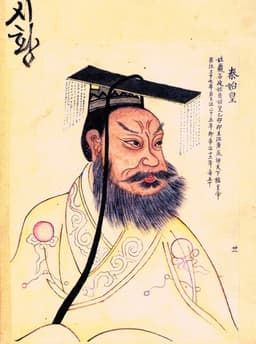
Qin Shi Huang
Emperor · Ancient
85.2Total
Basic Information
Born
1886
-259
Died
1950
-210
Era
Modern
Ancient
Nationality
United States
China
Occupation
General
Emperor
Civilization
Western
Eastern
Score Comparison
Military (10%)
78.0
80.0
Political (20%)
75.0
90.0
Influence (20%)
65.0
85.0
Legacy (20%)
65.0
90.0
Leadership (15%)
78.0
78.0
Strategy (15%)
82.0
82.0
TOTAL
71.5
85.2
Henry Hap Arnold — Complete Timeline
1942 AD
Appointed Commanding General of US Army Air ForcesPolitical Action◆ Major
Arnold was appointed Commanding General of the US Army Air Forces, overseeing the expansion of the air force from 20,000 to 2.5 million personnel. He directed the strategic bombing campaigns in Europe and the Pacific.
World War IIAir ForceCommand
Impact: global
1944 AD
Promoted to General of the Army and General of the Air ForcePolitical Action◆ Major
Arnold was promoted to five-star rank as General of the Army, and later became the only officer to hold five-star rank in two US services when he was also made General of the Air Force. This recognized his role in creating an independent air force.
Military RankAir ForceRecognition
Impact: nationalconstructive
Oversaw Development of B-29 SuperfortressInvention◆ Major
Arnold championed the development and production of the B-29 Superfortress, the most advanced bomber of World War II. The B-29 was used for strategic bombing of Japan and ultimately dropped the atomic bombs.
World War IIAviationBomber
Impact: global
1947 AD
Established the US Air Force as an Independent ServiceReform◆ Major
Arnold was a key advocate for the creation of an independent US Air Force, separate from the Army. The National Security Act of 1947 established the Air Force as a separate service, fulfilling Arnold's long-term goal.
Military ReformAir ForceIndependence
Impact: globalconstructive
Qin Shi Huang — Complete Timeline
246 BC
Construction of the Mausoleum and Terracotta ArmyOther◆ Major
Qin Shi Huang commissioned a vast mausoleum complex near Xi'an, guarded by thousands of life-sized terracotta soldiers, horses, and chariots. The project employed hundreds of thousands of workers and reflected his obsession with immortality and imperial power.
Impact: global
230 BC
Conquest of the Six Warring StatesWar
From 230 to 221 BCE, Ying Zheng led the Qin state in a series of campaigns that conquered the Han, Zhao, Wei, Chu, Yan, and Qi states. This unified China under a single ruler for the first time, ending the Warring States period.
Impact: global
221 BC
Standardization of Writing, Currency, and MeasurementsReform◆ Major
Qin Shi Huang ordered the standardization of Chinese script, currency, and weights and measures across the unified empire. This facilitated administration, trade, and cultural integration, laying a foundation for future dynasties.
Impact: globalconstructive
Proclamation of the Qin DynastyPolitical Action
After conquering the last independent state, Ying Zheng declared himself Shi Huangdi (First Emperor), founding the Qin Dynasty. He adopted a new title to signify his supreme authority and initiated centralized imperial rule.
Impact: global
214 BC
Initiation of the Great Wall ConstructionOther◆ Major
Qin Shi Huang ordered the connection and extension of existing northern fortifications to create a unified defensive wall against nomadic Xiongnu raids. This project involved massive conscripted labor and became the precursor to the later Great Wall.
Impact: regional
213 BC
Burning of Books and Burying of ScholarsPolitical Action◆ Major
On the advice of Li Si, Qin Shi Huang ordered the burning of historical records and philosophical texts not aligned with Legalist doctrine. He also had 460 Confucian scholars buried alive to suppress dissent and consolidate ideological control.
Impact: nationaldestructive
Expert Analysis
henry-hap-arnold-vs-qin-shi-huang
# The Emperor of Earth and the General of the Sky
One man built an army of clay, silent and eternal, buried beneath the earth to guard his tomb for two thousand years. Another built an army of steel and fire, roaring across continents, and lived to see it become the most powerful force ever to dominate the skies. Qin Shi Huang and Henry Hap Arnold never breathed the same air, never shared a century, never faced a common enemy. Yet both were architects of transformation, men who took the raw materials of their age and forged something that had never existed before. The question is not who was greater, but why their paths diverged so sharply—one ending in a tomb of paranoia, the other in the birth of a new service.
Origins
Qin Shi Huang was born Ying Zheng in 259 BC, a prince of the western state of Qin during the blood-soaked Warring States period. His childhood was a crucible of violence and intrigue: his father was a hostage in a rival state, and the boy grew up surrounded by courtiers who whispered of assassination and betrayal. He ascended the throne at thirteen, a puppet in the hands of regents and eunuchs. The world he inherited was one of constant war, where seven kingdoms clawed at each other for supremacy, and where the only law was the sword.
Henry Hap Arnold was born in 1886 in Gladwyne, Pennsylvania, a small-town boy with a restless spirit. His father was a doctor, his mother a devout Christian, and his childhood was one of modest comfort and endless curiosity. He read adventure stories, dreamed of flying, and entered West Point in 1903—not because he loved the army, but because it was the only path to a commission. His era was one of rapid technological change, where the Wright Brothers had just flown at Kitty Hawk and the world was beginning to understand that the horizon was no longer the limit.
The difference in their origins is not just one of time and place. Qin Shi Huang was forged by war and fear; Arnold was shaped by possibility and ambition. One learned that the world was a place to be conquered; the other, that it was a place to be explored.
Rise to Power
Qin Shi Huang’s path to power was a decade-long campaign of annihilation. From 230 to 221 BC, he led the armies of Qin in a series of relentless conquests—Han, Zhao, Wei, Chu, Yan, and finally Qi. Each victory was not a negotiation but an extinction. He did not merely defeat his enemies; he erased their states, their histories, their kings. When the last independent kingdom fell in 221 BC, Ying Zheng declared himself Shi Huangdi—the First Emperor—and proclaimed the Qin Dynasty. He was twenty-eight years old.
Arnold’s rise was slower, less bloody, and far more bureaucratic. He learned to fly in 1911, one of the first military pilots in American history. He trained under the Wright Brothers themselves, and by World War I he was a rising star in the fledgling Air Service. But the interwar years were a long struggle: the Army did not believe in air power, budgets were slashed, and Arnold was nearly court-martialed for his outspoken advocacy. His breakthrough came in 1942, when he was appointed Commanding General of the US Army Air Forces. From there, he oversaw an expansion from 20,000 men to over two million, building the largest air force in history.
Qin Shi Huang took power by the sword; Arnold took it by the memorandum. One conquered states; the other conquered bureaucracies.
Leadership & Governance
As emperor, Qin Shi Huang was a revolutionary administrator. He standardized writing, currency, and weights and measures across his vast empire, creating a unified system that would outlast his dynasty by two millennia. He linked the northern fortifications into what would become the Great Wall, a monumental project of defense and symbolism. He built roads, canals, and a network of imperial highways. His political philosophy was Legalism: strict laws, harsh punishments, and absolute centralization. Dissent was not tolerated. In 213 BC, on the advice of his chancellor Li Si, he ordered the burning of all historical records and philosophical texts not aligned with Legalism, and buried alive 460 scholars. It was control through terror.
Arnold governed differently. He was a builder, not a destroyer. He championed the development of the B-29 Superfortress, the most advanced bomber of its time, and pushed for radar, jet engines, and long-range navigation. He understood that air power was not just about planes but about systems: maintenance depots, training schools, weather forecasting, and logistics. He delegated authority, trusted his commanders, and fought for resources with a relentless optimism. When the atomic bomb was dropped in 1945, it was delivered by a B-29—Arnold’s plane, his vision.
Qin Shi Huang built by crushing; Arnold built by enabling. One saw governance as control; the other saw it as empowerment.
Triumph & Tragedy
Qin Shi Huang’s greatest triumph was unification. He took a fractured world and made it one. His greatest tragedy was the cost: millions died building his projects, his scholars were silenced, his heirs were purged. He became obsessed with immortality, sending expeditions for the elixir of life and constructing his mausoleum—a vast underground palace guarded by the Terracotta Army, thousands of life-sized soldiers, chariots, and horses. He died in 210 BC, on a journey seeking the elixir, and his empire collapsed within four years.
Arnold’s greatest triumph was victory in World War II. His air forces bombed Germany into rubble, destroyed Japan’s cities, and delivered the atomic bombs that ended the war. His greatest tragedy was that he never saw the full fruit of his labor. He retired in 1946, and in 1947, the US Air Force was established as an independent service—the institution he had fought for his entire career. He died in 1950, just three years later, knowing his dream had come true but unable to lead it into the future.
One emperor built a tomb; one general built a service. One died seeking eternal life; the other died knowing his legacy was airborne.
Character & Destiny
Qin Shi Huang’s character was shaped by paranoia. He slept in different rooms each night, never announced his routes, and executed those who revealed his secrets. He trusted no one, not even his own sons. His obsession with control led to his downfall: the Legalist system he created was so harsh that it bred rebellion, and his successors were too weak to maintain it.
Arnold’s character was shaped by optimism. He believed in the future, in technology, in the power of young men and women to rise to challenges. He was not a genius strategist—his military score of 79.6 reflects a competent but not brilliant tactician—but he was a brilliant organizer. He understood that the key to victory was not one great battle but a thousand small decisions, made by thousands of people, coordinated across continents.
One man saw the world as a fortress to be guarded; the other saw it as a sky to be claimed.
Legacy
Qin Shi Huang left a unified China—a concept that would endure despite centuries of division and conquest. He left the Terracotta Army, a wonder of the world. He left a model of centralized imperial rule that would be copied by every Chinese dynasty for two thousand years. But he also left a warning: power without mercy is brittle.
Arnold left the United States Air Force, the most powerful military aviation force in history. He left a doctrine of strategic bombing, a belief that air power could win wars without ground combat. He left a legacy of innovation, of pushing boundaries, of believing that the impossible was just a problem waiting to be solved. His influence score of 70.0 is modest, but his impact is incalculable: every pilot who flies for the US Air Force flies in his shadow.
Conclusion
Standing before the Terracotta Army, one feels the weight of eternity—the silence of thousands of soldiers, frozen in clay, waiting for a command that will never come. Standing before a B-29 Superfortress, one feels the rush of motion—the roar of engines, the promise of flight, the certainty that this machine was built to change the world.
Qin Shi Huang built an army that could not die. Henry Hap Arnold built an army that could not be stopped. One looked backward, to a world of order and control; the other looked forward, to a world of speed and possibility. Both succeeded. Both failed. But the difference between them is the difference between earth and sky: one buried his dream, and the other set it free.
Rankings
🥇
Qin Shi HuangLeader
Mil: 80.0Pol: 90.0Inf: 85.0
85.2
🥈
Henry Hap Arnold
Mil: 78.0Pol: 75.0Inf: 65.0
71.5
+13.7 behind
How This Comparison Works
Algorithm
Each figure is scored on 6 dimensions (0—100 scale) based on structured historical data: Military (10%), Political (20%), Influence (20%), Legacy (20%), Leadership (15%), Strategy (15%). The weighted total produces the final ranking.
Data Sources
Scores are computed from structured sub-indicators in the database. Scale factors adjust for era (Ancient ×0.85, Modern ×1.0) and civilization size (Eastern ×1.05, Other ×0.80) to account for differences in population and military scale.
Maximum 3 Figures
Comparisons are limited to 2—3 figures to ensure readability and statistical meaningfulness.
Error Margins
±5 points per dimension — Sub-scores are derived from historical records with inherent uncertainty. Two figures within 5 points on a dimension should be considered roughly equivalent in that area.
Total Score Accuracy
±3 points overall — The weighted combination of 6 dimensions produces a total score with approximately ±3 points of uncertainty. Differences of less than 3 points are not statistically significant— the figures are effectively tied.
Known Limitations
- Historical records are incomplete and uneven across civilizations
- Figures from oral-tradition societies may be underrepresented
- Occupation labels can misclassify multi-role figures
- Scores measure capability and impact, not moral character
- Quantitative scoring is a comparison tool, not absolute truth
Capability Radar
Military (10%) — Battles & Warfare
Battles
60
85
Win Rate
75
90
Expansion
90
90
Political (20%) — Governance & Reform
Reform
85
95
Diplomacy
80
75
Economy
75
90
Influence (20%) — Cultural & Global Reach
Cultural
60
95
Global
85
85
Legacy (20%) — Historical Impact
Historical
85
95
Longevity
70
95
Leadership (15%) — Power & Stability
Tenure
70
70
Stability
80
65
Strategy (15%) — Tactics & Innovation
Strategy
95
85
Tactics
70
80
Reform
95
95
Similar Comparisons
Comments & Discussion
ClayOverlord6/17/2026
Qin Shi Huang unified China with iron discipline; Hap Arnold birthed air power from ambition. But let’s be real—one’s legacy is a pile of broken terra-cotta in a dusty pit, the other’s is the US Air Force dominating every conflict since WWII. Arnold took an unproven technology and made it a war-winning instrument; the First Emperor used mass conscription and burned books. Give me the sky general over the paranoid clay king any day. History favors the forward-thinker.
兵马俑愤青6/17/2026
拿秦始皇和哈普·阿诺德比?搞笑吧!一个靠活人陪葬、焚书坑儒的暴君,一个创立了现代空军体系的战略家。阿诺德在二战让B-29炸平日本,直接终结战争;秦始皇修完长城就烂尾,留下个作秀的陵墓。别提“统一文字”那套老生常谈——没有思想自由,统一就是个空壳。我站阿诺德,飞行天才吊打泥巴皇帝。
DataSkepticDan6/17/2026
Numbers don’t lie: Qin’s terra-cotta army had roughly 8,000 soldiers; Arnold’s USAAF peaked at 2.4 million personnel by 1944. Scale matters. The First Emperor’s tomb is a static memorial; Arnold built a dynamic institution that reshaped global warfare. One inspired a Disney movie; the other inspired a branch of government. Objectively, Arnold’s impact—like bomb tonnage—is measurable in real-time history, not archaeological guesswork. Qin wins the art project; Arnold wins the world.
竹林隐士6/17/2026
你们都被西方的“进步叙事”洗脑了。阿诺德强在技术迭代,秦始皇强在文明架构。秦朝创建的郡县制、书同文车同轨,至今影响中国治理——美国空军能持续两千年吗?别拿短期效果碾压长期价值。阿诺德炸毁了城市,秦始皇统一了人心。历史不是军备竞赛,是文明韧性。我选秦始皇,他的帝国蓝图没被导弹取代。
ClassicsProf6/17/2026
Arnold’s air campaigns were brilliant, but Qin Shi Huang’s ambition was metaphysical—he sought to unify heaven and earth, even engineering his own immortality rituals. Arnold operated within the known; the First Emperor pushed beyond it, commissioning the Lingqu Canal and standardizing script. One built an air force; the other built a soul for China. Give me the man who dared to challenge mortality over the one who merely mastered mortars.