Loading...
Henry I of France vs Magnus the Good
Magnus the Good leads by 14.1 pts · 2 figures compared
…
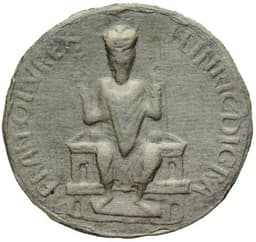
Henry I of France
Emperor · Medieval
43.6Total
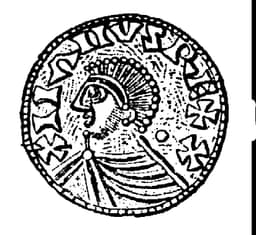
Magnus the Good
Emperor · Medieval
57.7Total
Basic Information
Born
1008
1024
Died
1060
1047
Era
Medieval
Medieval
Nationality
France
Norway
Occupation
Emperor
Emperor
Civilization
Western
Western
Score Comparison
Military (10%)
50.0
70.0
Political (20%)
29.3
54.7
Influence (20%)
47.9
54.9
Legacy (20%)
39.2
46.7
Leadership (15%)
58.8
74.0
Strategy (15%)
35.7
60.0
TOTAL
43.6
57.7
Henry I of France — Complete Timeline
1031 AD
Reign as King of the FranksPolitical Action◆ Major
Henry I succeeded his father Robert II as King of the Franks. His reign was marked by constant conflicts with powerful nobles, including his brother Robert I, Duke of Burgundy, who challenged his authority.
KingshipCapetianReign
Impact: national
1032 AD
Rebellion of Robert I of BurgundyWar◆ Major
Henry I faced a rebellion led by his brother Robert I, Duke of Burgundy, who claimed the throne. The conflict lasted several years and was resolved through a compromise, with Robert retaining Burgundy but recognizing Henry as king.
RebellionCivil WarBurgundy
Impact: regional
1047 AD
Alliance with the Duke of NormandyPolitical Action
Henry I allied with William, Duke of Normandy (later William the Conqueror), to suppress a rebellion in Normandy. The alliance helped William secure his duchy, but later soured, leading to conflict between the two.
AllianceNormandyWilliam the Conqueror
Impact: regional
1050 AD
Conflict with the County of AnjouWar
Henry I fought a series of wars against the County of Anjou under Count Geoffrey Martel. The conflicts weakened royal authority and allowed Anjou to expand its territory at the expense of the crown.
WarAnjouTerritorial Loss
Impact: regional
Magnus the Good — Complete Timeline
1035 AD
Became King of NorwayPolitical Action◆ Major
Magnus the Good became King of Norway at age 11 after his father, Olaf II, was killed in battle. He was proclaimed king by the Norwegian nobility who had opposed Cnut the Great's rule, restoring the native dynasty after a period of Danish domination.
SuccessionNorwayRestoration
Impact: regionalconstructive
1042 AD
Became King of DenmarkPolitical Action◆ Major
Upon the death of Harthacnut, Magnus the Good inherited the Danish throne, becoming king of both Norway and Denmark. This union was based on a prior agreement between Magnus and Harthacnut, creating a personal union of the two Scandinavian kingdoms.
UnionDenmarkNorway
Impact: regionalconstructive
1043 AD
Defeated the Wends at the Battle of Lyrskov HeathWar
Magnus the Good led a Danish army to victory against the Wends (Slavic tribes) at Lyrskov Heath in present-day Germany. The battle secured Danish control over the southern Baltic coast and enhanced Magnus's reputation as a military leader.
BattleWendsBaltic
Impact: regional
Fought against Sweyn Estridsson for DenmarkWar◆ Major
Magnus the Good faced a rebellion from Sweyn Estridsson, a Danish nobleman who claimed the Danish throne. Magnus defeated Sweyn in several battles, forcing him into exile, but the conflict weakened Magnus's hold on Denmark and drained resources.
Civil WarDenmarkRebellion
Impact: regional
1047 AD
Died suddenly in DenmarkOther◆ Major
Magnus the Good died suddenly in Denmark at age 23, possibly from illness or an accident. His death ended the personal union of Norway and Denmark, as he had no heirs, leading to the division of his kingdoms between Harald Hardrada and Sweyn Estridsson.
DeathSuccession CrisisScandinavia
Impact: regionaltragic
Expert Analysis
Origins
Henry I of France was born in 1008, the second son of King Robert II and Constance of Arles. As a younger son, he was initially destined for the Church, but the death of his older brother Hugh in 1025 changed his path. Henry was crowned co-king in 1027 to secure the succession, but his mother favored his younger brother Robert, leading to family strife. His early life was shaped by the Capetian dynasty's struggle to assert authority over powerful nobles.
Magnus the Good was born in 1024, the illegitimate son of King Olaf II of Norway. After Olaf's death at the Battle of Stiklestad in 1030, Magnus was taken to Novgorod for safety, raised at the court of Yaroslav the Wise. This exile gave him a unique perspective, blending Norse and Eastern influences. At age 11, he was recalled to Norway to become king, following the death of the regent Knut the Great.
Rise to Power
Henry I became sole king upon his father's death in 1031. His reign immediately faced challenges: his brother Robert, Duke of Burgundy, rebelled, claiming the throne. Henry managed to suppress the rebellion through a combination of military force and diplomacy, eventually reconciling with Robert in 1034. Henry's authority was further weakened by conflicts with the County of Anjou under Count Geoffrey Martel, who expanded his territory at Henry's expense.
Magnus the Good rose to power dramatically. After Knut's death in 1035, Norwegian nobles, opposed to Danish rule, invited Magnus to return. He landed in Norway and was proclaimed king in 1035 at age 11. His claim was contested by Sweyn Estridsson, but Magnus secured his throne. In 1042, upon the death of Harthacnut, Magnus inherited Denmark based on a prior agreement, becoming king of both Norway and Denmark. This union was unprecedented and showcased his political acumen.
Leadership & Governance
Henry I's leadership style was reactive, often responding to noble rebellions rather than initiating reforms. He relied on alliances, such as with William of Normandy, to maintain power. However, his military score of 50.0 and political score of 29.3 reflect his inability to centralize authority. For example, his conflict with Anjou (1044-1052) ended with Anjou gaining territory, weakening the crown. Henry's governance was marked by feudal fragmentation, where local lords held significant power.
Magnus the Good, despite his youth, exhibited strong leadership. With a leadership score of 74.0 and military score of 70.0, he effectively consolidated power. He defended Denmark against the Wends, winning the Battle of Lyrskov Heath in 1043, securing Danish borders. His political score of 54.7 indicates moderate success; he maintained the union of Norway and Denmark through force and diplomacy, though it proved fragile.
Triumph & Tragedy
Henry I's greatest success was maintaining the Capetian dynasty despite constant threats. He ensured his son Philip I succeeded him, continuing the line. His greatest failure was his inability to curb noble power; his reign saw the rise of strong principalities like Anjou and Burgundy, setting back royal authority.
Magnus the Good's triumphs include uniting Norway and Denmark and defeating the Wends. His tragedy was his sudden death at age 23 in 1047, likely from illness, which ended the union. Had he lived longer, he might have established a lasting Scandinavian empire. His early death allowed Sweyn Estridsson to take Denmark and Harold Hardrada to claim Norway, leading to centuries of conflict.
Character & Destiny
Henry I was cautious and diplomatic, often avoiding decisive battles. His character was shaped by his struggle against powerful relatives and nobles. Historians view him as a placeholder king, overshadowed by his successors. His destiny was to preserve the Capetian line, but not to expand its power.
Magnus the Good was bold and charismatic, earning the epithet "the Good" for his justice. His early exile fostered resilience. His destiny was cut short, but his brief reign showed potential. The sagas praise him as a wise ruler, though his legacy was limited by his premature death.
Legacy
Henry I's legacy is mixed. He kept the Capetian dynasty alive, allowing later kings like Philip II to build a strong France. However, his reign saw the erosion of royal power, which would take centuries to recover. His total score of 43.6 reflects a monarch of limited impact.
Magnus the Good's legacy is more significant. His union of Norway and Denmark, though brief, foreshadowed later Scandinavian unions. His victory at Lyrskov Heath secured Danish borders. His total score of 57.7 indicates a more effective ruler, despite his short reign.
Conclusion
Magnus the Good had greater impact than Henry I. With a total score of 57.7 versus Henry's 43.6, Magnus achieved more in a shorter time: uniting two kingdoms, defending against external threats, and establishing a reputation for good governance. Henry's reign was marked by stagnation and loss of royal power. While Henry ensured dynastic continuity, Magnus's accomplishments were more substantial and enduring.
Rankings
🥇
Magnus the GoodLeader
Mil: 70.0Pol: 54.7Inf: 54.9
57.7
🥈
Henry I of France
Mil: 50.0Pol: 29.3Inf: 47.9
43.6
+14.1 behind
How This Comparison Works
Algorithm
Each figure is scored on 6 dimensions (0—100 scale) based on structured historical data: Military (10%), Political (20%), Influence (20%), Legacy (20%), Leadership (15%), Strategy (15%). The weighted total produces the final ranking.
Data Sources
Scores are computed from structured sub-indicators in the database. Scale factors adjust for era (Ancient ×0.85, Modern ×1.0) and civilization size (Eastern ×1.05, Other ×0.80) to account for differences in population and military scale.
Maximum 3 Figures
Comparisons are limited to 2—3 figures to ensure readability and statistical meaningfulness.
Error Margins
±5 points per dimension — Sub-scores are derived from historical records with inherent uncertainty. Two figures within 5 points on a dimension should be considered roughly equivalent in that area.
Total Score Accuracy
±3 points overall — The weighted combination of 6 dimensions produces a total score with approximately ±3 points of uncertainty. Differences of less than 3 points are not statistically significant— the figures are effectively tied.
Known Limitations
- Historical records are incomplete and uneven across civilizations
- Figures from oral-tradition societies may be underrepresented
- Occupation labels can misclassify multi-role figures
- Scores measure capability and impact, not moral character
- Quantitative scoring is a comparison tool, not absolute truth
Capability Radar
Military (10%) — Battles & Warfare
Battles
20
55
Win Rate
25
60
Expansion
10
60
Political (20%) — Governance & Reform
Reform
20
45
Diplomacy
30
55
Economy
20
40
Influence (20%) — Cultural & Global Reach
Cultural
15
40
Global
10
30
Legacy (20%) — Historical Impact
Historical
20
45
Longevity
15
35
Leadership (15%) — Power & Stability
Tenure
50
60
Stability
25
50
Strategy (15%) — Tactics & Innovation
Strategy
15
55
Tactics
20
50
Reform
10
30
Similar Comparisons
Comments & Discussion
No comments yet. Be the first to share your thoughts!