Loading...
Henry I of France vs Sikandar Lodi
Sikandar Lodi leads by 16.2 pts · 2 figures compared
…
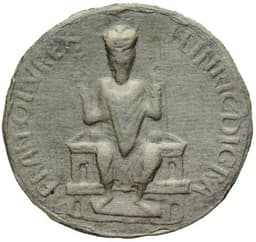
Henry I of France
Emperor · Medieval
43.6Total

Sikandar Lodi
Emperor · Medieval
59.8Total
Basic Information
Born
1008
1458
Died
1060
1517
Era
Medieval
Medieval
Nationality
France
India
Occupation
Emperor
Emperor
Civilization
Western
Indian
Score Comparison
Military (10%)
50.0
70.0
Political (20%)
29.3
68.0
Influence (20%)
47.9
54.9
Legacy (20%)
39.2
49.2
Leadership (15%)
58.8
74.0
Strategy (15%)
35.7
55.0
TOTAL
43.6
59.8
Henry I of France — Complete Timeline
1031 AD
Reign as King of the FranksPolitical Action◆ Major
Henry I succeeded his father Robert II as King of the Franks. His reign was marked by constant conflicts with powerful nobles, including his brother Robert I, Duke of Burgundy, who challenged his authority.
KingshipCapetianReign
Impact: national
1032 AD
Rebellion of Robert I of BurgundyWar◆ Major
Henry I faced a rebellion led by his brother Robert I, Duke of Burgundy, who claimed the throne. The conflict lasted several years and was resolved through a compromise, with Robert retaining Burgundy but recognizing Henry as king.
RebellionCivil WarBurgundy
Impact: regional
1047 AD
Alliance with the Duke of NormandyPolitical Action
Henry I allied with William, Duke of Normandy (later William the Conqueror), to suppress a rebellion in Normandy. The alliance helped William secure his duchy, but later soured, leading to conflict between the two.
AllianceNormandyWilliam the Conqueror
Impact: regional
1050 AD
Conflict with the County of AnjouWar
Henry I fought a series of wars against the County of Anjou under Count Geoffrey Martel. The conflicts weakened royal authority and allowed Anjou to expand its territory at the expense of the crown.
WarAnjouTerritorial Loss
Impact: regional
Sikandar Lodi — Complete Timeline
1500 AD
Promotion of Trade and CommerceReform
Sikandar Lodi implemented policies to promote trade, including standardizing weights and measures and reducing customs duties. He also improved roads and security for merchants. These measures boosted the economy of the Lodi Sultanate.
Economic PolicyTradeInfrastructure
Impact: nationalconstructive
1503 AD
Suppression of the Rebellion of Barbak ShahWar
Sikandar Lodi crushed a rebellion led by his brother Barbak Shah, the governor of Jaunpur. He defeated Barbak's forces and reasserted central authority. This internal conflict weakened the Lodi dynasty's stability.
Civil WarRebellionDynastic Conflict
Impact: nationaldestructive
1504 AD
Founding of AgraCultural◆ Major
Sikandar Lodi founded the city of Agra on the banks of the Yamuna River. He moved his capital there from Delhi, building a fort and palaces. Agra later became a major Mughal city under Akbar.
City FoundingUrban PlanningCapital Shift
Impact: regionalconstructive
1506 AD
Conquest of GwaliorWar◆ Major
Sikandar Lodi led a campaign against the Tomara kingdom of Gwalior. He captured the Gwalior Fort after a long siege, defeating Raja Man Singh Tomar. This extended Lodi control into central India.
Military CampaignGwalior FortTerritorial Expansion
Impact: regionaldestructive
Expert Analysis
Origins
Henry I of France (born 1008) was the son of King Robert II and Constance of Arles. He belonged to the Capetian dynasty, which had ruled France since 987. His upbringing was marked by court intrigue, particularly with his mother favoring his younger brother Robert. Henry was crowned co-king in 1027 to secure succession, but his mother's plots continued. He received a traditional education for a medieval prince, focusing on military training and governance.
Sikandar Lodi (born 1458) was the second ruler of the Lodi dynasty in the Delhi Sultanate. His father was Sultan Bahlul Lodi, who founded the dynasty. Sikandar's mother was a Hindu princess, which influenced his later policies of tolerance. He was well-educated in Persian, Arabic, and military strategy. He served as governor of various provinces under his father, gaining administrative experience.
Rise to Power
Henry I ascended the throne in 1031 upon his father's death. However, his mother Constance immediately plotted to replace him with his younger brother Robert. Henry was forced to flee Paris and seek support from the Duke of Normandy. With Norman aid, he returned and secured his position, but the rebellion of Robert I of Burgundy (his brother) erupted in 1032. After several years of conflict, Henry recognized Robert's claim to Burgundy in 1034, ending the rebellion. This compromise weakened royal authority but preserved the throne.
Sikandar Lodi came to power in 1489 after his father's death. He faced a challenge from his brother Barbak Shah, who had been governor of Jaunpur and declared independence. Sikandar marched against him, defeated his forces in 1490, and reasserted central control. He then turned to expanding the sultanate, beginning with the conquest of Gwalior in 1492, which took two years. His rise was characterized by military campaigns and administrative consolidation.
Leadership & Governance
Henry I's leadership was reactive and defensive. He spent most of his reign suppressing rebellions and defending royal domains. His military score of 50.0 reflects his inability to decisively defeat enemies; he often relied on alliances, such as with the Duke of Normandy. His political score of 29.3 indicates weak central authority—he failed to curb the power of nobles like Geoffrey Martel of Anjou, who expanded his territory at Henry's expense. Henry's governance was constrained by the feudal system, where he was first among equals rather than an absolute ruler.
Sikandar Lodi's leadership was more proactive and centralized. He scored 74.0 in leadership, reflecting his ability to expand the sultanate and implement reforms. He founded Agra in 1504, moving the capital from Delhi to a more strategic location. He standardized weights and measures, reduced customs duties, and improved roads to promote trade. His political score of 68.0 shows effective governance, though he faced rebellions. He was known for religious tolerance, appointing Hindus to high positions, which helped stabilize his realm.
Triumph & Tragedy
Henry I's greatest success was maintaining the Capetian dynasty despite constant challenges. He secured the succession of his son Philip I, ensuring continuity. However, his reign saw the erosion of royal power: the County of Anjou expanded, and the Duke of Normandy (William) became too powerful after Henry supported him. Henry's attempt to check William's power failed, leading to the Norman conquest of England in 1066, which eventually threatened France. His greatest failure was his inability to strengthen the monarchy, leaving it weaker than he found it.
Sikandar Lodi's triumphs include founding Agra, which later became the capital of the Mughal Empire, and conquering Gwalior. He expanded the Lodi territory significantly. His trade policies boosted the economy. However, his failure to secure a stable succession led to conflict after his death. He also failed to fully subdue the Rajput states, leaving them as potential threats. His religious tolerance, while positive, alienated some orthodox Muslim nobles.
Character & Destiny
Henry I was cautious and pragmatic, often choosing compromise over confrontation. This trait preserved his throne but prevented strong centralization. He was described by contemporaries as pious but weak. His destiny was shaped by the feudal context; he could not transcend the limitations of his era. His legacy score of 39.2 reflects his modest impact.
Sikandar Lodi was ambitious and strategic, with a vision for a centralized state. He was also scholarly, building libraries and patronizing learning. His character drove expansion and reform, but his authoritarian streak led to suppression of dissent. His destiny was to build a foundation that later rulers would build upon.
Legacy
Henry I's legacy is minimal: he is often overshadowed by his predecessors and successors. He did little to advance the Capetian dynasty's power; his son Philip I inherited a kingdom still plagued by noble rebellions. His main contribution was surviving and passing on the crown. In history, he is a footnote, with a legacy score of 39.2.
Sikandar Lodi's legacy is more tangible. Agra continues to be a major city. His administrative reforms influenced later sultans and the Mughals. However, the Lodi dynasty fell in 1526 to Babur, partly due to succession weaknesses. His legacy score of 49.2 reflects his enduring impact, though not transformative.
Conclusion
Sikandar Lodi had a greater impact than Henry I of France. With a total score of 59.8 versus Henry's 43.6, Sikandar's military (70.0 vs 50.0), political (68.0 vs 29.3), and leadership (74.0 vs 58.8) scores are significantly higher. He founded a city, expanded territory, and implemented reforms that outlasted his dynasty. Henry, despite his longer reign, failed to strengthen the monarchy and left no enduring achievements. Thus, Sikandar Lodi is the more consequential ruler.
Rankings
🥇
Sikandar LodiLeader
Mil: 70.0Pol: 68.0Inf: 54.9
59.8
🥈
Henry I of France
Mil: 50.0Pol: 29.3Inf: 47.9
43.6
+16.2 behind
How This Comparison Works
Algorithm
Each figure is scored on 6 dimensions (0—100 scale) based on structured historical data: Military (10%), Political (20%), Influence (20%), Legacy (20%), Leadership (15%), Strategy (15%). The weighted total produces the final ranking.
Data Sources
Scores are computed from structured sub-indicators in the database. Scale factors adjust for era (Ancient ×0.85, Modern ×1.0) and civilization size (Eastern ×1.05, Other ×0.80) to account for differences in population and military scale.
Maximum 3 Figures
Comparisons are limited to 2—3 figures to ensure readability and statistical meaningfulness.
Error Margins
±5 points per dimension — Sub-scores are derived from historical records with inherent uncertainty. Two figures within 5 points on a dimension should be considered roughly equivalent in that area.
Total Score Accuracy
±3 points overall — The weighted combination of 6 dimensions produces a total score with approximately ±3 points of uncertainty. Differences of less than 3 points are not statistically significant— the figures are effectively tied.
Known Limitations
- Historical records are incomplete and uneven across civilizations
- Figures from oral-tradition societies may be underrepresented
- Occupation labels can misclassify multi-role figures
- Scores measure capability and impact, not moral character
- Quantitative scoring is a comparison tool, not absolute truth
Capability Radar
Military (10%) — Battles & Warfare
Battles
20
55
Win Rate
25
60
Expansion
10
60
Political (20%) — Governance & Reform
Reform
20
50
Diplomacy
30
55
Economy
20
50
Influence (20%) — Cultural & Global Reach
Cultural
15
40
Global
10
30
Legacy (20%) — Historical Impact
Historical
20
50
Longevity
15
45
Leadership (15%) — Power & Stability
Tenure
50
65
Stability
25
45
Strategy (15%) — Tactics & Innovation
Strategy
15
55
Tactics
20
50
Reform
10
45
Similar Comparisons
Comments & Discussion
No comments yet. Be the first to share your thoughts!