Loading...
Henry II of Champagne vs Napoleon Bonaparte
Napoleon Bonaparte leads by 32.9 pts · 2 figures compared
…
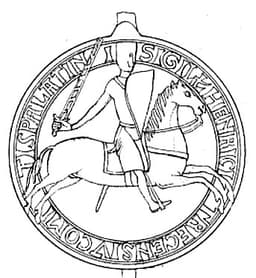
Henry II of Champagne
Emperor · Medieval
38.0Total

Napoleon Bonaparte
General · Modern
70.9Total
Basic Information
Born
1166
1769
Died
1197
1821
Era
Medieval
Modern
Nationality
Kingdom of Jerusalem
France
Occupation
Emperor
General
Civilization
Western
Western
Score Comparison
Military (10%)
10.2
94.0
Political (20%)
33.6
72.0
Influence (20%)
49.4
40.0
Legacy (20%)
37.5
80.0
Leadership (15%)
41.5
78.0
Strategy (15%)
39.6
90.0
TOTAL
38.0
70.9
Henry II of Champagne — Complete Timeline
1192 AD
Marriage to Isabella of JerusalemPolitical Action◆ Major
Henry II married Isabella I of Jerusalem, becoming king-consort of the Kingdom of Jerusalem. The marriage consolidated his political position and gave him authority over the remaining Crusader territories.
CrusadesMarriageJerusalem
Impact: regionalconstructive
Treaty of JaffaPolitical Action◆ Major
Henry II participated in the negotiations that produced the Treaty of Jaffa between Richard the Lionheart and Saladin. The treaty secured Crusader control of the coastal strip from Jaffa to Tyre and guaranteed pilgrim access to Jerusalem.
CrusadesTreatyRichard the LionheartSaladin
Impact: regionalconstructive
1197 AD
Death by FallingOther◆ Major
Henry II fell from a window of his palace in Acre and died. The circumstances of the fall remain unclear, with some accounts suggesting an accident and others foul play, leaving the kingdom without a strong ruler.
CrusadesDeathAccident
Impact: regionaltragic
Napoleon Bonaparte — Complete Timeline
1799 AD
Coup of 18 BrumaireOther◆ Major
Napoleon Bonaparte, with support from his brother Lucien and key political figures, overthrew the Directory in a bloodless coup. He established the Consulate with himself as First Consul, effectively becoming the ruler of France. This event ended the French Revolution's most unstable period.
French RevolutionCoupRise to Power
Impact: regional
1804 AD
Promulgation of the Napoleonic CodeOther◆ Major
Napoleon enacted the Civil Code of the French, known as the Napoleonic Code, a comprehensive set of laws that replaced the fragmented feudal legal systems. The code established legal equality, protected property rights, and secularized law. It became the basis for legal systems in many European and world countries.
Legal ReformNapoleonic CodeCivil Law
Impact: globalconstructive
1805 AD
Battle of AusterlitzWar◆ Major
Napoleon's Grande Arm
Napoleonic WarsBattleDecisive Victory
Impact: global
1812 AD
Invasion of RussiaWar◆ Major
Napoleon led the Grande Arm
Napoleonic WarsInvasionDisaster
Impact: globaldestructive
1815 AD
Battle of WaterlooWar◆ Major
Napoleon's French army was defeated by the combined forces of the Duke of Wellington's Anglo-Allied army and Gebhard Leberecht von Bl
Napoleonic WarsBattleFinal Defeat
Impact: globaldestructive
Expert Analysis
Napoleon Bonaparte vs Henry II of Champagne
# The Emperor and the Consort: Two Fates on History’s Stage
In the spring of 1197, a king fell from a window in Acre, his body broken on the stones below. In the spring of 1815, an emperor marched north from Elba, his ambition unbroken, to reclaim a continent. One man’s death was an accident, almost an afterthought in the annals of the Crusades; the other’s return was a thunderclap that shook Europe to its foundations. What separates a figure who becomes a footnote from one who becomes a legend? The answer lies not merely in talent, but in the currents of history that carry some men to glory and others to oblivion.
Origins
Napoleon Bonaparte was born in 1769 on Corsica, an island that had just passed from Italian to French control. His family belonged to the minor nobility, but they were poor, and young Napoleon grew up with the chip of provincial resentment on his shoulder. He spoke French with an Italian accent, and his schoolmates mocked him. This outsider’s hunger drove him—he devoured military history, studied artillery science, and dreamed of conquest. The French Revolution, erupting when he was twenty, tore down the old aristocratic order and flung open doors that had been bolted shut. A brilliant commoner could now rise faster than any noble.
Henry II of Champagne was born in 1166 into the highest echelons of medieval aristocracy. His uncle was Richard the Lionheart; his father was Count Henry I of Champagne. He inherited lands, titles, and connections. He never had to claw his way upward—the world was already arranged for his comfort. But that very ease may have dulled his edge. Where Napoleon’s hunger was forged in deprivation, Henry’s ambition was tempered by privilege. He arrived in the Holy Land not as a conqueror, but as a pilgrim who stumbled into a crown.
Rise to Power
Napoleon’s ascent was meteoric. In 1793, at age twenty-four, he drove the British out of Toulon with a daring artillery plan. By 1796, he was commanding the Army of Italy, where he won a series of stunning victories against the Austrians. He knew how to exploit terrain, how to concentrate his forces at the decisive point, and—most crucially—how to inspire his men. “I am but a man,” he once said, “but I am a man who never rests.” By 1799, he had seized power as First Consul, and by 1804, he crowned himself Emperor of the French.
Henry’s rise was gentler, more accidental. In 1192, after the death of Conrad of Montferrat, the kingdom of Jerusalem needed a king-consort for Queen Isabella. Henry was available, well-connected, and willing. He married Isabella and became king-consort—a title that sounded grand but carried little real authority. He participated in the Treaty of Jaffa that same year, a truce between Richard the Lionheart and Saladin that ended the Third Crusade. He was a mediator, not a commander. He did not seize power; power settled upon him like dust.
Leadership & Governance
Napoleon ruled as a titan. He reorganized France’s legal system into the Napoleonic Code, a rational, secular framework that influenced civil law across Europe and beyond. He centralized the state, reformed education, and created a merit-based bureaucracy. On the battlefield, he was nearly peerless: his 93.0 military score and 94.0 strategy rating reflect a mind that could orchestrate armies like an orchestra. At Austerlitz in 1805, he destroyed a combined Russian-Austrian army with a feigned retreat that remains a textbook maneuver. He governed with energy, vision, and an iron will.
Henry governed as a caretaker. His scores tell the story: military 43.3, strategy 32.0, leadership 37.1. He held the kingdom together during a fragile truce, but he had no grand vision, no reform, no lasting institution. The Crusader states were already crumbling, dependent on European reinforcements that never arrived. Henry managed, but he did not transform. He was a steward, not a builder.
Triumph & Tragedy
Napoleon’s greatest triumph was his empire at its height in 1810: he ruled from Madrid to Warsaw, his brothers sat on thrones, and his code governed millions. His tragedy was his fall. The invasion of Russia in 1812 destroyed his Grand Army—half a million men lost to winter, hunger, and guerrilla attacks. The Battle of the Nations at Leipzig in 1813 broke his power. Exiled to Elba, he escaped, only to meet final defeat at Waterloo in 1815. He died in 1821 on Saint Helena, a prisoner of the British, abandoned by the world.
Henry’s triumph was modest: he kept the Kingdom of Jerusalem alive for five years during a precarious peace. His tragedy was his death—a fall from a window in Acre in 1197, possibly accidental, possibly murder. He left no great reforms, no stunning victories, no epic defeats. He simply vanished from the stage, a king who fell before he ever truly rose.
Character & Destiny
Napoleon was a force of nature: restless, brilliant, ruthless. He believed he was destined for greatness, and his confidence became self-fulfilling. “Impossible,” he once said, “is a word to be found only in the dictionary of fools.” He drove himself and others relentlessly, and that drive created an empire—but it also destroyed it. His hubris, his refusal to compromise, his endless hunger for more—these were the same qualities that made him great and doomed him.
Henry was a creature of circumstance. He did not seek greatness; it came to him. He did not resist fate; he accepted it. His character was cautious, diplomatic, and unremarkable. He was not a fool, but he was not a genius either. He was a man who lived in the shadow of giants—Richard, Saladin, his own uncle—and that shadow swallowed him.
Legacy
Napoleon’s legacy is immense. The Napoleonic Code still shapes legal systems in Europe and the Americas. His military innovations—the corps system, mass conscription, rapid maneuver—revolutionized warfare. His name is synonymous with ambition, genius, and catastrophe. He is remembered as one of the most influential figures in Western history.
Henry’s legacy is a footnote. He appears in histories of the Crusades as a minor character, a king who fell from a window. His 65.6 influence score and 49.4 legacy rating reflect his obscurity. He is remembered by specialists, not by the world.
Conclusion
Napoleon and Henry lived in different eras, but the gulf between them is not just about time—it is about will. Napoleon shaped history because he demanded to; Henry was shaped by history because he accepted it. One man saw the world as clay to be molded; the other saw it as a stage to be occupied. Their scores tell the story: Napoleon’s total of 82.4 against Henry’s 46.6 is not merely a measure of achievement, but of the force of personality. In the end, we remember those who refused to be forgotten, and we forget those who accepted their place in the shadows.
Rankings
🥇
Napoleon BonaparteLeader
Mil: 94.0Pol: 72.0Inf: 40.0
70.9
🥈
Henry II of Champagne
Mil: 10.2Pol: 33.6Inf: 49.4
38.0
+32.9 behind
How This Comparison Works
Algorithm
Each figure is scored on 6 dimensions (0—100 scale) based on structured historical data: Military (10%), Political (20%), Influence (20%), Legacy (20%), Leadership (15%), Strategy (15%). The weighted total produces the final ranking.
Data Sources
Scores are computed from structured sub-indicators in the database. Scale factors adjust for era (Ancient ×0.85, Modern ×1.0) and civilization size (Eastern ×1.05, Other ×0.80) to account for differences in population and military scale.
Maximum 3 Figures
Comparisons are limited to 2—3 figures to ensure readability and statistical meaningfulness.
Error Margins
±5 points per dimension — Sub-scores are derived from historical records with inherent uncertainty. Two figures within 5 points on a dimension should be considered roughly equivalent in that area.
Total Score Accuracy
±3 points overall — The weighted combination of 6 dimensions produces a total score with approximately ±3 points of uncertainty. Differences of less than 3 points are not statistically significant— the figures are effectively tied.
Known Limitations
- Historical records are incomplete and uneven across civilizations
- Figures from oral-tradition societies may be underrepresented
- Occupation labels can misclassify multi-role figures
- Scores measure capability and impact, not moral character
- Quantitative scoring is a comparison tool, not absolute truth
Capability Radar
Military (10%) — Battles & Warfare
Battles
10
95
Win Rate
10
90
Expansion
5
95
Political (20%) — Governance & Reform
Reform
20
95
Diplomacy
40
80
Economy
25
85
Influence (20%) — Cultural & Global Reach
Cultural
15
85
Global
10
90
Legacy (20%) — Historical Impact
Historical
15
95
Longevity
10
90
Leadership (15%) — Power & Stability
Tenure
30
85
Stability
20
70
Strategy (15%) — Tactics & Innovation
Strategy
10
95
Tactics
10
98
Reform
5
92
Similar Comparisons
Comments & Discussion
No comments yet. Be the first to share your thoughts!