Loading...
Henry II of Champagne vs Taejo of Joseon
Taejo of Joseon leads by 32.4 pts · 2 figures compared
…
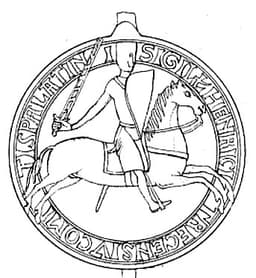
Henry II of Champagne
Emperor · Medieval
38.0Total
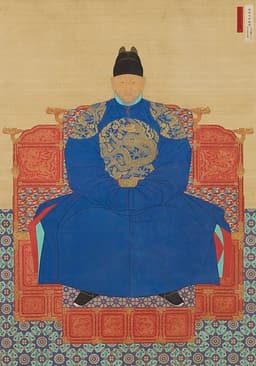
Taejo of Joseon
Emperor · Medieval
70.4Total
Basic Information
Born
1166
1335
Died
1197
1408
Era
Medieval
Medieval
Nationality
Kingdom of Jerusalem
Korea
Occupation
Emperor
Emperor
Civilization
Western
Eastern
Score Comparison
Military (10%)
10.2
74.7
Political (20%)
33.6
65.0
Influence (20%)
49.4
65.0
Legacy (20%)
37.5
80.0
Leadership (15%)
41.5
72.0
Strategy (15%)
39.6
61.2
TOTAL
38.0
70.4
Henry II of Champagne — Complete Timeline
1192 AD
Marriage to Isabella of JerusalemPolitical Action◆ Major
Henry II married Isabella I of Jerusalem, becoming king-consort of the Kingdom of Jerusalem. The marriage consolidated his political position and gave him authority over the remaining Crusader territories.
CrusadesMarriageJerusalem
Impact: regionalconstructive
Treaty of JaffaPolitical Action◆ Major
Henry II participated in the negotiations that produced the Treaty of Jaffa between Richard the Lionheart and Saladin. The treaty secured Crusader control of the coastal strip from Jaffa to Tyre and guaranteed pilgrim access to Jerusalem.
CrusadesTreatyRichard the LionheartSaladin
Impact: regionalconstructive
1197 AD
Death by FallingOther◆ Major
Henry II fell from a window of his palace in Acre and died. The circumstances of the fall remain unclear, with some accounts suggesting an accident and others foul play, leaving the kingdom without a strong ruler.
CrusadesDeathAccident
Impact: regionaltragic
Taejo of Joseon — Complete Timeline
1380 AD
Battle of HwangsanWar
General Yi Seong-gye defeated a Japanese pirate (wokou) force at Hwangsan. This victory enhanced his military reputation and demonstrated his capability as a commander.
WokouGoryeo Military
1388 AD
Wihwado RetreatPolitical Action
General Yi Seong-gye, ordered to invade the Ming dynasty's Liaodong region, turned his army back at Wihwado Island. This act of defiance against the Goryeo court led to a coup that eventually brought him to power.
CoupGoryeo-Ming RelationsPower Shift
Impact: national
1391 AD
Land Reform and the Gwajeon LawReform◆ Major
Taejo implemented the Gwajeon Law, a land reform that redistributed land from the old Goryeo aristocracy to his supporters and the state. This weakened the old elite and strengthened the new Joseon ruling class.
Land ReformSocial ChangeJoseon
Impact: nationalconstructive
1392 AD
Founding of the Joseon DynastyPolitical Action
Yi Seong-gye deposed the last Goryeo king and founded the Joseon dynasty, with its capital at Hanyang (modern Seoul). He established a new ruling class based on Confucian ideology, replacing the Buddhist-influenced Goryeo system.
Joseon DynastyConfucianismKorean History
Impact: regionalconstructive
1394 AD
Promulgation of the Gyeongguk DaejeonReform◆ Major
Taejo of Joseon ordered the compilation of the Gyeongguk Daejeon, a comprehensive legal code that established the administrative and social structure of the Joseon dynasty. This code remained in effect for centuries.
Legal CodeGovernanceConfucianism
Impact: nationalconstructive
Expert Analysis
Taejo of Joseon vs Henry II of Champagne
### The Founder and the Fallen: Two Fates of Medieval Kingship
History has a peculiar way of pairing men who, though separated by continents and contexts, illuminate the same truth: that the arc of a ruler’s life is bent not by fortune alone, but by the raw material of character and the currents of their age. Consider two medieval kings—one who built a dynasty that would last five centuries, the other who tumbled from a palace window into obscurity. Taejo of Joseon, born Yi Seong-gye in 1335, was a Korean general who seized the helm of history and steered his nation into a new Confucian era. Henry II of Champagne, born in 1166, was a French count who married into the throne of Jerusalem and, within five years, fell to his death—literally and figuratively. Their stories, read side by side, ask a single question: what separates the founder from the fallen?
### Origins
Yi Seong-gye grew up in a Goryeo kingdom buckling under corruption, Mongol influence, and coastal raids by Japanese pirates known as *wokou*. His father was a minor official, but Yi rose through the ranks of a military system that rewarded competence over birth. The late 14th century in East Asia was a crucible: the Mongol Yuan dynasty was collapsing, and the Ming were rising in China. For a man of ambition, it was a time when the old order could be broken.
Henry II of Champagne, by contrast, was born into the secure embrace of European aristocracy. His family ruled one of the wealthiest counties in France. But his world was the Crusader states—fragile, exotic, always on the verge of extinction. The Kingdom of Jerusalem was a relic of the First Crusade, a Latin outpost in a Muslim sea. Henry’s inheritance was not land but a precarious title, won by marrying Isabella of Jerusalem in 1192. His origins gave him connections, not roots.
### Rise to Power
Yi Seong-gye’s path to power was forged in battle. In 1380, at the Battle of Hwangsan, he crushed a large *wokou* force, his archers and cavalry annihilating the pirates. The victory made him a national hero. But the turning point came in 1388, when the Goryeo king ordered him to invade Ming China’s Liaodong region. Yi marched his army north, then stopped at Wihwado Island. He turned back—not in retreat, but in rebellion. This was the pivot: he chose pragmatism over loyalty, knowing the campaign was suicidal. By 1392, he deposed the last Goryeo king and founded the Joseon dynasty, moving the capital to Hanyang, modern Seoul.
Henry II’s rise was gentler but no less dramatic. He arrived in the Holy Land during the Third Crusade, a time of exhausted truces. Richard the Lionheart and Saladin had just signed the Treaty of Jaffa in 1192, which left Jerusalem in Muslim hands but granted coastal footholds to the Christians. Henry married Queen Isabella, a woman whose previous husbands had met violent ends. He became king-consort, a title that came with ceremony but little sword. His power was borrowed, not built.
### Leadership & Governance
Taego ruled with the systematic vision of a reformer. In 1391, he enacted the Gwajeon Law, a land redistribution that stripped the old Goryeo aristocracy of their estates and awarded them to his loyal supporters. This was not mere theft; it was the economic foundation of a new state. He then ordered the compilation of the Gyeongguk Daejeon, a legal code that established the administrative framework of Joseon for centuries. His military strategy was sound—he had proven it at Hwangsan—but his true genius was political: he understood that a dynasty is built on laws, not battles.
Henry II, by contrast, governed a kingdom that was already a shadow. His reign was a holding action. He participated in the Treaty of Jaffa negotiations, but the real power lay with Richard and Saladin. His leadership score of 37.1 reflects a man who was more a figurehead than a ruler. He could not reform a crumbling state; he could only try to keep it from vanishing.
### Triumph & Tragedy
Taejo’s greatest triumph was the founding itself—the creation of a dynasty that would endure until 1910. His tragedy was personal: he was forced to abdicate in 1398 after a bloody succession struggle between his sons. He died in 1408, a monk in all but name, watching his legacy survive his own happiness.
Henry II’s triumph was brief: he secured a fragile peace for Jerusalem. His tragedy was absurd. In 1197, he fell from a window of his palace in Acre. Some said he leaned out to watch a parade; others whispered of murder. He was 31. His death ended any hope of a stable succession, and within a century, the Kingdom of Jerusalem was gone.
### Character & Destiny
Taejo was a man of iron will and cold calculation. He could retreat when others would charge, and reform when others would plunder. His destiny was to be a founder because he thought in decades, not days. Henry II was a product of chivalric culture—brave, courteous, but reactive. He married a queen, signed a treaty, and then fell. His destiny was to be a footnote because he inherited a world that was already ending.
### Legacy
Taejo’s legacy is carved into Korea’s DNA. The Joseon dynasty shaped Korean language, law, Confucianism, and identity. His capital, Seoul, remains the nation’s heart. Henry II’s legacy is a whisper in Crusader chronicles, a name in genealogies. He is remembered not for what he built, but for how he died.
### Conclusion
We look at Taejo and see the architect of a nation. We look at Henry II and see a man who stepped into history’s trap. Their difference is not in talent—both were capable—but in the scale of their ambition and the moment they seized. Taejo saw a world in chaos and chose to reshape it. Henry saw a world in twilight and chose only to inhabit it. One founded a dynasty; the other fell from a window. In the end, history rewards not those who inherit thrones, but those who build them.
Rankings
🥇
Taejo of JoseonLeader
Mil: 74.7Pol: 65.0Inf: 65.0
70.4
🥈
Henry II of Champagne
Mil: 10.2Pol: 33.6Inf: 49.4
38.0
+32.4 behind
How This Comparison Works
Algorithm
Each figure is scored on 6 dimensions (0—100 scale) based on structured historical data: Military (10%), Political (20%), Influence (20%), Legacy (20%), Leadership (15%), Strategy (15%). The weighted total produces the final ranking.
Data Sources
Scores are computed from structured sub-indicators in the database. Scale factors adjust for era (Ancient ×0.85, Modern ×1.0) and civilization size (Eastern ×1.05, Other ×0.80) to account for differences in population and military scale.
Maximum 3 Figures
Comparisons are limited to 2—3 figures to ensure readability and statistical meaningfulness.
Error Margins
±5 points per dimension — Sub-scores are derived from historical records with inherent uncertainty. Two figures within 5 points on a dimension should be considered roughly equivalent in that area.
Total Score Accuracy
±3 points overall — The weighted combination of 6 dimensions produces a total score with approximately ±3 points of uncertainty. Differences of less than 3 points are not statistically significant— the figures are effectively tied.
Known Limitations
- Historical records are incomplete and uneven across civilizations
- Figures from oral-tradition societies may be underrepresented
- Occupation labels can misclassify multi-role figures
- Scores measure capability and impact, not moral character
- Quantitative scoring is a comparison tool, not absolute truth
Capability Radar
Military (10%) — Battles & Warfare
Battles
10
75
Win Rate
10
80
Expansion
5
65
Political (20%) — Governance & Reform
Reform
20
85
Diplomacy
40
70
Economy
25
65
Influence (20%) — Cultural & Global Reach
Cultural
15
80
Global
10
60
Legacy (20%) — Historical Impact
Historical
15
85
Longevity
10
80
Leadership (15%) — Power & Stability
Tenure
30
70
Stability
20
75
Strategy (15%) — Tactics & Innovation
Strategy
10
75
Tactics
10
70
Reform
5
60
Similar Comparisons
Comments & Discussion
Turtle General's Ghost6/16/2026
Let's be real—Taejo could've ended up as just another footnote if he'd been born in Champagne. Henry II inherited a Crusader kingdom already crumbling; Taejo *made* himself king. That 1392 decision to ally with Ming China instead of resisting? Pure genius. He read the geopolitical currents while Henry was busy with court intrigue. Five centuries of Joseon say everything.
历史折叠刀6/16/2026
把亨利二世跟李成桂放一起比较,真不是欺负人吗?一个当了五年国王,摔死了;一个开创五百年王朝。你告诉我这有什么可比性?亨利在雅法保卫战里那点表现,放在高丽末年那些抗倭将领面前,怕连个校尉都当不上。说句难听的,他就是投胎投得好,外加死得够有戏剧性。
Chivalry's Reckoning6/16/2026
The real irony here? Henry II could've lived if he'd been less *chivalrous*. March 1197: he's walking backward, bowing to a departing procession, falls out a window. Meanwhile, Taejo's doing land reforms, burning Buddhist temples, purging aristocrats. One dies from politeness; the other survived by being ruthless. I know who I'd rather follow into battle—or history.
中原边缘人6/16/2026
你们都在吹李成桂多厉害,怎么没人提他背刺高丽王的黑历史?1388年威化岛回军,明明可以继续打明朝,他偏要掉头夺权。这叫韬略?这叫投机!亨利二世至少是正儿八经继承耶路撒冷王位,还打过萨拉丁。李成桂的"开国之功"说到底就是一场兵变包装成的天命。别因为活得长就高贵了。
Skeptical Scribe6/16/2026
Both men are victims of survivor bias in the historical record. Taejo's Joseon scribes erased his early failures and rewrote his genealogy to include mythical kings. Henry II got unlucky with a window and a chronicler who loved dramatic endings. Strip away the propaganda: one was a competent general who picked the right moment to coup; the other was a capable noble who died stupidly. Neither is a "great king."