Loading...
Henry II of Champagne vs Tamar of Georgia
Tamar of Georgia leads by 33.5 pts · 2 figures compared
…
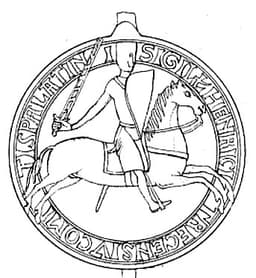
Henry II of Champagne
Emperor · Medieval
38.0Total
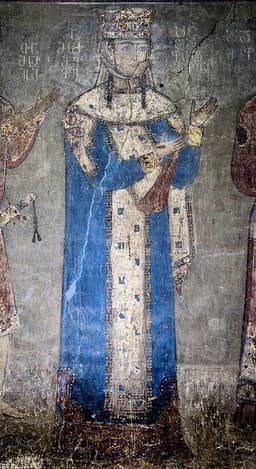
Tamar of Georgia
Emperor · Medieval
71.5Total
Basic Information
Born
1166
1160
Died
1197
1213
Era
Medieval
Medieval
Nationality
Kingdom of Jerusalem
Georgia
Occupation
Emperor
Emperor
Civilization
Western
Western
Score Comparison
Military (10%)
10.2
78.0
Political (20%)
33.6
72.0
Influence (20%)
49.4
82.0
Legacy (20%)
37.5
55.0
Leadership (15%)
41.5
80.0
Strategy (15%)
39.6
66.3
TOTAL
38.0
71.5
Henry II of Champagne — Complete Timeline
1192 AD
Marriage to Isabella of JerusalemPolitical Action◆ Major
Henry II married Isabella I of Jerusalem, becoming king-consort of the Kingdom of Jerusalem. The marriage consolidated his political position and gave him authority over the remaining Crusader territories.
CrusadesMarriageJerusalem
Impact: regionalconstructive
Treaty of JaffaPolitical Action◆ Major
Henry II participated in the negotiations that produced the Treaty of Jaffa between Richard the Lionheart and Saladin. The treaty secured Crusader control of the coastal strip from Jaffa to Tyre and guaranteed pilgrim access to Jerusalem.
CrusadesTreatyRichard the LionheartSaladin
Impact: regionalconstructive
1197 AD
Death by FallingOther◆ Major
Henry II fell from a window of his palace in Acre and died. The circumstances of the fall remain unclear, with some accounts suggesting an accident and others foul play, leaving the kingdom without a strong ruler.
CrusadesDeathAccident
Impact: regionaltragic
Tamar of Georgia — Complete Timeline
1184 AD
Coronation as Queen RegnantPolitical Action
Tamar was crowned as the first female ruler of Georgia after her father George III's death. Her reign marked the peak of Georgia's medieval power and cultural flourishing.
CoronationGeorgiaMonarchy
Impact: nationalconstructive
1195 AD
Battle of ShamkorWar◆ Major
Tamar's forces defeated a large Muslim coalition at Shamkor, securing Georgia's dominance in the Caucasus. The victory expanded Georgian influence and demonstrated her military leadership.
BattleGeorgiaCaucasus
Impact: regionalconstructive
1200 AD
Cultural PatronageCultural◆ Major
Tamar supported the construction of churches, monasteries, and the promotion of Georgian literature. Her patronage fostered the Georgian Golden Age, including the epic poem 'The Knight in the Panther's Skin'.
CulturePatronageGeorgia
Impact: nationalconstructive
Expert Analysis
Tamar of Georgia vs Henry II of Champagne
# The Window and the Throne: Two Medieval Monarchs, Two Destinies
In the year 1197, a king fell from a window in Acre. In the same decade, a queen was leading her armies to victory against a Muslim coalition at Shamkor. Henry II of Champagne plummeted to his death in circumstances still debated by historians; Tamar of Georgia rose to become the most celebrated ruler in her nation’s history. One reign ended in a tragic, almost absurd accident; the other inaugurated a golden age. What separated these two medieval monarchs, born just six years apart, was not luck alone—it was the depth of their foundations, the clarity of their purpose, and the strength of the worlds they inherited.
Origins
Henry II was born in 1166 into the turbulent world of the Crusader states, a French count who became king-consort of Jerusalem through marriage. His father was Henry I of Champagne, a powerful noble in France, but the young Henry’s destiny was shaped by the precarious politics of the Holy Land—a kingdom perpetually on the edge of annihilation. He arrived in the East as a stranger, a foreign prince grafted onto a fragile throne.
Tamar of Georgia, born in 1160, inherited a very different legacy. Her father, George III, had consolidated a kingdom that stretched across the Caucasus, rich in trade routes and cultural exchange. Georgia was Christian, surrounded by Muslim empires, but it was no Crusader state—it was an ancient nation with its own language, literature, and identity. Tamar was raised not as a foreign bride but as a future monarch, educated in statecraft, religion, and military strategy. Her world was not borrowed; it was hers.
Rise to Power
Henry’s path to power was a marriage contract. In 1192, he wed Isabella I of Jerusalem, a political action that made him king-consort. He had not won the throne through battle or inheritance; he had married into it. The same year, he participated in the Treaty of Jaffa between Richard the Lionheart and Saladin—a diplomatic maneuver that bought peace but revealed his secondary role. Henry was a player in someone else’s game.
Tamar’s rise was radically different. In 1184, she was crowned queen regnant of Georgia after her father’s death—the first female ruler of the kingdom. This was no ceremonial role. She immediately faced opposition from nobles who doubted a woman’s capacity to rule, but she outmaneuvered them, consolidating her authority through a combination of political acumen and religious legitimacy. She did not marry a king; she was the king.
Leadership and Governance
Henry’s leadership was cautious, diplomatic, and ultimately reactive. His military score of 43.3 and strategy of 32.0 reflect a ruler who managed rather than commanded. He maintained the fragile peace of the Treaty of Jaffa, but his governance was defined by the limits of his position—a consort whose authority derived from his wife’s bloodline. He built no lasting institutions, fought no decisive battles. His reign was a holding action.
Tamar governed with a vision that transformed Georgia. Her military score of 71.0 and leadership of 82.5 tell the story of a queen who personally directed her armies. At the Battle of Shamkor in 1195, her forces crushed a large Muslim coalition, securing Georgian dominance in the Caucasus. She did not merely defend her borders; she expanded them. Politically, she appointed capable ministers, reformed the administration, and patronized a cultural renaissance—building churches, monasteries, and supporting the epic poet Shota Rustaveli, whose work *The Knight in the Panther’s Skin* became a national treasure. Her political score of 75.2 reflects a ruler who understood that power required both swords and songs.
Triumph and Tragedy
For Henry, triumph was survival itself—keeping the Kingdom of Jerusalem alive in an era of Muslim resurgence. But tragedy came suddenly and absurdly. In 1197, he fell from a window of his palace in Acre. Some accounts suggest a balcony collapsed; others whisper of murder. Whatever the cause, his death was inglorious, a footnote in the history of a kingdom that would fall to the Mamluks a century later.
Tamar’s tragedy was different: she outlived her golden age. Her later years saw challenges from the nobility and the burden of a succession that would not match her greatness. Her son, George IV, was competent but not exceptional, and her daughter Rusudan presided over Georgia’s decline. Yet Tamar’s personal tragedy was minor compared to her triumph. She died in 1213, having forged a legacy so powerful that she was canonized by the Georgian Orthodox Church.
Character and Destiny
Henry’s character was shaped by contingency. He was a placeholder, a man who fell—literally and figuratively—from a height he had not earned. His total score of 46.6 reflects a ruler who was adequate but not exceptional, a figure of circumstance rather than destiny.
Tamar’s character was forged in conviction. She believed in Georgia, in its Christian identity, in its culture, and in her own right to rule. Her total score of 72.1 is not just higher—it represents a different kind of ruler: one who shaped her world rather than being shaped by it. She was called “King of Kings” and “Queen of Queens,” titles that reflected not arrogance but the understanding that leadership requires both authority and vision.
Legacy
Henry II of Champagne is remembered, if at all, as a footnote in Crusader history—the king who fell from a window. His legacy score of 49.4 places him in the shadow of greater figures like Richard and Saladin. His kingdom is gone, his name obscure.
Tamar of Georgia is immortal. Her legacy score of 72.2 understates her cultural impact: she is a national symbol, a saint, a muse for poets and historians. Georgia’s Golden Age is called “Tamar’s Age.” Streets, universities, and ships bear her name. She is not just remembered; she is revered.
Conclusion
What separates Henry and Tamar is not merely talent or luck. It is the difference between ruling a borrowed kingdom and leading a nation that believed in itself. Henry governed a crusader state that was always an outpost, always dependent on European support. Tamar ruled a civilization with deep roots, a language, a faith, and a future. One fell from a window; the other rose into legend. Their stories remind us that the most important inheritance a ruler can have is not a crown—it is a people ready to be led.
Rankings
🥇
Tamar of GeorgiaLeader
Mil: 78.0Pol: 72.0Inf: 82.0
71.5
🥈
Henry II of Champagne
Mil: 10.2Pol: 33.6Inf: 49.4
38.0
+33.5 behind
How This Comparison Works
Algorithm
Each figure is scored on 6 dimensions (0—100 scale) based on structured historical data: Military (10%), Political (20%), Influence (20%), Legacy (20%), Leadership (15%), Strategy (15%). The weighted total produces the final ranking.
Data Sources
Scores are computed from structured sub-indicators in the database. Scale factors adjust for era (Ancient ×0.85, Modern ×1.0) and civilization size (Eastern ×1.05, Other ×0.80) to account for differences in population and military scale.
Maximum 3 Figures
Comparisons are limited to 2—3 figures to ensure readability and statistical meaningfulness.
Error Margins
±5 points per dimension — Sub-scores are derived from historical records with inherent uncertainty. Two figures within 5 points on a dimension should be considered roughly equivalent in that area.
Total Score Accuracy
±3 points overall — The weighted combination of 6 dimensions produces a total score with approximately ±3 points of uncertainty. Differences of less than 3 points are not statistically significant— the figures are effectively tied.
Known Limitations
- Historical records are incomplete and uneven across civilizations
- Figures from oral-tradition societies may be underrepresented
- Occupation labels can misclassify multi-role figures
- Scores measure capability and impact, not moral character
- Quantitative scoring is a comparison tool, not absolute truth
Capability Radar
Military (10%) — Battles & Warfare
Battles
10
75
Win Rate
10
85
Expansion
5
75
Political (20%) — Governance & Reform
Reform
20
80
Diplomacy
40
75
Economy
25
85
Influence (20%) — Cultural & Global Reach
Cultural
15
80
Global
10
60
Legacy (20%) — Historical Impact
Historical
15
75
Longevity
10
70
Leadership (15%) — Power & Stability
Tenure
30
85
Stability
20
70
Strategy (15%) — Tactics & Innovation
Strategy
10
80
Tactics
10
70
Reform
5
65
Similar Comparisons
Comments & Discussion
No comments yet. Be the first to share your thoughts!