Loading...
Henry V vs Napoleon Bonaparte
Napoleon Bonaparte leads by 14.8 pts · 2 figures compared
…
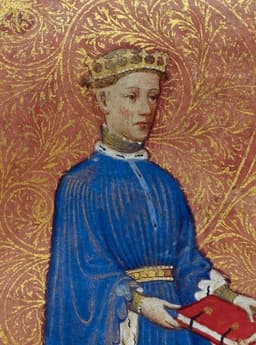
Henry V
Emperor · Medieval
56.1Total

Napoleon Bonaparte
General · Modern
70.9Total
Basic Information
Born
1081
1769
Died
1125
1821
Era
Medieval
Modern
Nationality
Holy Roman Empire
France
Occupation
Emperor
General
Civilization
Western
Western
Score Comparison
Military (10%)
25.0
94.0
Political (20%)
72.0
72.0
Influence (20%)
59.0
40.0
Legacy (20%)
54.0
80.0
Leadership (15%)
68.0
78.0
Strategy (15%)
43.3
90.0
TOTAL
56.1
70.9
Henry V — Complete Timeline
1106 AD
Election as King of GermanyPolitical Action◆ Major
Henry V was elected King of Germany in 1106 after rebelling against his father Henry IV, who died the same year. His accession marked the continuation of the Salian dynasty amid the Investiture Controversy.
SuccessionRebellion
Impact: regional
1110 AD
Campaign in ItalyWar
Henry V led a military campaign to Italy in 1110-1111 to assert imperial claims over the Papal States and secure his coronation. He captured Rome and forced Pope Paschal II to concede investiture rights, but the agreement was later repudiated.
Italian CampaignPapal Conflict
Impact: regional
1111 AD
Coronation as Holy Roman EmperorPolitical Action◆ Major
Pope Paschal II crowned Henry V Holy Roman Emperor in Rome on April 13, 1111, after Henry forced the Pope to grant him the right of investiture. The coronation followed a tense standoff where Henry imprisoned the Pope and cardinals.
CoronationInvestiture Controversy
Impact: regional
1122 AD
Concordat of WormsPolitical Action
Henry V and Pope Callixtus II signed the Concordat of Worms on September 23, 1122, ending the Investiture Controversy. The agreement gave the Church the right to elect bishops but allowed the emperor to invest them with secular authority.
Investiture ControversyTreatyChurch-State Relations
Impact: regionalconstructive
Napoleon Bonaparte — Complete Timeline
1799 AD
Coup of 18 BrumaireOther◆ Major
Napoleon Bonaparte, with support from his brother Lucien and key political figures, overthrew the Directory in a bloodless coup. He established the Consulate with himself as First Consul, effectively becoming the ruler of France. This event ended the French Revolution's most unstable period.
French RevolutionCoupRise to Power
Impact: regional
1804 AD
Promulgation of the Napoleonic CodeOther◆ Major
Napoleon enacted the Civil Code of the French, known as the Napoleonic Code, a comprehensive set of laws that replaced the fragmented feudal legal systems. The code established legal equality, protected property rights, and secularized law. It became the basis for legal systems in many European and world countries.
Legal ReformNapoleonic CodeCivil Law
Impact: globalconstructive
1805 AD
Battle of AusterlitzWar◆ Major
Napoleon's Grande Arm
Napoleonic WarsBattleDecisive Victory
Impact: global
1812 AD
Invasion of RussiaWar◆ Major
Napoleon led the Grande Arm
Napoleonic WarsInvasionDisaster
Impact: globaldestructive
1815 AD
Battle of WaterlooWar◆ Major
Napoleon's French army was defeated by the combined forces of the Duke of Wellington's Anglo-Allied army and Gebhard Leberecht von Bl
Napoleonic WarsBattleFinal Defeat
Impact: globaldestructive
Expert Analysis
henry-v-vs-napoleon-bonaparte
# The Conqueror and the Compromiser
On a June morning in 1815, Napoleon Bonaparte watched his Imperial Guard march into the maw of British cannon fire at Waterloo. Less than a century earlier, in September 1122, another ruler—Henry V of the Holy Roman Empire—sat across a table from a pope in the German city of Worms, signing away powers his father had spent a lifetime fighting to preserve. Two men, both emperors, both products of Western civilization, yet their stories could not have diverged more sharply. Why did one die in exile on a remote Atlantic island while the other died in his bed, having achieved something his predecessors could not: peace?
Origins
Napoleon was born in 1769 on Corsica, an island that had only recently become French. His family was minor nobility, but they were not French—they were Corsican, and he spoke Italian before he learned French. This outsider status forged in him a hunger for acceptance and dominance. The French Revolution, which erupted when he was twenty, shattered the old order and opened a path for talent over birth. Napoleon was a child of chaos, and chaos became his medium.
Henry V was born in 1081 into the Salian dynasty, one of the most powerful ruling families of medieval Europe. His father was Henry IV, the emperor who had walked barefoot in the snow to Canossa, begging papal forgiveness during the Investiture Controversy. Henry V grew up in the shadow of that humiliation. He learned early that power was not a gift but a negotiation, and that the Church was a rival, not a servant. Where Napoleon was shaped by revolution, Henry was shaped by a centuries-old war between throne and altar.
Rise to Power
Napoleon’s ascent was meteoric. At twenty-four, he drove the British out of Toulon. At twenty-six, he crushed a royalist uprising in Paris with a "whiff of grapeshot." By thirty, he was First Consul of France; by thirty-five, Emperor. His path was one of pure will: he seized opportunities, created them when they did not exist, and moved with a speed that left his enemies scrambling.
Henry V’s rise was more tangled. In 1106, he rebelled against his own father—a man who had excommunicated him—and was elected King of Germany. Henry IV died the same year, broken and bitter. Henry V inherited not a united empire but a fractured one, where dukes and bishops held real power and the pope in Rome claimed authority over both. He did not conquer his way to the throne; he maneuvered, negotiated, and, when necessary, betrayed.
Leadership & Governance
As a military commander, Napoleon was a genius. His score of 94 in military ability reflects a mind that revolutionized warfare: the use of artillery, the corps system, speed of movement, and the ability to concentrate force at a decisive point. He won sixty battles. His political score of 75 is lower, but his Napoleonic Code—a civil law system that enshrined equality before the law, property rights, and secular governance—remains the foundation of legal systems across Europe and beyond.
Henry V was no soldier. His military score of 30.5 is modest, and his campaigns—such as the 1110-1111 expedition to Italy—were more about intimidation than annihilation. But his political score of 65.1 and leadership score of 75.1 tell a different story. The Concordat of Worms in 1122 was not a surrender but a settlement. The emperor gave up the right to appoint bishops with spiritual authority, but he retained the right to invest them with temporal lands and powers. It was a compromise that ended fifty years of conflict and stabilized the empire for generations.
Triumph & Tragedy
Napoleon’s greatest moment was perhaps Austerlitz in 1805, where he destroyed a combined Russian and Austrian army and redrew the map of Europe. His greatest failure was the invasion of Russia in 1812—a catastrophe that cost half a million lives and shattered his aura of invincibility. Waterloo was the final act. He died in 1821 on Saint Helena, a prisoner of the British, at the age of fifty-one.
Henry V’s triumph was the Concordat itself—a document that historians still cite as a model of church-state compromise. His tragedy was that he was the last of his line. The Salian dynasty ended with him in 1125, and his legacy was not conquest but stability. He died at forty-four, having secured peace but no heir.
Character & Destiny
Napoleon was driven by an insatiable appetite for glory. "I live only for posterity," he once said. His personality—brilliant, ruthless, charismatic—led him to conquer Europe but also to overreach. He could not stop. His destiny was shaped by his refusal to accept limits.
Henry V was more pragmatic. He understood that power was about survival, not glory. He rebelled against his father, then compromised with the pope. He was not loved, but he was effective. His destiny was to be the man who ended a war, not the one who started one.
Legacy
Napoleon’s legacy is a paradox. He is remembered as a tyrant and a reformer, a destroyer of old Europe and a builder of new institutions. His influence score of 82 places him among the most consequential figures in history. Every student of war studies him; every student of law studies his code.
Henry V is largely forgotten outside of medieval history. His legacy score of 69.7 reflects a quieter achievement. The Concordat of Worms did not make headlines, but it laid the groundwork for the separation of spiritual and temporal power that would eventually shape modern governance.
Conclusion
One man conquered the world and lost it. The other compromised with his enemy and won peace. Napoleon’s story is a warning about the limits of ambition; Henry V’s is a lesson in the art of the possible. Both were products of their times—the revolutionary and the medieval—but their choices echo still. For every leader who dreams of glory, there is another who knows that sometimes, the greatest victory is the one that ends the war.
Rankings
🥇
Napoleon BonaparteLeader
Mil: 94.0Pol: 72.0Inf: 40.0
70.9
🥈
Henry V
Mil: 25.0Pol: 72.0Inf: 59.0
56.1
+14.8 behind
How This Comparison Works
Algorithm
Each figure is scored on 6 dimensions (0—100 scale) based on structured historical data: Military (10%), Political (20%), Influence (20%), Legacy (20%), Leadership (15%), Strategy (15%). The weighted total produces the final ranking.
Data Sources
Scores are computed from structured sub-indicators in the database. Scale factors adjust for era (Ancient ×0.85, Modern ×1.0) and civilization size (Eastern ×1.05, Other ×0.80) to account for differences in population and military scale.
Maximum 3 Figures
Comparisons are limited to 2—3 figures to ensure readability and statistical meaningfulness.
Error Margins
±5 points per dimension — Sub-scores are derived from historical records with inherent uncertainty. Two figures within 5 points on a dimension should be considered roughly equivalent in that area.
Total Score Accuracy
±3 points overall — The weighted combination of 6 dimensions produces a total score with approximately ±3 points of uncertainty. Differences of less than 3 points are not statistically significant— the figures are effectively tied.
Known Limitations
- Historical records are incomplete and uneven across civilizations
- Figures from oral-tradition societies may be underrepresented
- Occupation labels can misclassify multi-role figures
- Scores measure capability and impact, not moral character
- Quantitative scoring is a comparison tool, not absolute truth
Capability Radar
Military (10%) — Battles & Warfare
Battles
40
95
Win Rate
45
90
Expansion
30
95
Political (20%) — Governance & Reform
Reform
70
95
Diplomacy
75
80
Economy
55
85
Influence (20%) — Cultural & Global Reach
Cultural
40
85
Global
45
90
Legacy (20%) — Historical Impact
Historical
65
95
Longevity
50
90
Leadership (15%) — Power & Stability
Tenure
65
85
Stability
60
70
Strategy (15%) — Tactics & Innovation
Strategy
40
95
Tactics
35
98
Reform
30
92
Similar Comparisons
Comments & Discussion
No comments yet. Be the first to share your thoughts!