Loading...
Henry VII vs Sancho III of Navarre
Sancho III of Navarre leads by 8.6 pts · 2 figures compared
…
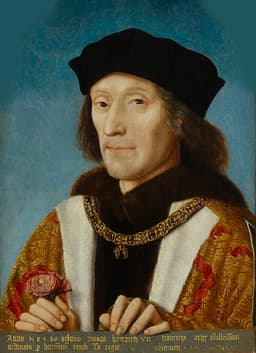
Henry VII
Emperor · Medieval
46.5Total
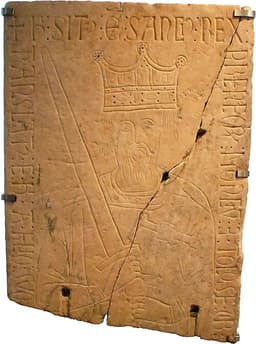
Sancho III of Navarre
Emperor · Medieval
55.1Total
Basic Information
Born
1275
985
Died
1313
1035
Era
Medieval
Medieval
Nationality
Holy Roman Empire
Navarre
Occupation
Emperor
Emperor
Civilization
Western
Western
Score Comparison
Military (10%)
55.0
47.5
Political (20%)
37.9
68.0
Influence (20%)
52.5
56.4
Legacy (20%)
41.7
48.3
Leadership (15%)
48.4
53.2
Strategy (15%)
45.0
60.0
TOTAL
46.5
55.1
Henry VII — Complete Timeline
1308 AD
Elected King of GermanyPolitical Action◆ Major
Henry VII of Luxembourg was elected King of Germany after the assassination of Albert I. His election was supported by the prince-electors, who sought a compromise candidate to end the Habsburg dominance.
ElectionLuxembourgGerman Kingdom
Impact: regional
1310 AD
Led Campaign in ItalyWar◆ Major
Henry VII of Luxembourg led a military campaign into Italy to assert imperial authority over the Guelph and Ghibelline factions. He captured several cities but faced resistance from Florence and the Papal States, leading to a prolonged conflict.
Military CampaignItalyImperial Authority
Impact: regional
1312 AD
Crowned Holy Roman EmperorPolitical Action
Henry VII of Luxembourg was crowned Holy Roman Emperor by Pope Clement V in Rome. This coronation was the first imperial coronation in Rome since Frederick II, and it revived the imperial ideal of universal rule.
CoronationHoly Roman EmpirePapacy
Impact: globalconstructive
1313 AD
Died of Malaria in BuonconventoOther◆ Major
Henry VII of Luxembourg died of malaria in Buonconvento, Italy, while preparing to attack Florence. His death ended his Italian campaign and the Luxembourg dynasty's ambitions in Italy, leading to a new interregnum.
DeathItalyLuxembourg
Impact: regionaltragic
Sancho III of Navarre — Complete Timeline
1004 AD
Inheritance of the Kingdom of PamplonaPolitical Action◆ Major
Sancho III inherited the Kingdom of Pamplona (Navarre) from his father Garc
Medieval IberiaKingdom of NavarreSuccession
Impact: regionalconstructive
1029 AD
Conquest of CastileWar◆ Major
Sancho III conquered the County of Castile after the assassination of Count Garc
Medieval IberiaConquestCastile
Impact: regional
1034 AD
Title of 'Emperor of Spain'Political Action◆ Major
Sancho III claimed the title 'Imperator totius Hispaniae' (Emperor of all Spain) after capturing Le
Medieval IberiaImperial TitleHegemony
Impact: regional
1035 AD
Division of the kingdomPolitical Action◆ Major
Upon his death, Sancho III divided his territories among his sons: Garc
Medieval IberiaSuccessionFragmentation
Impact: regionaldestructive
Expert Analysis
Origins
Henry VII of Luxembourg was born around 1275 into the House of Luxembourg, a minor comital family in the Holy Roman Empire. His father was Henry VI, Count of Luxembourg, and his mother was Beatrice d'Avesnes. Henry grew up in the Low Countries, receiving education in chivalric and administrative matters. He became Count of Luxembourg in 1288 after his father's death. Sancho III of Navarre, born around 990, was the son of García Sánchez II of Pamplona and Jimena Fernández. He inherited the Kingdom of Pamplona (Navarre) in 1004 at a young age. His early years were shaped by the Reconquista and the complex politics of Christian Iberian kingdoms. Both rulers emerged from relatively modest backgrounds for their eventual positions: Henry as a count who became emperor, Sancho as a king who expanded his realm.
Rise to Power
Henry VII's rise began with his election as King of Germany on November 27, 1308, following the assassination of King Albert I. The prince-electors, wary of Habsburg power, chose Henry as a compromise candidate. He was crowned King of the Romans at Aachen in 1309. His crowning achievement came on June 29, 1312, when Pope Clement V crowned him Holy Roman Emperor in Rome, the first imperial coronation in Rome since Frederick II. Sancho III inherited Pamplona in 1004 and quickly expanded his territory. He married Muniadona of Castile, which gave him claims to Castile. In 1029, after the assassination of Count García Sánchez of Castile, Sancho III conquered the county and incorporated it into his realm. By 1034, he captured León and claimed the title 'Imperator totius Hispaniae' (Emperor of all Spain), symbolizing his hegemony over Christian Iberia.
Leadership & Governance
Henry VII's leadership focused on restoring imperial authority in Italy, which had been fragmented by Guelph and Ghibelline conflicts. He attempted to act as a neutral arbitrator but was drawn into military campaigns. His governance style was chivalric and idealistic, seeking to revive the medieval empire. However, his political score of 37.9 reflects his inability to secure lasting alliances or administrative control. Sancho III governed through a combination of marriage alliances and military force. He centralized power in Navarre and expanded his influence over Castile, León, and Aragon. His political score of 68.0 indicates effective statecraft. He divided his kingdom among his sons upon his death, a decision that strengthened his dynasty but also sowed seeds of future conflict.
Triumph & Tragedy
Henry VII's greatest success was his coronation as emperor, a symbolic triumph that asserted Luxembourg's prestige. He also captured several cities in Italy, including Milan and Genoa. His tragedy was his death from malaria on August 24, 1313, in Buonconvento, Italy, while preparing to attack Florence. His campaign collapsed, and the Luxembourg dynasty's imperial ambitions ended. Sancho III's triumph was uniting most of Christian Iberia under his rule, a feat unmatched until the later Reconquista. He secured the title 'Emperor of Spain'. His tragedy was the division of his realm after his death in 1035, which led to fragmentation and internal strife among his sons. This division weakened the Christian front against Muslim rule.
Character & Destiny
Henry VII was idealistic and persistent, driven by a vision of imperial unity. His decision to campaign in Italy despite limited resources and opposition from the French king and the papacy showed his determination. However, his character led to overreach; his military score of 55.0 reflects competent but not exceptional generalship. Sancho III was pragmatic and ambitious, using marriage and conquest to expand his power. His political acumen scored 68.0, but his decision to divide his kingdom reflected a feudal mindset that prioritized family over state unity. His strategy score of 60.0 indicates careful planning, but his legacy was limited by the subsequent fragmentation.
Legacy
Henry VII's legacy is mixed. He revived the imperial coronation but failed to establish lasting imperial authority in Italy. The Luxembourg dynasty continued in the Empire, but Henry's Italian campaign is remembered as a failed venture. His influence score of 52.5 reflects his symbolic importance. Sancho III's legacy is more concrete: he laid the groundwork for the eventual unification of Spain. His son Ferdinand I became the first king of Castile and León, and his dynasty ruled Navarre for centuries. However, his division of the kingdom led to centuries of conflict among Christian Iberian states. His legacy score of 48.3 is moderate, reflecting both achievement and fragmentation.
Conclusion
Sancho III of Navarre had a greater impact than Henry VII. Despite Henry's higher profile as Holy Roman Emperor, Sancho's unification of Christian Iberia and his political maneuvering scored higher overall (55.1 vs 46.5). Sancho's political and strategy scores (68.0 and 60.0) significantly outpaced Henry's (37.9 and 45.0). While Henry's imperial coronation was a notable event, it produced no lasting political change. Sancho's conquests and title directly influenced the Reconquista and the formation of Spain. Therefore, Sancho III emerges as the more effective ruler with a more enduring legacy.
Rankings
🥇
Sancho III of NavarreLeader
Mil: 47.5Pol: 68.0Inf: 56.4
55.1
🥈
Henry VII
Mil: 55.0Pol: 37.9Inf: 52.5
46.5
+8.6 behind
How This Comparison Works
Algorithm
Each figure is scored on 6 dimensions (0—100 scale) based on structured historical data: Military (10%), Political (20%), Influence (20%), Legacy (20%), Leadership (15%), Strategy (15%). The weighted total produces the final ranking.
Data Sources
Scores are computed from structured sub-indicators in the database. Scale factors adjust for era (Ancient ×0.85, Modern ×1.0) and civilization size (Eastern ×1.05, Other ×0.80) to account for differences in population and military scale.
Maximum 3 Figures
Comparisons are limited to 2—3 figures to ensure readability and statistical meaningfulness.
Error Margins
±5 points per dimension — Sub-scores are derived from historical records with inherent uncertainty. Two figures within 5 points on a dimension should be considered roughly equivalent in that area.
Total Score Accuracy
±3 points overall — The weighted combination of 6 dimensions produces a total score with approximately ±3 points of uncertainty. Differences of less than 3 points are not statistically significant— the figures are effectively tied.
Known Limitations
- Historical records are incomplete and uneven across civilizations
- Figures from oral-tradition societies may be underrepresented
- Occupation labels can misclassify multi-role figures
- Scores measure capability and impact, not moral character
- Quantitative scoring is a comparison tool, not absolute truth
Capability Radar
Military (10%) — Battles & Warfare
Battles
35
45
Win Rate
40
50
Expansion
30
60
Political (20%) — Governance & Reform
Reform
30
40
Diplomacy
45
70
Economy
25
50
Influence (20%) — Cultural & Global Reach
Cultural
25
45
Global
20
35
Legacy (20%) — Historical Impact
Historical
30
50
Longevity
20
40
Leadership (15%) — Power & Stability
Tenure
40
65
Stability
20
55
Strategy (15%) — Tactics & Innovation
Strategy
35
55
Tactics
30
40
Reform
20
30
Similar Comparisons
Comments & Discussion
No comments yet. Be the first to share your thoughts!