Loading...
Al-Walid I vs Sancho III of Navarre
Al-Walid I leads by 13.5 pts · 2 figures compared
…
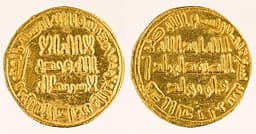
Al-Walid I
Emperor · Medieval
68.6Total
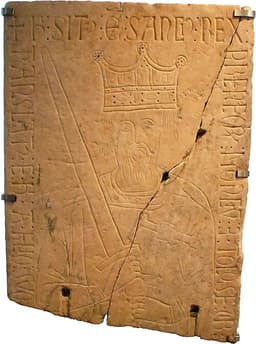
Sancho III of Navarre
Emperor · Medieval
55.1Total
Basic Information
Born
668
985
Died
715
1035
Era
Medieval
Medieval
Nationality
Umayyad Caliphate
Navarre
Occupation
Emperor
Emperor
Civilization
Middle Eastern
Western
Score Comparison
Military (10%)
76.0
47.5
Political (20%)
70.0
68.0
Influence (20%)
88.0
56.4
Legacy (20%)
40.0
48.3
Leadership (15%)
80.0
53.2
Strategy (15%)
65.4
60.0
TOTAL
68.6
55.1
Al-Walid I — Complete Timeline
700 AD
Patronage of Arabic language and administrationReform◆ Major
Al-Walid I made Arabic the official language of administration across the caliphate, replacing Greek and Persian. This standardized governance and promoted the spread of Arabic culture and Islam.
LanguageAdministrationArabization
Impact: globalprogressive
705 AD
Expansion of the Umayyad CaliphateWar
Al-Walid I oversaw the expansion of the Umayyad Caliphate to its greatest territorial extent. Conquests included Transoxiana, Sindh, and parts of Spain, making the caliphate one of the largest empires in history.
ConquestExpansionEmpire
Impact: global
706 AD
Construction of the Great Mosque of DamascusCultural◆ Major
Al-Walid I commissioned the construction of the Umayyad Mosque in Damascus, transforming a Christian basilica into a grand mosque. It became a masterpiece of Islamic architecture and a major pilgrimage site.
ArchitectureMosqueDamascus
Impact: globalconstructive
Sancho III of Navarre — Complete Timeline
1004 AD
Inheritance of the Kingdom of PamplonaPolitical Action◆ Major
Sancho III inherited the Kingdom of Pamplona (Navarre) from his father Garc
Medieval IberiaKingdom of NavarreSuccession
Impact: regionalconstructive
1029 AD
Conquest of CastileWar◆ Major
Sancho III conquered the County of Castile after the assassination of Count Garc
Medieval IberiaConquestCastile
Impact: regional
1034 AD
Title of 'Emperor of Spain'Political Action◆ Major
Sancho III claimed the title 'Imperator totius Hispaniae' (Emperor of all Spain) after capturing Le
Medieval IberiaImperial TitleHegemony
Impact: regional
1035 AD
Division of the kingdomPolitical Action◆ Major
Upon his death, Sancho III divided his territories among his sons: Garc
Medieval IberiaSuccessionFragmentation
Impact: regionaldestructive
Expert Analysis
Origins
Al-Walid I was born around 668 CE in Medina, the son of Caliph Abd al-Malik ibn Marwan. He grew up in the Umayyad court, receiving a thorough education in Islamic jurisprudence, military strategy, and administration. His father's reign had stabilized the caliphate after the Second Fitna, providing Al-Walid with a secure foundation. Sancho III of Navarre was born around 985 CE, the son of García Sánchez II of Pamplona and Jimena Fernández. He inherited a small but strategically positioned kingdom in the Pyrenees. Unlike Al-Walid, Sancho's early life was shaped by the constant conflict between Christian and Muslim states in Iberia.
Rise to Power
Al-Walid I became caliph in 705 CE upon his father's death, inheriting a vast empire. He immediately launched campaigns that expanded the caliphate to its greatest territorial extent. His generals conquered Transoxiana (led by Qutayba ibn Muslim), Sindh (Muhammad ibn al-Qasim), and advanced into Spain (Tariq ibn Ziyad). These conquests added millions of subjects and immense wealth. Sancho III inherited Pamplona in 1004 CE after his father's death. Through a combination of marriage (to Muniadona of Castile) and military pressure, he gained control of the County of Castile by 1029 after the assassination of Count García Sánchez. He also exerted influence over León and Aragón, culminating in his capture of León in 1034, after which he claimed the title "Imperator totius Hispaniae" (Emperor of all Spain).
Leadership & Governance
Al-Walid I centralized administration by making Arabic the official language across the caliphate, replacing Greek in Syria and Persian in Iraq. He standardized coinage and tax collection. His greatest architectural project was the Great Mosque of Damascus (706-715), which repurposed a Roman-Christian basilica into a masterpiece of Islamic art, featuring mosaics and marble. He also improved infrastructure, building roads and irrigation systems. Sancho III's governance was more feudal and personal. He ruled through a network of vassals and family ties, granting lands and titles to secure loyalty. He promoted the Cluniac reform in monasteries, strengthening ties with the Papacy. Unlike Al-Walid's centralized bureaucracy, Sancho's realm depended on his personal authority, which proved fragile after his death.
Triumph & Tragedy
Al-Walid's greatest triumph was the expansion of the Umayyad Caliphate to its peak, stretching from Spain to India. The mosque in Damascus remains a symbol of Islamic architecture. However, his conquests overstretched the empire, leading to administrative strain and eventual collapse after his death. His patronage of Arabic accelerated cultural integration but also marginalised non-Arab converts (mawali), fueling resentment. Sancho's triumph was briefly uniting most of Christian Iberia under his rule, a feat not seen since the Visigoths. His military scored 47.5, lower than Al-Walid's 76.0, reflecting his reliance on diplomacy over conquest. His tragedy was dividing his kingdom among his sons upon his death in 1035, leading to fragmentation and civil war. This division undid his life's work and weakened Christian Iberia for decades.
Character & Destiny
Al-Walid I was described as a capable administrator and devout Muslim, but also as autocratic. His decision to make Arabic official streamlined governance but alienated non-Arab elites. His character scored 80.0 in leadership, reflecting his ability to command loyalty from generals like Qutayba and Tariq. Sancho III was known as "the Great" for his political acumen, scoring 68.0 in political skill. He was pragmatic, using marriage and alliances to expand. However, his decision to divide his realm reflected a traditional inheritance practice that ultimately doomed his legacy. His leadership score of 53.2 indicates he was more a unifier through diplomacy than a strong ruler.
Legacy
Al-Walid I's legacy is monumental: the Umayyad Mosque remains a landmark, and the expansion of Arabic administration shaped the Islamic world for centuries. His conquests brought Islam to Spain and India. Yet his legacy score of 40.0 is relatively low because the Umayyad dynasty fell soon after, and his successors were overshadowed by the Abbasids. Sancho III's legacy is more regional: he established the kingdoms of Castile and Navarre as major powers. Ferdinand I of Castile, his son, continued expansion. However, the division of his realm meant his united Spain was fleeting. Sancho's legacy score of 48.3 reflects his importance in Iberian history but limited global impact.
Conclusion
Al-Walid I had a greater impact on world history. His military score of 76.0 against Sancho's 47.5, and his influence score of 88.0 against 56.4, demonstrate his broader reach. While Sancho united Christian Spain briefly, Al-Walid's conquests and administrative reforms shaped the Islamic Golden Age and spread Islam across continents. The Great Mosque of Damascus stands as a testament to his patronage, while Sancho's divided kingdom led to fragmentation. Al-Walid's total score of 68.6 surpasses Sancho's 55.1 by 13.5 points, a clear margin. Therefore, Al-Walid I is the more significant historical figure.
Rankings
🥇
Al-Walid ILeader
Mil: 76.0Pol: 70.0Inf: 88.0
68.6
🥈
Sancho III of Navarre
Mil: 47.5Pol: 68.0Inf: 56.4
55.1
+13.5 behind
How This Comparison Works
Algorithm
Each figure is scored on 6 dimensions (0—100 scale) based on structured historical data: Military (10%), Political (20%), Influence (20%), Legacy (20%), Leadership (15%), Strategy (15%). The weighted total produces the final ranking.
Data Sources
Scores are computed from structured sub-indicators in the database. Scale factors adjust for era (Ancient ×0.85, Modern ×1.0) and civilization size (Eastern ×1.05, Other ×0.80) to account for differences in population and military scale.
Maximum 3 Figures
Comparisons are limited to 2—3 figures to ensure readability and statistical meaningfulness.
Error Margins
±5 points per dimension — Sub-scores are derived from historical records with inherent uncertainty. Two figures within 5 points on a dimension should be considered roughly equivalent in that area.
Total Score Accuracy
±3 points overall — The weighted combination of 6 dimensions produces a total score with approximately ±3 points of uncertainty. Differences of less than 3 points are not statistically significant— the figures are effectively tied.
Known Limitations
- Historical records are incomplete and uneven across civilizations
- Figures from oral-tradition societies may be underrepresented
- Occupation labels can misclassify multi-role figures
- Scores measure capability and impact, not moral character
- Quantitative scoring is a comparison tool, not absolute truth
Capability Radar
Military (10%) — Battles & Warfare
Battles
75
45
Win Rate
80
50
Expansion
85
60
Political (20%) — Governance & Reform
Reform
85
40
Diplomacy
70
70
Economy
80
50
Influence (20%) — Cultural & Global Reach
Cultural
85
45
Global
70
35
Legacy (20%) — Historical Impact
Historical
80
50
Longevity
75
40
Leadership (15%) — Power & Stability
Tenure
80
65
Stability
75
55
Strategy (15%) — Tactics & Innovation
Strategy
75
55
Tactics
70
40
Reform
65
30
Similar Comparisons
Comments & Discussion
No comments yet. Be the first to share your thoughts!