Loading...
This comparison has not been analyzed yet.
One-time AI generation (~1 minute). Scores and timeline are already available below.
Herbert Hoover vs Zoran Djindjic
Herbert Hoover leads by 4.3 pts · 2 figures compared
…
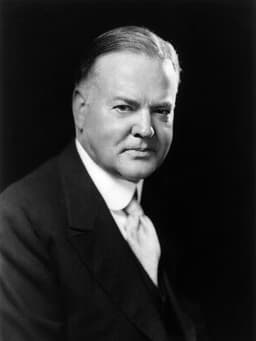
Herbert Hoover
Politician · Modern
53.8Total

Zoran Djindjic
Politician · Modern
49.5Total
Basic Information
Born
1874
1952
Died
1964
—
Era
Modern
Modern
Nationality
United States
Serbia
Occupation
Politician
Politician
Civilization
Western
Western
Score Comparison
Military (10%)
49.1
50.0
Political (20%)
54.7
62.7
Influence (20%)
58.0
54.1
Legacy (20%)
49.2
44.2
Leadership (15%)
65.0
41.5
Strategy (15%)
41.8
42.7
TOTAL
53.8
49.5
Herbert Hoover — Complete Timeline
1928 AD
Election as President of the United StatesPolitical Action◆ Major
Hoover, a Republican, won the 1928 presidential election in a landslide against Democrat Al Smith. Hoover's reputation as a successful businessman and humanitarian, particularly for his relief work in Europe during and after World War I, contributed to his victory.
Presidential ElectionRepublican Party
Impact: national
1929 AD
Stock Market Crash of 1929Other
The Wall Street Crash of 1929 occurred in October, marking the beginning of the Great Depression. Hoover's response, including calls for voluntary cooperation and limited federal intervention, was widely criticized as inadequate, and the depression deepened.
Great DepressionEconomic Crisis
Impact: globaltragic
1930 AD
Signing of the Smoot-Hawley TariffPolitical Action◆ Major
Hoover signed the Smoot-Hawley Tariff, which raised tariffs on thousands of imported goods to record levels. The tariff sparked retaliatory measures from other countries, contributing to a collapse in international trade and worsening the Great Depression.
Tariff PolicyGreat Depression
Impact: globaldestructive
Zoran Djindjic — Complete Timeline
2001 AD
Election as Prime Minister of SerbiaPolitical Action
Djindjic was elected Prime Minister of Serbia after the overthrow of Slobodan Milosevic. He led a reformist government focused on democratization, economic reform, and European integration.
DemocratizationReformPost-Milosevic
Impact: nationalprogressive
Extradition of Slobodan Milosevic to the ICTYPolitical Action◆ Major
Djindjic authorized the extradition of former President Slobodan Milosevic to the International Criminal Tribunal for the former Yugoslavia in The Hague. This was a highly controversial decision that divided Serbian public opinion.
ICTYWar CrimesJustice
Impact: globalconstructive
2003 AD
Assassination of Zoran DjindjicPolitical Action
Djindjic was assassinated by a sniper in Belgrade. The assassination was carried out by organized crime groups linked to the former Milosevic regime, who opposed his anti-corruption reforms and cooperation with the ICTY.
AssassinationPolitical ViolenceReform
Impact: nationaltragic
This comparison has not been analyzed yet.
One-time AI generation (~1 minute). Scores and timeline are already available below.
Rankings
🥇
Herbert HooverLeader
Mil: 49.1Pol: 54.7Inf: 58.0
53.8
🥈
Zoran Djindjic
Mil: 50.0Pol: 62.7Inf: 54.1
49.5
+4.3 behind
How This Comparison Works
Algorithm
Each figure is scored on 6 dimensions (0—100 scale) based on structured historical data: Military (10%), Political (20%), Influence (20%), Legacy (20%), Leadership (15%), Strategy (15%). The weighted total produces the final ranking.
Data Sources
Scores are computed from structured sub-indicators in the database. Scale factors adjust for era (Ancient ×0.85, Modern ×1.0) and civilization size (Eastern ×1.05, Other ×0.80) to account for differences in population and military scale.
Maximum 3 Figures
Comparisons are limited to 2—3 figures to ensure readability and statistical meaningfulness.
Error Margins
±5 points per dimension — Sub-scores are derived from historical records with inherent uncertainty. Two figures within 5 points on a dimension should be considered roughly equivalent in that area.
Total Score Accuracy
±3 points overall — The weighted combination of 6 dimensions produces a total score with approximately ±3 points of uncertainty. Differences of less than 3 points are not statistically significant— the figures are effectively tied.
Known Limitations
- Historical records are incomplete and uneven across civilizations
- Figures from oral-tradition societies may be underrepresented
- Occupation labels can misclassify multi-role figures
- Scores measure capability and impact, not moral character
- Quantitative scoring is a comparison tool, not absolute truth
Capability Radar
Military (10%) — Battles & Warfare
Battles
30
27
Win Rate
29
29
Expansion
38
37
Political (20%) — Governance & Reform
Reform
30
60
Diplomacy
55
55
Economy
40
55
Influence (20%) — Cultural & Global Reach
Cultural
30
30
Global
50
35
Legacy (20%) — Historical Impact
Historical
55
40
Longevity
40
25
Leadership (15%) — Power & Stability
Tenure
60
10
Stability
20
20
Strategy (15%) — Tactics & Innovation
Strategy
36
40
Tactics
40
38
Reform
44
45
Similar Comparisons
Comments & Discussion
No comments yet. Be the first to share your thoughts!