Loading...
Hernan Siles Zuazo vs Robert Menzies
Robert Menzies leads by 16.6 pts · 2 figures compared
…

Hernan Siles Zuazo
Politician · Modern
44.3Total
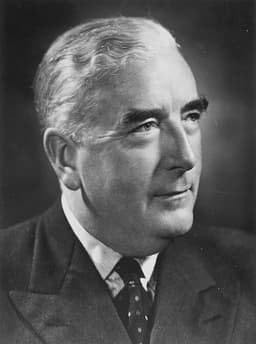
Robert Menzies
Politician · Modern
60.9Total
Basic Information
Born
1914
1894
Died
1996
1978
Era
Modern
Modern
Nationality
Bolivia
Australia
Occupation
Politician
Politician
Civilization
Western
Western
Score Comparison
Military (10%)
47.2
50.0
Political (20%)
35.1
68.8
Influence (20%)
49.4
62.0
Legacy (20%)
40.0
58.0
Leadership (15%)
51.9
75.0
Strategy (15%)
41.7
43.4
TOTAL
44.3
60.9
Hernan Siles Zuazo — Complete Timeline
1956 AD
Elected President of BoliviaPolitical Action◆ Major
Hernán Siles Zuazo was elected president of Bolivia, serving from 1956 to 1960. His first term continued the reforms of the National Revolution, focusing on economic stabilization and infrastructure development.
PresidencyReform
Impact: nationalconstructive
1964 AD
Exiled After CoupPolitical Action
Siles Zuazo was exiled after a military coup overthrew the government of Victor Paz Estenssoro. He spent many years in exile, primarily in Uruguay and Chile, during which he remained active in politics.
ExileCoup
Impact: nationaltragic
1982 AD
Elected President Again (Return to Democracy)Political Action◆ Major
Siles Zuazo was elected president of Bolivia for a second term, serving from 1982 to 1985. His election marked the return to democratic rule after years of military dictatorship.
PresidencyDemocracy
Impact: nationalconstructive
1984 AD
Hyperinflation CrisisOther◆ Major
During Siles Zuazo's second term, Bolivia experienced one of the worst hyperinflation crises in history, with inflation reaching over 20,000% annually. The crisis was caused by economic mismanagement, debt, and falling commodity prices.
HyperinflationEconomic Crisis
Impact: nationaltragic
1985 AD
Resigned Early Due to CrisisPolitical Action◆ Major
Facing the hyperinflation crisis and political instability, Siles Zuazo resigned the presidency a year early. He called for early elections, which led to the election of Victor Paz Estenssoro.
ResignationCrisis
Impact: nationaltragic
Robert Menzies — Complete Timeline
1939 AD
Became Prime Minister of Australia (First Term)Political Action◆ Major
Robert Menzies became Prime Minister of Australia for the first time on April 26, 1939, following the death of Joseph Lyons. He led the United Australia Party and took the country into World War II.
Prime MinisterWorld War IIFirst Term
Impact: national
1941 AD
Resigned as Prime Minister (First Term)Political Action◆ Major
Menzies resigned as Prime Minister on August 29, 1941, after losing the confidence of his party and facing criticism over his wartime leadership. He was succeeded by Arthur Fadden, and the government fell later that year.
ResignationWartime LeadershipPolitical Crisis
Impact: nationaldestructive
1949 AD
Became Prime Minister of Australia (Second Term)Political Action◆ Major
Menzies returned to power on December 19, 1949, leading the Liberal-Country Party coalition to victory in the federal election. He began the longest continuous prime ministership in Australian history, lasting until 1966.
Prime MinisterLiberal PartyLongest Serving
Impact: national
1950 AD
Expanded Immigration and Post-War DevelopmentReform◆ Major
Menzies' government oversaw a large-scale immigration program, attracting millions of European migrants to Australia. This policy, combined with economic growth and infrastructure projects, transformed Australian society and economy in the post-war period.
ImmigrationPost-WarEconomic Growth
Impact: nationalconstructive
Introduced the Menzies Government's Anti-Communist LegislationPolitical Action◆ Major
Menzies introduced the Communist Party Dissolution Act in 1950, seeking to ban the Communist Party of Australia. The act was declared unconstitutional by the High Court in 1951, leading to a failed referendum to change the constitution.
Anti-CommunismLegislationReferendum
Impact: nationaldestructive
Expert Analysis
Origins
Hernan Siles Zuazo was born in 1914 in La Paz, Bolivia, into a politically active family. His father, Hernando Siles, served as president of Bolivia from 1926 to 1930. Young Siles Zuazo studied law at the Universidad Mayor de San Andrés, but his education was interrupted by political turmoil. He became involved in leftist politics and co-founded the Nationalist Revolutionary Movement (MNR) in 1941, alongside Victor Paz Estenssoro. His early life was shaped by the Chaco War (1932-1935) and the subsequent rise of reformist movements.
Robert Menzies was born in 1894 in Jeparit, Victoria, Australia, to a Scottish-born father and a mother of English descent. His father was a storekeeper and later a member of parliament. Menzies studied law at the University of Melbourne, graduating with honors. He became a barrister and entered politics in 1928, winning a seat in the Victorian Legislative Council. His background was steeped in conservative values and legal rigor, contrasting with Siles Zuazo's revolutionary milieu.
Rise to Power
Siles Zuazo rose to prominence as a key figure in the 1952 Bolivian National Revolution, which brought the MNR to power. He served as vice president under Paz Estenssoro from 1952 to 1956. In 1956, he was elected president for his first term, continuing land reforms and nationalization of mines. After a military coup in 1964, he was exiled but returned in the late 1970s as Bolivia transitioned to democracy. He was elected president again in 1982, winning 33.8% of the vote in a fractured field, and took office on October 10, 1982, marking the end of military rule.
Menzies first became Prime Minister in April 1939 after the death of Joseph Lyons, but his wartime leadership was criticized, and he resigned in August 1941 after losing party confidence. He spent years rebuilding the conservative movement, founding the Liberal Party in 1945. He returned to power in December 1949, leading the Liberal-Country Party coalition to victory. His second term began on December 19, 1949, and he would go on to win seven consecutive elections, serving until January 1966.
Leadership & Governance
Siles Zuazo's leadership was marked by democratic commitment but economic mismanagement. His first term (1956-1960) continued revolutionary reforms, but his second term (1982-1985) was overwhelmed by hyperinflation, reaching 20,000% annually in 1985. He implemented austerity measures too late and faced strikes and opposition. His government's inability to control inflation led to widespread suffering, with GDP contracting by 10% in 1983. He scored 51.9 in leadership, reflecting his principled stance but poor economic outcomes.
Menzies governed with stability and economic growth. His government expanded immigration, with over 1 million migrants arriving between 1949 and 1965, fueling a construction boom. He maintained strong ties with the United States and Britain, sending troops to the Korean and Vietnam Wars. His anti-communist legislation, the Communist Party Dissolution Act of 1950, was struck down by the High Court, but he successfully passed a referendum in 1951 to ban the party, though it was narrowly defeated. His leadership score of 75.0 reflects his ability to maintain power and deliver prosperity.
Triumph & Tragedy
Siles Zuazo's triumph was his role in restoring democracy to Bolivia in 1982 after years of military rule. He oversaw free elections and peacefully transferred power in 1985 despite resigning early. His tragedy was the hyperinflation crisis, which destroyed savings and caused social chaos. His economic policies failed, and he was forced to call early elections, leading to the election of his former ally Victor Paz Estenssoro, who implemented shock therapy.
Menzies' triumphs include overseeing Australia's post-war economic boom, with GDP growth averaging 4.5% annually from 1950 to 1965. He also established the Australian National University and expanded social services. His tragedy was his inability to effectively lead during World War II, leading to his resignation. His wartime decisions, such as sending troops to the Middle East, were criticized, and he was seen as out of touch. His legacy score of 58.0 reflects his enduring impact but also the controversies over his conservative policies.
Character & Destiny
Siles Zuazo was a principled democrat but a poor economic manager. He believed in consensus and avoided authoritarian measures, even as hyperinflation raged. His character led him to resign rather than cling to power, a rare act in Latin American politics. His destiny was shaped by the impossible economic inheritance from the military regime, which left him with massive debt and depleted reserves.
Menzies was a skilled politician and orator, known for his wit and confidence. He was a staunch anti-communist and monarchist, which defined his foreign policy. His character of persistence allowed him to rebuild his career after his 1941 resignation. His destiny was to lead Australia during a period of unprecedented growth and to define the nation's post-war identity.
Legacy
Siles Zuazo's legacy is mixed: he is remembered as a democratic pioneer but also as the president who presided over hyperinflation. His decision to call early elections set a precedent for democratic transitions. He scored 40.0 in legacy, reflecting his limited long-term impact compared to his contemporaries.
Menzies' legacy is more substantial. He transformed Australia's economy and society, and his Liberal Party dominated politics for decades. His immigration policy diversified Australia, and his alliance with the US shaped foreign policy for generations. He scored 58.0 in legacy, with his name attached to institutions like the Menzies Research Centre.
Conclusion
Robert Menzies had a greater impact than Hernan Siles Zuazo. Menzies' leadership score of 75.0 versus Siles' 51.9, and his total score of 60.9 versus 44.3, reflect his more effective governance. Menzies shaped a prosperous, growing nation over 16 years, while Siles' term was defined by crisis and failure. Although Siles' role in restoring democracy is notable, the scale of Menzies' achievements in economic development, immigration, and political stability is far larger. Menzies' legacy endures in modern Australia, while Siles' is a cautionary tale.
Rankings
🥇
Robert MenziesLeader
Mil: 50.0Pol: 68.8Inf: 62.0
60.9
🥈
Hernan Siles Zuazo
Mil: 47.2Pol: 35.1Inf: 49.4
44.3
+16.6 behind
How This Comparison Works
Algorithm
Each figure is scored on 6 dimensions (0—100 scale) based on structured historical data: Military (10%), Political (20%), Influence (20%), Legacy (20%), Leadership (15%), Strategy (15%). The weighted total produces the final ranking.
Data Sources
Scores are computed from structured sub-indicators in the database. Scale factors adjust for era (Ancient ×0.85, Modern ×1.0) and civilization size (Eastern ×1.05, Other ×0.80) to account for differences in population and military scale.
Maximum 3 Figures
Comparisons are limited to 2—3 figures to ensure readability and statistical meaningfulness.
Error Margins
±5 points per dimension — Sub-scores are derived from historical records with inherent uncertainty. Two figures within 5 points on a dimension should be considered roughly equivalent in that area.
Total Score Accuracy
±3 points overall — The weighted combination of 6 dimensions produces a total score with approximately ±3 points of uncertainty. Differences of less than 3 points are not statistically significant— the figures are effectively tied.
Known Limitations
- Historical records are incomplete and uneven across civilizations
- Figures from oral-tradition societies may be underrepresented
- Occupation labels can misclassify multi-role figures
- Scores measure capability and impact, not moral character
- Quantitative scoring is a comparison tool, not absolute truth
Capability Radar
Military (10%) — Battles & Warfare
Battles
30
28
Win Rate
33
31
Expansion
37
33
Political (20%) — Governance & Reform
Reform
30
70
Diplomacy
35
75
Economy
10
72
Influence (20%) — Cultural & Global Reach
Cultural
15
55
Global
20
55
Legacy (20%) — Historical Impact
Historical
25
65
Longevity
15
60
Leadership (15%) — Power & Stability
Tenure
40
85
Stability
5
80
Strategy (15%) — Tactics & Innovation
Strategy
39
40
Tactics
38
41
Reform
43
45
Similar Comparisons
Comments & Discussion
No comments yet. Be the first to share your thoughts!