Loading...
Joseph Tarka vs Robert Menzies
Robert Menzies leads by 14.3 pts · 2 figures compared
…

Joseph Tarka
Politician · Modern
46.6Total
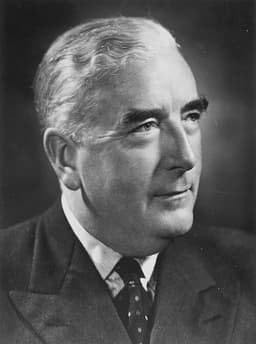
Robert Menzies
Politician · Modern
60.9Total
Basic Information
Born
1932
1894
Died
—
1978
Era
Modern
Modern
Nationality
Nigeria
Australia
Occupation
Politician
Politician
Civilization
Other
Western
Score Comparison
Military (10%)
38.9
50.0
Political (20%)
43.7
68.8
Influence (20%)
51.8
62.0
Legacy (20%)
41.7
58.0
Leadership (15%)
58.8
75.0
Strategy (15%)
39.6
43.4
TOTAL
46.6
60.9
Joseph Tarka — Complete Timeline
1955 AD
Founding of the United Middle Belt CongressPolitical Action◆ Major
Joseph Tarka founded the United Middle Belt Congress (UMBC), a political movement advocating for the rights of minority ethnic groups in the Middle Belt region of Nigeria. The UMBC sought greater autonomy and representation within the federal structure, challenging the dominance of larger ethnic groups.
Minority RightsPolitical MovementNigeria
Impact: regionalconstructive
1967 AD
Appointment as Federal Commissioner for TransportPolitical Action
During the Nigerian Civil War, Tarka was appointed Federal Commissioner for Transport in the government of General Yakubu Gowon. He oversaw the movement of supplies and troops, playing a logistical role in the federal war effort against Biafra.
GovernmentCivil WarNigeria
Impact: national
1975 AD
Advocacy for minority rights at the 1975 Constitution ConferencePolitical Action◆ Major
Tarka was a leading voice at the 1975 Constitutional Conference, arguing for the creation of more states to address the grievances of minority groups. His advocacy contributed to the eventual creation of additional states in Nigeria, reshaping the country's political map.
ConstitutionMinority RightsNigeria
Impact: nationalconstructive
Robert Menzies — Complete Timeline
1939 AD
Became Prime Minister of Australia (First Term)Political Action◆ Major
Robert Menzies became Prime Minister of Australia for the first time on April 26, 1939, following the death of Joseph Lyons. He led the United Australia Party and took the country into World War II.
Prime MinisterWorld War IIFirst Term
Impact: national
1941 AD
Resigned as Prime Minister (First Term)Political Action◆ Major
Menzies resigned as Prime Minister on August 29, 1941, after losing the confidence of his party and facing criticism over his wartime leadership. He was succeeded by Arthur Fadden, and the government fell later that year.
ResignationWartime LeadershipPolitical Crisis
Impact: nationaldestructive
1949 AD
Became Prime Minister of Australia (Second Term)Political Action◆ Major
Menzies returned to power on December 19, 1949, leading the Liberal-Country Party coalition to victory in the federal election. He began the longest continuous prime ministership in Australian history, lasting until 1966.
Prime MinisterLiberal PartyLongest Serving
Impact: national
1950 AD
Expanded Immigration and Post-War DevelopmentReform◆ Major
Menzies' government oversaw a large-scale immigration program, attracting millions of European migrants to Australia. This policy, combined with economic growth and infrastructure projects, transformed Australian society and economy in the post-war period.
ImmigrationPost-WarEconomic Growth
Impact: nationalconstructive
Introduced the Menzies Government's Anti-Communist LegislationPolitical Action◆ Major
Menzies introduced the Communist Party Dissolution Act in 1950, seeking to ban the Communist Party of Australia. The act was declared unconstitutional by the High Court in 1951, leading to a failed referendum to change the constitution.
Anti-CommunismLegislationReferendum
Impact: nationaldestructive
Expert Analysis
Origins
Joseph Tarka was born in 1932 in the Tiv area of central Nigeria, part of the Benue region. His early life was shaped by the marginalization of minority ethnic groups under the dominant Hausa-Fulani and Yoruba elites. He attended Katsina College and later the University of Ibadan, where he studied political science. Tarka's formative experiences included witnessing the political dominance of larger ethnic groups, which drove his commitment to minority rights.
Robert Menzies was born on December 20, 1894, in Jeparit, Victoria, Australia, into a family of Scottish descent. His father was a storekeeper and later a member of the Victorian Parliament. Menzies studied law at the University of Melbourne and became a barrister. He entered politics in 1928, winning a seat in the Victorian Legislative Council. His early career was marked by a strong belief in conservative values and anti-communism.
Rise to Power
Tarka rose to prominence by founding the United Middle Belt Congress (UMBC) in 1957, a movement advocating for the rights of minority ethnic groups in the Middle Belt region. He became a leading voice at the 1975 Constitutional Conference, arguing for the creation of more states to address minority grievances. His political influence peaked during the Nigerian Civil War when he was appointed Federal Commissioner for Transport under General Yakubu Gowon, overseeing logistics for the federal government.
Menzies first became Prime Minister of Australia on April 26, 1939, after the death of Joseph Lyons. However, his first term was marred by criticism over his wartime leadership, leading to his resignation on August 29, 1941. He returned to power on December 19, 1949, leading the Liberal-Country Party coalition to victory. He then began the longest continuous prime ministerial term in Australian history, lasting until 1966.
Leadership & Governance
Tarka's leadership focused on ethnic minority advocacy within a federal system. He used political negotiation and constitutional arguments to push for state creation, successfully influencing the creation of Benue State in 1976. His governance style was collaborative, working within the establishment to achieve incremental gains. However, his political score of 43.7 reflects limited executive power compared to Menzies.
Menzies governed as a strong conservative leader, prioritizing economic growth, anti-communism, and immigration. He introduced the Communist Party Dissolution Act in 1950, though it was later ruled unconstitutional. His government expanded immigration, attracting millions of European migrants, fueling post-war development. Menzies' leadership score of 75.0 reflects his ability to maintain coalition unity and win seven consecutive elections.
Triumph & Tragedy
Tarka's greatest success was his role in the creation of Benue State, giving political voice to the Tiv people. However, his failure to achieve broader minority rights within a heavily centralized Nigerian state limited his impact. His legacy score of 41.7 indicates modest long-term influence.
Menzies' triumphs include overseeing Australia's post-war economic boom and building the modern Liberal Party. His immigration policy transformed Australia into a multicultural society. His tragedy was his inability to win a referendum to ban the Communist Party, a major policy defeat. His military score of 50.0 reflects his cautious approach to defense.
Character & Destiny
Tarka was a pragmatic advocate, patient and persistent in pursuing minority rights through legal and political channels. His character as a consensus-builder allowed him to work within the system, but also limited his ability to mobilize mass movements. His total score of 46.6 reflects these constraints.
Menzies was a shrewd political strategist, known for his eloquence and ability to connect with voters. His anti-communist stance resonated with Cold War anxieties, but his authoritarian tendencies sometimes clashed with democratic norms. His political score of 68.8 reflects his electoral success and party leadership.
Legacy
Tarka's legacy is primarily regional; he is remembered as a champion of the Tiv people and minority rights in Nigeria. The creation of Benue State stands as his enduring achievement, but his influence on national politics waned after his death in 1980. His influence score of 51.8 indicates limited global impact.
Menzies' legacy is national and enduring. He shaped Australia's political landscape, establishing the Liberal Party as a dominant force. His immigration policies laid the foundation for modern multicultural Australia. His legacy score of 58.0 reflects his lasting impact on Australian institutions and identity.
Conclusion
Robert Menzies had a greater impact than Joseph Tarka, as reflected in his total score of 60.9 versus Tarka's 46.6. Menzies' leadership, political acumen, and long tenure allowed him to shape a nation's trajectory, while Tarka's influence was confined to regional minority advocacy. Menzies' policies on immigration and anti-communism had lasting national and international implications, whereas Tarka's achievements, though significant for the Tiv people, did not alter Nigeria's broader political structure. The data supports the conclusion that Menzies' governance and legacy surpass Tarka's in scope and durability.
Rankings
🥇
Robert MenziesLeader
Mil: 50.0Pol: 68.8Inf: 62.0
60.9
🥈
Joseph Tarka
Mil: 38.9Pol: 43.7Inf: 51.8
46.6
+14.3 behind
How This Comparison Works
Algorithm
Each figure is scored on 6 dimensions (0—100 scale) based on structured historical data: Military (10%), Political (20%), Influence (20%), Legacy (20%), Leadership (15%), Strategy (15%). The weighted total produces the final ranking.
Data Sources
Scores are computed from structured sub-indicators in the database. Scale factors adjust for era (Ancient ×0.85, Modern ×1.0) and civilization size (Eastern ×1.05, Other ×0.80) to account for differences in population and military scale.
Maximum 3 Figures
Comparisons are limited to 2—3 figures to ensure readability and statistical meaningfulness.
Error Margins
±5 points per dimension — Sub-scores are derived from historical records with inherent uncertainty. Two figures within 5 points on a dimension should be considered roughly equivalent in that area.
Total Score Accuracy
±3 points overall — The weighted combination of 6 dimensions produces a total score with approximately ±3 points of uncertainty. Differences of less than 3 points are not statistically significant— the figures are effectively tied.
Known Limitations
- Historical records are incomplete and uneven across civilizations
- Figures from oral-tradition societies may be underrepresented
- Occupation labels can misclassify multi-role figures
- Scores measure capability and impact, not moral character
- Quantitative scoring is a comparison tool, not absolute truth
Capability Radar
Military (10%) — Battles & Warfare
Battles
21
28
Win Rate
26
31
Expansion
26
33
Political (20%) — Governance & Reform
Reform
40
70
Diplomacy
45
75
Economy
20
72
Influence (20%) — Cultural & Global Reach
Cultural
35
55
Global
15
55
Legacy (20%) — Historical Impact
Historical
30
65
Longevity
20
60
Leadership (15%) — Power & Stability
Tenure
30
85
Stability
25
80
Strategy (15%) — Tactics & Innovation
Strategy
33
40
Tactics
32
41
Reform
38
45
Similar Comparisons
Comments & Discussion
No comments yet. Be the first to share your thoughts!