Loading...
Fernando Belaunde Terry vs Robert Menzies
Robert Menzies leads by 6.5 pts · 2 figures compared
…
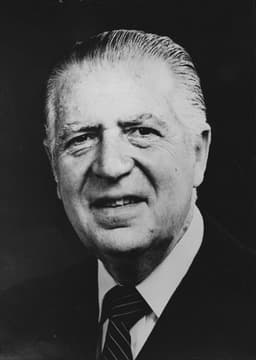
Fernando Belaunde Terry
Politician · Modern
54.4Total
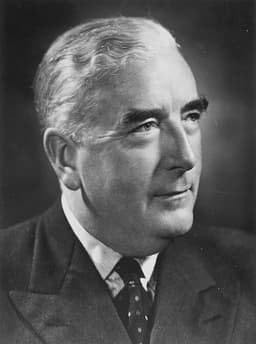
Robert Menzies
Politician · Modern
60.9Total
Basic Information
Born
1912
1894
Died
2002
1978
Era
Modern
Modern
Nationality
Peru
Australia
Occupation
Politician
Politician
Civilization
Western
Western
Score Comparison
Military (10%)
50.0
50.0
Political (20%)
68.0
68.8
Influence (20%)
53.3
62.0
Legacy (20%)
45.0
58.0
Leadership (15%)
68.0
75.0
Strategy (15%)
44.1
43.4
TOTAL
54.4
60.9
Fernando Belaunde Terry — Complete Timeline
1963 AD
Elected President of PeruPolitical Action◆ Major
Fernando Bela
ElectionCivilian Rule
Impact: nationalconstructive
1968 AD
Overthrown by military coupPolitical Action
General Juan Velasco Alvarado led a military coup that overthrew President Bela
CoupOverthrowMilitary
Impact: nationaldestructive
Exiled to the United StatesPolitical Action
After being overthrown, Bela
ExilePersonal
Impact: nationaltragic
1980 AD
Re-elected President of PeruPolitical Action
After 12 years of military rule, Bela
ElectionReturn to Democracy
Impact: nationalconstructive
1981 AD
Initiated the Marginal Forest Highway projectReform◆ Major
Belaúnde Terry launched the Marginal Forest Highway (Carretera Marginal de la Selva) project, a major infrastructure initiative to integrate the Amazon region into the national economy. The project aimed to promote colonization and development but faced environmental and social criticism.
InfrastructureDevelopmentAmazon
Impact: nationalconstructive
Robert Menzies — Complete Timeline
1939 AD
Became Prime Minister of Australia (First Term)Political Action◆ Major
Robert Menzies became Prime Minister of Australia for the first time on April 26, 1939, following the death of Joseph Lyons. He led the United Australia Party and took the country into World War II.
Prime MinisterWorld War IIFirst Term
Impact: national
1941 AD
Resigned as Prime Minister (First Term)Political Action◆ Major
Menzies resigned as Prime Minister on August 29, 1941, after losing the confidence of his party and facing criticism over his wartime leadership. He was succeeded by Arthur Fadden, and the government fell later that year.
ResignationWartime LeadershipPolitical Crisis
Impact: nationaldestructive
1949 AD
Became Prime Minister of Australia (Second Term)Political Action◆ Major
Menzies returned to power on December 19, 1949, leading the Liberal-Country Party coalition to victory in the federal election. He began the longest continuous prime ministership in Australian history, lasting until 1966.
Prime MinisterLiberal PartyLongest Serving
Impact: national
1950 AD
Expanded Immigration and Post-War DevelopmentReform◆ Major
Menzies' government oversaw a large-scale immigration program, attracting millions of European migrants to Australia. This policy, combined with economic growth and infrastructure projects, transformed Australian society and economy in the post-war period.
ImmigrationPost-WarEconomic Growth
Impact: nationalconstructive
Introduced the Menzies Government's Anti-Communist LegislationPolitical Action◆ Major
Menzies introduced the Communist Party Dissolution Act in 1950, seeking to ban the Communist Party of Australia. The act was declared unconstitutional by the High Court in 1951, leading to a failed referendum to change the constitution.
Anti-CommunismLegislationReferendum
Impact: nationaldestructive
Expert Analysis
Origins
Fernando Belaunde Terry was born on October 7, 1912, in Lima, Peru, into an aristocratic family with a tradition of public service. His father was a diplomat and his grandfather a former president. Belaunde studied architecture at the University of Texas at Austin and later at the University of San Marcos in Lima, graduating in 1935. His training as an architect influenced his vision for integrating Peru's geography through infrastructure. In contrast, Robert Menzies was born on December 20, 1894, in Jeparit, Victoria, Australia, to a working-class family of Scottish descent. His father was a storekeeper and later a politician. Menzies studied law at the University of Melbourne, graduating in 1918, and became a successful barrister. His legal background shaped his methodical approach to governance.
Rise to Power
Belaunde entered politics in the 1940s, co-founding the Popular Action party in 1956. He ran for president in 1962 but was blocked by a military junta. In 1963, he won the election with 39.1% of the vote, ending eight years of military rule. His first term focused on infrastructure, but he faced a hostile Congress controlled by opposition parties. Menzies entered federal politics in 1934, winning a House of Representatives seat. He served as Attorney-General and Minister for Industry in the Lyons government. After Lyons' death in 1939, Menzies became Prime Minister on April 26, 1939. However, his wartime leadership was criticized, and he resigned on August 29, 1941, after losing party confidence. He returned to power on December 19, 1949, leading the Liberal-Country Party coalition to victory, beginning the longest continuous prime ministership in Australian history (16 years).
Leadership & Governance
Belaunde's governance reflected his architectural background: he prioritized physical infrastructure to unify Peru. His flagship project, the Marginal Forest Highway (Carretera Marginal de la Selva), aimed to integrate the Amazon region. He also promoted agrarian reform and decentralization. However, his political score of 68.0 and leadership score of 68.0 indicate moderate effectiveness. He struggled with congressional opposition and economic instability, leading to inflation and debt. Menzies, with a political score of 68.8 and leadership score of 75.0, demonstrated more consistent governance. He built the Liberal Party as a stable coalition, maintained economic growth through immigration and industrial development, and expanded social services. His anti-communist legislation (Communist Party Dissolution Act 1950) was struck down by the High Court, but he successfully passed a referendum in 1951 to ban the party, though it was narrowly defeated. Menzies' governance emphasized stability, anti-communism, and close ties with the United States and Britain.
Triumph & Tragedy
Belaunde's greatest triumph was his 1980 re-election after 12 years of military rule, restoring democracy to Peru. He launched the Marginal Forest Highway and other projects, but his second term was marred by economic crisis, hyperinflation (reaching 3,000% annually by 1985), and the rise of the Shining Path insurgency. His failure to address inequality and corruption led to his party's defeat in 1985. His legacy score of 45.0 reflects these mixed results. Menzies' triumphs include overseeing Australia's post-war economic boom, expanding immigration (2 million migrants by 1966), and establishing key institutions like the Australian National University. His tragedy was his inability to effectively lead during World War II, leading to his resignation. His strategy score of 43.4 indicates tactical weaknesses, despite long-term success. His legacy score of 58.0 is higher than Belaunde's, reflecting durable institutional impact.
Character & Destiny
Belaunde was an idealist, often described as a visionary but impractical. His architectural training made him focus on physical projects rather than political consolidation. He was overthrown twice by the military, reflecting his inability to secure support from elites and the armed forces. His character led to a cycle of democratic restoration and failure. Menzies was pragmatic and disciplined, known for his oratory and intellectual rigor. He rebuilt his political career after 1941 by founding the Liberal Party in 1944, showing resilience. His cautious, consensus-driven style ensured long tenure but limited radical change. Historians note his skill in managing coalitions and public opinion, contributing to his high leadership score (75.0).
Legacy
Belaunde's legacy is mixed: he is remembered as a democrat who restored civilian rule, but his economic policies are criticized for fueling inflation and debt. The Marginal Forest Highway remains incomplete, symbolizing unfulfilled ambitions. His influence score of 53.3 and legacy of 45.0 reflect limited lasting impact. Menzies' legacy is more enduring: he shaped modern Australia's political culture, economic framework, and immigration policy. The Liberal Party he founded remains a major force. His influence score of 62.0 and legacy of 58.0 indicate a stronger, more institutional impact. Menzies is often ranked among Australia's greatest prime ministers, while Belaunde is seen as a transitional figure.
Conclusion
While both leaders advanced democracy in their contexts, Robert Menzies had a greater impact. His leadership score of 75.0, political score of 68.8, and legacy of 58.0 surpass Belaunde's 68.0, 68.0, and 45.0 respectively. Menzies' 16-year tenure allowed him to implement lasting policies, whereas Belaunde's two non-consecutive terms were interrupted by coups and economic crises. Menzies' institutional legacy—the Liberal Party, immigration program, and economic stability—outweighs Belaunde's infrastructure projects. The total score gap of 6.5 points (Menzies 60.9 vs. Belaunde 54.4) underscores this difference. In the comparison of democratic reformers, Menzies achieved more sustained, structural change.
Rankings
🥇
Robert MenziesLeader
Mil: 50.0Pol: 68.8Inf: 62.0
60.9
🥈
Fernando Belaunde Terry
Mil: 50.0Pol: 68.0Inf: 53.3
54.4
+6.5 behind
How This Comparison Works
Algorithm
Each figure is scored on 6 dimensions (0—100 scale) based on structured historical data: Military (10%), Political (20%), Influence (20%), Legacy (20%), Leadership (15%), Strategy (15%). The weighted total produces the final ranking.
Data Sources
Scores are computed from structured sub-indicators in the database. Scale factors adjust for era (Ancient ×0.85, Modern ×1.0) and civilization size (Eastern ×1.05, Other ×0.80) to account for differences in population and military scale.
Maximum 3 Figures
Comparisons are limited to 2—3 figures to ensure readability and statistical meaningfulness.
Error Margins
±5 points per dimension — Sub-scores are derived from historical records with inherent uncertainty. Two figures within 5 points on a dimension should be considered roughly equivalent in that area.
Total Score Accuracy
±3 points overall — The weighted combination of 6 dimensions produces a total score with approximately ±3 points of uncertainty. Differences of less than 3 points are not statistically significant— the figures are effectively tied.
Known Limitations
- Historical records are incomplete and uneven across civilizations
- Figures from oral-tradition societies may be underrepresented
- Occupation labels can misclassify multi-role figures
- Scores measure capability and impact, not moral character
- Quantitative scoring is a comparison tool, not absolute truth
Capability Radar
Military (10%) — Battles & Warfare
Battles
30
28
Win Rate
32
31
Expansion
32
33
Political (20%) — Governance & Reform
Reform
60
70
Diplomacy
55
75
Economy
50
72
Influence (20%) — Cultural & Global Reach
Cultural
35
55
Global
25
55
Legacy (20%) — Historical Impact
Historical
40
65
Longevity
30
60
Leadership (15%) — Power & Stability
Tenure
65
85
Stability
40
80
Strategy (15%) — Tactics & Innovation
Strategy
40
40
Tactics
42
41
Reform
46
45
Similar Comparisons
Comments & Discussion
No comments yet. Be the first to share your thoughts!