Loading...
Ferenc Gyurcsany vs Robert Menzies
Robert Menzies leads by 14.3 pts · 2 figures compared
…
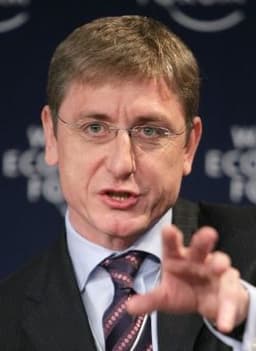
Ferenc Gyurcsany
Politician · Modern
46.6Total
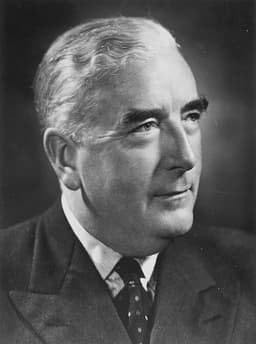
Robert Menzies
Politician · Modern
60.9Total
Basic Information
Born
1961
1894
Died
—
1978
Era
Modern
Modern
Nationality
Hungary
Australia
Occupation
Politician
Politician
Civilization
Western
Western
Score Comparison
Military (10%)
48.7
50.0
Political (20%)
40.8
68.8
Influence (20%)
50.2
62.0
Legacy (20%)
40.0
58.0
Leadership (15%)
58.8
75.0
Strategy (15%)
42.2
43.4
TOTAL
46.6
60.9
Ferenc Gyurcsany — Complete Timeline
2004 AD
Appointed Prime Minister of HungaryPolitical Action◆ Major
Ferenc Gyurcsany was appointed Prime Minister of Hungary by President Laszlo Solyom, succeeding Peter Medgyessy. He was a wealthy businessman and former member of the Hungarian Socialist Party. His appointment marked a continuation of socialist-led government.
Prime MinisterHungarian Socialist PartyGovernment Change
Impact: national
2006 AD
Implemented Austerity MeasuresReform◆ Major
Following the leaked speech, Gyurcsany's government implemented austerity measures including tax increases, spending cuts, and public sector reforms to reduce the budget deficit. The measures were unpopular and contributed to the political instability.
AusterityEconomic ReformBudget Deficit
Impact: nationaldestructive
Leaked Speech Caused RiotsPolitical Action◆ Major
A leaked recording of Gyurcsany's private speech to Socialist Party MPs revealed him admitting that the government had lied about the economy to win the 2006 election. The leak sparked massive protests and riots in Budapest, with demonstrators calling for his resignation.
LeakRiotsPolitical Crisis
Impact: nationaldestructive
2009 AD
Resigned as Prime MinisterPolitical Action◆ Major
Gyurcsany resigned as Prime Minister after losing a no-confidence vote in parliament. His resignation came amid the global financial crisis and ongoing political turmoil. He was succeeded by Gordon Bajnai.
ResignationNo-ConfidencePolitical Crisis
Impact: nationaltragic
Robert Menzies — Complete Timeline
1939 AD
Became Prime Minister of Australia (First Term)Political Action◆ Major
Robert Menzies became Prime Minister of Australia for the first time on April 26, 1939, following the death of Joseph Lyons. He led the United Australia Party and took the country into World War II.
Prime MinisterWorld War IIFirst Term
Impact: national
1941 AD
Resigned as Prime Minister (First Term)Political Action◆ Major
Menzies resigned as Prime Minister on August 29, 1941, after losing the confidence of his party and facing criticism over his wartime leadership. He was succeeded by Arthur Fadden, and the government fell later that year.
ResignationWartime LeadershipPolitical Crisis
Impact: nationaldestructive
1949 AD
Became Prime Minister of Australia (Second Term)Political Action◆ Major
Menzies returned to power on December 19, 1949, leading the Liberal-Country Party coalition to victory in the federal election. He began the longest continuous prime ministership in Australian history, lasting until 1966.
Prime MinisterLiberal PartyLongest Serving
Impact: national
1950 AD
Expanded Immigration and Post-War DevelopmentReform◆ Major
Menzies' government oversaw a large-scale immigration program, attracting millions of European migrants to Australia. This policy, combined with economic growth and infrastructure projects, transformed Australian society and economy in the post-war period.
ImmigrationPost-WarEconomic Growth
Impact: nationalconstructive
Introduced the Menzies Government's Anti-Communist LegislationPolitical Action◆ Major
Menzies introduced the Communist Party Dissolution Act in 1950, seeking to ban the Communist Party of Australia. The act was declared unconstitutional by the High Court in 1951, leading to a failed referendum to change the constitution.
Anti-CommunismLegislationReferendum
Impact: nationaldestructive
Expert Analysis
Origins
Ferenc Gyurcsany was born in 1961 in Pápa, Hungary. He studied economics at the University of Pecs and later became a wealthy businessman in the post-communist era. His early career included leadership roles in youth communist organizations, which shaped his political network. In contrast, Robert Menzies was born in 1894 in Jeparit, Victoria, Australia. His father was a storekeeper and later a politician. Menzies studied law at the University of Melbourne and became a barrister. His entry into politics was through the Victorian Legislative Council, reflecting a stable, democratic upbringing.
Rise to Power
Gyurcsany rose to prominence as a businessman and then as Minister of Youth and Sports in 2003. He became Prime Minister in 2004, appointed by President Solyom after the previous PM resigned. His rise was swift, driven by his wealth and party connections. Menzies first became Prime Minister in 1939, succeeding Joseph Lyons. However, he lost power in 1941 due to wartime dissatisfaction. He returned in 1949, leading the Liberal-Country Party coalition, and remained in office for a record 16 years. His rise was marked by party building and electoral success.
Leadership & Governance
Gyurcsany's leadership was marked by a centralizing, confrontational style. He implemented austerity measures in 2006 after his leaked speech revealed deception about the economy. These measures included tax hikes and spending cuts, which stabilized Hungary's budget deficit but sparked widespread protests. His governance scored 58.8 in leadership and 42.2 in strategy, reflecting his reactive approach. Menzies, on the other hand, scored 75.0 in leadership and 43.4 in strategy. He governed with a stable coalition, focusing on anti-communist legislation, immigration expansion, and economic growth. His style was consultative and parliamentary, contrasting with Gyurcsany's secrecy.
Triumph & Tragedy
Gyurcsany's greatest triumph was his initial economic management, reducing the deficit from 9.2% to 3.4% of GDP by 2007. However, his tragedy was the leaked 2006 speech where he admitted lying about the economy to win elections. This led to violent riots, a loss of public trust, and his eventual resignation in 2009. Menzies' triumphs include overseeing Australia's post-war boom, with immigration increasing population by 2 million, and founding the Liberal Party. His tragedy was the failure of his anti-communist referendum in 1951, which he lost after a strong public campaign. He also faced criticism for not modernizing Australia's constitution.
Character & Destiny
Gyurcsany was ambitious and pragmatic, but his secretiveness and deception damaged his credibility. His character led to a political crisis that defined his tenure. Menzies was known for his eloquence, intellect, and stability. He maintained power through consensus-building and flexibility. His character allowed him to adapt from wartime failure to peacetime success, shaping Australia's destiny as a prosperous nation.
Legacy
Gyurcsany's legacy is mixed: his austerity measures stabilized Hungary's economy, but his dishonesty eroded trust in government. He scored 40.0 in legacy. Menzies left a profound legacy: he shaped modern Australia through immigration, economic policies, and the Liberal Party. His legacy score is 58.0. The Menzies era is seen as a golden age of stability and growth.
Conclusion
Robert Menzies had a greater impact than Ferenc Gyurcsany. His total score of 60.9 versus 46.6 reflects his longer tenure, higher leadership, and lasting influence. While Gyurcsany faced a specific crisis, Menzies transformed Australia over decades. Menzies' legacy of political stability and economic expansion outweighs Gyurcsany's temporary fiscal adjustments.
Rankings
🥇
Robert MenziesLeader
Mil: 50.0Pol: 68.8Inf: 62.0
60.9
🥈
Ferenc Gyurcsany
Mil: 48.7Pol: 40.8Inf: 50.2
46.6
+14.3 behind
How This Comparison Works
Algorithm
Each figure is scored on 6 dimensions (0—100 scale) based on structured historical data: Military (10%), Political (20%), Influence (20%), Legacy (20%), Leadership (15%), Strategy (15%). The weighted total produces the final ranking.
Data Sources
Scores are computed from structured sub-indicators in the database. Scale factors adjust for era (Ancient ×0.85, Modern ×1.0) and civilization size (Eastern ×1.05, Other ×0.80) to account for differences in population and military scale.
Maximum 3 Figures
Comparisons are limited to 2—3 figures to ensure readability and statistical meaningfulness.
Error Margins
±5 points per dimension — Sub-scores are derived from historical records with inherent uncertainty. Two figures within 5 points on a dimension should be considered roughly equivalent in that area.
Total Score Accuracy
±3 points overall — The weighted combination of 6 dimensions produces a total score with approximately ±3 points of uncertainty. Differences of less than 3 points are not statistically significant— the figures are effectively tied.
Known Limitations
- Historical records are incomplete and uneven across civilizations
- Figures from oral-tradition societies may be underrepresented
- Occupation labels can misclassify multi-role figures
- Scores measure capability and impact, not moral character
- Quantitative scoring is a comparison tool, not absolute truth
Capability Radar
Military (10%) — Battles & Warfare
Battles
29
28
Win Rate
34
31
Expansion
35
33
Political (20%) — Governance & Reform
Reform
35
70
Diplomacy
30
75
Economy
30
72
Influence (20%) — Cultural & Global Reach
Cultural
20
55
Global
20
55
Legacy (20%) — Historical Impact
Historical
25
65
Longevity
15
60
Leadership (15%) — Power & Stability
Tenure
40
85
Stability
15
80
Strategy (15%) — Tactics & Innovation
Strategy
38
40
Tactics
40
41
Reform
44
45
Similar Comparisons
Comments & Discussion
No comments yet. Be the first to share your thoughts!