Loading...
Hipolito Mejia vs Napoleon Bonaparte
Napoleon Bonaparte leads by 25.4 pts · 2 figures compared
…
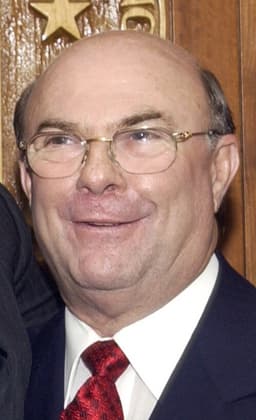
Hipolito Mejia
Politician · Modern
45.5Total

Napoleon Bonaparte
General · Modern
70.9Total
Basic Information
Born
1941
1769
Died
—
1821
Era
Modern
Modern
Nationality
Dominican Republic
France
Occupation
Politician
General
Civilization
Western
Western
Score Comparison
Military (10%)
49.9
94.0
Political (20%)
39.4
72.0
Influence (20%)
47.1
40.0
Legacy (20%)
37.5
80.0
Leadership (15%)
62.2
78.0
Strategy (15%)
40.8
90.0
TOTAL
45.5
70.9
Hipolito Mejia — Complete Timeline
2000 AD
Election as PresidentPolitical Action◆ Major
Mejía was elected president of the Dominican Republic as the candidate of the Dominican Revolutionary Party (PRD). He campaigned on a platform of agricultural development and social spending.
Dominican RepublicElectionPRD
Impact: nationalconstructive
2003 AD
Banking Crisis of 2003Other
The collapse of Banco Intercontinental (Baninter) due to massive fraud triggered a severe banking crisis. The government's bailout cost an estimated 20% of GDP, causing a deep recession and inflation.
Dominican RepublicBanking CrisisEconomy
Impact: nationaltragic
2004 AD
Defeat in the 2004 Presidential ElectionPolitical Action◆ Major
Mejía was defeated in his re-election bid by Leonel Fernández of the Dominican Liberation Party (PLD). The election was largely a referendum on Mejía's handling of the banking crisis.
Dominican RepublicElectionDefeat
Impact: national
Napoleon Bonaparte — Complete Timeline
1799 AD
Coup of 18 BrumaireOther◆ Major
Napoleon Bonaparte, with support from his brother Lucien and key political figures, overthrew the Directory in a bloodless coup. He established the Consulate with himself as First Consul, effectively becoming the ruler of France. This event ended the French Revolution's most unstable period.
French RevolutionCoupRise to Power
Impact: regional
1804 AD
Promulgation of the Napoleonic CodeOther◆ Major
Napoleon enacted the Civil Code of the French, known as the Napoleonic Code, a comprehensive set of laws that replaced the fragmented feudal legal systems. The code established legal equality, protected property rights, and secularized law. It became the basis for legal systems in many European and world countries.
Legal ReformNapoleonic CodeCivil Law
Impact: globalconstructive
1805 AD
Battle of AusterlitzWar◆ Major
Napoleon's Grande Arm
Napoleonic WarsBattleDecisive Victory
Impact: global
1812 AD
Invasion of RussiaWar◆ Major
Napoleon led the Grande Arm
Napoleonic WarsInvasionDisaster
Impact: globaldestructive
1815 AD
Battle of WaterlooWar◆ Major
Napoleon's French army was defeated by the combined forces of the Duke of Wellington's Anglo-Allied army and Gebhard Leberecht von Bl
Napoleonic WarsBattleFinal Defeat
Impact: globaldestructive
Expert Analysis
hipolito-mejia-vs-napoleon-bonaparte
# The Conqueror and the Farmer: Two Paths of Power in the Modern Age
In the summer of 1815, Napoleon Bonaparte stood on a muddy field near Waterloo, watching his Imperial Guard—the elite of his army—retreat for the first time in history. Less than two centuries later, in the spring of 2003, Hipólito Mejía sat in the Presidential Palace in Santo Domingo, watching the Dominican peso collapse as a banking scandal tore through his nation. One man commanded armies that reshaped continents; the other governed a small Caribbean island. Yet both were products of their times, men who rose from modest origins to wield power, and both saw their greatest ambitions shattered by forces they could not control. What drove their different outcomes—and what does their contrast reveal about the nature of leadership itself?
Origins
Napoleon was born in 1769 on Corsica, an island that had only become French the year before. His family was minor nobility, but poor—his father was a lawyer who died young, leaving Napoleon to support his mother and siblings. He spoke Italian as a child, not French, and was mocked by classmates at military academy for his accent and small stature. This outsider status forged a relentless ambition. He devoured books on military history and philosophy, particularly Rousseau and Plutarch, dreaming of glory.
Hipólito Mejía was born in 1941 in Santiago de los Caballeros, Dominican Republic, into a family of farmers. His father grew tobacco and coffee; young Hipólito worked the land alongside him. He studied agricultural engineering, not military strategy. While Napoleon learned to command soldiers, Mejía learned to cultivate crops. The Dominican Republic in the 1940s was a poor agrarian society under the iron grip of Rafael Trujillo’s dictatorship. Mejía’s world was small, local, and practical.
The difference in their eras is crucial. Napoleon came of age during the French Revolution, a time when a young artillery officer could rise to rule an empire. Mejía came of age during the Cold War, when Caribbean politics meant balancing between the United States and local strongmen. Napoleon’s world rewarded military genius; Mejía’s rewarded patience and coalition-building.
Rise to Power
Napoleon’s ascent was meteoric. At age 24, he drove the British out of Toulon and became a brigadier general. At 26, he suppressed a royalist revolt in Paris with a “whiff of grapeshot”—a cannonade that killed dozens but saved the revolutionary government. By 30, he had conquered Italy and Egypt. His political genius matched his military brilliance: in 1799, he staged a coup and made himself First Consul. By 1804, he crowned himself Emperor of the French.
Mejía’s rise was gradual and democratic. He joined the Dominican Revolutionary Party (PRD) in the 1960s, after Trujillo’s assassination. He served as Minister of Agriculture under President Antonio Guzmán (1978–1982), then as Vice President under José Francisco Peña Gómez (1996–2000). When Peña Gómez died, Mejía became the PRD’s candidate. In 2000, he won the presidency with 49.8% of the vote—a narrow victory, but a clean one.
Napoleon seized power through violence and charisma; Mejía won it through ballots and party loyalty. One was a conqueror; the other, a bureaucrat.
Leadership & Governance
As emperor, Napoleon was a whirlwind of reform. He created the Napoleonic Code, which standardized French law and influenced legal systems worldwide. He established the Bank of France, restructured education with lycées, and built roads and canals. But his genius was military: he fought over 60 battles and lost only seven, using speed, deception, and massed artillery to crush Austria, Prussia, and Russia. His political wisdom was less certain—he alienated allies, insulted the Pope, and invaded Spain and Russia, overextending his empire.
Mejía governed a small, fragile economy. His signature achievement was agricultural reform: he expanded irrigation, supported small farmers, and increased exports of coffee and cocoa. But his presidency was defined by the 2003 banking crisis. The collapse of Banco Intercontinental (Baninter) due to a $2.2 billion fraud forced the government to inject billions of pesos into the banking system, causing inflation to soar to 42% and the peso to lose 80% of its value. Mejía’s response—nationalizing bad debts and printing money—was criticized as chaotic. He lacked the economic expertise to stabilize the crisis.
Napoleon’s military score of 94.0 reflects his unmatched battlefield genius; Mejía’s political score of 59.5 reflects a presidency overwhelmed by events he could not control.
Triumph & Tragedy
Napoleon’s greatest moment was Austerlitz in 1805, where he destroyed a larger Austro-Russian army in a single day, ending the Holy Roman Empire. His worst was the 1812 invasion of Russia: 600,000 men marched in; fewer than 100,000 returned. The disaster broke his aura of invincibility. He was exiled to Elba in 1814, escaped in 1815, and rallied France for one last campaign—Waterloo—where he was defeated by the Duke of Wellington and Prussian general Gebhard von Blücher.
Mejía’s triumph was his 2000 election, a peaceful transfer of power in a nation with a history of coups. His tragedy was the 2004 election, where voters punished him for the banking crisis. He lost to Leonel Fernández with only 33.7% of the vote, a crushing rejection. Unlike Napoleon, Mejía did not return to power; he retired to his farm, writing memoirs and advising later PRD candidates.
Character & Destiny
Napoleon was restless, arrogant, and brilliant. He believed in fate—“I am not a man, but a thing,” he said—and in his own destiny. His personality drove him to conquer, but also to overreach. He could not stop. Mejía was pragmatic, humble, and stubborn. He said, “I am a farmer, not a politician,” and meant it. His personality made him relatable to voters, but unprepared for a financial crisis. Napoleon’s ambition created an empire; Mejía’s modesty limited his vision.
Legacy
Napoleon’s legacy is colossal. The Napoleonic Code, the metric system, modern French administration, and the very idea of a meritocratic military—all trace to him. He is remembered as both a tyrant and a reformer, a genius and a warmonger. His influence score of 82.0 reflects this complexity.
Mejía’s legacy is modest. He is remembered as the president who lost control of the economy, but also as a decent man who tried to help farmers. In Dominican history, he is a footnote between the presidencies of Leonel Fernández and Danilo Medina. His legacy score of 51.2 is a reminder that not all leaders shape their nations permanently.
Conclusion
What separates Napoleon from Mejía is not just talent or ambition, but the stage history gave them. Napoleon lived in an era when a single man could command armies and rewrite laws across a continent. Mejía lived in an era when a small Caribbean president was constrained by global markets, IMF loans, and the limits of his nation’s size. One changed the world; the other struggled to save his country from a banking scandal. Both were shaped by their times, and both failed in the end—Napoleon on a remote Atlantic island, Mejía in a quiet retirement. Their stories remind us that leadership is not just about the man, but the moment. And that history, as Napoleon himself knew, is destiny.
Rankings
🥇
Napoleon BonaparteLeader
Mil: 94.0Pol: 72.0Inf: 40.0
70.9
🥈
Hipolito Mejia
Mil: 49.9Pol: 39.4Inf: 47.1
45.5
+25.4 behind
How This Comparison Works
Algorithm
Each figure is scored on 6 dimensions (0—100 scale) based on structured historical data: Military (10%), Political (20%), Influence (20%), Legacy (20%), Leadership (15%), Strategy (15%). The weighted total produces the final ranking.
Data Sources
Scores are computed from structured sub-indicators in the database. Scale factors adjust for era (Ancient ×0.85, Modern ×1.0) and civilization size (Eastern ×1.05, Other ×0.80) to account for differences in population and military scale.
Maximum 3 Figures
Comparisons are limited to 2—3 figures to ensure readability and statistical meaningfulness.
Error Margins
±5 points per dimension — Sub-scores are derived from historical records with inherent uncertainty. Two figures within 5 points on a dimension should be considered roughly equivalent in that area.
Total Score Accuracy
±3 points overall — The weighted combination of 6 dimensions produces a total score with approximately ±3 points of uncertainty. Differences of less than 3 points are not statistically significant— the figures are effectively tied.
Known Limitations
- Historical records are incomplete and uneven across civilizations
- Figures from oral-tradition societies may be underrepresented
- Occupation labels can misclassify multi-role figures
- Scores measure capability and impact, not moral character
- Quantitative scoring is a comparison tool, not absolute truth
Capability Radar
Military (10%) — Battles & Warfare
Battles
26
95
Win Rate
33
90
Expansion
36
95
Political (20%) — Governance & Reform
Reform
30
95
Diplomacy
35
80
Economy
25
85
Influence (20%) — Cultural & Global Reach
Cultural
10
85
Global
10
90
Legacy (20%) — Historical Impact
Historical
15
95
Longevity
10
90
Leadership (15%) — Power & Stability
Tenure
40
85
Stability
20
70
Strategy (15%) — Tactics & Innovation
Strategy
35
95
Tactics
39
98
Reform
43
92
Similar Comparisons
Comments & Discussion
GeneralissimNo6/17/2026
Comparing Napoleon’s military juggernaut to Mejía’s banana republic mismanagement is like comparing a thunderstorm to a leaky faucet. Waterloo was a tactical masterpiece undone by Grouchy’s tardiness and Prussian steel. Mejía’s 2003 banking crisis? Just his cronies looting the Baninter vaults while he twiddled his thumbs. One lost a war; the other lost a nation’s savings. Context matters—but so does competence.
古典修正派6/17/2026
拿破仑靠军事天才改写欧陆疆域,梅希亚则靠腐败银行掏空国库——两者都是“权力膨胀”的教科书案例。滑铁卢前,拿破仑曾问拉普:“你认为我们会赢吗?”他输了。梅希亚呢?2003年他边打高尔夫边看电视,等银行挤兑压垮经济。历史只铭记胜者,但失败者的愚蠢也值得刻进石碑。
Agrippa'sGhost6/17/2026
As a classics scholar, I see Napoleon as a failed Alexander—conquering for glory, not stability. His Continental System? A clumsy imitation of Athenian trade wars. Mejía’s reign echoes the Roman Republic’s late-stage corruption: the Baninter collapse was a modern Class Struggle where elites looted state funds while peasants starved. Both men built empires on sand, but Napoleon’s collapse was poetic tragedy; Mejía’s was farce.
数据铁匠6/17/2026
比较拿破仑和梅希亚?先看数字:拿破仑的法国在1812年有4000万人口,GDP占欧洲五分之一;梅希亚统治的多米尼加在2000年GDP才180亿美元,人口800万。但权力半径反而更危险——拿破仑的决策影响整个大陆,梅希亚的失误也能让本国GDP缩水10%以上。两者都是“能量密度”的受害者,只是拿破仑引爆了火药桶,梅希亚只是塌了火柴盒。
TheCorsicanCurse6/17/2026
Napoleon’s genius was his ability to turn peasants into soldiers; Mejía’s failure was his inability to turn farmers into a stable economy. One forged the Grande Armée from Corsican grit; the other let the peso tank by ignoring IMF warnings. Leadership isn’t about size—it’s about leverage. Bonaparte lost at Waterloo because he bet on Grouchy. Mejía lost the presidency because he bet on his cronies. Both gambled badly.