Loading...
This comparison has not been analyzed yet.
One-time AI generation (~1 minute). Scores and timeline are already available below.
Hirohito vs Osei Kwadwo
Hirohito leads by 2.2 pts · 2 figures compared
…
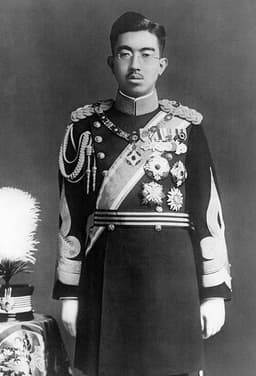
Hirohito
Emperor · Modern
58.0Total
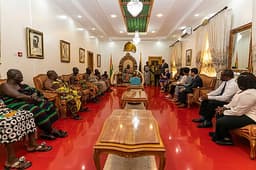
Osei Kwadwo
Emperor · Modern
55.8Total
Basic Information
Born
1901
1735
Died
1989
1777
Era
Modern
Modern
Nationality
Japan
Ashanti Empire
Occupation
Emperor
Emperor
Civilization
Eastern
Other
Score Comparison
Military (10%)
51.1
45.0
Political (20%)
60.0
59.3
Influence (20%)
55.0
54.9
Legacy (20%)
55.0
45.8
Leadership (15%)
72.0
85.0
Strategy (15%)
55.9
45.0
TOTAL
58.0
55.8
Hirohito — Complete Timeline
1926 AD
Accession to the ThronePolitical Action◆ Major
Hirohito became Emperor of Japan upon the death of his father, Emperor Taisho. His reign was designated the Showa era. As emperor, he held a symbolic and constitutional role, but his actual political power was limited by the Meiji Constitution.
Japanese MonarchyShowa EraSuccession
Impact: national
1931 AD
Japanese Invasion of ManchuriaWar◆ Major
The Japanese Kwantung Army invaded Manchuria without explicit approval from the civilian government. Hirohito's role in the invasion is debated, but he was informed and did not oppose it. The invasion led to the establishment of the puppet state of Manchukuo and increased militarism in Japan.
World War IIJapanese ExpansionManchuria
Impact: regionaldestructive
1945 AD
Decision to Surrender in World War IIPolitical Action
After the atomic bombings of Hiroshima and Nagasaki and the Soviet invasion of Manchuria, Hirohito intervened in a deadlocked cabinet to accept the Potsdam Declaration. He made a radio broadcast announcing Japan's surrender, the first time the Japanese people heard his voice. This ended World War II.
World War IISurrenderAtomic Bomb
Impact: global
1946 AD
Renunciation of DivinityCultural◆ Major
Under pressure from the Allied occupation, Hirohito issued the Humanity Declaration, in which he denied the traditional claim that the Japanese emperor was a living god. This was a key step in the transformation of Japan into a constitutional monarchy with a symbolic emperor.
Post-War JapanConstitutional MonarchyOccupation
Impact: nationalconstructive
1947 AD
Post-War Reign and Symbolic RolePolitical Action◆ Major
Under the new Japanese Constitution, Hirohito became a symbol of the state with no political power. He focused on ceremonial duties and public appearances, helping to stabilize Japan during its post-war reconstruction. He reigned until his death in 1989, overseeing Japan's economic recovery.
Post-War JapanConstitutional MonarchyReconstruction
Impact: nationalconstructive
Osei Kwadwo — Complete Timeline
1760 AD
Reorganization of the Ashanti bureaucracyReform◆ Major
Osei Kwadwo restructured the Ashanti government by creating a more formal bureaucracy with appointed officials, including the Gyaasewahene (treasurer) and other administrative roles. This reduced the influence of hereditary chiefs and improved efficiency.
BureaucracyReformAshanti
Impact: nationalconstructive
1765 AD
Introduction of the 'Osei Kwadwo' system of successionReform◆ Major
Osei Kwadwo implemented a new system for selecting the Asantehene, moving away from strict matrilineal inheritance to allow for the appointment of the most capable candidate from the royal family. This aimed to ensure competent leadership.
Succession ReformAshantiPolitical
Impact: nationalconstructive
1770 AD
Military campaigns against the Akyem and AkwamuWar
Osei Kwadwo led military campaigns to suppress rebellions and expand Ashanti territory, particularly against the Akyem and Akwamu states. These campaigns reinforced Ashanti dominance in the region.
Military CampaignAkyemAkwamu
Impact: regional
This comparison has not been analyzed yet.
One-time AI generation (~1 minute). Scores and timeline are already available below.
Rankings
🥇
HirohitoLeader
Mil: 51.1Pol: 60.0Inf: 55.0
58.0
🥈
Osei Kwadwo
Mil: 45.0Pol: 59.3Inf: 54.9
55.8
+2.2 behind
How This Comparison Works
Algorithm
Each figure is scored on 6 dimensions (0—100 scale) based on structured historical data: Military (10%), Political (20%), Influence (20%), Legacy (20%), Leadership (15%), Strategy (15%). The weighted total produces the final ranking.
Data Sources
Scores are computed from structured sub-indicators in the database. Scale factors adjust for era (Ancient ×0.85, Modern ×1.0) and civilization size (Eastern ×1.05, Other ×0.80) to account for differences in population and military scale.
Maximum 3 Figures
Comparisons are limited to 2—3 figures to ensure readability and statistical meaningfulness.
Error Margins
±5 points per dimension — Sub-scores are derived from historical records with inherent uncertainty. Two figures within 5 points on a dimension should be considered roughly equivalent in that area.
Total Score Accuracy
±3 points overall — The weighted combination of 6 dimensions produces a total score with approximately ±3 points of uncertainty. Differences of less than 3 points are not statistically significant— the figures are effectively tied.
Known Limitations
- Historical records are incomplete and uneven across civilizations
- Figures from oral-tradition societies may be underrepresented
- Occupation labels can misclassify multi-role figures
- Scores measure capability and impact, not moral character
- Quantitative scoring is a comparison tool, not absolute truth
Capability Radar
Military (10%) — Battles & Warfare
Battles
51
20
Win Rate
56
25
Expansion
55
30
Political (20%) — Governance & Reform
Reform
70
75
Diplomacy
60
55
Economy
50
50
Influence (20%) — Cultural & Global Reach
Cultural
55
40
Global
65
30
Legacy (20%) — Historical Impact
Historical
75
45
Longevity
70
40
Leadership (15%) — Power & Stability
Tenure
85
60
Stability
40
60
Strategy (15%) — Tactics & Innovation
Strategy
62
35
Tactics
65
30
Reform
64
40
Similar Comparisons
Comments & Discussion
No comments yet. Be the first to share your thoughts!