Loading...
Hirohito vs Napoleon Bonaparte
Napoleon Bonaparte leads by 12.9 pts · 2 figures compared
…
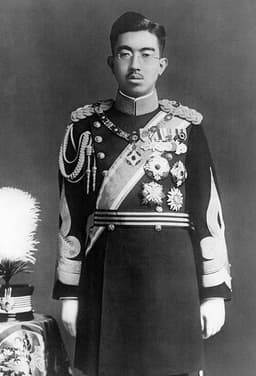
Hirohito
Emperor · Modern
58.0Total

Napoleon Bonaparte
General · Modern
70.9Total
Basic Information
Born
1901
1769
Died
1989
1821
Era
Modern
Modern
Nationality
Japan
France
Occupation
Emperor
General
Civilization
Eastern
Western
Score Comparison
Military (10%)
51.1
94.0
Political (20%)
60.0
72.0
Influence (20%)
55.0
40.0
Legacy (20%)
55.0
80.0
Leadership (15%)
72.0
78.0
Strategy (15%)
55.9
90.0
TOTAL
58.0
70.9
Hirohito — Complete Timeline
1926 AD
Accession to the ThronePolitical Action◆ Major
Hirohito became Emperor of Japan upon the death of his father, Emperor Taisho. His reign was designated the Showa era. As emperor, he held a symbolic and constitutional role, but his actual political power was limited by the Meiji Constitution.
Japanese MonarchyShowa EraSuccession
Impact: national
1931 AD
Japanese Invasion of ManchuriaWar◆ Major
The Japanese Kwantung Army invaded Manchuria without explicit approval from the civilian government. Hirohito's role in the invasion is debated, but he was informed and did not oppose it. The invasion led to the establishment of the puppet state of Manchukuo and increased militarism in Japan.
World War IIJapanese ExpansionManchuria
Impact: regionaldestructive
1945 AD
Decision to Surrender in World War IIPolitical Action
After the atomic bombings of Hiroshima and Nagasaki and the Soviet invasion of Manchuria, Hirohito intervened in a deadlocked cabinet to accept the Potsdam Declaration. He made a radio broadcast announcing Japan's surrender, the first time the Japanese people heard his voice. This ended World War II.
World War IISurrenderAtomic Bomb
Impact: global
1946 AD
Renunciation of DivinityCultural◆ Major
Under pressure from the Allied occupation, Hirohito issued the Humanity Declaration, in which he denied the traditional claim that the Japanese emperor was a living god. This was a key step in the transformation of Japan into a constitutional monarchy with a symbolic emperor.
Post-War JapanConstitutional MonarchyOccupation
Impact: nationalconstructive
1947 AD
Post-War Reign and Symbolic RolePolitical Action◆ Major
Under the new Japanese Constitution, Hirohito became a symbol of the state with no political power. He focused on ceremonial duties and public appearances, helping to stabilize Japan during its post-war reconstruction. He reigned until his death in 1989, overseeing Japan's economic recovery.
Post-War JapanConstitutional MonarchyReconstruction
Impact: nationalconstructive
Napoleon Bonaparte — Complete Timeline
1799 AD
Coup of 18 BrumaireOther◆ Major
Napoleon Bonaparte, with support from his brother Lucien and key political figures, overthrew the Directory in a bloodless coup. He established the Consulate with himself as First Consul, effectively becoming the ruler of France. This event ended the French Revolution's most unstable period.
French RevolutionCoupRise to Power
Impact: regional
1804 AD
Promulgation of the Napoleonic CodeOther◆ Major
Napoleon enacted the Civil Code of the French, known as the Napoleonic Code, a comprehensive set of laws that replaced the fragmented feudal legal systems. The code established legal equality, protected property rights, and secularized law. It became the basis for legal systems in many European and world countries.
Legal ReformNapoleonic CodeCivil Law
Impact: globalconstructive
1805 AD
Battle of AusterlitzWar◆ Major
Napoleon's Grande Arm
Napoleonic WarsBattleDecisive Victory
Impact: global
1812 AD
Invasion of RussiaWar◆ Major
Napoleon led the Grande Arm
Napoleonic WarsInvasionDisaster
Impact: globaldestructive
1815 AD
Battle of WaterlooWar◆ Major
Napoleon's French army was defeated by the combined forces of the Duke of Wellington's Anglo-Allied army and Gebhard Leberecht von Bl
Napoleonic WarsBattleFinal Defeat
Impact: globaldestructive
Expert Analysis
hirohito-vs-napoleon-bonaparte
# The Emperor and the General
In the spring of 1814, as allied armies closed in on Paris, Napoleon Bonaparte stood before his generals and declared that France needed him to fight on. Less than a year later, he would be defeated for good at Waterloo, exiled to a remote Atlantic island. In the summer of 1945, another leader faced a decision that would define his reign: Emperor Hirohito, secluded in his Tokyo bunker, listened as his military advisors urged a fight to the death. He chose surrender. One man built an empire through sheer force of will; the other presided over an empire’s destruction and rebirth. What separates a conqueror from a symbol? The answer lies in the worlds that shaped them.
Origins
Napoleon was born in 1769 on Corsica, an island only recently annexed by France. His family was minor nobility, poor enough that young Napoleon wore shabby uniforms to military school, where his classmates mocked his accent. The French Revolution, which erupted when he was twenty, shattered the old order and opened paths that birth alone could never have granted. It was a world of chaos and opportunity, where a brilliant artillery officer could rise to command armies at twenty-four.
Hirohito, born in 1901, entered a world of divine certainty. He was the grandson of Emperor Meiji, the figure who had transformed Japan from feudal isolation into a modern power. Raised in the palace, tutored by princes and scholars, he was taught that his lineage stretched back to the sun goddess Amaterasu. His education emphasized science and marine biology—a curious passion that would later provide him solace—but also the sacred duty of the throne. Where Napoleon’s world was one of revolution and ambition, Hirohito’s was one of ritual and hierarchy.
Rise to Power
Napoleon’s ascent was meteoric. In 1793, at the Siege of Toulon, he devised the artillery plan that recaptured the city from royalist rebels and their British allies. He was promoted to brigadier general at twenty-four. By 1796, he commanded the Army of Italy, where his lightning campaigns humiliated Austria and made him a national hero. His political genius matched his military skill: in 1799, he staged a coup that made him First Consul, then Emperor in 1804. Every step was won by talent, audacity, and a relentless drive to prove himself.
Hirohito’s path was predetermined. He became emperor in 1926, upon his father’s death, at age twenty-five. His reign was named Showa, meaning "Enlightened Peace." Yet the young emperor inherited a government where military extremists already held enormous power. In 1931, the Kwantung Army invaded Manchuria without explicit approval from Tokyo. Hirohito’s role remains debated: he did not order the invasion, but he did not stop it. He was a constitutional monarch, bound by tradition and law, yet also the living god of a nation where soldiers died shouting his name. The tension between his symbolic power and political reality would haunt his entire reign.
Leadership & Governance
Napoleon ruled with a fusion of military genius and administrative brilliance. His campaigns—Austerlitz in 1805, Jena in 1806, Wagram in 1809—rewrote the rules of warfare. He moved armies faster than his enemies could think, striking at their supply lines and crushing them in decisive battles. His military score of 94 reflects this mastery. But he was also a reformer: the Napoleonic Code standardized French law, abolished feudal privileges, and spread ideals of meritocracy across Europe. He built schools, roads, and a centralized bureaucracy. Yet his ambition had no limits. He invaded Spain in 1808, then Russia in 1812—both catastrophic mistakes that bled his empire dry.
Hirohito governed through silence and ritual. During World War II, he was kept informed of military operations but rarely intervened. The invasion of China, the attack on Pearl Harbor, the atrocities across Asia—all occurred in his name, but historians still argue over how much he knew or approved. His political score of 81.8 reflects his careful navigation of power, but his military score of 60.7 and strategy score of 58.3 reveal a leader who was more observer than commander. His true moment of leadership came in August 1945, when he broke a deadlock in the Supreme War Council and ordered surrender. For the first time, the emperor spoke, and his voice ended the war.
Triumph & Tragedy
Napoleon’s greatest triumph was Austerlitz, where he crushed the combined armies of Russia and Austria in a single day. His greatest tragedy was the Russian campaign of 1812, where he lost over 400,000 men to winter, hunger, and guerilla attacks. He was exiled to Elba in 1814, escaped in 1815, and met his final defeat at Waterloo. He died in 1821 on Saint Helena, a prisoner of the British.
Hirohito’s triumph was survival itself. After Japan’s surrender, the Allied occupation under General Douglas MacArthur decided to retain the emperor as a symbol of stability. In 1946, Hirohito issued the Humanity Declaration, renouncing his divine status. It was a profound act of self-diminishment. Under the 1947 constitution, he became a ceremonial figurehead, stripped of all political power. He lived another forty-two years, watching Japan rise from ashes to become an economic superpower. His tragedy was that he reigned through the most destructive war in human history, and that his silence allowed horrors to unfold.
Character & Destiny
Napoleon was restless, brilliant, and incapable of stopping. "I am a creature of circumstance," he once said, but he created those circumstances. He trusted his star, and for a decade, it never failed him. His downfall came from the same qualities that made him great: an appetite for conquest that could never be satisfied.
Hirohito was cautious, reserved, and deeply aware of his limitations. He was a marine biologist who loved studying jellyfish, a scholar-emperor trapped in a warrior culture. His fate was shaped by forces he could not control: militarism, nationalism, and the atomic bomb. He chose survival over glory, symbol over power. In doing so, he ensured that Japan could rebuild.
Legacy
Napoleon’s legacy is written across Europe: the Napoleonic Code, the metric system, the modern nation-state. He is remembered as a military genius and a tyrant, a liberator and a conqueror. His influence score of 82 reflects a man who changed the world, for better and worse.
Hirohito’s legacy is more ambiguous. To some, he was a puppet of militarists; to others, a war criminal who escaped justice. His reign saw Japan’s darkest atrocities and its greatest peacetime achievements. His legacy score of 73 reflects this complexity. In modern Japan, he is remembered as the emperor who led his people through war and into peace, a symbol of continuity in a nation that transformed itself completely.
Conclusion
Two men, two worlds. Napoleon believed that history was made by the will of great men; Hirohito understood that history often makes men, trapping them in roles they did not choose. One died in exile, dreaming of glory; the other died in his palace, surrounded by his family, having seen his nation rise from defeat to prosperity. Perhaps the deepest difference is this: Napoleon wanted to conquer the world, while Hirohito only wanted to survive it. Both succeeded, in ways neither could have imagined.
Rankings
🥇
Napoleon BonaparteLeader
Mil: 94.0Pol: 72.0Inf: 40.0
70.9
🥈
Hirohito
Mil: 51.1Pol: 60.0Inf: 55.0
58.0
+12.9 behind
How This Comparison Works
Algorithm
Each figure is scored on 6 dimensions (0—100 scale) based on structured historical data: Military (10%), Political (20%), Influence (20%), Legacy (20%), Leadership (15%), Strategy (15%). The weighted total produces the final ranking.
Data Sources
Scores are computed from structured sub-indicators in the database. Scale factors adjust for era (Ancient ×0.85, Modern ×1.0) and civilization size (Eastern ×1.05, Other ×0.80) to account for differences in population and military scale.
Maximum 3 Figures
Comparisons are limited to 2—3 figures to ensure readability and statistical meaningfulness.
Error Margins
±5 points per dimension — Sub-scores are derived from historical records with inherent uncertainty. Two figures within 5 points on a dimension should be considered roughly equivalent in that area.
Total Score Accuracy
±3 points overall — The weighted combination of 6 dimensions produces a total score with approximately ±3 points of uncertainty. Differences of less than 3 points are not statistically significant— the figures are effectively tied.
Known Limitations
- Historical records are incomplete and uneven across civilizations
- Figures from oral-tradition societies may be underrepresented
- Occupation labels can misclassify multi-role figures
- Scores measure capability and impact, not moral character
- Quantitative scoring is a comparison tool, not absolute truth
Capability Radar
Military (10%) — Battles & Warfare
Battles
51
95
Win Rate
56
90
Expansion
55
95
Political (20%) — Governance & Reform
Reform
70
95
Diplomacy
60
80
Economy
50
85
Influence (20%) — Cultural & Global Reach
Cultural
55
85
Global
65
90
Legacy (20%) — Historical Impact
Historical
75
95
Longevity
70
90
Leadership (15%) — Power & Stability
Tenure
85
85
Stability
40
70
Strategy (15%) — Tactics & Innovation
Strategy
62
95
Tactics
65
98
Reform
64
92
Similar Comparisons
Comments & Discussion
No comments yet. Be the first to share your thoughts!