Loading...
Hojo Ujitsuna vs Napoleon Bonaparte
Napoleon Bonaparte leads by 18.2 pts · 2 figures compared
…
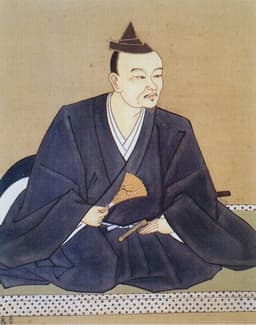
Hojo Ujitsuna
Emperor · Medieval
52.7Total

Napoleon Bonaparte
General · Modern
70.9Total
Basic Information
Born
1487
1769
Died
1541
1821
Era
Medieval
Modern
Nationality
Japan
France
Occupation
Emperor
General
Civilization
Eastern
Western
Score Comparison
Military (10%)
45.0
94.0
Political (20%)
68.0
72.0
Influence (20%)
53.3
40.0
Legacy (20%)
45.8
80.0
Leadership (15%)
53.2
78.0
Strategy (15%)
52.5
90.0
TOTAL
52.7
70.9
Hojo Ujitsuna — Complete Timeline
1524 AD
Capture of Edo CastleWar◆ Major
Hojo Ujitsuna captured Edo Castle from the Uesugi clan, expanding Hojo control into the Kanto region. This victory established the Hojo as a major power in the area and laid the foundation for their future dominance.
ConquestEdo CastleKanto
Impact: regional
1526 AD
Siege of Odawara CastleWar◆ Major
Hojo Ujitsuna successfully defended Odawara Castle against a siege by the Uesugi and their allies. The defense solidified Odawara as the Hojo stronghold and demonstrated Ujitsuna's military capability.
SiegeDefenseOdawara
Impact: regional
1537 AD
Expansion into Musashi ProvinceWar
Hojo Ujitsuna led campaigns into Musashi Province, capturing several castles from the Uesugi. This expansion significantly increased Hojo territory and influence in the Kanto region.
ExpansionMusashiUesugi Conflict
Impact: regional
Napoleon Bonaparte — Complete Timeline
1799 AD
Coup of 18 BrumaireOther◆ Major
Napoleon Bonaparte, with support from his brother Lucien and key political figures, overthrew the Directory in a bloodless coup. He established the Consulate with himself as First Consul, effectively becoming the ruler of France. This event ended the French Revolution's most unstable period.
French RevolutionCoupRise to Power
Impact: regional
1804 AD
Promulgation of the Napoleonic CodeOther◆ Major
Napoleon enacted the Civil Code of the French, known as the Napoleonic Code, a comprehensive set of laws that replaced the fragmented feudal legal systems. The code established legal equality, protected property rights, and secularized law. It became the basis for legal systems in many European and world countries.
Legal ReformNapoleonic CodeCivil Law
Impact: globalconstructive
1805 AD
Battle of AusterlitzWar◆ Major
Napoleon's Grande Arm
Napoleonic WarsBattleDecisive Victory
Impact: global
1812 AD
Invasion of RussiaWar◆ Major
Napoleon led the Grande Arm
Napoleonic WarsInvasionDisaster
Impact: globaldestructive
1815 AD
Battle of WaterlooWar◆ Major
Napoleon's French army was defeated by the combined forces of the Duke of Wellington's Anglo-Allied army and Gebhard Leberecht von Bl
Napoleonic WarsBattleFinal Defeat
Impact: globaldestructive
Expert Analysis
hojo-ujitsuna-vs-napoleon-bonaparte
# The Conqueror and the Builder: Napoleon Bonaparte and Hojo Ujitsuna
On a June morning in 1815, Napoleon Bonaparte watched the muddy fields of Waterloo swallow his Imperial Guard, the flower of French military might, as Prussian artillery thundered on his flank. Three centuries earlier and half a world away, Hojo Ujitsuna stood atop the stone battlements of Odawara Castle, watching his father's dream of a fortress city rise from the plains of Sagami Province. One man sought to reshape an entire continent through the fury of cannon and cavalry; the other spent a lifetime patiently laying stones that would outlast generations. What drove these two leaders—one whose name echoes through every history book, the other known mainly to specialists—to such different fates?
Origins
Napoleon Bonaparte was born in 1769 on the Mediterranean island of Corsica, a land that had only recently become French. His family were minor nobility, proud and resentful of their new masters. Young Napoleon spoke Italian before French, carried a chip on his shoulder, and burned with ambition to prove himself to a country that considered him an outsider. The French Revolution, which erupted when he was twenty, shattered the old order and created opportunities unimaginable under the Bourbon monarchy. For a gifted artillery officer without connections, it was a ladder to the sky.
Hojo Ujitsuna, born in 1487, inherited a different world. Japan was tearing itself apart in the Sengoku period, the "Warring States" era, when the old shogunate had collapsed and warlords fought for every inch of land. His father, Hojo Soun, had clawed his way from obscurity to become lord of Izu Province, building a power base through cunning and patience rather than dramatic conquest. Young Ujitsuna grew up not in a palace but in a fortress under constant threat, learning that survival mattered more than glory.
Rise to Power
Napoleon's ascent was meteoric. At twenty-four, he drove the British from Toulon. At twenty-six, he crushed a royalist uprising in Paris with a "whiff of grapeshot." By thirty, he had conquered Italy and Egypt, returning to France in 1799 to seize power as First Consul. The key turning point came in 1796 when he took command of the starving, unpaid Army of Italy—and within weeks transformed it into the finest fighting force in Europe. He understood that war was not just about tactics but about morale, about making soldiers believe they were invincible.
Hojo Ujitsuna's path was slower, more methodical. In 1524, at age thirty-seven, he captured Edo Castle from the Uesugi clan, a victory that established Hojo dominance in the Kanto region. Two years later, in 1526, he defended Odawara Castle against a Uesugi siege, proving that his father's fortress could withstand any assault. These were not Napoleonic lightning strikes but careful campaigns of attrition and consolidation. Where Napoleon gambled everything on one decisive battle, Ujitsuna built networks of alliances, fortified positions, and patient pressure.
Leadership & Governance
Napoleon ruled through charisma and fear. He inspired devotion in his soldiers—men who would charge into cannon fire shouting "Vive l'Empereur!"—but he also demanded absolute obedience. His Napoleonic Code reformed French law, establishing principles of equality before the law and protection of property that influenced legal systems across Europe. Yet his political wisdom faltered when he crowned himself emperor in 1804, betraying the revolutionary ideals that had lifted him to power. He could conquer kingdoms but could not govern them; he installed his brothers on thrones across Europe, and they failed him one by one.
Hojo Ujitsuna governed through stability and infrastructure. His military scores—military 53.9, strategy 57.4—suggest he was no tactical genius, but his leadership score of 79.0 and political score of 72.0 reveal a different kind of strength. He transformed Odawara from a simple castle into a great fortress city, a symbol of permanence in an age of chaos. While Napoleon chased glory across the Alps and the Russian steppes, Ujitsuna expanded into Musashi Province in 1537, capturing castles not for personal glory but to secure his domain for future generations.
Triumph & Tragedy
Napoleon's greatest moment came at Austerlitz in 1805, when he crushed the combined armies of Austria and Russia in what many consider his masterpiece. His worst came in 1812, when the Russian winter swallowed his Grand Army of 600,000 men; barely 40,000 returned. He was exiled to Elba, escaped, raised another army, and met final defeat at Waterloo in 1815. The tragedy was not that he lost, but that he could not stop—his ambition, once the engine of his success, became the instrument of his destruction.
Hojo Ujitsuna's triumphs were quieter. He never lost a major battle, but he never won a legendary one either. His greatest achievement was simply surviving and expanding, turning the Hojo domain into the most powerful force in eastern Japan by the time of his death in 1541. His tragedy was that history remembers builders less than destroyers. While Napoleon's name fills libraries, Ujitsuna's story survives mainly in specialist studies and local Japanese histories.
Character & Destiny
Napoleon was a man of impossible energy and limitless ego. "I am not a man," he once said, "but a thing." He slept four hours a night, dictated letters to multiple secretaries simultaneously, and believed himself chosen by destiny. This personality drove him to conquer Europe but also to refuse any compromise that might have preserved his empire. He could not share power because he could not imagine anyone else worthy of it.
Hojo Ujitsuna seems to have been the opposite: cautious, patient, and focused on legacy rather than glory. His strategy score of 57.4 suggests he was no military genius, but his leadership score of 79.0 indicates he knew how to hold a coalition together. He understood that in the Warring States period, the daimyo who built the strongest walls and the most reliable alliances would outlast the flashiest generals. He was right—the Hojo clan survived him by fifty years, falling only when the great unifier Toyotomi Hideyoshi turned his full might against Odawara in 1590.
Legacy
Napoleon's legacy is written across Europe: the Napoleonic Code, the metric system, the modern concept of meritocracy, and the borders of nations from Italy to Germany. He is remembered with scores of military 94.0, influence 82.0, and legacy 78.0—a titan of history whose shadow falls across two centuries. Yet his empire lasted barely a decade, and he died alone on a remote island in the South Atlantic.
Hojo Ujitsuna's legacy score of 62.1 is modest by comparison, but it reflects a different kind of achievement. Odawara Castle still stands, a testament to his father's vision and his own patient labor. The Hojo domain he built provided stability to the Kanto region during the most turbulent period in Japanese history. He is remembered not as a world-shaker but as a builder, the man who turned a fortress into a city and a warlord's ambition into a dynasty.
Conclusion
Standing at Odawara Castle today, looking out over the modern city that has grown around its stone walls, one feels the weight of patience. Napoleon Bonaparte, whose total score reaches 82.4, conquered an empire in twenty years and lost it in two. Hojo Ujitsuna, with his quieter score of 67.2, built something that outlasted him by half a century. The difference is not in talent but in temperament—one man wanted to change the world in his lifetime, the other to build something that would endure beyond it. History remembers the conqueror, but perhaps it is the builder who truly wins.
Rankings
🥇
Napoleon BonaparteLeader
Mil: 94.0Pol: 72.0Inf: 40.0
70.9
🥈
Hojo Ujitsuna
Mil: 45.0Pol: 68.0Inf: 53.3
52.7
+18.2 behind
How This Comparison Works
Algorithm
Each figure is scored on 6 dimensions (0—100 scale) based on structured historical data: Military (10%), Political (20%), Influence (20%), Legacy (20%), Leadership (15%), Strategy (15%). The weighted total produces the final ranking.
Data Sources
Scores are computed from structured sub-indicators in the database. Scale factors adjust for era (Ancient ×0.85, Modern ×1.0) and civilization size (Eastern ×1.05, Other ×0.80) to account for differences in population and military scale.
Maximum 3 Figures
Comparisons are limited to 2—3 figures to ensure readability and statistical meaningfulness.
Error Margins
±5 points per dimension — Sub-scores are derived from historical records with inherent uncertainty. Two figures within 5 points on a dimension should be considered roughly equivalent in that area.
Total Score Accuracy
±3 points overall — The weighted combination of 6 dimensions produces a total score with approximately ±3 points of uncertainty. Differences of less than 3 points are not statistically significant— the figures are effectively tied.
Known Limitations
- Historical records are incomplete and uneven across civilizations
- Figures from oral-tradition societies may be underrepresented
- Occupation labels can misclassify multi-role figures
- Scores measure capability and impact, not moral character
- Quantitative scoring is a comparison tool, not absolute truth
Capability Radar
Military (10%) — Battles & Warfare
Battles
45
95
Win Rate
50
90
Expansion
55
95
Political (20%) — Governance & Reform
Reform
45
95
Diplomacy
50
80
Economy
55
85
Influence (20%) — Cultural & Global Reach
Cultural
40
85
Global
20
90
Legacy (20%) — Historical Impact
Historical
45
95
Longevity
40
90
Leadership (15%) — Power & Stability
Tenure
50
85
Stability
50
70
Strategy (15%) — Tactics & Innovation
Strategy
60
95
Tactics
55
98
Reform
40
92
Similar Comparisons
Comments & Discussion
Corsican Cannonball6/17/2026
Calling this a fair comparison is like comparing a wildfire to a garden bonsai. Napoleon lost everything at Waterloo because he overreached. Ujitsuna built a dynasty that held power for three generations after his death. The real lesson here: slow, strategic construction beats flashy conquest every time. Ujitsuna’s siege engineering at Odawara was brilliant—he turned enemy defenses into his own fortifications. Napoleon just left scorched earth and bitter enemies.
数据刀客6/17/2026
拿破仑在1796年意大利战役中单场缴获了30面军旗,而北条氏纲一辈子可能连30个村庄都没打过。但数据会骗人:拿破仑的胜利是沙漏里的沙,北条氏纲的城堡是岩石。真正的问题在于,你们把“知名度”当成了“重要性”的标签。前者是历史书的宠儿,后者是土壤的守护者。
Golden Eagle, Iron Crane6/17/2026
As a classicist, I see Napoleon as Caesar without the mercy—Brutus would’ve stabbed him twice. Ujitsuna reminds me of Augustus: patient, building through alliances and marriage, not just war. Napoleon’s 1812 retreat killed 400,000 men; Ujitsuna’s bloodiest campaign probably lost a few thousand. Scale matters, but so does proportion. One conquered Europe and bankrupted France; the other secured a region for centuries.
长城守卫6/17/2026
你们都被拿破仑的史诗蒙蔽了。他是在欧洲这张破桌上玩梭哈,输了就一无所有。北条氏纲呢?他在关东的霸权靠的不是军旗,是婚姻和外交。他让女儿嫁给盟友,把敌人变成亲戚。拿破仑连约瑟芬都不能管好自己的皇后。真正的权力不在战场,在卧房和会议室。北条氏纲深谙此道,拿破仑却在滑铁卢赌上了全部。
The Revisionist Lens6/17/2026
Let’s stop romanticizing the "patient builder" myth. Ujitsuna was a warlord in a civil war—his "stability" was just a pause before the next slaughter. Napoleon at least tried to codify laws (Civil Code) and reform education. Ujitsuna left no lasting institutions, just a castle that fell to Nobunaga’s son in 1590. If we’re judging legacy, give me the guy who abolished feudalism in half of Europe over the guy who extended Japan’s war for another generation.