Loading...
Bhutto Zulfikar Ali vs John F. Kennedy
John F. Kennedy leads by 10.3 pts · 2 figures compared
…
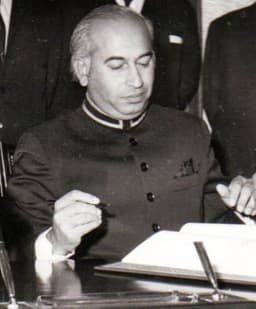
Bhutto Zulfikar Ali
Politician · Modern
52.4Total
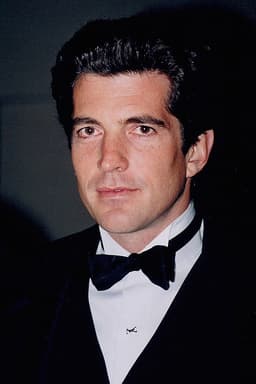
John F. Kennedy
Politician · Modern
62.7Total
Basic Information
Born
1928
1917
Died
—
1963
Era
Modern
Modern
Nationality
Pakistan
United States
Occupation
Politician
Politician
Civilization
Indian
Western
Score Comparison
Military (10%)
45.7
34.9
Political (20%)
55.0
60.0
Influence (20%)
58.3
82.0
Legacy (20%)
52.0
54.0
Leadership (15%)
40.0
72.0
Strategy (15%)
60.0
54.3
TOTAL
52.4
62.7
Bhutto Zulfikar Ali — Complete Timeline
1967 AD
Founding of the Pakistan People's PartyPolitical Action◆ Major
Bhutto founded the Pakistan People's Party (PPP) with a socialist and populist platform. The party quickly gained mass support, especially in West Pakistan, challenging the military regime of Ayub Khan.
PPPSocialismPolitical party
Impact: nationalconstructive
1970 AD
1970 general election victoryPolitical Action
Bhutto's PPP won a majority of seats in West Pakistan in the 1970 general election, while the Awami League won in East Pakistan. The refusal to transfer power to the Awami League led to the Bangladesh Liberation War.
ElectionBangladesh Liberation WarPolitical crisis
Impact: nationaldestructive
1972 AD
Nationalization of industriesReform◆ Major
Bhutto's government nationalized major industries, including steel, banking, and oil. This policy aimed to reduce economic inequality but led to inefficiencies, reduced foreign investment, and long-term economic challenges.
NationalizationEconomic reformSocialism
Impact: national
Simla AgreementPolitical Action◆ Major
Bhutto signed the Simla Agreement with Indian Prime Minister Indira Gandhi, normalizing relations after the 1971 war. The agreement established the Line of Control in Kashmir and committed both countries to bilateral resolution of disputes.
India-Pakistan relationsKashmirPeace treaty
Impact: regionalconstructive
1979 AD
Execution by Zia-ul-HaqPolitical Action
Bhutto was executed by hanging after a controversial murder trial under General Zia-ul-Haq's military regime. His death sparked international outrage and made him a martyr for the PPP, shaping Pakistani politics for decades.
ExecutionMartyrdomMilitary regime
Impact: nationaltragic
John F. Kennedy — Complete Timeline
1961 AD
Bay of Pigs InvasionWar◆ Major
Kennedy authorized the CIA-backed invasion of Cuba by exiles at the Bay of Pigs, which failed disastrously. The event embarrassed the U.S., strengthened Castro's position, and pushed Cuba closer to the Soviet Union.
CubaCold WarFailed Invasion
Impact: globaldestructive
Establishment of the Peace CorpsPolitical Action◆ Major
Kennedy signed an executive order establishing the Peace Corps, sending American volunteers abroad to assist with development. The program promoted U.S. soft power and cultural exchange, becoming a lasting legacy of his administration.
Peace CorpsForeign AidVolunteerism
Impact: globalconstructive
1962 AD
Cuban Missile CrisisPolitical Action
Kennedy confronted the Soviet Union over the installation of nuclear missiles in Cuba. He imposed a naval blockade and negotiated a peaceful resolution, securing the removal of missiles in exchange for a pledge not to invade Cuba and removal of U.S. missiles from Turkey.
Cold WarNuclear CrisisDiplomacy
Impact: global
Moon Speech at Rice UniversityCultural◆ Major
Kennedy delivered a speech at Rice University, committing the U.S. to landing a man on the moon before the end of the decade. This galvanized the Apollo program and the Space Race against the Soviet Union.
Space RaceApollo ProgramMoon Landing
Impact: globalprogressive
1963 AD
Assassination of John F. KennedyPolitical Action
Kennedy was assassinated by Lee Harvey Oswald while riding in a motorcade in Dallas, Texas. His death shocked the world and led to the passage of the Civil Rights Act and other legislation under his successor, Lyndon B. Johnson.
AssassinationDallasConspiracy Theories
Impact: globaltragic
Expert Analysis
Origins
Zulfikar Ali Bhutto was born on January 5, 1928, in Larkana, Sindh, into a wealthy landowning family. His father, Sir Shah Nawaz Bhutto, was a prominent politician. Bhutto studied at the University of Southern California and the University of California, Berkeley, then earned a law degree from Christ Church, Oxford. He returned to Pakistan in 1953 and entered politics, serving as a cabinet minister under President Ayub Khan.
John F. Kennedy was born on May 29, 1917, in Brookline, Massachusetts, into a wealthy, politically ambitious family. His father, Joseph P. Kennedy Sr., was a businessman and ambassador. Kennedy attended Harvard University, graduating in 1940, and served in the U.S. Navy during World War II, commanding PT-109. His wartime heroism launched his political career.
Rise to Power
Bhutto rose to prominence as a charismatic populist. He served as Foreign Minister under Ayub Khan from 1963 to 1966, but broke with the regime over the Tashkent Agreement. In 1967, he founded the Pakistan People's Party (PPP) with a socialist platform. The 1970 general election saw the PPP win a majority of seats in West Pakistan, while the Awami League won in East Pakistan. After the 1971 war and the secession of Bangladesh, Bhutto became President in December 1971, later Prime Minister in 1973.
Kennedy's rise was accelerated by his family's wealth and his own charisma. He served in the House of Representatives (1947–1953) and the Senate (1953–1960). His 1960 presidential campaign against Richard Nixon was the first to use televised debates effectively. Kennedy won by a narrow margin, becoming the first Catholic president and the youngest elected at age 43.
Leadership & Governance
Bhutto's leadership was defined by populist socialism and authoritarian tendencies. He nationalized major industries—steel, banking, oil—and implemented land reforms. His government also pursued a nuclear weapons program. However, his rule became increasingly repressive, using military courts to suppress dissent. His political score of 55.0 reflects his electoral success but also his failure to maintain democratic institutions.
Kennedy's governance focused on Cold War containment and domestic reform. He confronted the Soviet Union over the Cuban Missile Crisis in 1962, using naval blockade and diplomacy to avert nuclear war. He launched the Peace Corps and committed to landing a man on the moon. Domestically, he proposed civil rights legislation but faced opposition from Southern Democrats. His leadership score of 72.0 reflects his crisis management and inspirational vision, though his legislative achievements were limited before his death.
Triumph & Tragedy
Bhutto's greatest triumph was the Simla Agreement of 1972 with India's Indira Gandhi, which normalized relations after the 1971 war and established the Line of Control in Kashmir. His greatest tragedy was his execution by General Zia-ul-Haq in 1979 after a controversial murder trial. The nationalization policies, while aiming to reduce inequality, led to economic inefficiency and alienated industrialists. His military score of 45.7 reflects his inability to prevent the loss of East Pakistan.
Kennedy's triumph was his handling of the Cuban Missile Crisis, where he successfully forced Soviet leader Khrushchev to remove missiles from Cuba. His tragedy was the Bay of Pigs Invasion in 1961, a failed CIA-backed attempt to overthrow Fidel Castro, which embarrassed the U.S. and strengthened Castro's position. Kennedy's assassination in 1963 cut short his presidency, leaving many initiatives unfulfilled. His military score of 34.9 reflects his cautious approach to direct conflict.
Character & Destiny
Bhutto was charismatic, ambitious, and ruthless. He was a skilled orator who connected with the masses, but his authoritarian streak and refusal to share power led to his downfall. His decision to rig the 1977 elections triggered protests that enabled Zia's coup. His character—combining populism with autocracy—shaped his fate: executed by the same military he once commanded.
Kennedy was cool, intellectual, and risk-taking. He surrounded himself with experts and cultivated an image of vigor. His handling of the Cuban Missile Crisis showed calculated brinkmanship, but the Bay of Pigs reflected poor judgment. His assassination created a martyr myth, but his actual record is mixed. His influence score of 82.0 is high due to his symbolic resonance, but his legacy score of 54.0 indicates limited concrete achievements.
Legacy
Bhutto's legacy is profound in Pakistan. The PPP remains a major political force, and his socialist rhetoric influenced generations. However, his nationalization policies are criticized for damaging the economy. He is remembered as a populist hero and a flawed democrat. His total score of 52.4 reflects his mixed impact.
Kennedy's legacy is globally iconic. The Peace Corps continues to operate, and the Apollo program achieved the moon landing in 1969. His civil rights advocacy set the stage for the 1964 Civil Rights Act. However, his presidency was too short for lasting legislative impact. His total score of 62.7 is higher due to his influence and leadership.
Conclusion
John F. Kennedy had greater overall impact than Zulfikar Ali Bhutto, as reflected in his higher total score (62.7 vs 52.4). Kennedy's influence on global politics—through the peaceful resolution of the Cuban Missile Crisis and the inspiration of the Space Race—transcended his short presidency. Bhutto's impact was more regional, and his authoritarian turn undermined his democratic legacy. While Bhutto's populism reshaped Pakistan, Kennedy's leadership during the Cold War averted catastrophe and set a standard for crisis management. Therefore, Kennedy's influence is more significant on a global scale.
Rankings
🥇
John F. KennedyLeader
Mil: 34.9Pol: 60.0Inf: 82.0
62.7
🥈
Bhutto Zulfikar Ali
Mil: 45.7Pol: 55.0Inf: 58.3
52.4
+10.3 behind
How This Comparison Works
Algorithm
Each figure is scored on 6 dimensions (0—100 scale) based on structured historical data: Military (10%), Political (20%), Influence (20%), Legacy (20%), Leadership (15%), Strategy (15%). The weighted total produces the final ranking.
Data Sources
Scores are computed from structured sub-indicators in the database. Scale factors adjust for era (Ancient ×0.85, Modern ×1.0) and civilization size (Eastern ×1.05, Other ×0.80) to account for differences in population and military scale.
Maximum 3 Figures
Comparisons are limited to 2—3 figures to ensure readability and statistical meaningfulness.
Error Margins
±5 points per dimension — Sub-scores are derived from historical records with inherent uncertainty. Two figures within 5 points on a dimension should be considered roughly equivalent in that area.
Total Score Accuracy
±3 points overall — The weighted combination of 6 dimensions produces a total score with approximately ±3 points of uncertainty. Differences of less than 3 points are not statistically significant— the figures are effectively tied.
Known Limitations
- Historical records are incomplete and uneven across civilizations
- Figures from oral-tradition societies may be underrepresented
- Occupation labels can misclassify multi-role figures
- Scores measure capability and impact, not moral character
- Quantitative scoring is a comparison tool, not absolute truth
Capability Radar
Military (10%) — Battles & Warfare
Battles
42
10
Win Rate
45
10
Expansion
51
10
Political (20%) — Governance & Reform
Reform
70
65
Diplomacy
60
75
Economy
55
55
Influence (20%) — Cultural & Global Reach
Cultural
55
70
Global
55
70
Legacy (20%) — Historical Impact
Historical
60
65
Longevity
50
60
Leadership (15%) — Power & Stability
Tenure
65
50
Stability
30
60
Strategy (15%) — Tactics & Innovation
Strategy
52
20
Tactics
57
15
Reform
60
25
Similar Comparisons
Comments & Discussion
No comments yet. Be the first to share your thoughts!