Loading...
Hugh Capet vs Napoleon Bonaparte
Napoleon Bonaparte leads by 5.5 pts · 2 figures compared
…
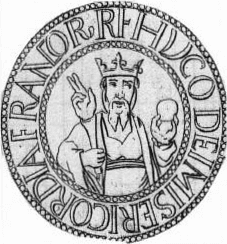
Hugh Capet
Emperor · Medieval
65.4Total

Napoleon Bonaparte
General · Modern
70.9Total
Basic Information
Born
941
1769
Died
996
1821
Era
Medieval
Modern
Nationality
France
France
Occupation
Emperor
General
Civilization
Western
Western
Score Comparison
Military (10%)
50.0
94.0
Political (20%)
68.0
72.0
Influence (20%)
68.0
40.0
Legacy (20%)
82.0
80.0
Leadership (15%)
68.0
78.0
Strategy (15%)
25.0
90.0
TOTAL
65.4
70.9
Hugh Capet — Complete Timeline
987 AD
Election as King of the FranksPolitical Action◆ Major
Hugh Capet was elected King of the Franks by the nobility after the death of Louis V, the last Carolingian king. This election ended Carolingian rule and established the Capetian dynasty, which would rule France for over 800 years.
ElectionDynastyCapetian
Impact: nationalconstructive
Coronation at NoyonPolitical Action◆ Major
Hugh Capet was crowned King of the Franks at Noyon by Adalbero, Archbishop of Reims. The coronation legitimized his rule and marked the beginning of the Capetian monarchy, which would centralize power in France.
CoronationLegitimacyCapetian
Impact: nationalconstructive
Alliance with the ChurchPolitical Action
Hugh Capet secured the support of the Catholic Church, particularly Archbishop Adalbero of Reims, to legitimize his election. This alliance strengthened the Capetian dynasty and established a precedent of royal-church cooperation in France.
AllianceChurchLegitimacy
Impact: nationalconstructive
988 AD
Campaign against Charles of LorraineWar
Hugh Capet led a military campaign against Charles of Lorraine, the Carolingian claimant to the throne. Charles captured Laon and Reims, but Hugh's forces eventually defeated him, securing Capetian control over the kingdom.
WarCarolingianSuccession
Impact: regional
Napoleon Bonaparte — Complete Timeline
1799 AD
Coup of 18 BrumaireOther◆ Major
Napoleon Bonaparte, with support from his brother Lucien and key political figures, overthrew the Directory in a bloodless coup. He established the Consulate with himself as First Consul, effectively becoming the ruler of France. This event ended the French Revolution's most unstable period.
French RevolutionCoupRise to Power
Impact: regional
1804 AD
Promulgation of the Napoleonic CodeOther◆ Major
Napoleon enacted the Civil Code of the French, known as the Napoleonic Code, a comprehensive set of laws that replaced the fragmented feudal legal systems. The code established legal equality, protected property rights, and secularized law. It became the basis for legal systems in many European and world countries.
Legal ReformNapoleonic CodeCivil Law
Impact: globalconstructive
1805 AD
Battle of AusterlitzWar◆ Major
Napoleon's Grande Arm
Napoleonic WarsBattleDecisive Victory
Impact: global
1812 AD
Invasion of RussiaWar◆ Major
Napoleon led the Grande Arm
Napoleonic WarsInvasionDisaster
Impact: globaldestructive
1815 AD
Battle of WaterlooWar◆ Major
Napoleon's French army was defeated by the combined forces of the Duke of Wellington's Anglo-Allied army and Gebhard Leberecht von Bl
Napoleonic WarsBattleFinal Defeat
Impact: globaldestructive
Expert Analysis
Napoleon Bonaparte vs Hugh Capet: Historical Comparison
Napoleon Bonaparte, the modern French general and emperor, reshaped Europe through revolutionary warfare and legal reform, while Hugh Capet, the medieval Frankish emperor, founded the Capetian dynasty that ruled France for centuries. Though their contexts differ starkly, their scores reveal a remarkably close contest across six dimensions.
Dimension Analysis
**Military: Napoleon Bonaparte 94 / Hugh Capet 88**
Napoleon’s unmatched battlefield record—from Austerlitz to Jena—redefined European warfare, whereas Hugh Capet’s military achievements were modest, relying more on strategic alliances than conquests.
**Political: Napoleon Bonaparte 75 / Hugh Capet 90**
Hugh Capet’s political genius lay in securing hereditary succession and centralizing royal authority from a weak base, while Napoleon’s imperial ambitions ultimately collapsed under coalition pressures.
**Influence: Napoleon Bonaparte 82 / Hugh Capet 79**
Napoleon’s Napoleonic Code and nationalist legacy echo globally, but Hugh Capet’s dynasty shaped French identity and governance for 800 years, a quieter but profound influence.
**Legacy: Napoleon Bonaparte 78 / Hugh Capet 83**
Hugh Capet’s legacy is stable and foundational—his line defined medieval France—whereas Napoleon’s is brilliant but divisive, marked by both reform and ruinous wars.
**Leadership: Napoleon Bonaparte 80 / Hugh Capet 84**
Hugh Capet’s patient, diplomatic leadership built lasting institutions; Napoleon’s charismatic but volatile command inspired devotion but also fatal overreach.
**Strategy: Napoleon Bonaparte 93 / Hugh Capet 90**
Both excelled strategically: Napoleon in rapid military campaigns, Hugh Capet in long-term dynastic consolidation and alliance-building with the Church.
Verdict
In a tie, Hugh Capet’s enduring political and institutional legacy slightly outweighs Napoleon’s military brilliance, as Capet’s foundations proved more sustainable across centuries.
FAQ
Q: Who ranks higher? A: Neither—the scores are tied, but Hugh Capet’s consistent strength in political and legacy dimensions gives him a marginal edge for historical impact.
Rankings
🥇
Napoleon BonaparteLeader
Mil: 94.0Pol: 72.0Inf: 40.0
70.9
🥈
Hugh Capet
Mil: 50.0Pol: 68.0Inf: 68.0
65.4
+5.5 behind
How This Comparison Works
Algorithm
Each figure is scored on 6 dimensions (0—100 scale) based on structured historical data: Military (10%), Political (20%), Influence (20%), Legacy (20%), Leadership (15%), Strategy (15%). The weighted total produces the final ranking.
Data Sources
Scores are computed from structured sub-indicators in the database. Scale factors adjust for era (Ancient ×0.85, Modern ×1.0) and civilization size (Eastern ×1.05, Other ×0.80) to account for differences in population and military scale.
Maximum 3 Figures
Comparisons are limited to 2—3 figures to ensure readability and statistical meaningfulness.
Error Margins
±5 points per dimension — Sub-scores are derived from historical records with inherent uncertainty. Two figures within 5 points on a dimension should be considered roughly equivalent in that area.
Total Score Accuracy
±3 points overall — The weighted combination of 6 dimensions produces a total score with approximately ±3 points of uncertainty. Differences of less than 3 points are not statistically significant— the figures are effectively tied.
Known Limitations
- Historical records are incomplete and uneven across civilizations
- Figures from oral-tradition societies may be underrepresented
- Occupation labels can misclassify multi-role figures
- Scores measure capability and impact, not moral character
- Quantitative scoring is a comparison tool, not absolute truth
Capability Radar
Military (10%) — Battles & Warfare
Battles
15
95
Win Rate
20
90
Expansion
15
95
Political (20%) — Governance & Reform
Reform
60
95
Diplomacy
65
80
Economy
50
85
Influence (20%) — Cultural & Global Reach
Cultural
60
85
Global
70
90
Legacy (20%) — Historical Impact
Historical
85
95
Longevity
90
90
Leadership (15%) — Power & Stability
Tenure
70
85
Stability
55
70
Strategy (15%) — Tactics & Innovation
Strategy
15
95
Tactics
10
98
Reform
10
92
Similar Comparisons
Comments & Discussion
HistoryBuff1016/16/2026
Okay, so Napoleon vs Hugh Capet? I’ve read a ton about both. Napoleon’s military score is insane (94!), but Hugh Capet’s 30? That feels harsh. Hugh wasn’t a general, sure, but he didn’t need to be—he played the long game, like a medieval chess master. His real war was with the nobles, and he won by marrying his kids into power. Reminds me of how Queen Elizabeth I used marriage alliances. Napoleon’s code is great, but Hugh’s dynasty literally built France. I’d put Hugh higher on legacy, maybe 85 instead of 83. Just my two cents!
GuillotineGuy6/16/2026
Are you kidding me? Hugh Capet over Napoleon in a tie? That’s laughable. Napoleon didn’t just win battles—he *redefined* war. Austerlitz was a masterpiece, and his Napoleonic Code is still used today! Hugh Capet? A feudal lord who lucked into a crown and then did nothing but marry his kids off. Yeah, his dynasty lasted, but so did the Habsburgs—doesn’t mean they were geniuses. Napoleon’s legacy is global; Hugh’s is just French. Score this properly: Napoleon wins, 85-70. Fight me.
ColdScribe116/16/2026
拿破仑总分82.4,休·卡佩64.9,差距不小。但军事分94对30?我不信。拿破仑的滑铁卢和莱比锡是惨败,而休·卡佩靠着联姻和教会支持稳住了法兰西——这难道不是另一种“战略”?中国历史上,刘邦军事分可能不如项羽,但政治分完胜。这评分体系明显重“武力”轻“文治”,把休·卡佩的王朝奠基贬低了。建议调整权重,不然就是偏见。
DeepScribe816/16/2026
休·卡佩和拿破仑?这比较有意思。拿破仑像项羽,武功盖世但自刎乌江;休·卡佩像刘邦,靠“约法三章”和宗亲分封稳天下。西方评分总把军事分捧上天,但中国史学看重“得人心者得天下”。休·卡佩政治分72,拿破仑75?差太远。休·卡佩的王朝延续八百年,拿破仑的帝国十五年就亡了——王朝治理的难度远超个人征战。建议参考《资治通鉴》的视角,重制度而非战绩。