Loading...
Huijong of Goryeo vs Napoleon Bonaparte
Napoleon Bonaparte leads by 33.4 pts · 2 figures compared
…
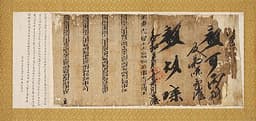
Huijong of Goryeo
Emperor · Medieval
37.5Total

Napoleon Bonaparte
General · Modern
70.9Total
Basic Information
Born
1181
1769
Died
1237
1821
Era
Medieval
Modern
Nationality
Korea
France
Occupation
Emperor
General
Civilization
Eastern
Western
Score Comparison
Military (10%)
20.0
94.0
Political (20%)
32.1
72.0
Influence (20%)
46.3
40.0
Legacy (20%)
37.5
80.0
Leadership (15%)
34.6
78.0
Strategy (15%)
45.0
90.0
TOTAL
37.5
70.9
Huijong of Goryeo — Complete Timeline
1209 AD
Failed coup against Choe Chung-heonPolitical Action◆ Major
King Huijong attempted to assassinate Choe Chung-heon by ambushing him during a palace visit. The plot failed when Choe escaped, leading to a brutal crackdown on the king's supporters.
Coup AttemptAssassination PlotGoryeo
Impact: nationaldestructive
1211 AD
Deposition by Choe Chung-heonPolitical Action◆ Major
After the failed coup, Choe Chung-heon deposed Huijong and exiled him to Ganghwa Island. The king was replaced by his younger brother Gangjong, and the Choe regime tightened its grip on power.
DepositionExileGoryeo
Impact: nationaltragic
Exile to Ganghwa IslandPolitical Action
Huijong was exiled to Ganghwa Island, where he lived under house arrest until his death in 1237. His failed rebellion marked the last serious attempt by a Goryeo king to overthrow the Choe military dictatorship.
ExileHouse ArrestGoryeo
Impact: nationaltragic
Napoleon Bonaparte — Complete Timeline
1799 AD
Coup of 18 BrumaireOther◆ Major
Napoleon Bonaparte, with support from his brother Lucien and key political figures, overthrew the Directory in a bloodless coup. He established the Consulate with himself as First Consul, effectively becoming the ruler of France. This event ended the French Revolution's most unstable period.
French RevolutionCoupRise to Power
Impact: regional
1804 AD
Promulgation of the Napoleonic CodeOther◆ Major
Napoleon enacted the Civil Code of the French, known as the Napoleonic Code, a comprehensive set of laws that replaced the fragmented feudal legal systems. The code established legal equality, protected property rights, and secularized law. It became the basis for legal systems in many European and world countries.
Legal ReformNapoleonic CodeCivil Law
Impact: globalconstructive
1805 AD
Battle of AusterlitzWar◆ Major
Napoleon's Grande Arm
Napoleonic WarsBattleDecisive Victory
Impact: global
1812 AD
Invasion of RussiaWar◆ Major
Napoleon led the Grande Arm
Napoleonic WarsInvasionDisaster
Impact: globaldestructive
1815 AD
Battle of WaterlooWar◆ Major
Napoleon's French army was defeated by the combined forces of the Duke of Wellington's Anglo-Allied army and Gebhard Leberecht von Bl
Napoleonic WarsBattleFinal Defeat
Impact: globaldestructive
Expert Analysis
huijong-of-goryeo-vs-napoleon-bonaparte
# The Emperor Who Could Not Escape His Cage
On a winter morning in 1211, King Huijong of Goryeo watched from the window of his island prison as the waters of the Yellow Sea turned gray beneath a low sky. Just seven years earlier, he had ascended the throne of a kingdom that had stood for nearly four centuries. Now he was a ghost in all but name, exiled to Ganghwa Island by the very man he had tried to destroy. Half a world away and six centuries later, another ruler—Napoleon Bonaparte—would also know the bitter taste of exile, pacing the damp floors of Saint Helena while the empire he had built from nothing crumbled into memory. Both men reached for absolute power. One nearly grasped it. The other never held it at all. The difference lay not in their ambition, but in the worlds that shaped them.
Origins
Napoleon Bonaparte was born in 1769 on the island of Corsica, a place that had only recently become French. His family was minor nobility—poor, proud, and resentful of the mainland. This marginality forged in him a hunger for recognition that would never be satisfied. He attended military school in France, where his classmates mocked his accent and his poverty. He responded by studying ceaselessly, devouring histories of war and conquest.
Huijong of Goryeo was born in 1181 into a very different kind of cage. His father was King Sinjong, but real power belonged to Choe Chung-heon, a military strongman who had seized control of the government in 1196. The Choe regime turned kings into puppets and the throne into a stage. Huijong grew up knowing that his crown was a lie, that his words meant nothing unless the general allowed them. This knowledge festered.
The era of Napoleon was one of revolution, where old orders were shattered and new men could rise on talent alone. Huijong’s Korea was one of rigid hierarchy, where the military aristocracy had crushed the civil bureaucracy and held the monarchy hostage. One man lived in a world of possibility. The other lived in a world of walls.
Rise to Power
Napoleon’s ascent was a masterpiece of speed and audacity. By 1793, at just twenty-four, he had driven the British out of Toulon. By 1796, he commanded the Army of Italy and turned a starving, unpaid force into a conquering legion. His victories in Italy, Egypt, and Austria made him a living legend. In 1799, he seized power in a coup and crowned himself emperor in 1804. Every step was his own.
Huijong’s rise was passive. He became king in 1204—not through conquest or cunning, but because Choe Chung-heon chose him. The general had deposed Huijong’s predecessor and placed the young prince on the throne like a chess piece. Huijong did not earn his power. He inherited a gilded prison.
Leadership & Governance
Napoleon governed with the same energy he brought to war. He reformed French law with the Napoleonic Code, standardized education, built roads and canals, and centralized the state. He appointed officials based on merit, not birth. His military genius was unmatched: he could read a battlefield like a map of the human soul, knowing when to strike and when to wait. His political wisdom, however, was flawed. He conquered too much, trusted too few, and made enemies of nations that might have been allies.
Huijong’s rule was a desperate struggle for survival. He had no army of his own, no loyal bureaucracy, no independent treasury. His only weapon was patience—and he ran out of it. In 1209, he attempted to assassinate Choe Chung-heon during a palace visit. The plot failed. Instead of killing the general, Huijong sealed his own fate. Two years later, in 1211, Choe deposed him and sent him to Ganghwa Island, where he lived under house arrest until his death in 1237.
Triumph & Tragedy
Napoleon’s greatest triumph was Austerlitz in 1805, where he crushed the combined armies of Russia and Austria. It was the perfect battle: bold, elegant, and decisive. His greatest tragedy was the invasion of Russia in 1812. He marched into the vastness with half a million men and returned with fewer than fifty thousand. The Grand Army bled to death in the snow.
Huijong’s tragedy was that he never had a triumph. His only act of defiance—the 1209 coup attempt—was a failure before it began. He was a king who never ruled, a rebel who never fought. His life was a slow drowning.
Character & Destiny
Napoleon was restless, brilliant, and arrogant. He believed he could bend history to his will. That belief carried him to Moscow and then to Waterloo, where in 1815 his final defeat sent him to Saint Helena. He died in 1821, still dreaming of escape.
Huijong was brave but reckless. He saw no path forward except violence, and he lacked the resources to make violence succeed. His character was that of a cornered animal—not a conqueror, but a prisoner who refused to stop clawing at the bars.
Legacy
Napoleon left behind a transformed Europe. The Napoleonic Code still shapes civil law across the world. He spread nationalism, meritocracy, and the idea that a man could rise by his own ability. His legacy is a battlefield of debate: liberator or tyrant? But it is a legacy that endures.
Huijong left behind almost nothing. Korean history records him as a footnote, a king who tried and failed. His name appears in chronicles as a warning: do not challenge the powerful when you have no power of your own. His legacy is silence.
Conclusion
One man conquered an empire. The other could not escape a palace. But both knew what it meant to reach for something beyond their grasp. Napoleon’s ambition was vast enough to reshape the world; Huijong’s was desperate enough to cost him everything. In the end, the difference between them was not courage or intelligence—it was the cage they were born into. Napoleon lived in a time when cages could be broken. Huijong lived in a time when they could only be endured. History remembers the one who broke free. But it should not forget the one who tried.
Rankings
🥇
Napoleon BonaparteLeader
Mil: 94.0Pol: 72.0Inf: 40.0
70.9
🥈
Huijong of Goryeo
Mil: 20.0Pol: 32.1Inf: 46.3
37.5
+33.4 behind
How This Comparison Works
Algorithm
Each figure is scored on 6 dimensions (0—100 scale) based on structured historical data: Military (10%), Political (20%), Influence (20%), Legacy (20%), Leadership (15%), Strategy (15%). The weighted total produces the final ranking.
Data Sources
Scores are computed from structured sub-indicators in the database. Scale factors adjust for era (Ancient ×0.85, Modern ×1.0) and civilization size (Eastern ×1.05, Other ×0.80) to account for differences in population and military scale.
Maximum 3 Figures
Comparisons are limited to 2—3 figures to ensure readability and statistical meaningfulness.
Error Margins
±5 points per dimension — Sub-scores are derived from historical records with inherent uncertainty. Two figures within 5 points on a dimension should be considered roughly equivalent in that area.
Total Score Accuracy
±3 points overall — The weighted combination of 6 dimensions produces a total score with approximately ±3 points of uncertainty. Differences of less than 3 points are not statistically significant— the figures are effectively tied.
Known Limitations
- Historical records are incomplete and uneven across civilizations
- Figures from oral-tradition societies may be underrepresented
- Occupation labels can misclassify multi-role figures
- Scores measure capability and impact, not moral character
- Quantitative scoring is a comparison tool, not absolute truth
Capability Radar
Military (10%) — Battles & Warfare
Battles
5
95
Win Rate
5
90
Expansion
5
95
Political (20%) — Governance & Reform
Reform
10
95
Diplomacy
10
80
Economy
10
85
Influence (20%) — Cultural & Global Reach
Cultural
10
85
Global
5
90
Legacy (20%) — Historical Impact
Historical
15
95
Longevity
10
90
Leadership (15%) — Power & Stability
Tenure
30
85
Stability
10
70
Strategy (15%) — Tactics & Innovation
Strategy
5
95
Tactics
5
98
Reform
5
92
Similar Comparisons
Comments & Discussion
断代考官6/17/2026
作为一个考据党,我真受不了这种强行对比。高丽熙宗在位七年,始终被崔忠献捏在手心,连宫门都出不去。拿破仑从少尉打到皇帝,欧洲地图都被他改画了两遍。这俩人除了"都被流放过"之外,简直没有任何共同点。建议写手先把《高丽史》列传读完再下笔。
Revisionist Wrecking Ball6/17/2026
This framing is pure Orientalist Eurocentrism—assuming Napoleon's "rise from nothing" is universally admirable while Huijong's trapped kingship is pathetic. Napoleon inherited the chaos of the French Revolution; Huijong inherited a Choe dynasty stranglehold. Both were products of their systems, but one gets called "ambitious" and the other "weak." I'd rather dissect why our historical lens glorifies violent self-makers over trapped traditional rulers.
青丘旧书生6/17/2026
诸位何必较真?东国史臣若见今日西洋人将寡人比作科西嘉武夫,怕要拊掌大笑。熙宗虽囚于江华,犹能保宗庙血食二十载,岂非其智?拿破仑征俄折戟,兵败滑铁卢,终老南大西洋一孤岛,可谓其能?愚以为,能守社稷者,未必不如能裂土者。治乱之判,岂在疆场?
Historian3876/17/2026
As a military historian, I'm disgusted by this comparison. Napoleon won 60 battles and reshaped European warfare with his corps system and artillery tactics. Huijong never commanded a single campaign—he was a puppet king whose only military action was a failed drunken assassination plot against Choe. Comparing them is like comparing a tiger to a declawed housecat that never left the porch.