Loading...
Huni vs Napoleon Bonaparte
Napoleon Bonaparte leads by 29.1 pts · 2 figures compared
…
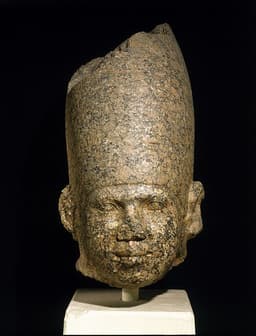
Huni
Emperor · Ancient
41.8Total

Napoleon Bonaparte
General · Modern
70.9Total
Basic Information
Born
-2620
1769
Died
-2600
1821
Era
Ancient
Modern
Nationality
Old Kingdom Egypt
France
Occupation
Emperor
General
Civilization
Middle Eastern
Western
Score Comparison
Military (10%)
38.4
94.0
Political (20%)
26.4
72.0
Influence (20%)
45.5
40.0
Legacy (20%)
40.0
80.0
Leadership (15%)
48.4
78.0
Strategy (15%)
53.5
90.0
TOTAL
41.8
70.9
Huni — Complete Timeline
2615 BC
Establishment of the cult of the sun god RaCultural
Huni may have promoted the cult of Ra, as evidenced by the sun temple at Meidum and the use of the sun symbol in his name. This religious shift laid the groundwork for the solar temples of the Fifth Dynasty.
ReligionSun CultRa
Impact: national
2610 BC
Construction of the Meidum PyramidOther◆ Major
Huni is credited with building the Meidum Pyramid, originally a step pyramid later converted into a true pyramid. The pyramid's outer casing collapsed in antiquity, leaving a distinctive three-step core. It represents a transitional phase in pyramid construction from step to true pyramids.
Pyramid ConstructionMeidumArchitecture
Impact: nationalconstructive
Napoleon Bonaparte — Complete Timeline
1799 AD
Coup of 18 BrumaireOther◆ Major
Napoleon Bonaparte, with support from his brother Lucien and key political figures, overthrew the Directory in a bloodless coup. He established the Consulate with himself as First Consul, effectively becoming the ruler of France. This event ended the French Revolution's most unstable period.
French RevolutionCoupRise to Power
Impact: regional
1804 AD
Promulgation of the Napoleonic CodeOther◆ Major
Napoleon enacted the Civil Code of the French, known as the Napoleonic Code, a comprehensive set of laws that replaced the fragmented feudal legal systems. The code established legal equality, protected property rights, and secularized law. It became the basis for legal systems in many European and world countries.
Legal ReformNapoleonic CodeCivil Law
Impact: globalconstructive
1805 AD
Battle of AusterlitzWar◆ Major
Napoleon's Grande Arm
Napoleonic WarsBattleDecisive Victory
Impact: global
1812 AD
Invasion of RussiaWar◆ Major
Napoleon led the Grande Arm
Napoleonic WarsInvasionDisaster
Impact: globaldestructive
1815 AD
Battle of WaterlooWar◆ Major
Napoleon's French army was defeated by the combined forces of the Duke of Wellington's Anglo-Allied army and Gebhard Leberecht von Bl
Napoleonic WarsBattleFinal Defeat
Impact: globaldestructive
Expert Analysis
huni-vs-napoleon-bonaparte
# The Emperor and the Pharaoh: Two Paths to Immortality
On a June morning in 1815, Napoleon Bonaparte stood on a muddy field near Waterloo, watching his Imperial Guard march into cannon fire for the last time. Four thousand years earlier and a thousand miles to the southeast, another ruler—whose name would be nearly erased from history—watched laborers drag limestone blocks across the desert to build a monument that still stands today. One man conquered Europe; the other built a pyramid. Both sought immortality. Only one found it in the way he intended.
Origins
Napoleon was born in 1769 on the island of Corsica, a place that had just been sold to France by Genoa. His family was minor nobility, struggling and resentful. He spoke French with a thick Italian accent and was mocked at military school for his poverty and provincial manners. Yet this outsider’s hunger drove him. The French Revolution had shattered the old order, and for a brilliant young artillery officer, chaos was opportunity.
Huni, the last pharaoh of Egypt’s Third Dynasty, was born around 2620 BCE—so long ago that even the concept of “France” would not exist for another four thousand years. We know almost nothing of his childhood. He ruled at the dawn of pyramid-building, when Egyptian civilization was still inventing the tools of eternal power. Where Napoleon’s world was exploding with revolutionary change, Huni’s was one of slow, sacred repetition. The sun god Ra was rising in importance, and a pharaoh’s duty was to align heaven and earth.
Rise to Power
Napoleon’s ascent was meteoric. At 24, he captured Toulon from the British and was promoted to brigadier general. At 26, he crushed a royalist uprising in Paris with a “whiff of grapeshot.” At 30, he made himself First Consul. At 35, Emperor. Each step was a gamble, each victory a ladder. He did not inherit power; he seized it with both hands and the barrels of his cannon.
Huni’s rise is lost to time. He was likely the son or close relative of his predecessor, Khasekhemwy, the last great warrior-king of the early dynasties. There was no coup, no revolution—just the steady, unbroken chain of divine kingship. To be pharaoh was to be born into the role of living god. Huni did not fight for the throne; he inherited a cosmos.
Leadership & Governance
Napoleon governed with ferocious energy. He reformed French law into the Napoleonic Code, centralized the bureaucracy, created the Bank of France, and reorganized education. He promoted soldiers based on talent, not birth—a radical idea. His military genius was undeniable: he won 60 of his 70 battles, outmaneuvering larger armies with speed, deception, and devastating artillery. At Austerlitz in 1805, he destroyed a combined Russian-Austrian army with a trap so perfect it became a textbook example. Yet his political wisdom was brittle. He could conquer but could not consolidate. He placed his brothers on thrones across Europe, but they failed him. He alienated the Spanish with brutal occupation, and the Peninsular War bled his empire dry.
Huni governed through ritual and stone. The Meidum Pyramid, which he began and which his son Sneferu would complete, was not a tomb—it was a resurrection machine. Its construction required organizing thousands of workers, feeding them, housing them, and coordinating the quarrying, transport, and placement of millions of tons of stone. This was governance on a scale that rivaled any army. Huni’s political achievement was not a code of laws but a system of labor and belief that turned a mortal king into an eternal star. The cult of Ra, which he promoted, gave Egypt a solar theology that would last for two thousand years.
Triumph & Tragedy
Napoleon’s greatest triumph was the Empire at its height in 1810—master of Europe from Spain to Poland. His greatest tragedy was the invasion of Russia in 1812. He marched 600,000 men into the snow; fewer than 100,000 came back. The Grande Armée dissolved. He was exiled to Elba, returned for a Hundred Days, and then crushed at Waterloo. His final years were spent on a remote Atlantic island, dictating memoirs and dying slowly of stomach cancer.
Huni’s triumphs and tragedies are harder to measure. The Meidum Pyramid collapsed—its outer casing fell away, leaving a strange, three-tiered ruin that looks more like a tower than a pyramid. Was this a catastrophic failure during construction, or did it collapse centuries later? We do not know. But Huni’s name survived only in fragments. For thousands of years, no one remembered the pharaoh who built the first true pyramid. His tragedy was not defeat in battle but oblivion.
Character & Destiny
Napoleon was driven by an insatiable ego. “I am not a man,” he once said. “I am a thing—a thing that moves.” He believed in his own star, his own destiny. This confidence made him invincible—until it made him blind. He could not stop, could not compromise, could not share power. His character was his fate: a hunger that consumed everything, including himself.
Huni is a blank. We have no statues, no inscriptions of his deeds, no record of his personality. Perhaps he was a pious traditionalist, or perhaps a bold innovator. The only evidence of his character is the pyramid itself—a monument that began as a step pyramid and was transformed into a true pyramid, suggesting a mind willing to experiment. But he remains a ghost, a name on a king list, his inner life lost to the desert wind.
Legacy
Napoleon’s legacy is everywhere: the Napoleonic Code shapes civil law from Louisiana to Japan; his military tactics are still studied; his name is a synonym for ambition and genius. He is remembered as both liberator and tyrant, reformer and warmonger. His shadow falls across two centuries.
Huni’s legacy is more subtle. The Meidum Pyramid, even in ruin, became the prototype for the great pyramids of Giza. His son Sneferu built the Bent Pyramid and the Red Pyramid, perfecting the form. Without Huni’s experiment, there would be no Great Pyramid of Khufu. His name, almost forgotten, is preserved only in the Turin King List and a few fragments. Yet the sun cult he promoted shaped Egyptian religion for millennia. His legacy is not in memory but in stone.
Conclusion
We remember Napoleon because he forced the world to remember him—through battles, laws, and a name shouted across history. We barely remember Huni because he built for eternity, not for posterity. One sought to dominate his age; the other sought to transcend it. In the end, Napoleon’s empire crumbled in a generation, while Huni’s pyramid—broken, stripped, and weathered—still stands. Perhaps the truest immortality is not the one we chase, but the one we leave behind without knowing it.
Rankings
🥇
Napoleon BonaparteLeader
Mil: 94.0Pol: 72.0Inf: 40.0
70.9
🥈
Huni
Mil: 38.4Pol: 26.4Inf: 45.5
41.8
+29.1 behind
How This Comparison Works
Algorithm
Each figure is scored on 6 dimensions (0—100 scale) based on structured historical data: Military (10%), Political (20%), Influence (20%), Legacy (20%), Leadership (15%), Strategy (15%). The weighted total produces the final ranking.
Data Sources
Scores are computed from structured sub-indicators in the database. Scale factors adjust for era (Ancient ×0.85, Modern ×1.0) and civilization size (Eastern ×1.05, Other ×0.80) to account for differences in population and military scale.
Maximum 3 Figures
Comparisons are limited to 2—3 figures to ensure readability and statistical meaningfulness.
Error Margins
±5 points per dimension — Sub-scores are derived from historical records with inherent uncertainty. Two figures within 5 points on a dimension should be considered roughly equivalent in that area.
Total Score Accuracy
±3 points overall — The weighted combination of 6 dimensions produces a total score with approximately ±3 points of uncertainty. Differences of less than 3 points are not statistically significant— the figures are effectively tied.
Known Limitations
- Historical records are incomplete and uneven across civilizations
- Figures from oral-tradition societies may be underrepresented
- Occupation labels can misclassify multi-role figures
- Scores measure capability and impact, not moral character
- Quantitative scoring is a comparison tool, not absolute truth
Capability Radar
Military (10%) — Battles & Warfare
Battles
39
95
Win Rate
43
90
Expansion
42
95
Political (20%) — Governance & Reform
Reform
20
95
Diplomacy
20
80
Economy
20
85
Influence (20%) — Cultural & Global Reach
Cultural
20
85
Global
10
90
Legacy (20%) — Historical Impact
Historical
30
95
Longevity
20
90
Leadership (15%) — Power & Stability
Tenure
30
85
Stability
30
70
Strategy (15%) — Tactics & Innovation
Strategy
46
95
Tactics
53
98
Reform
54
92
Similar Comparisons
Comments & Discussion
No comments yet. Be the first to share your thoughts!