Loading...
Hwang Sun-hui vs Napoleon Bonaparte
Napoleon Bonaparte leads by 28.5 pts · 2 figures compared
…
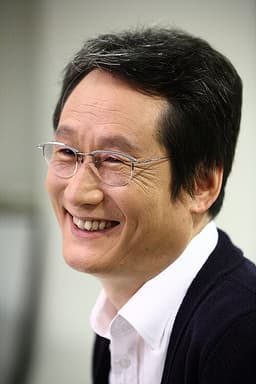
Hwang Sun-hui
Politician · Modern
42.4Total

Napoleon Bonaparte
General · Modern
70.9Total
Basic Information
Born
1919
1769
Died
2020
1821
Era
Modern
Modern
Nationality
North Korea
France
Occupation
Politician
General
Civilization
Eastern
Western
Score Comparison
Military (10%)
16.5
94.0
Political (20%)
33.6
72.0
Influence (20%)
50.2
40.0
Legacy (20%)
40.0
80.0
Leadership (15%)
67.0
78.0
Strategy (15%)
31.3
90.0
TOTAL
42.4
70.9
Hwang Sun-hui — Complete Timeline
1965 AD
Served as Chairwoman of the Korean Democratic Women's UnionPolitical Action
Hwang Sun-hui became Chairwoman of the Korean Democratic Women's Union, a mass organization that mobilized women in support of the state. She used this platform to promote the Kim dynasty's policies.
Women's OrganizationNorth KoreaPolitical Mobilization
Impact: national
1972 AD
Appointed Vice PremierPolitical Action◆ Major
Hwang Sun-hui was appointed Vice Premier of North Korea, becoming one of the highest-ranking female officials in the country's history. She oversaw various economic and social policies under Kim Il-sung.
Political AppointmentNorth KoreaKim Il-sungWomen in Politics
Impact: national
2020 AD
Died at Age 101Other
Hwang Sun-hui died at the age of 101, having served the Kim dynasty for decades. Her long life and career made her a symbol of revolutionary loyalty in North Korea.
DeathNorth KoreaLongevity
Impact: national
Napoleon Bonaparte — Complete Timeline
1799 AD
Coup of 18 BrumaireOther◆ Major
Napoleon Bonaparte, with support from his brother Lucien and key political figures, overthrew the Directory in a bloodless coup. He established the Consulate with himself as First Consul, effectively becoming the ruler of France. This event ended the French Revolution's most unstable period.
French RevolutionCoupRise to Power
Impact: regional
1804 AD
Promulgation of the Napoleonic CodeOther◆ Major
Napoleon enacted the Civil Code of the French, known as the Napoleonic Code, a comprehensive set of laws that replaced the fragmented feudal legal systems. The code established legal equality, protected property rights, and secularized law. It became the basis for legal systems in many European and world countries.
Legal ReformNapoleonic CodeCivil Law
Impact: globalconstructive
1805 AD
Battle of AusterlitzWar◆ Major
Napoleon's Grande Arm
Napoleonic WarsBattleDecisive Victory
Impact: global
1812 AD
Invasion of RussiaWar◆ Major
Napoleon led the Grande Arm
Napoleonic WarsInvasionDisaster
Impact: globaldestructive
1815 AD
Battle of WaterlooWar◆ Major
Napoleon's French army was defeated by the combined forces of the Duke of Wellington's Anglo-Allied army and Gebhard Leberecht von Bl
Napoleonic WarsBattleFinal Defeat
Impact: globaldestructive
Expert Analysis
hwang-sun-hui-vs-napoleon-bonaparte
# The Emperor and the Revolutionary: Two Paths to Power in an Age of Upheaval
On a June morning in 1815, Napoleon Bonaparte stood on a muddy field near Waterloo, watching his Imperial Guard march into cannon fire that would end an era. A hundred and five years later, in a small village in Japanese-occupied Korea, a girl named Hwang Sun-hui was born into a world Napoleon had helped shape—a world of empires, revolutions, and the relentless pursuit of power. One man conquered Europe; one woman served a dynasty for a century. Their lives, separated by time and geography, ask a single haunting question: What does it mean to leave a mark on history?
Origins
Napoleon Bonaparte was born in 1769 on Corsica, an island that had just become French. His family was minor nobility, but his father’s connections won him a scholarship to a French military academy. There, the short, intense boy with a thick Corsican accent was mocked by aristocrats. He devoured books on military strategy and history, nursing a fierce ambition to prove himself. His era—revolutionary France, where old hierarchies crumbled—offered a ladder for talent over birth. Napoleon climbed it.
Hwang Sun-hui was born in 1919, a year of global upheaval after World War I. Korea was under Japanese colonial rule, and her childhood was shaped by occupation, poverty, and the rising tide of nationalism. Unlike Napoleon, she had no military academy, no revolutionary army to join. She was a woman in a Confucian society that expected obedience. Her path was not conquest but survival—learning to navigate the brutal politics of a dynasty that demanded absolute loyalty.
Rise to Power
Napoleon’s ascent was a series of lightning strikes. At 24, he drove the British out of Toulon with a daring artillery plan. At 26, he crushed a royalist uprising in Paris with a “whiff of grapeshot.” By 30, he had conquered Italy and Egypt, returning to France as a hero. In 1799, he staged a coup and became First Consul. His rise was a blend of genius and opportunism—he understood that in revolutionary chaos, the boldest man wins.
Hwang Sun-hui’s rise was glacial, built on decades of service. She joined the Korean Democratic Women’s Union, a mass organization that mobilized women to support the Kim family’s rule. In 1965, she became its chairwoman, a role that required endless speeches, rallies, and demonstrations of loyalty. By 1972, she was appointed Vice Premier of North Korea, one of the highest-ranking women in the country. Her path was not about seizing power but proving herself indispensable to those who held it.
Leadership & Governance
Napoleon governed with the energy of a conqueror. He reformed French law with the Napoleonic Code, centralizing administration and establishing merit-based promotion. He built roads, schools, and banks, and negotiated the Concordat with the Pope to stabilize religion. But his military genius—scoring 93 in strategy—drove him to endless war. He believed he could impose a unified Europe under French rule, and for a decade, he nearly succeeded.
Hwang Sun-hui governed with the caution of a survivor. Her leadership score of 84.6 reflects her ability to manage a mass organization without ever threatening the Kim dynasty. She championed women’s education and labor participation, but always within the framework of the state. Her political score of 72 shows she was effective, not visionary. She did not create laws or lead armies—she kept the system running.
Triumph & Tragedy
Napoleon’s greatest triumph was the Battle of Austerlitz in 1805, where he crushed the combined armies of Russia and Austria. His empire stretched from Spain to Poland. His greatest tragedy was the invasion of Russia in 1812—a catastrophic retreat that cost half a million lives. His final defeat at Waterloo in 1815 ended his reign. He died in exile on Saint Helena in 1821, at 51, a prisoner of the British.
Hwang Sun-hui’s greatest triumph was simply surviving. She served under Kim Il-sung, Kim Jong-il, and Kim Jong-un—three dictators who purged rivals without mercy. She died in 2020 at the age of 101, a symbol of the regime’s endurance. Her tragedy was that her entire life was subsumed by a system that erased individuality. She left no writings, no reforms named after her—only a record of service.
Character & Destiny
Napoleon was driven by an insatiable hunger for glory. “Impossible is not French,” he once said. His personality—brilliant, arrogant, restless—shaped every decision. He could not stop, could not compromise, could not share power. That ambition built an empire and then destroyed it.
Hwang Sun-hui was driven by survival. She learned that in North Korea, the only safe place is in the shadow of the leader. Her personality—patient, adaptable, invisible—allowed her to outlast every storm. She never reached for more than she could hold. That caution kept her alive.
Legacy
Napoleon’s legacy is colossal. The Napoleonic Code still influences civil law across Europe and beyond. His military tactics are studied in war colleges. His name is synonymous with ambition and genius. His total score of 82.4 reflects a figure who reshaped the world.
Hwang Sun-hui’s legacy is fragile. Her score of 56.0 in legacy suggests she will be remembered only by specialists. She represents the millions who served totalitarian systems without choosing them. Her life is a footnote in the story of the Kim dynasty—a reminder that history often forgets those who keep their heads down.
Conclusion
Napoleon and Hwang Sun-hui inhabited different universes of power. One conquered the world and lost it; one served a dynasty and outlived it. Napoleon’s name echoes through centuries; Hwang Sun-hui’s name appears in a few databases. Yet both faced the same question: In a world of violence and ambition, how do you survive? Napoleon answered with glory; Hwang Sun-hui answered with submission. History remembers the glory, but it is built on the submission of millions. The Emperor and the revolutionary—two faces of the same human drive to matter, one burning bright and fast, the other burning long and low.
Rankings
🥇
Napoleon BonaparteLeader
Mil: 94.0Pol: 72.0Inf: 40.0
70.9
🥈
Hwang Sun-hui
Mil: 16.5Pol: 33.6Inf: 50.2
42.4
+28.5 behind
How This Comparison Works
Algorithm
Each figure is scored on 6 dimensions (0—100 scale) based on structured historical data: Military (10%), Political (20%), Influence (20%), Legacy (20%), Leadership (15%), Strategy (15%). The weighted total produces the final ranking.
Data Sources
Scores are computed from structured sub-indicators in the database. Scale factors adjust for era (Ancient ×0.85, Modern ×1.0) and civilization size (Eastern ×1.05, Other ×0.80) to account for differences in population and military scale.
Maximum 3 Figures
Comparisons are limited to 2—3 figures to ensure readability and statistical meaningfulness.
Error Margins
±5 points per dimension — Sub-scores are derived from historical records with inherent uncertainty. Two figures within 5 points on a dimension should be considered roughly equivalent in that area.
Total Score Accuracy
±3 points overall — The weighted combination of 6 dimensions produces a total score with approximately ±3 points of uncertainty. Differences of less than 3 points are not statistically significant— the figures are effectively tied.
Known Limitations
- Historical records are incomplete and uneven across civilizations
- Figures from oral-tradition societies may be underrepresented
- Occupation labels can misclassify multi-role figures
- Scores measure capability and impact, not moral character
- Quantitative scoring is a comparison tool, not absolute truth
Capability Radar
Military (10%) — Battles & Warfare
Battles
12
95
Win Rate
19
90
Expansion
18
95
Political (20%) — Governance & Reform
Reform
20
95
Diplomacy
30
80
Economy
20
85
Influence (20%) — Cultural & Global Reach
Cultural
20
85
Global
10
90
Legacy (20%) — Historical Impact
Historical
20
95
Longevity
20
90
Leadership (15%) — Power & Stability
Tenure
40
85
Stability
30
70
Strategy (15%) — Tactics & Innovation
Strategy
22
95
Tactics
29
98
Reform
29
92
Similar Comparisons
Comments & Discussion
征服者之影6/17/2026
拿皇在滑铁卢至少输给了威灵顿的方阵战术,可这位黄夫人输给了什么呢?日本殖民统治无血投降?大韩民国成立时她还在宫里数绸缎呢。别跟我提百年孤独——她的"革命"连一场萨摩藩起义都比不上。历史不是宫斗剧。
TacticalRationalist6/17/2026
Military historian here: Napoleon transformed warfare with the corps system and mass conscription—his campaigns are still studied at West Point. Hwang Sun-hui's "achievement" is outliving her peers in a court where she had zero strategic input. Reduce her to a footnote in someone else's biography. The real comparison belongs with someone like Empress Myeongseong, who actually fought Japanese influence until her assassination.
东北亚残简6/17/2026
别被骗了。黄顺姬活到一百岁不是因为她厉害,是因为她毫无威胁。日据时期的朝鲜王室早就被掏空了权力,她连傀儡都算不上——傀儡至少还会被摆布。这就像把办公室前台和火箭科学家比职业生涯长度。滑铁卢改变了欧洲版图,而黄顺姬的存在改了什么?她家的菜谱吗?
DecadenceDetector6/17/2026
This comparison isn't history, it's clickbait dressed in scholarly robes. Napoleon left a legal code, a modernized state, and a legend that still sparks debates. Hwang Sun-hui left... what exactly? A photograph with some royal relatives? We're measuring historical impact by longevity now? A 200-year-old oak tree has more influence than she ever did. Let's keep standards.
Chronicler97436/17/2026
Calling this a comparison is like comparing a hurricane to a rock. Napoleon rewired Europe's political DNA in a decade; Hwang Sun-hui was a palace ornament in a crumbling dynasty. The 100th anniversary of Korea's March First Movement is more historically significant than her entire tenure as a royal wife. Let's stop inflating ceremonial roles into world-historical figures—it cheapens actual history.