Loading...
Hyegong of Silla vs Napoleon Bonaparte
Napoleon Bonaparte leads by 36.5 pts · 2 figures compared
…
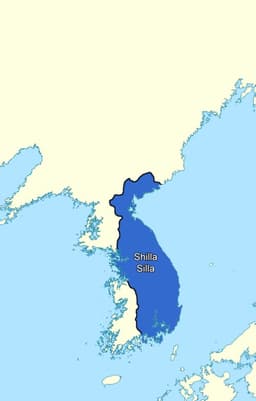
Hyegong of Silla
Emperor · Ancient
34.4Total

Napoleon Bonaparte
General · Modern
70.9Total
Basic Information
Born
-758
1769
Died
—
1821
Era
Ancient
Modern
Nationality
Korea
France
Occupation
Emperor
General
Civilization
Eastern
Western
Score Comparison
Military (10%)
10.2
94.0
Political (20%)
26.4
72.0
Influence (20%)
44.0
40.0
Legacy (20%)
35.0
80.0
Leadership (15%)
34.6
78.0
Strategy (15%)
45.0
90.0
TOTAL
34.4
70.9
Hyegong of Silla — Complete Timeline
780 AD
Assassination of Hyegong of SillaPolitical Action◆ Major
King Hyegong was killed in a coup led by Kim Yang-sang and other nobles. The assassination ended the middle Silla period and resulted in the collapse of the direct royal line, leading to a period of instability and the rise of the succeeding king Wonseong.
CoupAssassinationSilla
Impact: nationaldestructive
Napoleon Bonaparte — Complete Timeline
1799 AD
Coup of 18 BrumaireOther◆ Major
Napoleon Bonaparte, with support from his brother Lucien and key political figures, overthrew the Directory in a bloodless coup. He established the Consulate with himself as First Consul, effectively becoming the ruler of France. This event ended the French Revolution's most unstable period.
French RevolutionCoupRise to Power
Impact: regional
1804 AD
Promulgation of the Napoleonic CodeOther◆ Major
Napoleon enacted the Civil Code of the French, known as the Napoleonic Code, a comprehensive set of laws that replaced the fragmented feudal legal systems. The code established legal equality, protected property rights, and secularized law. It became the basis for legal systems in many European and world countries.
Legal ReformNapoleonic CodeCivil Law
Impact: globalconstructive
1805 AD
Battle of AusterlitzWar◆ Major
Napoleon's Grande Arm
Napoleonic WarsBattleDecisive Victory
Impact: global
1812 AD
Invasion of RussiaWar◆ Major
Napoleon led the Grande Arm
Napoleonic WarsInvasionDisaster
Impact: globaldestructive
1815 AD
Battle of WaterlooWar◆ Major
Napoleon's French army was defeated by the combined forces of the Duke of Wellington's Anglo-Allied army and Gebhard Leberecht von Bl
Napoleonic WarsBattleFinal Defeat
Impact: globaldestructive
Expert Analysis
hyegong-of-silla-vs-napoleon-bonaparte
# The Emperor and the King: Two Fates in the Shadow of Power
On a June evening in 1815, Napoleon Bonaparte stood on a muddy field near Waterloo, watching his Imperial Guard march into cannon fire. Less than a hundred years earlier and half a world away, a teenage king named Hyegong of Silla faced a very different end—alone in his palace, surrounded by assassins sent by his own nobles. Both men held supreme power. Both lost everything. But the gulf between their fates is not merely a matter of victory or defeat—it is a story of what happens when a leader’s ambition outruns the world he inherits.
Origins
Napoleon was born in 1769 on the Mediterranean island of Corsica, a year after France purchased the island from Genoa. He came from minor nobility, but his family was neither wealthy nor powerful. What he had was a prodigious mind and an era of chaos—the French Revolution had shattered the old order, creating opportunities for men of talent rather than birth. He devoured military history, mastered mathematics, and absorbed the Enlightenment’s belief that reason could reshape society.
Hyegong of Silla was born in 758, during the golden age of Korea’s Silla dynasty. He was royalty from birth, the son of King Gyeongdeok, who had expanded Silla’s territory and patronage of Buddhism. But Hyegong inherited a kingdom already cracking under its own weight. The throne had long depended on a fragile alliance of aristocratic families, the “true bone” and “holy bone” ranks that determined who could rule. His world was one of inherited privilege and inherited obligation—a system that rewarded blood over brains.
Rise to Power
Napoleon rose through sheer force of will. At twenty-four, he drove the British out of Toulon. At twenty-six, he crushed a royalist uprising in Paris with a “whiff of grapeshot.” By thirty, he had conquered Italy and Egypt, his name plastered across Europe. His path was a ladder he built himself, rung by rung, each victory a testament to his ability to exploit the chaos around him. In 1804, he crowned himself Emperor of the French—not because he was born to it, but because he had taken it.
Hyegong became king as a child, likely around 765, after his father’s death. He had no ladder to climb—he was placed on a throne he had not earned, surrounded by nobles who had been maneuvering for power for generations. The Silla system required a king to balance aristocratic factions, to distribute titles and land carefully, to be a symbol of unity rather than a source of change. Hyegong was neither a warrior nor a reformer. He was a boy in a man’s game.
Leadership & Governance
Napoleon governed with the audacity of a conqueror and the precision of a bureaucrat. He reformed French law through the Napoleonic Code, standardizing legal principles across Europe. He centralized education, built roads, stabilized the currency, and created a merit-based military. He was a master of both strategy and administration—his political score of 75.0 reflects a man who understood that conquest alone could not sustain an empire. He tried to merge old monarchies with new ideas, marrying an Austrian princess and installing his brothers on European thrones.
Hyegong ruled in a world where power was personal, not institutional. Silla’s government was a network of noble families, each with its own army and ambitions. To govern was to negotiate, to placate, to survive. The historical record is sparse, but what remains suggests Hyegong lacked the ruthlessness or cunning to dominate these factions. His military score of 49.6 and political score of 46.8 are not just numbers—they reflect a king who could not command respect or enforce his will. He may have been a patron of Buddhism, but piety does not keep a throne steady.
Triumph & Tragedy
Napoleon’s greatest moment came on December 2, 1805, at Austerlitz, where he destroyed the combined armies of Russia and Austria. It was a masterpiece of deception and timing—he deliberately weakened his own center to lure the allies into a trap, then crushed them from the flanks. His strategic score of 93.0 is earned in moments like this. His tragedy was not Waterloo, but the invasion of Russia in 1812—a hubris so vast it consumed his Grand Army and, ultimately, his empire.
Hyegong’s triumph is harder to find. He presided over a period of cultural production, but his reign is defined by its end. In 780, after perhaps fifteen years on the throne, a coup led by the noble Kim Yang-sang swept through the palace. Hyegong was assassinated. His death marked the end of the middle Silla period, a quiet collapse rather than a dramatic battle. His tragedy is not a single defeat but a slow erosion of legitimacy—a king who could not rule, and a system that no longer believed in kings.
Character & Destiny
Napoleon was driven by an insatiable hunger for glory. “Impossible is a word to be found only in the dictionary of fools,” he once said. His personality—arrogant, brilliant, impatient—shaped every decision. He could not stop, could not consolidate, could not delegate. His downfall came because he believed his own legend. He was a man who conquered Europe but could not conquer himself.
Hyegong was shaped by passivity, or perhaps by a world that gave him no room to act. In Silla, a king who failed to assert control was not just weak—he was a target. The coup that killed him was not a rebellion against tyranny but against impotence. His character remains a mystery, but his fate suggests a man who either could not or would not play the brutal game of aristocratic politics. Destiny, for him, was not a grand narrative but a locked room.
Legacy
Napoleon’s legacy is immense and contested. The Napoleonic Code still forms the basis of civil law in much of Europe and the world. He spread nationalism, secularism, and meritocracy—often at the point of a bayonet. His military innovations are studied in war colleges. But he also left a trail of devastation, from the corpses of Spain to the frozen fields of Russia. His legacy score of 78.0 reflects a man who reshaped history, for better and worse.
Hyegong’s legacy is almost invisible. He is remembered primarily as the last king of the middle Silla period, a name in a list, a footnote in Korean history. His legacy score of 49.8 is not a judgment on his character but on his impact—he changed nothing, built nothing, left nothing. His assassination cleared the way for a new dynasty, but he himself was erased.
Conclusion
What separates Napoleon from Hyegong is not talent or luck, but the nature of the worlds they inhabited. Napoleon was born into a revolution that had destroyed the old rules, giving a Corsican outsider the chance to rewrite them. Hyegong was born into a system that had already written the rules—and those rules required a king to be a puppet or a tyrant, but never a man. One died on a remote island, exiled and bitter but immortal. The other died in his own palace, forgotten before his body was cold. Power, in the end, is not about how high you rise, but about whether the world you inherit allows you to climb at all.
Rankings
🥇
Napoleon BonaparteLeader
Mil: 94.0Pol: 72.0Inf: 40.0
70.9
🥈
Hyegong of Silla
Mil: 10.2Pol: 26.4Inf: 44.0
34.4
+36.5 behind
How This Comparison Works
Algorithm
Each figure is scored on 6 dimensions (0—100 scale) based on structured historical data: Military (10%), Political (20%), Influence (20%), Legacy (20%), Leadership (15%), Strategy (15%). The weighted total produces the final ranking.
Data Sources
Scores are computed from structured sub-indicators in the database. Scale factors adjust for era (Ancient ×0.85, Modern ×1.0) and civilization size (Eastern ×1.05, Other ×0.80) to account for differences in population and military scale.
Maximum 3 Figures
Comparisons are limited to 2—3 figures to ensure readability and statistical meaningfulness.
Error Margins
±5 points per dimension — Sub-scores are derived from historical records with inherent uncertainty. Two figures within 5 points on a dimension should be considered roughly equivalent in that area.
Total Score Accuracy
±3 points overall — The weighted combination of 6 dimensions produces a total score with approximately ±3 points of uncertainty. Differences of less than 3 points are not statistically significant— the figures are effectively tied.
Known Limitations
- Historical records are incomplete and uneven across civilizations
- Figures from oral-tradition societies may be underrepresented
- Occupation labels can misclassify multi-role figures
- Scores measure capability and impact, not moral character
- Quantitative scoring is a comparison tool, not absolute truth
Capability Radar
Military (10%) — Battles & Warfare
Battles
5
95
Win Rate
5
90
Expansion
5
95
Political (20%) — Governance & Reform
Reform
20
95
Diplomacy
20
80
Economy
20
85
Influence (20%) — Cultural & Global Reach
Cultural
15
85
Global
5
90
Legacy (20%) — Historical Impact
Historical
20
95
Longevity
10
90
Leadership (15%) — Power & Stability
Tenure
30
85
Stability
10
70
Strategy (15%) — Tactics & Innovation
Strategy
5
95
Tactics
5
98
Reform
5
92
Similar Comparisons
Comments & Discussion
DynastyDecoder6/17/2026
This comparison is like comparing a wildfire to a candle flicker. Napoleon remade Europe’s map in a decade; Hyegong couldn’t hold his own court. The real difference? Napoleon had a revolutionary army forged in national fervor. Hyegong had a court of parasites who saw him as an expendable figurehead. Your analysis romanticizes Hyegong’s tragedy—he wasn’t a tragic hero, he was a victim of a system already dead. Waterloo at least meant something. His assassination was just a footnote.