Loading...
Hyeonjong of Goryeo vs Li Xuan
Hyeonjong of Goryeo leads by 18.8 pts · 2 figures compared
…
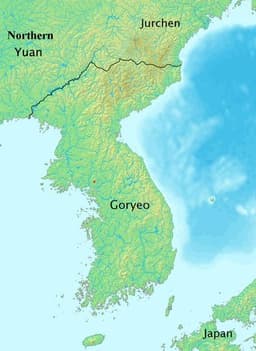
Hyeonjong of Goryeo
Emperor · Medieval
59.7Total
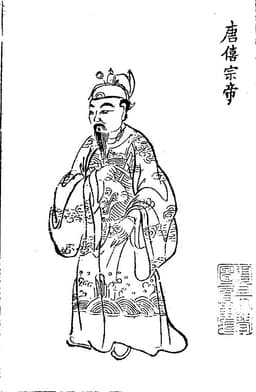
Li Xuan
Emperor · Medieval
40.9Total
Basic Information
Born
992
862
Died
1031
888
Era
Medieval
Medieval
Nationality
Korea
China
Occupation
Emperor
Emperor
Civilization
Eastern
Eastern
Score Comparison
Military (10%)
45.0
50.0
Political (20%)
68.0
35.0
Influence (20%)
56.7
46.3
Legacy (20%)
55.0
37.5
Leadership (15%)
74.0
39.0
Strategy (15%)
60.0
38.6
TOTAL
59.7
40.9
Hyeonjong of Goryeo — Complete Timeline
1010 AD
Defense Against the Khitan InvasionWar◆ Major
Hyeonjong led Goryeo's resistance against a major invasion by the Khitan Liao dynasty. Despite initial setbacks, including the burning of Gaegyeong, Goryeo forces repelled the invaders, and Hyeonjong's leadership preserved the kingdom's independence and territorial integrity.
WarKhitanGoryeo
Impact: national
1011 AD
Order to Carve the Tripitaka KoreanaCultural
King Hyeonjong ordered the carving of the Tripitaka Koreana, a complete set of Buddhist scriptures, as a prayer for divine protection against the Khitan invasions. This massive project produced over 80,000 wooden printing blocks, becoming a masterpiece of Buddhist scripture preservation.
BuddhismPrintingCultural Heritage
Impact: globalconstructive
Li Xuan — Complete Timeline
880 AD
Fled Chang'an to ChengduPolitical Action
When Huang Chao's rebel army approached the Tang capital Chang'an, Li Xuan (Tang Xizong) abandoned the city and fled to Chengdu in Sichuan. This flight left the capital undefended and marked the collapse of central authority during the Huang Chao Rebellion.
FlightHuang Chao RebellionCapital Lost
Impact: nationaltragic
885 AD
Recalled to Chang'an After Huang Chao's DefeatPolitical Action◆ Major
After Huang Chao was defeated by the Shatuo Turk Li Keyong and other warlords, Li Xuan returned to Chang'an. However, the city was in ruins and the Tang court was now dependent on regional military governors, further weakening imperial power.
ReturnWarlord EraTang Decline
Impact: national
Expert Analysis
Origins
Hyeonjong of Goryeo (born 992, reigned 1009-1031) was the eighth king of the Goryeo dynasty, which ruled Korea from 918 to 1392. He was the son of King Mokjong, but his early life was marked by political turmoil: after his father's assassination, he was raised in relative obscurity under the protection of Buddhist monks. His background was steeped in the Confucian and Buddhist traditions of the Korean aristocracy, but he lacked direct military training. In contrast, Li Xuan (born 862, reigned 873-888), better known as Tang Xizong, was the fifth son of Emperor Yizong of the Tang dynasty. He grew up in the lavish imperial palace of Chang'an, receiving a classical education but little practical governance experience. His early life was shielded from the growing crises of the Tang state, including eunuch power and regional warlordism.
Rise to Power
Hyeonjong ascended to the throne in 1009 after a coup that deposed his predecessor, King Mokjong. His rise was facilitated by the military general Gang Jo, who placed him on the throne. However, Hyeonjong quickly asserted his own authority, executing Gang Jo when he became too powerful. This decisive action stabilized his rule. Li Xuan became emperor in 873 at age 11, entirely controlled by eunuchs. His accession was engineered by the powerful eunuch Tian Lingzi, who effectively ran the government. Li Xuan's reign began with the Huang Chao rebellion (874-884), which he was utterly powerless to stop. He fled Chang'an in 880, a turning point that exposed his weakness.
Leadership & Governance
Hyeonjong's governance focused on centralizing authority and defending the realm. He implemented administrative reforms to strengthen royal power, reducing the influence of aristocratic clans. His most notable act was ordering the carving of the Tripitaka Koreana (1011) as a Buddhist invocation for protection against the Khitan invasions. This project demonstrated his strategic use of religion for state purposes. Li Xuan, by contrast, was a passive ruler. He delegated all authority to eunuchs and warlords, such as Tian Lingzi and Zhu Wen. His reign saw the collapse of Tang control over the provinces, with regional governors acting independently. While Hyeonjong scored 68.0 in political skill, Li Xuan managed only 35.0, reflecting his inability to govern effectively.
Triumph & Tragedy
Hyeonjong's greatest triumph was successfully repelling the Khitan Liao dynasty's invasions in 1010-1011 and 1018-1019. Despite the burning of the capital Gaegyeong in 1010, he rallied the kingdom, led a counteroffensive, and forced the Khitan to withdraw. His greatest failure was the initial devastation of the capital, which cost many lives. Nevertheless, his military score of 45.0 understates his strategic resilience. Li Xuan's triumph was merely surviving the Huang Chao rebellion and returning to Chang'an in 885. However, the city was in ruins, and his authority never recovered. His tragedy was his complete loss of control: the Tang dynasty effectively ended under his watch, as warlords carved up the empire. He died in 888, a puppet ruler whose legacy score is just 37.5.
Character & Destiny
Hyeonjong was pragmatic and decisive. He used Buddhism to unify his people and was willing to retreat and regroup rather than fight to the death. His character shaped a destiny of sustained independence for Goryeo, which lasted another 350 years. Li Xuan was indecisive and pleasure-seeking, more interested in games than governance. His character sealed the Tang dynasty's fate; historians often mark his reign as the point of no return. As one Tang history notes, 'The emperor was a child playing while the empire burned.' Hyeonjong's leadership score of 74.0 contrasts sharply with Li Xuan's 39.0.
Legacy
Hyeonjong's legacy endures through the Tripitaka Koreana, a UNESCO World Heritage site and a masterpiece of Buddhist scripture carving. His defense against the Khitan secured Goryeo's sovereignty and cultural identity. Li Xuan's legacy is negative: he presided over the Tang dynasty's disintegration, leading to the Five Dynasties and Ten Kingdoms period. His name is synonymous with incompetence. Hyeonjong's influence score of 56.7 exceeds Li Xuan's 46.3, reflecting his lasting impact on Korean history.
Conclusion
Hyeonjong of Goryeo had a significantly greater impact than Li Xuan. With an overall score of 59.7 versus 40.9, and clear achievements in defense and cultural preservation, Hyeonjong secured his kingdom's future. Li Xuan, by contrast, was a passive figure who failed to act during a crisis, leading to the collapse of a once-great dynasty. Hyeonjong's proactive leadership and strategic use of religion stand out as effective governance, while Li Xuan's abdication of responsibility marks him as one of history's weakest rulers. The data supports a decisive verdict: Hyeonjong's legacy is one of resilience and cultural contribution, whereas Li Xuan's is one of decline and failure.
Rankings
🥇
Hyeonjong of GoryeoLeader
Mil: 45.0Pol: 68.0Inf: 56.7
59.7
🥈
Li Xuan
Mil: 50.0Pol: 35.0Inf: 46.3
40.9
+18.8 behind
How This Comparison Works
Algorithm
Each figure is scored on 6 dimensions (0—100 scale) based on structured historical data: Military (10%), Political (20%), Influence (20%), Legacy (20%), Leadership (15%), Strategy (15%). The weighted total produces the final ranking.
Data Sources
Scores are computed from structured sub-indicators in the database. Scale factors adjust for era (Ancient ×0.85, Modern ×1.0) and civilization size (Eastern ×1.05, Other ×0.80) to account for differences in population and military scale.
Maximum 3 Figures
Comparisons are limited to 2—3 figures to ensure readability and statistical meaningfulness.
Error Margins
±5 points per dimension — Sub-scores are derived from historical records with inherent uncertainty. Two figures within 5 points on a dimension should be considered roughly equivalent in that area.
Total Score Accuracy
±3 points overall — The weighted combination of 6 dimensions produces a total score with approximately ±3 points of uncertainty. Differences of less than 3 points are not statistically significant— the figures are effectively tied.
Known Limitations
- Historical records are incomplete and uneven across civilizations
- Figures from oral-tradition societies may be underrepresented
- Occupation labels can misclassify multi-role figures
- Scores measure capability and impact, not moral character
- Quantitative scoring is a comparison tool, not absolute truth
Capability Radar
Military (10%) — Battles & Warfare
Battles
30
5
Win Rate
35
5
Expansion
10
0
Political (20%) — Governance & Reform
Reform
65
5
Diplomacy
55
5
Economy
50
5
Influence (20%) — Cultural & Global Reach
Cultural
70
10
Global
55
5
Legacy (20%) — Historical Impact
Historical
75
15
Longevity
70
10
Leadership (15%) — Power & Stability
Tenure
60
20
Stability
45
5
Strategy (15%) — Tactics & Innovation
Strategy
45
5
Tactics
40
5
Reform
30
0
Similar Comparisons
Comments & Discussion
No comments yet. Be the first to share your thoughts!