Loading...
This comparison has not been analyzed yet.
One-time AI generation (~1 minute). Scores and timeline are already available below.
Hyojong of Joseon vs Mozaffar ad-Din Shah
Mozaffar ad-Din Shah leads by 12.9 pts · 2 figures compared
…

Hyojong of Joseon
Emperor · Modern
41.2Total
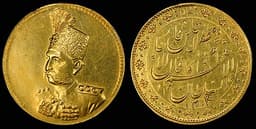
Mozaffar ad-Din Shah
Emperor · Modern
54.1Total
Basic Information
Born
1619
1853
Died
1659
1907
Era
Modern
Modern
Nationality
Korea
Persia
Occupation
Emperor
Emperor
Civilization
Eastern
Middle Eastern
Score Comparison
Military (10%)
20.0
43.3
Political (20%)
48.0
68.0
Influence (20%)
48.6
52.5
Legacy (20%)
40.0
45.8
Leadership (15%)
40.0
64.0
Strategy (15%)
38.6
54.3
TOTAL
41.2
54.1
Hyojong of Joseon — Complete Timeline
1650 AD
Northern Expedition Plan (Bukbeol)Political Action◆ Major
King Hyojong initiated a plan to invade Qing China to avenge the humiliation of the 1636 surrender. He expanded the army, built fortifications, and stockpiled weapons. The plan was never executed due to Qing power and lack of allies.
Military PolicyRevengeQing
Impact: nationalconstructive
1652 AD
Military Reforms and FortificationReform
Hyojong strengthened the Joseon military by reorganizing the army, improving artillery, and fortifying northern borders. He also promoted the use of matchlock muskets and trained a standing army, preparing for a potential war with Qing.
Military ReformDefenseModernization
Impact: nationalconstructive
1659 AD
Death of HyojongOther◆ Major
King Hyojong died suddenly at age 40, possibly from illness or poisoning. His death ended the Northern Expedition plan. His successor Hyeonjong was young, leading to a power vacuum and intensified factional strife.
SuccessionDeathPolitical Instability
Impact: nationaltragic
Mozaffar ad-Din Shah — Complete Timeline
1901 AD
Granted the D'Arcy Oil ConcessionPolitical Action◆ Major
Mozaffar ad-Din Shah granted a 60-year oil concession to William Knox D'Arcy, giving him exclusive rights to explore and exploit oil in most of Persia. This concession led to the discovery of oil in 1908 and the founding of the Anglo-Persian Oil Company, which became a major economic and political force.
Oil ConcessionForeign InvestmentEconomic Policy
Impact: global
1906 AD
Signed the Persian Constitution of 1906Political Action
Mozaffar ad-Din Shah signed the Fundamental Law of Persia, establishing a constitutional monarchy with an elected parliament (Majlis). This was a response to the Constitutional Revolution of 1905-1906, which demanded limits on royal power and the creation of a representative government.
ConstitutionConstitutional RevolutionReform
Impact: nationalprogressive
1907 AD
Issued the Supplementary Fundamental LawsPolitical Action◆ Major
Mozaffar ad-Din Shah signed the Supplementary Fundamental Laws, which expanded the constitution to include civil rights protections, such as freedom of speech, press, and assembly, and established the principle of equality before the law. These laws were enacted shortly before his death.
Constitutional ReformCivil RightsSupplementary Laws
Impact: nationalprogressive
This comparison has not been analyzed yet.
One-time AI generation (~1 minute). Scores and timeline are already available below.
Rankings
🥇
Mozaffar ad-Din ShahLeader
Mil: 43.3Pol: 68.0Inf: 52.5
54.1
🥈
Hyojong of Joseon
Mil: 20.0Pol: 48.0Inf: 48.6
41.2
+12.9 behind
How This Comparison Works
Algorithm
Each figure is scored on 6 dimensions (0—100 scale) based on structured historical data: Military (10%), Political (20%), Influence (20%), Legacy (20%), Leadership (15%), Strategy (15%). The weighted total produces the final ranking.
Data Sources
Scores are computed from structured sub-indicators in the database. Scale factors adjust for era (Ancient ×0.85, Modern ×1.0) and civilization size (Eastern ×1.05, Other ×0.80) to account for differences in population and military scale.
Maximum 3 Figures
Comparisons are limited to 2—3 figures to ensure readability and statistical meaningfulness.
Error Margins
±5 points per dimension — Sub-scores are derived from historical records with inherent uncertainty. Two figures within 5 points on a dimension should be considered roughly equivalent in that area.
Total Score Accuracy
±3 points overall — The weighted combination of 6 dimensions produces a total score with approximately ±3 points of uncertainty. Differences of less than 3 points are not statistically significant— the figures are effectively tied.
Known Limitations
- Historical records are incomplete and uneven across civilizations
- Figures from oral-tradition societies may be underrepresented
- Occupation labels can misclassify multi-role figures
- Scores measure capability and impact, not moral character
- Quantitative scoring is a comparison tool, not absolute truth
Capability Radar
Military (10%) — Battles & Warfare
Battles
5
5
Win Rate
5
5
Expansion
5
5
Political (20%) — Governance & Reform
Reform
40
60
Diplomacy
35
30
Economy
30
20
Influence (20%) — Cultural & Global Reach
Cultural
20
20
Global
10
25
Legacy (20%) — Historical Impact
Historical
30
45
Longevity
20
30
Leadership (15%) — Power & Stability
Tenure
50
40
Stability
45
15
Strategy (15%) — Tactics & Innovation
Strategy
20
5
Tactics
10
5
Reform
30
5
Similar Comparisons
Comments & Discussion
No comments yet. Be the first to share your thoughts!