Loading...
Mozaffar ad-Din Shah vs Napoleon Bonaparte
Napoleon Bonaparte leads by 16.8 pts · 2 figures compared
…
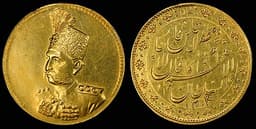
Mozaffar ad-Din Shah
Emperor · Modern
54.1Total

Napoleon Bonaparte
General · Modern
70.9Total
Basic Information
Born
1853
1769
Died
1907
1821
Era
Modern
Modern
Nationality
Persia
France
Occupation
Emperor
General
Civilization
Middle Eastern
Western
Score Comparison
Military (10%)
43.3
94.0
Political (20%)
68.0
72.0
Influence (20%)
52.5
40.0
Legacy (20%)
45.8
80.0
Leadership (15%)
64.0
78.0
Strategy (15%)
54.3
90.0
TOTAL
54.1
70.9
Mozaffar ad-Din Shah — Complete Timeline
1901 AD
Granted the D'Arcy Oil ConcessionPolitical Action◆ Major
Mozaffar ad-Din Shah granted a 60-year oil concession to William Knox D'Arcy, giving him exclusive rights to explore and exploit oil in most of Persia. This concession led to the discovery of oil in 1908 and the founding of the Anglo-Persian Oil Company, which became a major economic and political force.
Oil ConcessionForeign InvestmentEconomic Policy
Impact: global
1906 AD
Signed the Persian Constitution of 1906Political Action
Mozaffar ad-Din Shah signed the Fundamental Law of Persia, establishing a constitutional monarchy with an elected parliament (Majlis). This was a response to the Constitutional Revolution of 1905-1906, which demanded limits on royal power and the creation of a representative government.
ConstitutionConstitutional RevolutionReform
Impact: nationalprogressive
1907 AD
Issued the Supplementary Fundamental LawsPolitical Action◆ Major
Mozaffar ad-Din Shah signed the Supplementary Fundamental Laws, which expanded the constitution to include civil rights protections, such as freedom of speech, press, and assembly, and established the principle of equality before the law. These laws were enacted shortly before his death.
Constitutional ReformCivil RightsSupplementary Laws
Impact: nationalprogressive
Napoleon Bonaparte — Complete Timeline
1799 AD
Coup of 18 BrumaireOther◆ Major
Napoleon Bonaparte, with support from his brother Lucien and key political figures, overthrew the Directory in a bloodless coup. He established the Consulate with himself as First Consul, effectively becoming the ruler of France. This event ended the French Revolution's most unstable period.
French RevolutionCoupRise to Power
Impact: regional
1804 AD
Promulgation of the Napoleonic CodeOther◆ Major
Napoleon enacted the Civil Code of the French, known as the Napoleonic Code, a comprehensive set of laws that replaced the fragmented feudal legal systems. The code established legal equality, protected property rights, and secularized law. It became the basis for legal systems in many European and world countries.
Legal ReformNapoleonic CodeCivil Law
Impact: globalconstructive
1805 AD
Battle of AusterlitzWar◆ Major
Napoleon's Grande Arm
Napoleonic WarsBattleDecisive Victory
Impact: global
1812 AD
Invasion of RussiaWar◆ Major
Napoleon led the Grande Arm
Napoleonic WarsInvasionDisaster
Impact: globaldestructive
1815 AD
Battle of WaterlooWar◆ Major
Napoleon's French army was defeated by the combined forces of the Duke of Wellington's Anglo-Allied army and Gebhard Leberecht von Bl
Napoleonic WarsBattleFinal Defeat
Impact: globaldestructive
Expert Analysis
mozaffar-ad-din-shah-vs-napoleon-bonaparte
# The Emperor and the Conqueror: Two Faces of Power in an Age of Upheaval
In the winter of 1807, Napoleon Bonaparte stood atop the battlefield of Eylau, his boots caked with frozen mud and blood, surveying a landscape littered with forty thousand corpses. He was thirty-seven years old, master of Europe from the Pyrenees to the Vistula. Exactly a century later, in the autumn of 1906, Mozaffar ad-Din Shah Qajar sat in a palace in Tehran, his body weakened by illness, his hand trembling as he signed a document that would strip his dynasty of absolute power. He was fifty-three, and he had just given away what his ancestors had fought for generations to keep. These two men, born into different worlds, embody the extremes of what power can demand and what it can destroy.
Origins
Napoleon Bonaparte entered the world on the island of Corsica in 1769, the son of a minor noble family that had allied itself with France only after the island’s conquest. His childhood was marked by poverty, pride, and the sting of being treated as an outsider by French aristocrats at military school. Yet France’s revolutionary upheaval, which began when he was twenty, became his ladder. The old order collapsed, and talent—ruthless, ambitious talent—was suddenly the only currency that mattered.
Mozaffar ad-Din Shah was born in 1853 into the Qajar dynasty, a ruling house that had governed Persia since the late eighteenth century. He was the crown prince from childhood, raised in the luxurious but suffocating confines of the royal court, where intrigue was the national sport and real power lay not with the shah but with the conservative clergy, the landed aristocracy, and the British and Russian empires that treated Persia as a chessboard. While Napoleon learned to command armies in the chaos of revolution, Mozaffar learned to navigate a world where his authority was perpetually borrowed.
Rise to Power
Napoleon’s ascent was a masterpiece of timing and violence. At twenty-four, he crushed a royalist uprising in Paris with a “whiff of grapeshot.” At twenty-six, he led a ragged army across the Alps into Italy and won six battles in twelve days. By thirty, he had made himself First Consul of France. By thirty-five, he crowned himself Emperor in Notre-Dame, snatching the crown from the Pope’s hands and placing it on his own head. Every step was earned through blood, calculation, and the absolute refusal to accept limits.
Mozaffar ad-Din Shah’s path was the opposite. He became shah in 1896 only because his father, Naser al-Din Shah, was assassinated by a follower of Jamal al-Din al-Afghani, a pan-Islamic reformer. Mozaffar had spent his entire adult life as governor of Azerbaijan, far from the capital, and was already in poor health. He inherited a throne that was deeply indebted to foreign powers, its treasury empty, its army outdated, and its people simmering with resentment. He did not seize power; power was thrust upon him like a burden he could not put down.
Leadership & Governance
Napoleon governed as he commanded: with speed, clarity, and an iron will. He reformed France’s legal system with the Napoleonic Code, which standardized laws across a fractured nation and enshrined principles of meritocracy, property rights, and secular authority. He reorganized education, created the Bank of France, and built roads and canals that tied his empire together. On the battlefield, his genius was strategic: he moved armies faster than his enemies, struck at their weakest points, and turned defeats into victories through sheer force of personality. At Austerlitz in 1805, he lured the combined Russian and Austrian armies into a trap that destroyed them in a single day.
Mozaffar ad-Din Shah governed by exhaustion and concession. He took three expensive trips to Europe, borrowing heavily from Russia and Britain to finance them. In 1901, desperate for revenue, he granted the D’Arcy Oil Concession to a British businessman, giving away exclusive rights to explore and exploit Persia’s oil for sixty years in exchange for a pittance. This single act would shape the Middle East for the next century, but at the time it was merely a desperate transaction. Under pressure from merchants, clerics, and intellectuals who demanded a constitution, he vacillated, promised reforms, then resisted, then finally capitulated. In 1906, he signed the Fundamental Law, creating an elected parliament and limiting royal power. The next year, he signed the Supplementary Fundamental Laws, which expanded civil rights. He did not believe in these reforms. He simply lacked the strength to refuse them.
Triumph & Tragedy
Napoleon’s greatest triumph was Austerlitz, where he destroyed two empires in a single day and forced the Holy Roman Empire to dissolve. His greatest tragedy was the invasion of Russia in 1812. He marched six hundred thousand men into the vastness of the Russian winter. He won every battle, but the enemy refused to surrender. By the time he limped back to France, fewer than thirty thousand soldiers remained. The Grande Armée was gone, and with it, his aura of invincibility.
Mozaffar ad-Din Shah’s greatest triumph was also his tragedy. By signing the constitution, he gave Persia its first modern political framework, a document that would inspire generations of reformers. But he did so not out of conviction but out of weakness. He died just weeks after signing the Supplementary Laws, and the constitution he had reluctantly granted became a battleground between the monarchy, the clergy, and foreign powers. Within a decade, Russia would bombard the parliament building, and the dream of constitutional rule would be crushed by the same forces that had forced the shah’s hand.
Character & Destiny
Napoleon was driven by an insatiable hunger for glory. “I live only for posterity,” he once said. He believed that destiny had chosen him to reshape Europe, and he was willing to burn everything—his army, his family, his health—in pursuit of that vision. His downfall came not from lack of talent but from an inability to stop. At Waterloo in 1815, his tactics were still brilliant, but his soldiers were exhausted, his marshals were divided, and the Duke of Wellington held the ridge.
Mozaffar ad-Din Shah was driven by exhaustion. He was a man who had never been allowed to rule, only to reign. His health was broken by years of illness and opium use. He signed the D’Arcy Concession because he needed money. He signed the constitution because he feared revolution. He did not shape history; history shaped him, and he bent before its force.
Legacy
Napoleon’s legacy is a paradox. He was a tyrant who trampled the liberties of nations, yet the Napoleonic Code, the metric system, and the idea of meritocracy spread across Europe and endure today. He is remembered as both a military genius and a cautionary tale about the limits of ambition. His scores of 94 in military and 93 in strategy reflect a man who changed the art of war forever, even as his political score of 75 reveals the flaws that brought him down.
Mozaffar ad-Din Shah’s legacy is quieter but no less profound. The constitution he signed in 1906 became the foundation of Iran’s modern political identity, a symbol of the struggle between autocracy and democracy. The D’Arcy Concession paved the way for the Anglo-Iranian Oil Company, which would dominate Iran’s economy and lead to the nationalization crisis of the 1950s. His scores of 72 in leadership and 69 in legacy suggest a man who, despite his weakness, set forces in motion that outlasted his dynasty.
Conclusion
Napoleon Bonaparte and Mozaffar ad-Din Shah represent two poles of leadership: the conqueror who shapes the world through force, and the caretaker who is shaped by it. One burned across Europe like a comet, leaving craters and monuments. The other watched his empire slip through his fingers like sand, leaving behind a constitution he never believed in. Both were prisoners of their time—Napoleon of his own ambition, Mozaffar of his own weakness. In the end, history judges not by intention but by consequence. Napoleon’s wars killed millions, but his laws live. Mozaffar’s concessions sold his country’s future, but his signature gave birth to a dream of freedom that would not die. Which is the greater legacy? Perhaps that is a question only the future can answer.
Rankings
🥇
Napoleon BonaparteLeader
Mil: 94.0Pol: 72.0Inf: 40.0
70.9
🥈
Mozaffar ad-Din Shah
Mil: 43.3Pol: 68.0Inf: 52.5
54.1
+16.8 behind
How This Comparison Works
Algorithm
Each figure is scored on 6 dimensions (0—100 scale) based on structured historical data: Military (10%), Political (20%), Influence (20%), Legacy (20%), Leadership (15%), Strategy (15%). The weighted total produces the final ranking.
Data Sources
Scores are computed from structured sub-indicators in the database. Scale factors adjust for era (Ancient ×0.85, Modern ×1.0) and civilization size (Eastern ×1.05, Other ×0.80) to account for differences in population and military scale.
Maximum 3 Figures
Comparisons are limited to 2—3 figures to ensure readability and statistical meaningfulness.
Error Margins
±5 points per dimension — Sub-scores are derived from historical records with inherent uncertainty. Two figures within 5 points on a dimension should be considered roughly equivalent in that area.
Total Score Accuracy
±3 points overall — The weighted combination of 6 dimensions produces a total score with approximately ±3 points of uncertainty. Differences of less than 3 points are not statistically significant— the figures are effectively tied.
Known Limitations
- Historical records are incomplete and uneven across civilizations
- Figures from oral-tradition societies may be underrepresented
- Occupation labels can misclassify multi-role figures
- Scores measure capability and impact, not moral character
- Quantitative scoring is a comparison tool, not absolute truth
Capability Radar
Military (10%) — Battles & Warfare
Battles
5
95
Win Rate
5
90
Expansion
5
95
Political (20%) — Governance & Reform
Reform
60
95
Diplomacy
30
80
Economy
20
85
Influence (20%) — Cultural & Global Reach
Cultural
20
85
Global
25
90
Legacy (20%) — Historical Impact
Historical
45
95
Longevity
30
90
Leadership (15%) — Power & Stability
Tenure
40
85
Stability
15
70
Strategy (15%) — Tactics & Innovation
Strategy
5
95
Tactics
5
98
Reform
5
92
Similar Comparisons
Comments & Discussion
FrozenMudPoet6/17/2026
Eylau’s frozen mud didn't just stain Napoleon's boots—it stained his soul. Forty-thousand corpses in one winter battle, and he called that victory. Mozaffar ad-Din Shah never saw that scale of death. His tragedy was slow decay, not explosive ruin. Napoleon’s charisma won armies; Mozaffar’s weakness lost a dynasty. History remembers the man who drowned Europe in blood, not the one who signed away Persia with a trembling hand. Give me the tyrant who fought over the one who surrendered.
统计刺客6/17/2026
数据不会撒谎:拿破仑麾下的法军十年内阵亡超过百万,而莫扎法尔沙在1906年那支只有几万人的哥萨克旅,连一场像样的仗都没打过。你们吹捧的"军事天才"本质上就是个规模化屠宰的专家;而那位被嘲笑的"软弱国王",至少避免了一场毫无意义的屠杀。我选择死亡人数少的那一方当皇帝,谢谢。
LateImperialDesk6/17/2026
Let's not romanticize either of these men as tragic figures. Napoleon's entire reign was a blood-soaked Ponzi scheme: conquer new lands to pay for the next war, until the pyramid collapsed in 1815. Mozaffar ad-Din Shah's Constitutional Revolution was his desperate attempt to save face—he knew the Qajars were bankrupt in both treasury and legitimacy. One died in exile on a remote island; the other died in his bed, but his dynasty barely survived a decade. Neither left their country better off.
洋务遗老6/17/2026
说莫扎法尔沙"软弱"?你们这些拿破仑崇拜者真是站着说话不腰疼。他面对的是英俄两大帝国在波斯领土上的百年博弈,而拿破仑只需要集中精力在欧洲玩零和游戏。莫扎法尔沙签署宪法时,手里既没有大军团也没有禁卫军,只有一份财务报表上触目惊心的外债数字。换你来坐那个王位,你能在1906年的波斯做出什么比"让权"更好的选择?
Legionnaire'sDaughter6/17/2026
My great-grandfather fought at Austerlitz. He said Boney had eyes that could burn through a man's soul. But that fire consumed everything—his soldiers, his brothers, his own son. Mozaffar ad-Din Shah? He had the eyes of a man who knew he was already defeated. Napoleon died with a legend; Mozaffar died with a constitution. One burned bright and destroyed half of Europe; the other flickered and was forgotten. I'll take the fire over the gutter every time.