Loading...
Mozaffar ad-Din Shah vs Qin Shi Huang
Qin Shi Huang leads by 31.1 pts · 2 figures compared
…
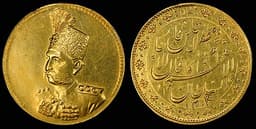
Mozaffar ad-Din Shah
Emperor · Modern
54.1Total
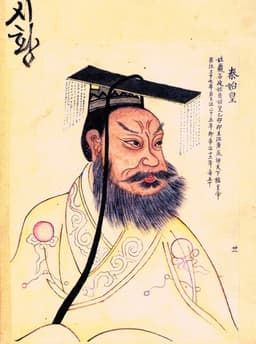
Qin Shi Huang
Emperor · Ancient
85.2Total
Basic Information
Born
1853
-259
Died
1907
-210
Era
Modern
Ancient
Nationality
Persia
China
Occupation
Emperor
Emperor
Civilization
Middle Eastern
Eastern
Score Comparison
Military (10%)
43.3
80.0
Political (20%)
68.0
90.0
Influence (20%)
52.5
85.0
Legacy (20%)
45.8
90.0
Leadership (15%)
64.0
78.0
Strategy (15%)
54.3
82.0
TOTAL
54.1
85.2
Mozaffar ad-Din Shah — Complete Timeline
1901 AD
Granted the D'Arcy Oil ConcessionPolitical Action◆ Major
Mozaffar ad-Din Shah granted a 60-year oil concession to William Knox D'Arcy, giving him exclusive rights to explore and exploit oil in most of Persia. This concession led to the discovery of oil in 1908 and the founding of the Anglo-Persian Oil Company, which became a major economic and political force.
Oil ConcessionForeign InvestmentEconomic Policy
Impact: global
1906 AD
Signed the Persian Constitution of 1906Political Action
Mozaffar ad-Din Shah signed the Fundamental Law of Persia, establishing a constitutional monarchy with an elected parliament (Majlis). This was a response to the Constitutional Revolution of 1905-1906, which demanded limits on royal power and the creation of a representative government.
ConstitutionConstitutional RevolutionReform
Impact: nationalprogressive
1907 AD
Issued the Supplementary Fundamental LawsPolitical Action◆ Major
Mozaffar ad-Din Shah signed the Supplementary Fundamental Laws, which expanded the constitution to include civil rights protections, such as freedom of speech, press, and assembly, and established the principle of equality before the law. These laws were enacted shortly before his death.
Constitutional ReformCivil RightsSupplementary Laws
Impact: nationalprogressive
Qin Shi Huang — Complete Timeline
246 BC
Construction of the Mausoleum and Terracotta ArmyOther◆ Major
Qin Shi Huang commissioned a vast mausoleum complex near Xi'an, guarded by thousands of life-sized terracotta soldiers, horses, and chariots. The project employed hundreds of thousands of workers and reflected his obsession with immortality and imperial power.
Impact: global
230 BC
Conquest of the Six Warring StatesWar
From 230 to 221 BCE, Ying Zheng led the Qin state in a series of campaigns that conquered the Han, Zhao, Wei, Chu, Yan, and Qi states. This unified China under a single ruler for the first time, ending the Warring States period.
Impact: global
221 BC
Standardization of Writing, Currency, and MeasurementsReform◆ Major
Qin Shi Huang ordered the standardization of Chinese script, currency, and weights and measures across the unified empire. This facilitated administration, trade, and cultural integration, laying a foundation for future dynasties.
Impact: globalconstructive
Proclamation of the Qin DynastyPolitical Action
After conquering the last independent state, Ying Zheng declared himself Shi Huangdi (First Emperor), founding the Qin Dynasty. He adopted a new title to signify his supreme authority and initiated centralized imperial rule.
Impact: global
214 BC
Initiation of the Great Wall ConstructionOther◆ Major
Qin Shi Huang ordered the connection and extension of existing northern fortifications to create a unified defensive wall against nomadic Xiongnu raids. This project involved massive conscripted labor and became the precursor to the later Great Wall.
Impact: regional
213 BC
Burning of Books and Burying of ScholarsPolitical Action◆ Major
On the advice of Li Si, Qin Shi Huang ordered the burning of historical records and philosophical texts not aligned with Legalist doctrine. He also had 460 Confucian scholars buried alive to suppress dissent and consolidate ideological control.
Impact: nationaldestructive
Expert Analysis
mozaffar-ad-din-shah-vs-qin-shi-huang
# The Emperor and the Shah: Two Paths to Power, Two Destinies
In the winter of 213 BC, a man who called himself the First Emperor ordered the burning of every book in his realm that did not serve his vision. In the summer of 1906, another monarch, frail and exhausted, signed away his absolute authority to a parliament he had resisted for years. Between these two moments lies a chasm not merely of two millennia, but of two fundamentally different conceptions of what it meant to rule. Qin Shi Huang and Mozaffar ad-Din Shah both inherited thrones, both faced the burden of holding together fractured kingdoms, and both left behind worlds transformed. Yet one created an empire that would define China for two thousand years, while the other presided over a dynasty’s death spiral. Why?
Origins
Ying Zheng was born in 259 BC into a world of endless war. The seven kingdoms of ancient China had been fighting for centuries, and his own childhood was a hostage’s nightmare—he spent his early years as a pawn in the palace of Zhao, watching his father’s kingdom struggle for survival. By the time he ascended the Qin throne at thirteen, he had learned that trust was a weakness and power the only currency that mattered. His era demanded ruthlessness; the Warring States period was a Darwinian laboratory where only the most cunning and brutal survived.
Mozaffar ad-Din Shah, born in 1853, inherited a different kind of chaos. The Qajar dynasty had ruled Persia for over a century, but by his time, the empire was a shadow of its Safavid glory. He grew up in the luxury of the Tehran court, surrounded by courtiers who whispered of Russian and British influence, of loans that drained the treasury, of a people who had begun to ask dangerous questions about why their shah spent fortunes on European tours while they starved. His Persia was not a battlefield of swords but a chessboard of foreign powers, and he had been trained only to be a piece.
Rise to Power
Qin Shi Huang’s ascent was a military campaign. In 230 BC, he launched the first of a series of conquests that would, over nine years, swallow the six rival kingdoms whole. He did not negotiate or compromise; his general Wang Jian simply marched, besieged, and annihilated. By 221 BC, when he stood before the last surrendered king, Ying Zheng had earned his new title: Shi Huangdi, the First Emperor. He had not inherited an empire—he had forged it in blood.
Mozaffar ad-Din Shah’s path was far quieter. He became crown prince in 1862, but his father, Naser al-Din Shah, ruled for nearly fifty years, leaving his son to wait in the shadows. When he finally took the throne in 1896, he was forty-three years old, sickly, and deeply indebted to Russia for loans that had financed his father’s extravagance. He had never commanded an army or won a war. His rise was not a conquest but an inheritance of debt and decay.
Leadership & Governance
Qin Shi Huang governed like a man building a machine. He abolished the feudal states and divided China into thirty-six commanderies, each run by appointed bureaucrats who answered directly to him. He ordered that all writing be standardized into a single script, that all cart axles be the same width so they could travel the same roads, that all coins be round with square holes. His reforms were breathtaking in their scope: a unified legal code, a national highway system, the beginnings of the Great Wall in 214 BC. He was not a tyrant who destroyed for pleasure; he was a tyrant who destroyed to create.
Mozaffar ad-Din Shah, by contrast, governed by concession. In 1901, desperate for money to fund another European tour, he granted William Knox D’Arcy a sixty-year oil concession that gave Britain control over Persia’s most valuable resource for a pittance. When his subjects protested, he did not send armies; he borrowed more from Russia. His great reform came only under duress: in 1906, after months of protests by merchants, clerics, and intellectuals who had taken sanctuary in the British embassy, he signed the Persian Constitution, creating a parliament and limiting his own power. He signed it, his biographers note, because he was too ill to resist.
Triumph & Tragedy
Qin Shi Huang’s greatest triumph was also his greatest tragedy. He unified China, but he did so by burying scholars alive and burning their books. He built the Terracotta Army—thousands of life-sized soldiers, each with a unique face, to guard his tomb for eternity—but he also worked millions of laborers to death on his projects. His triumph was a monument to human will; his tragedy was that he believed his will was all that mattered.
Mozaffar ad-Din Shah’s triumph was the constitution itself. For a brief moment, Persia became a constitutional monarchy, and the Majles began to reform the tax system, curb foreign influence, and build a modern state. But his tragedy was that he signed it only to die. In January 1907, he issued the Supplementary Fundamental Laws, expanding civil rights. Six months later, he was dead, and his son Muhammad Ali Shah immediately began a brutal campaign to reverse everything his father had done. The constitution survived, but barely—and the dynasty’s fate was sealed.
Character & Destiny
Qin Shi Huang was a man of iron will and paranoid genius. He believed he could conquer death itself, sending expeditions for the elixir of immortality while building a tomb of staggering ambition. His character was his destiny: he could not delegate, could not trust, could not imagine a world that did not revolve around his singular vision. That vision created China, but it also ensured that his dynasty would collapse within four years of his death in 210 BC.
Mozaffar ad-Din Shah was a man of weakness and good intentions. He was not cruel, but he was not strong. He wanted to modernize Persia, but he lacked the courage to confront the powers that bled it dry. His character was also his destiny: he gave his people a constitution because he could not say no, and he signed away his country’s oil because he could not say yes to reform. The Qajar dynasty would fall in 1925, replaced by the Pahlavis, who would prove far more ruthless.
Legacy
Qin Shi Huang’s legacy is the blueprint of China itself. His standardization of writing made Chinese civilization possible across a vast geography; his bureaucratic model survived dynasties; his Great Wall became a national symbol. He is remembered as both a unifier and a tyrant, but he is never forgotten. His tomb remains unopened, a mystery that still guards his dream of eternity.
Mozaffar ad-Din Shah’s legacy is more ambiguous. The constitution he signed became the foundation of Iran’s modern political struggles, but the D’Arcy concession he granted became the source of decades of exploitation and resentment. He is remembered as a weak king who gave away his country’s wealth, but also as the man who, however reluctantly, gave his people a voice. In Tehran’s Constitution House, his portrait hangs beside the document he signed—a reminder that sometimes the greatest gifts are given by those too tired to refuse.
Conclusion
Standing at the edge of history, these two rulers embody a stark truth: power is not a matter of will alone, but of timing. Qin Shi Huang built an empire because the world he inherited was ready to be unified by force; Mozaffar ad-Din Shah lost one because the world he inherited was already carved up by forces beyond his control. One man burned books to impose a single truth; the other signed a constitution to accommodate many voices. Both were men of their age, and both were consumed by it. The First Emperor’s terracotta soldiers still stand guard over his dream; the Shah’s constitution still echoes in Iran’s streets. Which legacy endures? Perhaps the one that learns to bend, rather than break.
Rankings
🥇
Qin Shi HuangLeader
Mil: 80.0Pol: 90.0Inf: 85.0
85.2
🥈
Mozaffar ad-Din Shah
Mil: 43.3Pol: 68.0Inf: 52.5
54.1
+31.1 behind
How This Comparison Works
Algorithm
Each figure is scored on 6 dimensions (0—100 scale) based on structured historical data: Military (10%), Political (20%), Influence (20%), Legacy (20%), Leadership (15%), Strategy (15%). The weighted total produces the final ranking.
Data Sources
Scores are computed from structured sub-indicators in the database. Scale factors adjust for era (Ancient ×0.85, Modern ×1.0) and civilization size (Eastern ×1.05, Other ×0.80) to account for differences in population and military scale.
Maximum 3 Figures
Comparisons are limited to 2—3 figures to ensure readability and statistical meaningfulness.
Error Margins
±5 points per dimension — Sub-scores are derived from historical records with inherent uncertainty. Two figures within 5 points on a dimension should be considered roughly equivalent in that area.
Total Score Accuracy
±3 points overall — The weighted combination of 6 dimensions produces a total score with approximately ±3 points of uncertainty. Differences of less than 3 points are not statistically significant— the figures are effectively tied.
Known Limitations
- Historical records are incomplete and uneven across civilizations
- Figures from oral-tradition societies may be underrepresented
- Occupation labels can misclassify multi-role figures
- Scores measure capability and impact, not moral character
- Quantitative scoring is a comparison tool, not absolute truth
Capability Radar
Military (10%) — Battles & Warfare
Battles
5
85
Win Rate
5
90
Expansion
5
90
Political (20%) — Governance & Reform
Reform
60
95
Diplomacy
30
75
Economy
20
90
Influence (20%) — Cultural & Global Reach
Cultural
20
95
Global
25
85
Legacy (20%) — Historical Impact
Historical
45
95
Longevity
30
95
Leadership (15%) — Power & Stability
Tenure
40
70
Stability
15
65
Strategy (15%) — Tactics & Innovation
Strategy
5
85
Tactics
5
80
Reform
5
95
Similar Comparisons
Comments & Discussion
烽火戏诸侯6/17/2026
作为一个古典文献考据癖,我觉得拿秦始皇和穆扎法尔比简直是对历史的侮辱。始皇帝焚书坑儒是政治清洗,但《史记》明说他保留医药卜筮之书,还统一了文字度量衡。这穆扎法尔倒好,1906年签个宪法手抖得像筛糠,之前还他妈欠了一屁股俄国债——一个建立帝国秩序,一个卖国求荣,高下立判。
数据拆解狂6/17/2026
从数据看,这两人根本不在一个量级:秦始皇在位36年,把七个战国经济体整合成统一市场,秦半两钱流通了700年。穆扎法尔在位10年,把伊朗国债从200万英镑搞到650万英镑,通胀率涨到50%以上——经济白痴式统治的教科书案例。别拿浪漫主义比烂了,这就是个管理学的降维打击。
Revisionist Critic6/17/2026
Stop pearl-clutching about Qin Shi Huang's brutality—Mozaffar ad-Din Shah was just as complicit in systemic violence, but through ineptitude. The Qajar shah's weakness allowed colonial powers to plunder Iran's resources, whose famine deaths and political repression rival any early empire's body count. The difference? One created national unity; the other accelerated national disintegration. Let's not romanticize incompetence as a moral virtue.
OldWarhorse6/17/2026
As a military historian, I'd say Qin Shi Huang was the ultimate force multiplier: he unified China by conquering six kingdoms with iron discipline and a ruthless meritocracy. His standardized bronze weapons and crossbow tactics were centuries ahead of their time. Mozaffar ad-Din Shah? He couldn't even modernize Persia's army to fight off British and Russian interference—he sold out his own soldiers for a European spa trip. One forged a war machine, the other let his empire rot.