Loading...
Idaddu I vs Napoleon Bonaparte
Napoleon Bonaparte leads by 30.7 pts · 2 figures compared
…
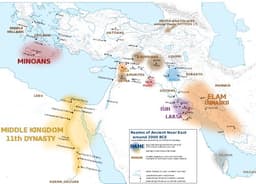
Idaddu I
Emperor · Ancient
40.2Total

Napoleon Bonaparte
General · Modern
70.9Total
Basic Information
Born
-1970
1769
Died
-1950
1821
Era
Ancient
Modern
Nationality
Elam
France
Occupation
Emperor
General
Civilization
Middle Eastern
Western
Score Comparison
Military (10%)
25.9
94.0
Political (20%)
35.1
72.0
Influence (20%)
45.5
40.0
Legacy (20%)
40.0
80.0
Leadership (15%)
48.4
78.0
Strategy (15%)
36.8
90.0
TOTAL
40.2
70.9
Idaddu I — Complete Timeline
1970 BC
Foundation of the Sukkalmah DynastyPolitical Action◆ Major
Idaddu I established the Sukkalmah dynasty, becoming its first ruler. He adopted the title 'sukkalmah' (grand regent), which became the standard designation for Elamite rulers of this period, structuring Elamite governance for centuries.
Dynasty FoundationTitle Adoption
Impact: regionalconstructive
Napoleon Bonaparte — Complete Timeline
1799 AD
Coup of 18 BrumaireOther◆ Major
Napoleon Bonaparte, with support from his brother Lucien and key political figures, overthrew the Directory in a bloodless coup. He established the Consulate with himself as First Consul, effectively becoming the ruler of France. This event ended the French Revolution's most unstable period.
French RevolutionCoupRise to Power
Impact: regional
1804 AD
Promulgation of the Napoleonic CodeOther◆ Major
Napoleon enacted the Civil Code of the French, known as the Napoleonic Code, a comprehensive set of laws that replaced the fragmented feudal legal systems. The code established legal equality, protected property rights, and secularized law. It became the basis for legal systems in many European and world countries.
Legal ReformNapoleonic CodeCivil Law
Impact: globalconstructive
1805 AD
Battle of AusterlitzWar◆ Major
Napoleon's Grande Arm
Napoleonic WarsBattleDecisive Victory
Impact: global
1812 AD
Invasion of RussiaWar◆ Major
Napoleon led the Grande Arm
Napoleonic WarsInvasionDisaster
Impact: globaldestructive
1815 AD
Battle of WaterlooWar◆ Major
Napoleon's French army was defeated by the combined forces of the Duke of Wellington's Anglo-Allied army and Gebhard Leberecht von Bl
Napoleonic WarsBattleFinal Defeat
Impact: globaldestructive
Expert Analysis
idaddu-i-vs-napoleon-bonaparte
# The Conqueror and the Grand Regent
History has a curious way of preserving the names of those who shook the world while burying those who merely laid its foundations. On a June evening in 1815, a short, brooding Corsican watched his dreams of empire dissolve into the mud of Waterloo. Four thousand years earlier, in the shadowy valleys of southwestern Iran, a man named Idaddu I carved out a dynasty so obscure that even his dates are uncertain—born around 1970 BCE, dead by 1950 BCE, his name surviving only in fragmentary cuneiform. Napoleon Bonaparte and Idaddu I both seized power in turbulent times, both claimed titles that elevated them above their peers, yet one became a household name while the other remains a footnote. The question is not merely who was greater, but why their fates diverged so dramatically.
Origins
Napoleon was born in 1769 on the island of Corsica, a place that had just passed from Genoese to French control. His family was minor nobility, struggling and ambitious. The France of his youth was a powder keg: the old monarchy crumbling, the Enlightenment reshaping minds, and revolution waiting to erupt. Napoleon absorbed this chaos like a sponge. He read Rousseau and Voltaire, studied artillery at military academies, and learned to see opportunity where others saw ruin. His world was one of rapid change, where a commoner with talent could rise to command armies.
Idaddu I emerged from a different world entirely. Elam, in the third millennium BCE, was a land of city-states and competing dynasties, wedged between Mesopotamia and the Iranian plateau. He was likely a local governor or military commander who saw the weakness of the old order. The Elamite civilization had existed for centuries, but its political structure was fragmented. Idaddu I's great innovation was not a new philosophy or a revolutionary idea—it was a title: *sukkalmah*, meaning "grand regent." In a world of kings and priests, he created a role that implied supremacy without the baggage of monarchy. His origins are lost to us, but his ambition speaks through the clay tablets: he wanted to unify, to centralize, to leave a mark.
Rise to Power
Napoleon's ascent was a masterpiece of timing and audacity. In 1793, at age 24, he recaptured the port of Toulon from British forces, earning promotion to brigadier general. By 1796, he commanded the Army of Italy and turned a neglected force into a conquering machine, defeating the Austrians and forcing peace on his terms. His 1798 Egyptian campaign was a strategic failure but a propaganda triumph—he returned to France a hero, and in 1799, he staged a coup d'état, becoming First Consul. By 1804, he crowned himself Emperor. Each step was calculated, each risk measured against the chaos of revolutionary France.
Idaddu I's rise is less dramatic but no less decisive. Around 1970 BCE, he founded the Sukkalmah dynasty, likely through a combination of military pressure and political maneuvering. The title *sukkalmah* itself suggests a careful balancing act: he did not declare himself king, but rather "grand regent," implying he ruled on behalf of a higher authority—perhaps a deity or a nominal monarch. This was a shrewd move in a world where kingship was sacred and contested. By creating a new office, he sidestepped traditional rivalries and built a power base that could outlast him.
Leadership & Governance
Napoleon governed with a blend of iron will and legal genius. His Napoleonic Code, enacted in 1804, standardized French law, abolished feudal privileges, and established secular principles that influenced legal systems across Europe. He reformed education, centralized administration, and built infrastructure. But his rule was also autocratic: he suppressed dissent, censored the press, and restored slavery in French colonies. His military campaigns, from Austerlitz in 1805 to the disastrous Russian invasion of 1812, revealed a commander of extraordinary tactical skill but strategic overreach. His political score of 75.0 reflects a ruler who could organize but could not compromise.
Idaddu I left no code, no grand legal reform. His governance was likely personal and tribal, built on loyalty networks and ritual authority. The *sukkalmah* title became hereditary, passed down through his descendants, and the dynasty he founded lasted for centuries—a testament to his political foresight. His military score of 60.0 suggests competent but not brilliant generalship; his leadership score of 35.9 is the lowest among his attributes, perhaps indicating a ruler who relied on tradition rather than charisma. Yet his influence score of 60.7 is respectable for an ancient figure whose civilization left few records.
Triumph & Tragedy
Napoleon's greatest triumph was Austerlitz in 1805, where he crushed a combined Russian-Austrian army and dissolved the Holy Roman Empire. His greatest tragedy was the 1812 invasion of Russia, where 600,000 men marched east and fewer than 100,000 returned. The retreat through the snow became a symbol of hubris punished. His final defeat at Waterloo in 1815, followed by exile to Saint Helena, completed the arc of rise and fall that has captivated historians for two centuries.
Idaddu I's triumphs are harder to measure. He founded a dynasty that would rule Elam for generations, ensuring stability in a volatile region. His tragedy may be simply that he is forgotten—that his title, once so innovative, now requires a footnote to explain. No dramatic battle, no epic defeat marks his legacy. He succeeded in building something that lasted, but in doing so, he became invisible to history.
Character & Destiny
Napoleon was driven by an insatiable hunger for glory. "I live only for posterity," he once said, and his every action was calculated to ensure his name would echo through the ages. He was brilliant, ruthless, and ultimately self-destructive—a man who could not stop conquering even when conquest became counterproductive. His personality shaped his destiny: the same ambition that lifted him from obscurity also drove him to overreach.
Idaddu I, by contrast, seems to have been a builder rather than a conqueror. He created a title, a dynasty, a system that outlasted him. His personality is opaque to us, but his decisions suggest caution, pragmatism, and a deep understanding of political legitimacy. He did not seek to conquer the world; he sought to order his own corner of it.
Legacy
Napoleon's legacy is vast and contested. He is remembered as a military genius, a reformer, a tyrant, and a liberator. The Napoleonic Code still underpins legal systems across Europe and the Americas. His name adorns streets, monuments, and books. Yet his legacy score of 78.0 reflects the ambiguity: he brought war to a continent, and millions died.
Idaddu I's legacy is quieter but real. The Sukkalmah dynasty endured for centuries, and the title *sukkalmah* influenced later Elamite and Persian governance. His total score of 49.0 suggests a minor figure by the standards of world history, but that judgment is unfair: he operated in a world with no printing press, no mass communication, no way to preserve his name beyond a few clay tablets. That we know his name at all is a kind of triumph.
Conclusion
Napoleon and Idaddu I represent two poles of historical achievement: the dazzling, world-shaking conqueror and the quiet, foundational builder. Napoleon's story is a tragedy of ambition; Idaddu's is a mystery of endurance. One conquered Europe and lost it all; the other founded a dynasty and vanished from memory. Perhaps the deepest difference lies not in their actions but in the worlds they inhabited. Napoleon lived in an age of revolution, where a single life could reshape continents. Idaddu lived in an age of tradition, where the most radical act was to invent a new title and hope it would outlast you. In the end, both succeeded—and both, in their own ways, failed.
Rankings
🥇
Napoleon BonaparteLeader
Mil: 94.0Pol: 72.0Inf: 40.0
70.9
🥈
Idaddu I
Mil: 25.9Pol: 35.1Inf: 45.5
40.2
+30.7 behind
How This Comparison Works
Algorithm
Each figure is scored on 6 dimensions (0—100 scale) based on structured historical data: Military (10%), Political (20%), Influence (20%), Legacy (20%), Leadership (15%), Strategy (15%). The weighted total produces the final ranking.
Data Sources
Scores are computed from structured sub-indicators in the database. Scale factors adjust for era (Ancient ×0.85, Modern ×1.0) and civilization size (Eastern ×1.05, Other ×0.80) to account for differences in population and military scale.
Maximum 3 Figures
Comparisons are limited to 2—3 figures to ensure readability and statistical meaningfulness.
Error Margins
±5 points per dimension — Sub-scores are derived from historical records with inherent uncertainty. Two figures within 5 points on a dimension should be considered roughly equivalent in that area.
Total Score Accuracy
±3 points overall — The weighted combination of 6 dimensions produces a total score with approximately ±3 points of uncertainty. Differences of less than 3 points are not statistically significant— the figures are effectively tied.
Known Limitations
- Historical records are incomplete and uneven across civilizations
- Figures from oral-tradition societies may be underrepresented
- Occupation labels can misclassify multi-role figures
- Scores measure capability and impact, not moral character
- Quantitative scoring is a comparison tool, not absolute truth
Capability Radar
Military (10%) — Battles & Warfare
Battles
10
95
Win Rate
10
90
Expansion
10
95
Political (20%) — Governance & Reform
Reform
30
95
Diplomacy
30
80
Economy
30
85
Influence (20%) — Cultural & Global Reach
Cultural
20
85
Global
10
90
Legacy (20%) — Historical Impact
Historical
30
95
Longevity
20
90
Leadership (15%) — Power & Stability
Tenure
30
85
Stability
30
70
Strategy (15%) — Tactics & Innovation
Strategy
10
95
Tactics
10
98
Reform
10
92
Similar Comparisons
Comments & Discussion
FRAGMENTED CLAY6/17/2026
Napoleon is ranked by everyone while Idaddu I is barely even a name. Why? For all his ‘empire,’ we can’t tell if Idaddu I actually ruled more than a couple mud-brick towns. He’s a shadow because his achievements evaporated with his language. Napoleon’s legacy lives in every legal code, every map of Europe, every battle studied at West Point. Idaddu had clay tablets Napoleon had the printing press. Advantage: modern media.
沙盘推手6/17/2026
拿破仑玩的是信息战,Idaddu I纯属考古界的赌注。你拿一个靠报纸造势、用大炮说话的革命天才,去比一个连出生地都要靠推测的青铜时代酋长?不是同一个量级,甚至不是同一个游戏。Idaddu I的“帝国”可能还不如拿破仑的一个省大。用“统治”来形容一个没有文字记录的政权,太抬举他了。
CLASSICS KICK6/17/2026
Idaddu I didn’t just rule Elam—he arguably invented the blueprint for Mesopotamian kingship that Hammurabi and Nebuchadnezzar later copied. The man unified a fractured region, initiated monumental building projects (that we know of from the Susa texts), and stabilized a dynasty for centuries. Napoleon? A spectacular comet that burned out in 20 years. Idaddu I’s legacy is the bedrock of ancient statecraft. Give me the builder over the sparkler.
地缘观察家6/17/2026
拿破仑是地理的受害者,Idaddu I是地理的受益者。拿破仑被困在欧洲大陆,四面都是敌人,每次扩张都招致反法同盟反扑。Idaddu I的位置好太多了:扎格罗斯山脉当屏障,美索不达米亚平原当粮仓,周边没有能瞬间摧毁他的协调大国。换个环境,拿破仑也能当个“千古一王”,Idaddu I到欧洲可能第二年就被普鲁士砍了。环境决定上限。