Loading...
Idris I of Morocco vs Stephen of Blois
Idris I of Morocco leads by 6.2 pts · 2 figures compared
…

Idris I of Morocco
Emperor · Medieval
48.1Total
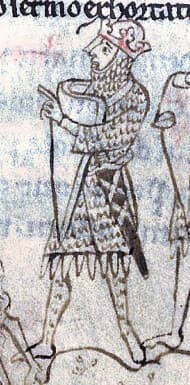
Stephen of Blois
Emperor · Medieval
41.9Total
Basic Information
Born
745
1096
Died
791
1154
Era
Medieval
Medieval
Nationality
Morocco
England
Occupation
Emperor
Emperor
Civilization
Middle Eastern
Western
Score Comparison
Military (10%)
55.0
50.0
Political (20%)
35.1
26.4
Influence (20%)
56.4
51.0
Legacy (20%)
48.3
41.7
Leadership (15%)
48.4
41.5
Strategy (15%)
38.6
35.7
TOTAL
48.1
41.9
Idris I of Morocco — Complete Timeline
786 AD
Flight from the Abbasid CaliphatePolitical Action◆ Major
Idris ibn Abdallah, a descendant of the Prophet Muhammad, fled the Abbasid persecution after the Battle of Fakhkh. He escaped to the Maghreb, where he sought refuge among the Berber tribes of the Volubilis region.
FlightAbbasid PersecutionMaghreb
Impact: regional
788 AD
Foundation of the Idrisid DynastyPolitical Action
Idris I established the Idrisid dynasty in the Maghreb, recognized as the first Moroccan state. He was proclaimed imam by the Berber tribes of the Awraba confederation, founding a Shi'a-influenced polity that would rule for over a century.
Idrisid DynastyMoroccan StateBerber Alliance
Impact: regionalconstructive
789 AD
Foundation of FezCultural◆ Major
Idris I founded the city of Fez on the banks of the Fez River. The city became the capital of the Idrisid state and a major center of Islamic learning and trade in North Africa, later housing the University of al-Qarawiyyin.
FezCity FoundationIslamic Center
Impact: regionalconstructive
791 AD
Assassination by Abbasid AgentsPolitical Action◆ Major
Idris I was poisoned by an agent of the Abbasid caliph Harun al-Rashid, who feared the rise of an independent Shi'a state in the Maghreb. His death left his infant son Idris II as heir, with the regency managed by a Berber council.
AssassinationAbbasid IntrigueSuccession Crisis
Impact: regionaltragic
Stephen of Blois — Complete Timeline
1135 AD
Coronation of StephenPolitical Action◆ Major
Stephen was crowned king of England on December 22, 1135, after the death of Henry I. He seized the throne despite Henry's designation of his daughter Matilda as heir.
CoronationUsurpationSuccession Crisis
Impact: national
1141 AD
Battle of LincolnWar◆ Major
Stephen was captured by forces loyal to Matilda at the Battle of Lincoln on February 2, 1141. He was imprisoned, and Matilda briefly ruled as Lady of the English.
BattleCaptureCivil War
Impact: nationaldestructive
Release and RestorationPolitical Action◆ Major
Stephen was released in exchange for Matilda's half-brother Robert of Gloucester, who had been captured. Stephen was restored as king, and the civil war continued.
ReleaseRestorationCivil War
Impact: national
1153 AD
Treaty of WallingfordPolitical Action◆ Major
Stephen and Matilda's son Henry Plantagenet signed the Treaty of Wallingford. Stephen recognized Henry as his heir, ending the Anarchy civil war.
TreatyPeaceSuccession
Impact: nationalconstructive
1154 AD
Death of StephenPolitical Action◆ Major
Stephen died on October 25, 1154, at Dover. His death allowed Henry Plantagenet to become king as Henry II, founding the Plantagenet dynasty.
DeathEnd of AnarchyPlantagenet
Impact: nationaltragic
Expert Analysis
Origins
Idris I, born Idris ibn Abdallah in 745, was a descendant of the Prophet Muhammad through his grandson Hasan. After the Abbasids defeated the Alids at the Battle of Fakhkh in 786, Idris fled persecution, escaping to the Maghreb in 788. He found refuge among the Awraba Berbers in Volubilis, where he was recognized as a religious leader due to his lineage.
Stephen of Blois was born around 1096, the son of Stephen II, Count of Blois, and Adela of Normandy, daughter of William the Conqueror. Raised in the Anglo-Norman court, he was sent to England by his uncle Henry I, who granted him lands and arranged his marriage to Matilda of Boulogne, a wealthy heiress. Stephen became Count of Mortain and one of the wealthiest barons in England.
Rise to Power
Idris I, after arriving in the Maghreb, was proclaimed imam by the Awraba Berbers in 788. He united various Berber tribes under his leadership, leveraging his prophetic lineage to gain legitimacy. He founded the Idrisid dynasty, the first Moroccan state, and began consolidating control over northern Morocco. By 789, he had established Fez as his capital, which would become a major center of Islamic learning and trade. His rise was swift but fragile, as he faced no significant opposition from local tribes, who saw him as a unifying figure.
Stephen of Blois rose to power following the death of Henry I in 1135. Despite Henry's oath of allegiance to his daughter Matilda, Stephen rushed to England, seized the treasury at Winchester, and was crowned king on December 22, 1135. He gained support from key nobles, including his brother Henry of Blois, Bishop of Winchester. However, his claim was contested by Matilda, leading to a prolonged civil war known as the Anarchy. Stephen's political maneuvering secured the throne but sparked immediate conflict.
Leadership & Governance
Idris I governed as both a religious imam and political leader. He established a decentralized administration, relying on local Berber chieftains to maintain order while building Fez as a cultural and economic hub. His governance focused on consolidating Islamic influence and promoting trade. Idris I's leadership score of 48.4 reflects his ability to unite diverse tribes, but his short reign limited institutional development. He did not impose heavy taxation or create a standing army, instead relying on tribal levies.
Stephen of Blois, with a leadership score of 41.5, struggled to maintain control. He granted lands and titles to secure loyalty, but this alienated other nobles. His governance during the Anarchy was marked by baronial revolts and lawlessness. Stephen failed to curb the power of powerful magnates like the Earl of Chester. His military strategy, scoring 35.7, was reactive; he often negotiated from weakness, such as after his capture at the Battle of Lincoln in 1141. The Treaty of Wallingford in 1153 ended the war by recognizing Henry Plantagenet as his heir, effectively surrendering his dynasty's future.
Triumph & Tragedy
Idris I's greatest triumph was founding the Idrisid dynasty and establishing Fez, which became a major city. His ability to escape Abbasid persecution and build a state in exile was a remarkable achievement. However, his tragedy was his assassination in 791, poisoned by an Abbasid agent after only three years of rule. This left his infant son, Idris II, to succeed him, creating a regency that could have collapsed the dynasty. His death underscored the fragility of his nascent state.
Stephen's triumph was securing the English throne and holding it for 19 years despite continuous challenges. He survived capture and restored his rule after the Battle of Lincoln. His tragedy was the Anarchy, a civil war that devastated England, leading to widespread famine, lawlessness, and the breakdown of royal authority. Stephen's political score of 26.4 reflects his inability to achieve a stable peace. His legacy is overshadowed by the chaos of his reign, and his death in 1154 led to the end of his line.
Character & Destiny
Idris I was a charismatic religious figure, using his lineage to inspire loyalty. His decision to flee to the Maghreb showed pragmatism, but his trust in the Abbasid agent who poisoned him proved fatal. His character as a unifier shaped his destiny: he created a state but died before securing it. Historical assessments view him as a founder of Moroccan identity, but his reign was too short for deeper evaluation.
Stephen was described as brave but indecisive, generous to a fault. His capture at Lincoln stemmed from his reckless charge into battle. His character led him to make concessions that weakened his position, such as freeing his rival Robert of Gloucester. Stephen's destiny was to be a king whose reign was defined by conflict. Historians often see him as a well-meaning but ineffective ruler, unable to prevent the Anarchy. His total score of 41.9 reflects his mixed performance.
Legacy
Idris I's legacy is profound: he founded the first Moroccan state, the Idrisid dynasty, which lasted until 985. Fez became a center of learning, and his descendants spread Islam in the Maghreb. His influence score of 56.4 reflects his role in shaping Moroccan identity. He is remembered as a saintly figure and a founding father. The Idrisid dynasty established a precedent for Islamic rule in the region.
Stephen's legacy is less positive: the Anarchy weakened the English monarchy and led to the rise of Henry II's Plantagenet dynasty. His reign is often cited as a cautionary tale of weak kingship. However, the Treaty of Wallingford set a precedent for peaceful succession. Stephen's influence score of 51.0 is modest, as his impact was largely negative. He is remembered mainly for the civil war, not for any constructive achievements.
Conclusion
Idris I had greater impact than Stephen of Blois. While Stephen's reign was longer and affected England more directly, Idris I's founding of the Idrisid dynasty created a lasting state that shaped Moroccan history for centuries. Idris I's total score of 48.1 exceeds Stephen's 41.9 by 6.2 points. Idris I's legacy—Fez, the Idrisid dynasty, and Moroccan statehood—outweighs Stephen's negative legacy of civil war. Idris I, despite his short reign, achieved foundational state-building, whereas Stephen failed to maintain peace and lost his dynasty. Thus, Idris I emerges as the more consequential figure.
Rankings
🥇
Idris I of MoroccoLeader
Mil: 55.0Pol: 35.1Inf: 56.4
48.1
🥈
Stephen of Blois
Mil: 50.0Pol: 26.4Inf: 51.0
41.9
+6.2 behind
How This Comparison Works
Algorithm
Each figure is scored on 6 dimensions (0—100 scale) based on structured historical data: Military (10%), Political (20%), Influence (20%), Legacy (20%), Leadership (15%), Strategy (15%). The weighted total produces the final ranking.
Data Sources
Scores are computed from structured sub-indicators in the database. Scale factors adjust for era (Ancient ×0.85, Modern ×1.0) and civilization size (Eastern ×1.05, Other ×0.80) to account for differences in population and military scale.
Maximum 3 Figures
Comparisons are limited to 2—3 figures to ensure readability and statistical meaningfulness.
Error Margins
±5 points per dimension — Sub-scores are derived from historical records with inherent uncertainty. Two figures within 5 points on a dimension should be considered roughly equivalent in that area.
Total Score Accuracy
±3 points overall — The weighted combination of 6 dimensions produces a total score with approximately ±3 points of uncertainty. Differences of less than 3 points are not statistically significant— the figures are effectively tied.
Known Limitations
- Historical records are incomplete and uneven across civilizations
- Figures from oral-tradition societies may be underrepresented
- Occupation labels can misclassify multi-role figures
- Scores measure capability and impact, not moral character
- Quantitative scoring is a comparison tool, not absolute truth
Capability Radar
Military (10%) — Battles & Warfare
Battles
25
30
Win Rate
30
25
Expansion
35
10
Political (20%) — Governance & Reform
Reform
35
20
Diplomacy
30
25
Economy
25
15
Influence (20%) — Cultural & Global Reach
Cultural
40
20
Global
20
15
Legacy (20%) — Historical Impact
Historical
45
30
Longevity
35
20
Leadership (15%) — Power & Stability
Tenure
40
40
Stability
20
10
Strategy (15%) — Tactics & Innovation
Strategy
25
15
Tactics
20
20
Reform
15
10
Similar Comparisons
Comments & Discussion
No comments yet. Be the first to share your thoughts!