Loading...
Qasim Khan of Astrakhan vs Stephen of Blois
Stephen of Blois leads by 3.0 pts · 2 figures compared
…

Qasim Khan of Astrakhan
Emperor · Medieval
38.9Total
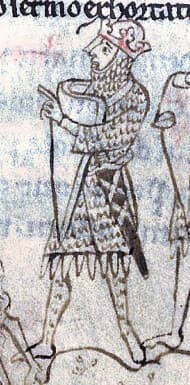
Stephen of Blois
Emperor · Medieval
41.9Total
Basic Information
Born
1480
1096
Died
1532
1154
Era
Medieval
Medieval
Nationality
Astrakhan Khanate
England
Occupation
Emperor
Emperor
Civilization
Eastern
Western
Score Comparison
Military (10%)
21.2
50.0
Political (20%)
29.3
26.4
Influence (20%)
47.1
51.0
Legacy (20%)
35.8
41.7
Leadership (15%)
41.5
41.5
Strategy (15%)
54.8
35.7
TOTAL
38.9
41.9
Qasim Khan of Astrakhan — Complete Timeline
1520 AD
Alliance with the Crimean KhanatePolitical Action◆ Major
Qasim Khan formed an alliance with the Crimean Khanate, recognizing Crimean suzerainty in exchange for military support. This alliance shaped Astrakhan's foreign policy, aligning it with Crimea against Muscovy and the Nogai Horde.
AllianceCrimean KhanateForeign Policy
Impact: regional
1521 AD
Raid on MoscowWar◆ Major
Qasim Khan of Astrakhan joined the Crimean khan Mehmed I Giray in a raid on Moscow. The allied forces reached the outskirts of the city, forcing Grand Prince Vasily III to pay tribute and recognize Crimean suzerainty.
RaidMoscowCrimean Khanate
Impact: regional
1525 AD
Conflict with the Nogai HordeWar
Qasim Khan fought against the Nogai Horde, which was encroaching on Astrakhan's territory. The conflict ended in a stalemate, with both sides suffering heavy losses and the border remaining unchanged.
ConflictNogai HordeBorder Dispute
Stephen of Blois — Complete Timeline
1135 AD
Coronation of StephenPolitical Action◆ Major
Stephen was crowned king of England on December 22, 1135, after the death of Henry I. He seized the throne despite Henry's designation of his daughter Matilda as heir.
CoronationUsurpationSuccession Crisis
Impact: national
1141 AD
Battle of LincolnWar◆ Major
Stephen was captured by forces loyal to Matilda at the Battle of Lincoln on February 2, 1141. He was imprisoned, and Matilda briefly ruled as Lady of the English.
BattleCaptureCivil War
Impact: nationaldestructive
Release and RestorationPolitical Action◆ Major
Stephen was released in exchange for Matilda's half-brother Robert of Gloucester, who had been captured. Stephen was restored as king, and the civil war continued.
ReleaseRestorationCivil War
Impact: national
1153 AD
Treaty of WallingfordPolitical Action◆ Major
Stephen and Matilda's son Henry Plantagenet signed the Treaty of Wallingford. Stephen recognized Henry as his heir, ending the Anarchy civil war.
TreatyPeaceSuccession
Impact: nationalconstructive
1154 AD
Death of StephenPolitical Action◆ Major
Stephen died on October 25, 1154, at Dover. His death allowed Henry Plantagenet to become king as Henry II, founding the Plantagenet dynasty.
DeathEnd of AnarchyPlantagenet
Impact: nationaltragic
Expert Analysis
Origins
Qasim Khan of Astrakhan was born around 1500, part of the Chingisid dynasty that ruled the Astrakhan Khanate, a successor state to the Golden Horde. Little is known of his early life, but he inherited a fragile state sandwiched between the expanding Crimean Khanate and the rising Grand Duchy of Moscow. His background was steeped in steppe politics, where alliances shifted rapidly. Stephen of Blois was born around 1096 in Blois, France, to Stephen II, Count of Blois, and Adela of Normandy, daughter of William the Conqueror. He was raised in the Anglo-Norman world, inheriting the County of Boulogne through his wife Matilda. Stephen's early life was marked by privilege and connection to the English throne, as his uncle Henry I ruled England.
Rise to Power
Qasim Khan rose to power in the 1520s during a period of Astrakhan's decline. He secured the throne through familial ties but immediately faced pressure from the Crimean Khanate. In 1523, Qasim aligned with Crimean Khan Mehmed I Giray, joining a raid on Moscow. This alliance, however, came at the cost of recognizing Crimean suzerainty, limiting his autonomy. Stephen of Blois rose to power after the death of Henry I in 1135. Despite Henry's designation of his daughter Matilda as heir, Stephen rushed to England, secured the support of the Church and barons, and was crowned king on December 22, 1135. His seizure of power was swift but set the stage for the Anarchy.
Leadership & Governance
Qasim Khan ruled over a small khanate dependent on trade along the Volga River. He attempted to balance between the Crimean Khanate and the Nogai Horde, but his military score of 21.2 reflects his inability to project power. His political score of 29.3 indicates limited effectiveness; he failed to secure lasting alliances. Stephen of Blois governed during a period of civil war known as the Anarchy. His leadership score of 41.5 is moderate, as he struggled to maintain control. He issued charters to gain support but lacked the political acumen to prevent the war. His capture at the Battle of Lincoln on February 2, 1141, highlighted his military weaknesses (score 50.0), though he was later restored.
Triumph & Tragedy
Qasim Khan's greatest triumph was surviving as a ruler for over a decade despite external threats. However, his alliance with the Crimean Khanate (key event) led to Astrakhan becoming a vassal, a tragedy that hastened the khanate's absorption by Russia in 1556. Stephen's triumph was securing the throne and eventually ending the Anarchy through the Treaty of Wallingford in 1153, which recognized Henry Plantagenet as his heir. His tragedy was the devastation of England during the civil war, with widespread famine and lawlessness. Stephen died on October 25, 1154, leaving a weakened monarchy.
Character & Destiny
Qasim Khan was a cautious leader, willing to submit to stronger powers for survival. This pragmatism allowed him to rule but sealed Astrakhan's fate as a buffer state. Stephen was impulsive and brave but indecisive, often swayed by advisors. His character led to the Anarchy; he failed to decisively defeat Matilda's forces. Historians note Stephen's personal charm but lack of strategic vision, reflected in his strategy score of 35.7.
Legacy
Qasim Khan's legacy is minimal; he scored 35.8 in legacy. Astrakhan was annexed by Russia in 1556, and his rule is a footnote in the decline of the Golden Horde's successor states. Stephen's legacy is more significant, scoring 41.7. The Anarchy ended with the Plantagenet dynasty, leading to reforms under Henry II. Stephen is remembered as a weak king whose reign highlighted the need for stronger central authority.
Conclusion
Stephen of Blois had a greater impact than Qasim Khan. With a total score of 41.9 vs. 38.9, Stephen's reign shaped English history through the Anarchy and the eventual rise of the Plantagenets. Qasim Khan's rule, while representative of steppe politics, had little lasting effect beyond Astrakhan's absorption. Stephen's failures led to systemic changes, while Qasim's survival tactics delayed the inevitable.
Rankings
🥇
Stephen of BloisLeader
Mil: 50.0Pol: 26.4Inf: 51.0
41.9
🥈
Qasim Khan of Astrakhan
Mil: 21.2Pol: 29.3Inf: 47.1
38.9
+3.0 behind
How This Comparison Works
Algorithm
Each figure is scored on 6 dimensions (0—100 scale) based on structured historical data: Military (10%), Political (20%), Influence (20%), Legacy (20%), Leadership (15%), Strategy (15%). The weighted total produces the final ranking.
Data Sources
Scores are computed from structured sub-indicators in the database. Scale factors adjust for era (Ancient ×0.85, Modern ×1.0) and civilization size (Eastern ×1.05, Other ×0.80) to account for differences in population and military scale.
Maximum 3 Figures
Comparisons are limited to 2—3 figures to ensure readability and statistical meaningfulness.
Error Margins
±5 points per dimension — Sub-scores are derived from historical records with inherent uncertainty. Two figures within 5 points on a dimension should be considered roughly equivalent in that area.
Total Score Accuracy
±3 points overall — The weighted combination of 6 dimensions produces a total score with approximately ±3 points of uncertainty. Differences of less than 3 points are not statistically significant— the figures are effectively tied.
Known Limitations
- Historical records are incomplete and uneven across civilizations
- Figures from oral-tradition societies may be underrepresented
- Occupation labels can misclassify multi-role figures
- Scores measure capability and impact, not moral character
- Quantitative scoring is a comparison tool, not absolute truth
Capability Radar
Military (10%) — Battles & Warfare
Battles
15
30
Win Rate
10
25
Expansion
5
10
Political (20%) — Governance & Reform
Reform
10
20
Diplomacy
20
25
Economy
10
15
Influence (20%) — Cultural & Global Reach
Cultural
5
20
Global
5
15
Legacy (20%) — Historical Impact
Historical
10
30
Longevity
5
20
Leadership (15%) — Power & Stability
Tenure
20
40
Stability
10
10
Strategy (15%) — Tactics & Innovation
Strategy
10
15
Tactics
10
20
Reform
5
10
Similar Comparisons
Comments & Discussion
No comments yet. Be the first to share your thoughts!