Loading...
Idriss Deby vs Shimazu Yoshihiro
Idriss Deby leads by 4.2 pts · 2 figures compared
…
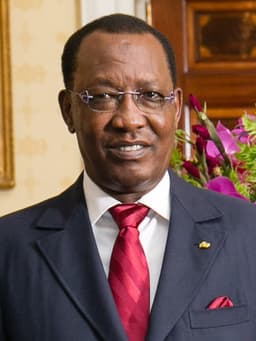
Idriss Deby
General · Modern
58.9Total

Shimazu Yoshihiro
General · Modern
54.7Total
Basic Information
Born
1952
1535
Died
—
1619
Era
Modern
Modern
Nationality
Chad
Japan
Occupation
General
General
Civilization
Other
Eastern
Score Comparison
Military (10%)
67.5
63.3
Political (20%)
68.0
42.2
Influence (20%)
55.7
61.0
Legacy (20%)
49.2
50.0
Leadership (15%)
68.0
62.0
Strategy (15%)
55.0
50.0
TOTAL
58.9
54.7
Idriss Deby — Complete Timeline
1990 AD
Seized Power in CoupPolitical Action
Idriss Deby, a former military commander, led a rebellion that overthrew President Hiss
Coup d'étatChadRebellion
Impact: national
1996 AD
Won First Multi-Party ElectionPolitical Action◆ Major
Deby won the 1996 presidential election, the first multi-party election in Chad's history. The election was criticized for irregularities but was seen as a step towards democratic transition.
ElectionDemocracyChad
Impact: national
2003 AD
Chad-Cameroon Pipeline CompletionOther◆ Major
The Chad-Cameroon Petroleum Development and Pipeline Project became operational, allowing Chad to export oil. The project brought significant revenue but also raised concerns about corruption and environmental impact.
Oil PipelineEconomyChad
Impact: national
2013 AD
Military Intervention in Northern MaliWar◆ Major
Chadian troops under Deby's command played a key role in the French-led intervention in Mali, fighting against Islamist insurgents. The intervention helped push back militants but resulted in Chadian casualties.
Military InterventionMaliCounterterrorism
Impact: regional
2021 AD
Killed on the Front LinesWar
President Idriss Deby was killed while visiting troops fighting rebels from the Front for Change and Concord in Chad (FACT) in northern Chad. His death on the battlefield was confirmed by the military.
DeathChadConflict
Impact: nationaltragic
Shimazu Yoshihiro — Complete Timeline
1578 AD
Battle of MimigawaWar◆ Major
Shimazu Yoshihiro led the Shimazu clan to victory against the Otomo clan at the Battle of Mimigawa. Using a pincer movement, the Shimazu forces destroyed the Otomo army, expanding their territory in Kyushu.
Sengoku PeriodBattleKyushu
Impact: regionalconstructive
1587 AD
Siege of Udo CastleWar
Shimazu Yoshihiro besieged Udo Castle in Higo Province during Toyotomi Hideyoshi's Kyushu campaign. The castle fell after a prolonged siege, but the Shimazu clan ultimately submitted to Hideyoshi.
Sengoku PeriodSiegeKyushu Campaign
Impact: regional
1592 AD
Invasion of KoreaWar◆ Major
Shimazu Yoshihiro participated in Toyotomi Hideyoshi's invasion of Korea. He led forces in several battles, including the capture of Gyeongju, and gained a reputation for fierce fighting.
Imjin WarInvasionKorea
Impact: regionaldestructive
1600 AD
Battle of SekigaharaWar
Shimazu Yoshihiro fought for the Western Army at Sekigahara. His forces engaged Tokugawa Ieyasu's troops but were eventually forced to retreat. Yoshihiro survived the battle and returned to Satsuma.
Sengoku PeriodBattleWestern Army
Impact: nationaldestructive
Expert Analysis
Origins
Idriss Deby was born in 1952 in Fada, Chad, into a pastoralist family of the Zaghawa ethnic group. He received military training in France and rose through the Chadian army under President Hissène Habré. Deby's early career was marked by his role as a commander in the Chadian army, where he gained combat experience against Libyan forces during the Toyota War.
Shimazu Yoshihiro was born in 1535 in Satsuma Province, Japan, as the younger brother of Shimazu Yoshihisa. He was a member of the powerful Shimazu clan, which controlled southern Kyushu. Yoshihiro received a samurai education and was trained in military tactics from a young age, participating in clan campaigns against neighboring domains.
Rise to Power
Deby's rise began in 1990 when he led a rebellion against President Habré, capitalizing on internal dissent and ethnic tensions. His forces captured N'Djamena on December 2, 1990, and Deby declared himself president. He consolidated power by incorporating rival factions into his government and holding a national conference in 1993. In 1996, he won Chad's first multi-party election, though international observers noted irregularities.
Yoshihiro's rise was tied to the Shimazu clan's expansion in Kyushu. He played a key role in the Battle of Mimigawa (1578), where the Shimazu army destroyed the Otomo clan using a pincer movement. This victory solidified Shimazu dominance in southern Japan. Yoshihiro later served under Toyotomi Hideyoshi during the Kyushu campaign (1587), but the clan was forced to submit to Hideyoshi's authority.
Leadership & Governance
Deby's leadership was characterized by authoritarian control and ethnic favoritism. He maintained power through a network of patronage, primarily among Zaghawa elites, and suppressed political dissent. He implemented economic reforms tied to oil production, including the Chad-Cameroon pipeline (2003), which boosted state revenue. However, corruption and inequality persisted. Deby also engaged in military interventions, such as sending troops to Mali in 2013 to fight Islamist rebels.
Yoshihiro's governance was limited to his role as a daimyo and military commander. He did not hold central political power but was a key figure in the Shimazu clan's administration. His leadership focused on military strategy and clan loyalty. After the Battle of Sekigahara (1600), where he fought for the Western Army, his clan was reduced in power, but he was allowed to retain his domain.
Triumph & Tragedy
Deby's greatest success was stabilizing Chad after decades of civil war and becoming a key Western ally against Islamist extremism. His military scored 67.5, reflecting his battlefield presence. However, his greatest failure was his death on the front lines in 2021, killed by rebels from the Front for Change and Concord in Chad (FACT). His rule also saw human rights abuses and a lack of democratic progress.
Yoshihiro's triumph was his military prowess, earning him the nickname "Demon of Satsuma." He scored 63.3 in military, with notable victories at Mimigawa and during the Korean campaign (1592-1598). His tragedy was the defeat at Sekigahara, which ended Shimazu ambitions for national dominance. His political score of 42.2 reflects his limited influence outside the clan.
Character & Destiny
Deby was a pragmatic and ruthless leader, willing to use violence to maintain power. He was also a risk-taker, as shown by his decision to lead from the front. His character shaped his destiny: his military background kept him in power but also led to his death in combat. Historians note his ability to navigate Chad's complex ethnic politics.
Yoshihiro was a fierce and loyal samurai, known for his bravery and tactical skill. His character led him to fight despite overwhelming odds at Sekigahara, where his clan's retreat saved his life. His destiny was tied to the Shimazu clan's decline, but he preserved their legacy in Satsuma.
Legacy
Deby's legacy is mixed. He is remembered as a strongman who brought stability but also repression. His death on the battlefield enhanced his image as a warrior-president. Oil revenues transformed Chad's economy, but corruption undermined development. His influence score is 55.7, reflecting regional impact.
Yoshihiro's legacy is that of a skilled samurai general. He is celebrated in Japanese culture as a symbol of Satsuma's martial spirit. His military tactics are studied, and his participation in the Korean invasion is noted for its brutality. His legacy score is 50.0, indicating moderate historical recognition.
Conclusion
Idriss Deby had greater overall impact, with a total score of 58.9 against Yoshihiro's 54.7. Deby's influence as a national leader and his role in regional security outweigh Yoshihiro's localized military achievements. While Yoshihiro was a formidable commander, Deby's political and military leadership shaped a nation's trajectory for three decades. Deby's legacy, though flawed, is more consequential in global history.
Rankings
🥇
Idriss DebyLeader
Mil: 67.5Pol: 68.0Inf: 55.7
58.9
🥈
Shimazu Yoshihiro
Mil: 63.3Pol: 42.2Inf: 61.0
54.7
+4.2 behind
How This Comparison Works
Algorithm
Each figure is scored on 6 dimensions (0—100 scale) based on structured historical data: Military (10%), Political (20%), Influence (20%), Legacy (20%), Leadership (15%), Strategy (15%). The weighted total produces the final ranking.
Data Sources
Scores are computed from structured sub-indicators in the database. Scale factors adjust for era (Ancient ×0.85, Modern ×1.0) and civilization size (Eastern ×1.05, Other ×0.80) to account for differences in population and military scale.
Maximum 3 Figures
Comparisons are limited to 2—3 figures to ensure readability and statistical meaningfulness.
Error Margins
±5 points per dimension — Sub-scores are derived from historical records with inherent uncertainty. Two figures within 5 points on a dimension should be considered roughly equivalent in that area.
Total Score Accuracy
±3 points overall — The weighted combination of 6 dimensions produces a total score with approximately ±3 points of uncertainty. Differences of less than 3 points are not statistically significant— the figures are effectively tied.
Known Limitations
- Historical records are incomplete and uneven across civilizations
- Figures from oral-tradition societies may be underrepresented
- Occupation labels can misclassify multi-role figures
- Scores measure capability and impact, not moral character
- Quantitative scoring is a comparison tool, not absolute truth
Capability Radar
Military (10%) — Battles & Warfare
Battles
65
65
Win Rate
60
70
Expansion
55
55
Political (20%) — Governance & Reform
Reform
40
20
Diplomacy
55
40
Economy
35
25
Influence (20%) — Cultural & Global Reach
Cultural
30
45
Global
35
30
Legacy (20%) — Historical Impact
Historical
45
50
Longevity
40
40
Leadership (15%) — Power & Stability
Tenure
75
50
Stability
30
35
Strategy (15%) — Tactics & Innovation
Strategy
60
60
Tactics
55
75
Reform
70
30
Similar Comparisons
Comments & Discussion
No comments yet. Be the first to share your thoughts!