Loading...
Ignazio Cassis vs Napoleon Bonaparte
Napoleon Bonaparte leads by 18.8 pts · 2 figures compared
…
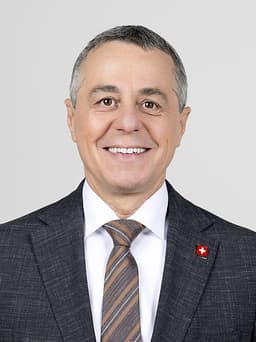
Ignazio Cassis
Politician · Modern
52.1Total

Napoleon Bonaparte
General · Modern
70.9Total
Basic Information
Born
1961
1769
Died
—
1821
Era
Modern
Modern
Nationality
Switzerland
France
Occupation
Politician
General
Civilization
Western
Western
Score Comparison
Military (10%)
50.0
94.0
Political (20%)
61.3
72.0
Influence (20%)
51.0
40.0
Legacy (20%)
39.2
80.0
Leadership (15%)
74.0
78.0
Strategy (15%)
42.6
90.0
TOTAL
52.1
70.9
Ignazio Cassis — Complete Timeline
2017 AD
Election to Federal CouncilPolitical Action◆ Major
Cassis was elected to the Swiss Federal Council on September 20, 2017, representing the FDP.The Liberals. He became the first Italian-speaking Swiss president in years, taking over the Federal Department of Foreign Affairs, shaping Swiss foreign policy.
Federal CouncilElectionFDP
Impact: nationalconstructive
2022 AD
Presidency of the Swiss ConfederationPolitical Action◆ Major
Ignazio Cassis served as President of the Swiss Confederation in 2022, a year marked by the Russian invasion of Ukraine. He chaired the Federal Council and represented Switzerland in international diplomacy, including navigating Swiss neutrality and sanctions against Russia.
Swiss PresidencyUkraine WarNeutrality
Impact: national
Foreign policy during Ukraine warPolitical Action◆ Major
As head of the Federal Department of Foreign Affairs, Cassis led Switzerland's response to the Russian invasion of Ukraine, including adopting EU sanctions while maintaining neutrality. He also facilitated humanitarian aid and diplomatic efforts, balancing international pressure with Swiss tradition.
Foreign PolicyUkraine WarSanctions
Impact: global
Napoleon Bonaparte — Complete Timeline
1799 AD
Coup of 18 BrumaireOther◆ Major
Napoleon Bonaparte, with support from his brother Lucien and key political figures, overthrew the Directory in a bloodless coup. He established the Consulate with himself as First Consul, effectively becoming the ruler of France. This event ended the French Revolution's most unstable period.
French RevolutionCoupRise to Power
Impact: regional
1804 AD
Promulgation of the Napoleonic CodeOther◆ Major
Napoleon enacted the Civil Code of the French, known as the Napoleonic Code, a comprehensive set of laws that replaced the fragmented feudal legal systems. The code established legal equality, protected property rights, and secularized law. It became the basis for legal systems in many European and world countries.
Legal ReformNapoleonic CodeCivil Law
Impact: globalconstructive
1805 AD
Battle of AusterlitzWar◆ Major
Napoleon's Grande Arm
Napoleonic WarsBattleDecisive Victory
Impact: global
1812 AD
Invasion of RussiaWar◆ Major
Napoleon led the Grande Arm
Napoleonic WarsInvasionDisaster
Impact: globaldestructive
1815 AD
Battle of WaterlooWar◆ Major
Napoleon's French army was defeated by the combined forces of the Duke of Wellington's Anglo-Allied army and Gebhard Leberecht von Bl
Napoleonic WarsBattleFinal Defeat
Impact: globaldestructive
Expert Analysis
ignazio-cassis-vs-napoleon-bonaparte
# The Emperor and the Federal Councillor
On a June morning in 1815, Napoleon Bonaparte surveyed the muddy fields of Waterloo, his Grande Armée poised for what would be the final gamble of a life that had redrawn the map of Europe. Two centuries later, on a crisp January day in 2022, Ignazio Cassis stood before the Swiss Federal Assembly in Bern, accepting the presidency of a confederation that prided itself on staying out of the very conflicts Napoleon had ignited. One man commanded armies that shook thrones; the other presided over a nation whose greatest power lay in its refusal to wield any. How did two figures from the same continent, both born into the Western tradition, come to embody such radically different visions of leadership?
Origins
Napoleon Bonaparte came into the world in 1769 on the island of Corsica, a place that had only recently passed from Italian to French control. His family was minor nobility, neither rich nor influential, but ambitious enough to send young Napoleon to military school in mainland France. There, the short, intense boy with a thick Corsican accent endured the mockery of aristocratic classmates—and channeled that humiliation into a ferocious will to prove himself. The France he grew up in was a powder keg of revolution, a society that had just shattered its monarchy and was ready to reward talent over birth.
Ignazio Cassis was born in 1961 in Sorengo, a small town in the Italian-speaking canton of Ticino, Switzerland. His Switzerland was a stable, wealthy, and famously neutral federation—a country that had not fought a war since Napoleon himself had invaded it in 1798. Cassis studied medicine at the University of Zurich, became a doctor, and later moved into public health administration. His world was one of consensus, compromise, and careful management of a multi-lingual, multi-cultural society. Where Napoleon’s France was a volcano, Cassis’s Switzerland was a well-tended garden.
Rise to Power
Napoleon’s ascent was a masterpiece of audacity and opportunism. At 24, he drove the British out of Toulon. At 26, he crushed a royalist uprising in Paris with a “whiff of grapeshot.” At 30, he made himself First Consul of France. Each step was a gamble, a calculated risk that paid off because he could read a battlefield and a political situation with equal clarity. His rise was not a slow climb but a series of explosive leaps, fueled by the chaos of the French Revolution and his own unshakable confidence.
Cassis’s path was the opposite: a steady, deliberate ascent through the ranks of Swiss public service. He served as cantonal doctor, then as vice-director of the Federal Office of Public Health, and later as a member of the Swiss Council of States. In 2017, he was elected to the seven-member Federal Council, the collective executive that governs Switzerland. His rise was not marked by dramatic victories but by the quiet accumulation of trust and expertise. In 2022, he became President of the Confederation—a largely ceremonial role, rotated annually among the Federal Councillors, and a far cry from the imperial purple.
Leadership & Governance
Napoleon ruled as a military genius and a reformer. His Napoleonic Code, introduced in 1804, standardized French law, abolished feudal privileges, and enshrined principles of meritocracy and property rights that influenced legal systems across Europe and beyond. As a commander, he was peerless: his campaigns in Italy, Egypt, and Austria showcased a tactical brilliance that earned him a military score of 94 out of 100. Yet his political score of 75 reflects the darker side of his governance—a regime that, for all its reforms, was a dictatorship that suppressed dissent and exhausted France in endless wars.
Cassis governed as a consensus-builder in a system designed to resist strong leadership. As Foreign Minister during the Russian invasion of Ukraine in 2022, he faced his greatest challenge: how to maintain Swiss neutrality while condemning aggression. His response—joining EU sanctions while refusing to send weapons—was a tightrope walk that satisfied neither hawks nor doves. His political score of 68.3 and leadership score of 72 reflect a leader who managed rather than transformed, who navigated constraints rather than shattered them.
Triumph & Tragedy
Napoleon’s greatest triumph was the Battle of Austerlitz in 1805, where he crushed the combined armies of Russia and Austria, cementing his mastery of Europe. His greatest tragedy was the invasion of Russia in 1812—a catastrophic miscalculation that cost half a million lives and destroyed his Grand Armée. He died in exile on Saint Helena in 1821, a prisoner of the British, his empire in ruins.
Cassis’s triumphs are quieter: maintaining Swiss unity during a global crisis, preserving the nation’s humanitarian tradition, and becoming the first Italian-speaking president in over a decade. His tragedy, if it can be called that, is the inevitable limitation of his role. He will not be remembered for reshaping history, but for shepherding his small, prosperous nation through turbulent times.
Character & Destiny
Napoleon was driven by an insatiable hunger for glory. “Impossible is a word to be found only in the dictionary of fools,” he once said. His personality—brilliant, ruthless, and grandiose—shaped every decision, from the conquest of Egypt to the disastrous invasion of Russia. He believed he was a force of history, and in many ways, he was.
Cassis, by contrast, embodies the Swiss virtues of modesty and pragmatism. He is a man of committees and compromises, not of grand visions or sweeping reforms. His character reflects his nation’s destiny: to be prosperous, stable, and deliberately unremarkable.
Legacy
Napoleon’s legacy is monumental. His legal code, his military innovations, and his very concept of the modern state continue to shape the world. He is remembered as both a hero and a tyrant, a figure of awe and caution. His legacy score of 78 reflects this complexity.
Cassis’s legacy, with a score of 53.6, is far more modest. He will be remembered, if at all, as a competent steward during a challenging year. In Switzerland, that is considered a success.
Conclusion
Napoleon Bonaparte and Ignazio Cassis are separated by two centuries, by scale, and by the very definition of power. One sought to conquer the world; the other sought to manage a small piece of it. Yet both were products of their times—Napoleon of a revolutionary age that rewarded ambition, Cassis of a stable era that valued prudence. Their stories remind us that leadership is not a universal quality but a dialogue between a person and their moment. The same fire that makes an emperor can, in another age, simply warm a committee room.
Rankings
🥇
Napoleon BonaparteLeader
Mil: 94.0Pol: 72.0Inf: 40.0
70.9
🥈
Ignazio Cassis
Mil: 50.0Pol: 61.3Inf: 51.0
52.1
+18.8 behind
How This Comparison Works
Algorithm
Each figure is scored on 6 dimensions (0—100 scale) based on structured historical data: Military (10%), Political (20%), Influence (20%), Legacy (20%), Leadership (15%), Strategy (15%). The weighted total produces the final ranking.
Data Sources
Scores are computed from structured sub-indicators in the database. Scale factors adjust for era (Ancient ×0.85, Modern ×1.0) and civilization size (Eastern ×1.05, Other ×0.80) to account for differences in population and military scale.
Maximum 3 Figures
Comparisons are limited to 2—3 figures to ensure readability and statistical meaningfulness.
Error Margins
±5 points per dimension — Sub-scores are derived from historical records with inherent uncertainty. Two figures within 5 points on a dimension should be considered roughly equivalent in that area.
Total Score Accuracy
±3 points overall — The weighted combination of 6 dimensions produces a total score with approximately ±3 points of uncertainty. Differences of less than 3 points are not statistically significant— the figures are effectively tied.
Known Limitations
- Historical records are incomplete and uneven across civilizations
- Figures from oral-tradition societies may be underrepresented
- Occupation labels can misclassify multi-role figures
- Scores measure capability and impact, not moral character
- Quantitative scoring is a comparison tool, not absolute truth
Capability Radar
Military (10%) — Battles & Warfare
Battles
27
95
Win Rate
30
90
Expansion
34
95
Political (20%) — Governance & Reform
Reform
35
95
Diplomacy
55
80
Economy
40
85
Influence (20%) — Cultural & Global Reach
Cultural
20
85
Global
15
90
Legacy (20%) — Historical Impact
Historical
15
95
Longevity
10
90
Leadership (15%) — Power & Stability
Tenure
40
85
Stability
45
70
Strategy (15%) — Tactics & Innovation
Strategy
39
95
Tactics
38
98
Reform
45
92
Similar Comparisons
Comments & Discussion
VIENNA’S GHOST6/17/2026
So we’re comparing a man who redrew borders at gunpoint to a man whose main job is literally *staying neutral*? Napoleon gave us the Napoleonic Code, national borders across Europe, and a legacy of conquest. Cassis gave us Swiss COVID restrictions. If you want a statesman who changed world history, you look to the Emperor. If you want a civil servant happy to chair mediations, you look at Cassis. This isn’t a comparison—it’s a category error.
数据屠夫6/17/2026
拿破仑打了六十多场仗,还发明了现代兵役制;卡西斯呢?他在联邦委员会干四年,主要政绩是协调疫苗采购和保持中立。光拿军事实力说事就离谱——拿破仑的法军1789年才12万,到1812年远征俄国时膨胀到60万,而瑞士军队总共14万,大部分还是民兵。这根本不是一个量级,也不是一个宇宙的“领袖”。谁认真比较,谁就输在起跑线上了。
CLASSICS SCHOLAR SALLY6/17/2026
Context matters: Napoleon’s Corsican background made him a lifelong outsider in aristocratic France, fueling his drive to impose order through the Code and the lycées. Cassis, a Ticinese in German-dominated Bern, similarly navigated a polyglot federation—but his tool was consensus, not cannon. Napoleon centralized power; Cassis embodies Swiss federalism, where the weakest move is to overwhelm. One changed Europe in a decade; the other kept it stable for a year. Different games, same chessboard.
历史辩证侠6/17/2026
别总把拿破仑吹成神——他是终结了旧制度,但他也恢复了奴隶制(1802年留尼汪岛),还把欧洲烧成一片焦土。卡西斯也许没改变世界,但瑞士在他任内维持了直接民主和联邦制的底线,面对疫情和难民潮都没崩盘。拿破仑一辈子打得只剩两条腿回家,卡西斯搞了六年外交就退休。谁更“伟大”看你怎么定义——是要短暂的光辉,还是长久的稳定。
REVISIONIST SPARTACUS6/17/2026
Let’s be honest: Cassis is a footnote in Swiss record books. Napoleon? He’s the reason we have a modern bureaucracy, metric system, and the idea that a soldier’s merit matters more than his bloodline. Waterloo lost, but his Code survives in 70+ countries. Cassis presided over a nation that’s been neutral for 200 years—convenient when all your neighbors fight your wars for you. One man dared; the other ducked. I know which legacy I’d rather have.