Loading...
Igrish-Halam vs Napoleon Bonaparte
Napoleon Bonaparte leads by 34.2 pts · 2 figures compared
…
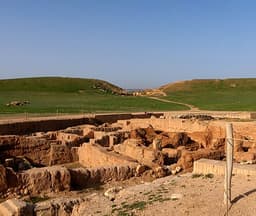
Igrish-Halam
Emperor · Ancient
36.7Total

Napoleon Bonaparte
General · Modern
70.9Total
Basic Information
Born
-2400
1769
Died
-2380
1821
Era
Ancient
Modern
Nationality
Ebla
France
Occupation
Emperor
General
Civilization
Middle Eastern
Western
Score Comparison
Military (10%)
50.0
94.0
Political (20%)
26.4
72.0
Influence (20%)
43.2
40.0
Legacy (20%)
34.2
80.0
Leadership (15%)
31.2
78.0
Strategy (15%)
36.8
90.0
TOTAL
36.7
70.9
Napoleon Bonaparte — Complete Timeline
1799 AD
Coup of 18 BrumaireOther◆ Major
Napoleon Bonaparte, with support from his brother Lucien and key political figures, overthrew the Directory in a bloodless coup. He established the Consulate with himself as First Consul, effectively becoming the ruler of France. This event ended the French Revolution's most unstable period.
French RevolutionCoupRise to Power
Impact: regional
1804 AD
Promulgation of the Napoleonic CodeOther◆ Major
Napoleon enacted the Civil Code of the French, known as the Napoleonic Code, a comprehensive set of laws that replaced the fragmented feudal legal systems. The code established legal equality, protected property rights, and secularized law. It became the basis for legal systems in many European and world countries.
Legal ReformNapoleonic CodeCivil Law
Impact: globalconstructive
1805 AD
Battle of AusterlitzWar◆ Major
Napoleon's Grande Arm
Napoleonic WarsBattleDecisive Victory
Impact: global
1812 AD
Invasion of RussiaWar◆ Major
Napoleon led the Grande Arm
Napoleonic WarsInvasionDisaster
Impact: globaldestructive
1815 AD
Battle of WaterlooWar◆ Major
Napoleon's French army was defeated by the combined forces of the Duke of Wellington's Anglo-Allied army and Gebhard Leberecht von Bl
Napoleonic WarsBattleFinal Defeat
Impact: globaldestructive
Expert Analysis
igrish-halam-vs-napoleon-bonaparte
# The Emperor and the Enigma
In the spring of 1815, as Napoleon Bonaparte marshaled his forces for one final, desperate gamble at Waterloo, the world he sought to reshape was already a dizzying tapestry of revolution, ambition, and blood. Nearly four thousand years earlier, on the dusty plains of northern Syria, another ruler—Igrish-Halam of Ebla—faced a different kind of struggle, one fought not with cannons and cavalry but with clay tablets and the slow, grinding logic of Bronze Age diplomacy. How do we compare a man whose name thunders through every history book with one whose very existence is a whisper from the rubble? The answer lies not in ranking their achievements, but in understanding the chasm of time, circumstance, and fate that separates them.
Origins
Napoleon Bonaparte was born in 1769 on the Mediterranean island of Corsica, a place recently annexed by France. His family was minor nobility, poor but proud, and his father’s maneuvering secured him a place at a French military academy. There, the awkward, accented boy was mocked by aristocrats—but he devoured mathematics, history, and the art of siege warfare. The French Revolution, erupting when he was twenty, shattered the old order and opened a path for talent over birth. Napoleon was a child of upheaval, his mind forged in the chaos of a society tearing itself apart and rebuilding.
Igrish-Halam, by contrast, emerged from the mists of the third millennium BC. He was king of Ebla, a city-state in what is now Syria, around 2400 BC—a time when writing was still a young technology, used mostly for accounting. We know almost nothing of his birth or upbringing. His name appears in a handful of cuneiform tablets, unearthed at Tell Mardikh in the 1970s, which record trade agreements and tribute. He ruled during an age of city-states jostling for control of trade routes, where power was measured in shekels of silver and bushels of barley. If Napoleon was a comet streaking across a modern sky, Igrish-Halam was a candle flickering in a long-forgotten room.
Rise to Power
Napoleon’s ascent was meteoric. In 1793, at just twenty-four, he recaptured the port of Toulon from British forces, earning promotion to brigadier general. By 1796, he commanded the French army in Italy, where his lightning campaigns crushed the Austrians and made him a national hero. He was not merely a soldier; he was a politician, a propagandist, and a master of timing. In 1799, he staged a coup and became First Consul, effectively dictator of France. Five years later, he crowned himself Emperor. Each step was a gambit, calculated and ruthless.
Igrish-Halam’s rise is largely invisible. He inherited the throne of Ebla, likely through dynastic succession. There is no record of a dramatic coup or a stunning victory. The tablets suggest his reign was a time of consolidation, not expansion. He faced pressure from the powerful kingdom of Mari to the east, and his strategy was negotiation rather than conquest. Where Napoleon seized his moment, Igrish-Halam simply occupied his.
Leadership & Governance
As emperor, Napoleon remade France. He centralized the government, established the Bank of France, and—most enduringly—created the Napoleonic Code, a legal system that enshrined equality before the law, property rights, and secular authority. It swept away feudal privileges and influenced legal codes across Europe and beyond. His military genius was staggering: he fought more than sixty battles and lost only seven, his Grande Armée a machine of speed, discipline, and devastating artillery. He ruled with charisma and terror, rewarding loyalty, crushing dissent.
Igrish-Halam’s governance is glimpsed in fragments. The Ebla archives show a sophisticated bureaucracy: scribes recorded grain shipments, wool quotas, and diplomatic gifts. He maintained trade networks that stretched to Mesopotamia and Anatolia. But there is no code of laws, no grand reform. His leadership score, by modern metrics, is a low 31.8—a reflection not of incompetence but of obscurity. He was a manager, not a revolutionary. In the Bronze Age, survival was the highest achievement.
Triumph & Tragedy
Napoleon’s greatest triumph was the zenith of his empire in 1810-1812, when he controlled most of continental Europe. His greatest tragedy was the invasion of Russia in 1812. He marched with over 600,000 men; fewer than 100,000 returned. The disaster shattered his aura of invincibility. Exiled to Elba in 1814, he escaped in 1815, only to meet final defeat at Waterloo. He died in 1821 on the remote island of Saint Helena, a prisoner of the British.
Igrish-Halam’s triumph was simply enduring. He reigned for twenty years—a long time in the ancient Near East. His tragedy is that we do not know how he died. Was he killed in battle? Did he die in bed? The tablets fall silent. Ebla itself was destroyed by fire around 2300 BC, likely by the Akkadian Empire under Sargon. Igrish-Halam’s world vanished, buried under ash and sand.
Character & Destiny
Napoleon was driven by an insatiable ambition, a belief that he was a man of destiny. “Impossible is a word to be found only in the dictionary of fools,” he once said. His personality—arrogant, calculating, charismatic—shaped every decision. He trusted his genius above all, and that hubris led to his fall.
Igrish-Halam’s character is a void. We can infer caution, patience, a preference for stability over glory. His destiny was to be forgotten, then rediscovered by archaeologists. He did not shape history; he was shaped by it.
Legacy
Napoleon’s legacy is immense. The Napoleonic Code governs legal systems from France to Louisiana to Japan. His military tactics are still studied. He reshaped nationalism, modern warfare, and the very idea of the state. He is remembered as both a liberator and a tyrant.
Igrish-Halam’s legacy is almost nil. His name appears in a few scholarly papers. He matters because he proves that even the forgotten had lives, ambitions, and struggles. In the long arc of history, Napoleon is a mountain; Igrish-Halam is a grain of sand. But both were real.
Conclusion
We compare them not to diminish one or exalt the other, but to grasp the scale of human time. Napoleon’s world was one of printing presses, gunpowder, and nation-states. Igrish-Halam’s was one of bronze, barley, and gods who demanded sacrifice. One man’s story is a novel; the other’s is a single, broken sentence. Yet both faced the same fundamental challenge: to lead, to survive, to leave a mark. Napoleon’s mark is a scar across the earth; Igrish-Halam’s is a faint impression in clay. Both, in their own way, are history.
Rankings
🥇
Napoleon BonaparteLeader
Mil: 94.0Pol: 72.0Inf: 40.0
70.9
🥈
Igrish-Halam
Mil: 50.0Pol: 26.4Inf: 43.2
36.7
+34.2 behind
How This Comparison Works
Algorithm
Each figure is scored on 6 dimensions (0—100 scale) based on structured historical data: Military (10%), Political (20%), Influence (20%), Legacy (20%), Leadership (15%), Strategy (15%). The weighted total produces the final ranking.
Data Sources
Scores are computed from structured sub-indicators in the database. Scale factors adjust for era (Ancient ×0.85, Modern ×1.0) and civilization size (Eastern ×1.05, Other ×0.80) to account for differences in population and military scale.
Maximum 3 Figures
Comparisons are limited to 2—3 figures to ensure readability and statistical meaningfulness.
Error Margins
±5 points per dimension — Sub-scores are derived from historical records with inherent uncertainty. Two figures within 5 points on a dimension should be considered roughly equivalent in that area.
Total Score Accuracy
±3 points overall — The weighted combination of 6 dimensions produces a total score with approximately ±3 points of uncertainty. Differences of less than 3 points are not statistically significant— the figures are effectively tied.
Known Limitations
- Historical records are incomplete and uneven across civilizations
- Figures from oral-tradition societies may be underrepresented
- Occupation labels can misclassify multi-role figures
- Scores measure capability and impact, not moral character
- Quantitative scoring is a comparison tool, not absolute truth
Capability Radar
Military (10%) — Battles & Warfare
Battles
10
95
Win Rate
10
90
Expansion
15
95
Political (20%) — Governance & Reform
Reform
15
95
Diplomacy
20
80
Economy
15
85
Influence (20%) — Cultural & Global Reach
Cultural
10
85
Global
5
90
Legacy (20%) — Historical Impact
Historical
15
95
Longevity
10
90
Leadership (15%) — Power & Stability
Tenure
20
85
Stability
15
70
Strategy (15%) — Tactics & Innovation
Strategy
10
95
Tactics
10
98
Reform
10
92
Similar Comparisons
Comments & Discussion
No comments yet. Be the first to share your thoughts!