Loading...
Intef II vs Napoleon Bonaparte
Napoleon Bonaparte leads by 25.9 pts · 2 figures compared
…
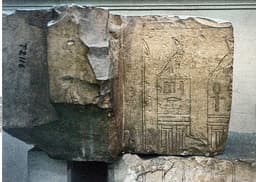
Intef II
Emperor · Ancient
45.0Total

Napoleon Bonaparte
General · Modern
70.9Total
Basic Information
Born
-2100
1769
Died
-2050
1821
Era
Ancient
Modern
Nationality
Middle Kingdom Egypt
France
Occupation
Emperor
General
Civilization
Middle Eastern
Western
Score Comparison
Military (10%)
25.0
94.0
Political (20%)
36.5
72.0
Influence (20%)
46.3
40.0
Legacy (20%)
40.8
80.0
Leadership (15%)
74.0
78.0
Strategy (15%)
41.7
90.0
TOTAL
45.0
70.9
Intef II — Complete Timeline
2100 BC
Accession as Theban pharaohPolitical Action◆ Major
Intef II became ruler of Thebes, succeeding Intef I. His reign of approximately 50 years was the longest of the 11th Dynasty and marked a period of sustained expansion and consolidation of Theban power.
AccessionTheban DynastyLong Reign
Impact: regional
2080 BC
Conquest of the Thinite nomeWar◆ Major
Intef II captured the Thinite nome (Abydos region) from the Heracleopolitan kingdom. This victory gave Thebes control of a key religious and strategic area, strengthening their position in the ongoing civil war.
ConquestAbydosCivil War
Impact: regionalconstructive
2070 BC
Establishment of the 'Intef' tomb at ThebesCultural
Intef II built a large saff-tomb at El-Tarif in Thebes, a new type of royal burial. This tomb, with its long causeway and courtyard, reflected the growing wealth and power of the 11th Dynasty and set a precedent for later Theban burials.
TombArchitectureThebes
2060 BC
Expansion of Theban control to the 14th nomeWar◆ Major
Intef II extended Theban rule northward to the 14th nome of Lower Egypt, near the Faiyum. This expansion brought the Theban kingdom to the borders of the Heracleopolitan domain, setting the stage for eventual reunification.
ExpansionTerritorialReunification
Impact: regionalconstructive
Napoleon Bonaparte — Complete Timeline
1799 AD
Coup of 18 BrumaireOther◆ Major
Napoleon Bonaparte, with support from his brother Lucien and key political figures, overthrew the Directory in a bloodless coup. He established the Consulate with himself as First Consul, effectively becoming the ruler of France. This event ended the French Revolution's most unstable period.
French RevolutionCoupRise to Power
Impact: regional
1804 AD
Promulgation of the Napoleonic CodeOther◆ Major
Napoleon enacted the Civil Code of the French, known as the Napoleonic Code, a comprehensive set of laws that replaced the fragmented feudal legal systems. The code established legal equality, protected property rights, and secularized law. It became the basis for legal systems in many European and world countries.
Legal ReformNapoleonic CodeCivil Law
Impact: globalconstructive
1805 AD
Battle of AusterlitzWar◆ Major
Napoleon's Grande Arm
Napoleonic WarsBattleDecisive Victory
Impact: global
1812 AD
Invasion of RussiaWar◆ Major
Napoleon led the Grande Arm
Napoleonic WarsInvasionDisaster
Impact: globaldestructive
1815 AD
Battle of WaterlooWar◆ Major
Napoleon's French army was defeated by the combined forces of the Duke of Wellington's Anglo-Allied army and Gebhard Leberecht von Bl
Napoleonic WarsBattleFinal Defeat
Impact: globaldestructive
Expert Analysis
Origins
Intef II was a pharaoh of the 11th Dynasty of Egypt, ruling from Thebes. He was born around 2100 BCE into a family of Theban nomarchs. His father, Mentuhotep I, and brother, Intef I, had already begun asserting independence from the Heracleopolitan kingdom. Intef II inherited a small territory around Thebes. His exact birth year is unknown.
Napoleon Bonaparte was born on August 15, 1769, in Ajaccio, Corsica, to a minor noble family. His father, Carlo Buonaparte, was a lawyer who secured a scholarship for Napoleon to study at the Brienne Military Academy in France. Napoleon graduated as a second lieutenant in 1785. His Corsican background shaped his early identity, but he later embraced French nationalism.
Rise to Power
Intef II acceded to the Theban throne around 2112 BCE, succeeding his brother Intef I. His reign lasted about 50 years. He immediately pursued expansion northward against the Heracleopolitan kingdom. His key turning point was the conquest of the Thinite nome (Abydos) around 2100 BCE, a religious and strategic center. By year 14 of his reign, he had extended Theban control to the 13th nome, and later to the 14th nome near the Faiyum. He did not claim the title of king of Upper and Lower Egypt, but solidified Theban dominance.
Napoleon rose during the French Revolution. He distinguished himself at the Siege of Toulon (1793) and the Italian campaign (1796-1797). His coup of 18 Brumaire (November 9, 1799) overthrew the Directory, establishing the Consulate with Napoleon as First Consul. He later crowned himself Emperor in 1804. His rise was marked by military victories and political maneuvering.
Leadership & Governance
Intef II ruled as a traditional Egyptian pharaoh, emphasizing military expansion and religious legitimacy. He built a saff-tomb at El-Tarif, a new style that reflected growing wealth. He controlled the region from Thebes to the Faiyum. His governance relied on local nomarchs and the cult of Montu. He did not implement major administrative reforms.
Napoleon centralized the French state, codified laws (Napoleonic Code, 1804), established the Bank of France, and reorganized education. His leadership was autocratic, with a merit-based system for appointments. He scored 72.0 in political leadership, reflecting his institutional impact. Intef II scored 48.7 politically, due to limited administrative changes.
Triumph & Tragedy
Intef II's greatest success was expanding Theban rule to the 14th nome, laying the foundation for the reunification of Egypt under Mentuhotep II. His long reign provided stability. However, he failed to conquer the Heracleopolitan kingdom entirely; his expansion stopped at the 14th nome. His tomb was later plundered.
Napoleon's triumphs include Austerlitz (1805) and the Napoleonic Code. His military score of 94.0 reflects his dominance. His tragedy was the failed invasion of Russia (1812), where he lost over 500,000 men. He was exiled to Elba in 1814, returned for the Hundred Days, and was finally defeated at Waterloo (1815). His legacy includes the spread of nationalism and legal reforms.
Character & Destiny
Intef II was a pragmatic ruler, focusing on steady expansion. He maintained Theban autonomy and prepared for future unification. His character was conservative; he did not overreach. His destiny was to be a transitional figure, remembered primarily for his tomb and the stela of his hound (the only named dog from ancient Egypt).
Napoleon was ambitious, charismatic, and relentless. His decision-making was bold but sometimes reckless, as in Russia. He scored 78.0 in leadership. His character led to both his rise and fall. Historians note his tactical genius but strategic overreach.
Legacy
Intef II's legacy is modest. He is considered a minor pharaoh, with an influence score of 61.8. He prepared Thebes for reunification, but his achievements were overshadowed by his successors. His saff-tomb influenced later Theban burials. The Intef dynasty is known for the "Stela of the Dog" mentioning his pet.
Napoleon's legacy is immense. His Napoleonic Code influenced civil law worldwide. He restructured European borders and introduced meritocracy. Despite his defeat, his impact on modern state-building and military strategy is profound, with a legacy score of 80.0. He is studied in military academies globally.
Conclusion
Napoleon Bonaparte had a greater impact than Intef II. Napoleon's total score of 70.9 significantly exceeds Intef II's 56.3. Napoleon transformed Europe through law, warfare, and administration. Intef II, while important for Theban expansion, did not fundamentally alter Egyptian civilization. Napoleon's influence endures in legal systems and military doctrine, whereas Intef II is a footnote in ancient history. The data supports Napoleon as the more consequential figure.
Rankings
🥇
Napoleon BonaparteLeader
Mil: 94.0Pol: 72.0Inf: 40.0
70.9
🥈
Intef II
Mil: 25.0Pol: 36.5Inf: 46.3
45.0
+25.9 behind
How This Comparison Works
Algorithm
Each figure is scored on 6 dimensions (0—100 scale) based on structured historical data: Military (10%), Political (20%), Influence (20%), Legacy (20%), Leadership (15%), Strategy (15%). The weighted total produces the final ranking.
Data Sources
Scores are computed from structured sub-indicators in the database. Scale factors adjust for era (Ancient ×0.85, Modern ×1.0) and civilization size (Eastern ×1.05, Other ×0.80) to account for differences in population and military scale.
Maximum 3 Figures
Comparisons are limited to 2—3 figures to ensure readability and statistical meaningfulness.
Error Margins
±5 points per dimension — Sub-scores are derived from historical records with inherent uncertainty. Two figures within 5 points on a dimension should be considered roughly equivalent in that area.
Total Score Accuracy
±3 points overall — The weighted combination of 6 dimensions produces a total score with approximately ±3 points of uncertainty. Differences of less than 3 points are not statistically significant— the figures are effectively tied.
Known Limitations
- Historical records are incomplete and uneven across civilizations
- Figures from oral-tradition societies may be underrepresented
- Occupation labels can misclassify multi-role figures
- Scores measure capability and impact, not moral character
- Quantitative scoring is a comparison tool, not absolute truth
Capability Radar
Military (10%) — Battles & Warfare
Battles
30
95
Win Rate
35
90
Expansion
40
95
Political (20%) — Governance & Reform
Reform
30
95
Diplomacy
35
80
Economy
30
85
Influence (20%) — Cultural & Global Reach
Cultural
20
85
Global
15
90
Legacy (20%) — Historical Impact
Historical
30
95
Longevity
25
90
Leadership (15%) — Power & Stability
Tenure
70
85
Stability
40
70
Strategy (15%) — Tactics & Innovation
Strategy
30
95
Tactics
25
98
Reform
20
92
Similar Comparisons
Comments & Discussion
No comments yet. Be the first to share your thoughts!