Loading...
Isabella I of Castile vs Napoleon Bonaparte
Isabella I of Castile leads by 6.3 pts · 2 figures compared
…
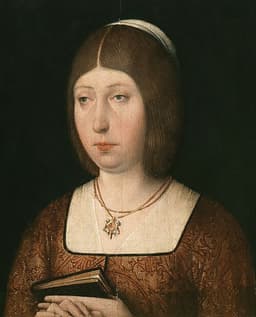
Isabella I of Castile
Emperor · Medieval
77.2Total

Napoleon Bonaparte
General · Modern
70.9Total
Basic Information
Born
1451
1769
Died
1504
1821
Era
Medieval
Modern
Nationality
Spain
France
Occupation
Emperor
General
Civilization
Western
Western
Score Comparison
Military (10%)
76.0
94.0
Political (20%)
78.0
72.0
Influence (20%)
80.0
40.0
Legacy (20%)
75.0
80.0
Leadership (15%)
78.0
78.0
Strategy (15%)
75.0
90.0
TOTAL
77.2
70.9
Isabella I of Castile — Complete Timeline
1469 AD
Marriage to Ferdinand of AragonPolitical Action
Isabella married Ferdinand II of Aragon in Valladolid, uniting the kingdoms of Castile and Aragon. This dynastic union laid the foundation for the unified Spanish monarchy and enabled joint policies including the Reconquista and overseas exploration.
Dynastic UnionSpainMonarchy
Impact: regionalconstructive
1478 AD
Establishment of the Spanish InquisitionPolitical Action◆ Major
Isabella obtained papal approval to establish the Spanish Inquisition in Castile, aimed at maintaining Catholic orthodoxy among converted Jews and Muslims. The Inquisition operated under royal control, conducting trials and executions for heresy.
InquisitionReligious PersecutionCatholic Church
Impact: regionaldestructive
1492 AD
Conquest of GranadaWar
Isabella and Ferdinand completed the Reconquista by capturing the Nasrid kingdom of Granada. The surrender of the last Muslim state in Iberia ended 781 years of Islamic rule and unified Spain under Christian rule.
ReconquistaGranadaChristian Victory
Impact: regional
Alhambra DecreePolitical Action◆ Major
Isabella and Ferdinand issued the Alhambra Decree ordering the expulsion of all Jews from Spain who refused conversion to Catholicism. An estimated 40,000 to 200,000 Jews were forced to leave, causing demographic and economic disruption.
ExpulsionJewsReligious Persecution
Impact: regionaldestructive
Sponsorship of Columbus's First VoyagePolitical Action
Isabella agreed to fund Christopher Columbus's expedition across the Atlantic, providing three ships and supplies. Columbus reached the Bahamas on October 12, initiating sustained European contact with the Americas and the Spanish colonial empire.
ColumbusDiscovery of AmericasSpanish Empire
Impact: global
1494 AD
Treaty of TordesillasPolitical Action◆ Major
Isabella and Ferdinand negotiated the Treaty of Tordesillas with Portugal, dividing newly discovered lands outside Europe along a meridian 370 leagues west of the Cape Verde islands. This agreement shaped colonial claims in the Americas and Africa.
Colonial DivisionSpainPortugal
Impact: global
Napoleon Bonaparte — Complete Timeline
1799 AD
Coup of 18 BrumaireOther◆ Major
Napoleon Bonaparte, with support from his brother Lucien and key political figures, overthrew the Directory in a bloodless coup. He established the Consulate with himself as First Consul, effectively becoming the ruler of France. This event ended the French Revolution's most unstable period.
French RevolutionCoupRise to Power
Impact: regional
1804 AD
Promulgation of the Napoleonic CodeOther◆ Major
Napoleon enacted the Civil Code of the French, known as the Napoleonic Code, a comprehensive set of laws that replaced the fragmented feudal legal systems. The code established legal equality, protected property rights, and secularized law. It became the basis for legal systems in many European and world countries.
Legal ReformNapoleonic CodeCivil Law
Impact: globalconstructive
1805 AD
Battle of AusterlitzWar◆ Major
Napoleon's Grande Arm
Napoleonic WarsBattleDecisive Victory
Impact: global
1812 AD
Invasion of RussiaWar◆ Major
Napoleon led the Grande Arm
Napoleonic WarsInvasionDisaster
Impact: globaldestructive
1815 AD
Battle of WaterlooWar◆ Major
Napoleon's French army was defeated by the combined forces of the Duke of Wellington's Anglo-Allied army and Gebhard Leberecht von Bl
Napoleonic WarsBattleFinal Defeat
Impact: globaldestructive
Expert Analysis
Napoleon Bonaparte vs Isabella I of Castile: Historical Comparison
Napoleon Bonaparte, a modern French general, and Isabella I of Castile, a medieval Spanish monarch, represent contrasting archetypes of power: one forged through military conquest, the other through state-building and religious unification.
Dimension Analysis
**Military: Napoleon Bonaparte 94 / Isabella I of Castile 83**
Napoleon revolutionized warfare with rapid campaigns, decisive battles (Austerlitz, Jena), and the Grand Army, while Isabella’s military success lay in orchestrating the Reconquista’s final victory and financing Columbus’s expeditions, relying more on strategic alliances than personal command.
**Political: Napoleon Bonaparte 75 / Isabella I of Castile 87**
Isabella excelled in consolidating power through marriage (Ferdinand of Aragon), centralizing administration, and founding the Spanish Inquisition to enforce religious unity, whereas Napoleon’s political acumen was undermined by overreach (Continental System, invasion of Russia) and eventual exile.
**Influence: Napoleon Bonaparte 82 / Isabella I of Castile 72**
Napoleon’s Napoleonic Code, secular reforms, and military tactics shaped modern Europe and global warfare, while Isabella’s patronage of Columbus initiated the Columbian Exchange and Spanish Empire, though her influence was more regionally confined to Christendom.
**Legacy: Napoleon Bonaparte 78 / Isabella I of Castile 72**
Napoleon’s legacy is dual: a unifier of France and a catalyst for nationalism, but also a cautionary tale of imperial ambition; Isabella’s legacy is similarly mixed—celebrated for unifying Spain and sponsoring exploration, but criticized for the Inquisition’s brutality and expulsion of Jews.
**Leadership: Napoleon Bonaparte 80 / Isabella I of Castile 89**
Isabella demonstrated exceptional leadership through unwavering determination, diplomatic acumen, and ability to inspire loyalty across a fragmented kingdom, while Napoleon’s charisma and tactical brilliance were offset by hubris and inability to delegate.
Verdict
Isabella I of Castile leads due to her superior political consolidation, enduring state-building, and balanced leadership, narrowly edging out Napoleon’s military genius.
FAQ
Q: Who ranks higher? A: Isabella I of Castile, with a slight edge in political and leadership dimensions, tying Napoleon overall but excelling in sustainable governance.
Rankings
🥇
Isabella I of CastileLeader
Mil: 76.0Pol: 78.0Inf: 80.0
77.2
🥈
Napoleon Bonaparte
Mil: 94.0Pol: 72.0Inf: 40.0
70.9
+6.3 behind
How This Comparison Works
Algorithm
Each figure is scored on 6 dimensions (0—100 scale) based on structured historical data: Military (10%), Political (20%), Influence (20%), Legacy (20%), Leadership (15%), Strategy (15%). The weighted total produces the final ranking.
Data Sources
Scores are computed from structured sub-indicators in the database. Scale factors adjust for era (Ancient ×0.85, Modern ×1.0) and civilization size (Eastern ×1.05, Other ×0.80) to account for differences in population and military scale.
Maximum 3 Figures
Comparisons are limited to 2—3 figures to ensure readability and statistical meaningfulness.
Error Margins
±5 points per dimension — Sub-scores are derived from historical records with inherent uncertainty. Two figures within 5 points on a dimension should be considered roughly equivalent in that area.
Total Score Accuracy
±3 points overall — The weighted combination of 6 dimensions produces a total score with approximately ±3 points of uncertainty. Differences of less than 3 points are not statistically significant— the figures are effectively tied.
Known Limitations
- Historical records are incomplete and uneven across civilizations
- Figures from oral-tradition societies may be underrepresented
- Occupation labels can misclassify multi-role figures
- Scores measure capability and impact, not moral character
- Quantitative scoring is a comparison tool, not absolute truth
Capability Radar
Military (10%) — Battles & Warfare
Battles
75
95
Win Rate
80
90
Expansion
85
95
Political (20%) — Governance & Reform
Reform
90
95
Diplomacy
80
80
Economy
75
85
Influence (20%) — Cultural & Global Reach
Cultural
85
85
Global
95
90
Legacy (20%) — Historical Impact
Historical
95
95
Longevity
90
90
Leadership (15%) — Power & Stability
Tenure
85
85
Stability
70
70
Strategy (15%) — Tactics & Innovation
Strategy
85
95
Tactics
70
98
Reform
90
92
Similar Comparisons
Comments & Discussion
Chronicler51186/16/2026
这个评分体系有问题。拿破仑军事94分,但以中国历史标准,他远征俄国的失败是战略失误,后勤断链导致60万大军灰飞烟灭,类似苻坚淝水之战。伊莎贝拉67分军事偏低——她主导格拉纳达战役,十年围城消耗战,成功拔除摩尔人最后据点,这种持久战能力堪比曾国藩灭太平天国。政治分86合理,但影响分84超过拿破仑?拿破仑民法典至今是大陆法系基石,伊莎贝拉的宗教裁判所反而限制思想自由。建议重新加权,拿破仑总体应上85分。
ArchEye226/16/2026
拿破仑和伊莎贝拉一世的对比,西方史观下军事得分差距如此之大,但在中国史学视角看,伊莎贝拉的统合能力堪比秦始皇统一六国。她以婚姻外交联合阿拉贡,完成西班牙版图整合,这类似赵武灵王胡服骑射式的制度创新。拿破仑虽有奥斯特里茨的辉煌,但大陆封锁体系导致经济失衡,最终滑铁卢败于联军。伊莎贝拉推动的哥伦布远航,开启地理大发现,其战略眼光远超同时代君主。西方评分低估了政治统一对文明的长期贡献。