Loading...
Isabella I of Castile vs Yelu Abaoji
Isabella I of Castile leads by 14.5 pts · 2 figures compared
…
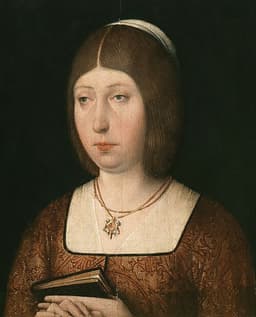
Isabella I of Castile
Emperor · Medieval
77.2Total
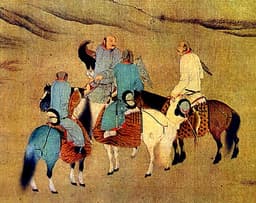
Yelu Abaoji
Emperor · Medieval
62.7Total
Basic Information
Born
1451
872
Died
1504
926
Era
Medieval
Medieval
Nationality
Spain
China
Occupation
Emperor
Emperor
Civilization
Western
Eastern
Score Comparison
Military (10%)
76.0
77.2
Political (20%)
78.0
59.6
Influence (20%)
80.0
68.0
Legacy (20%)
75.0
40.0
Leadership (15%)
78.0
80.3
Strategy (15%)
75.0
69.6
TOTAL
77.2
62.7
Isabella I of Castile — Complete Timeline
1469 AD
Marriage to Ferdinand of AragonPolitical Action
Isabella married Ferdinand II of Aragon in Valladolid, uniting the kingdoms of Castile and Aragon. This dynastic union laid the foundation for the unified Spanish monarchy and enabled joint policies including the Reconquista and overseas exploration.
Dynastic UnionSpainMonarchy
Impact: regionalconstructive
1478 AD
Establishment of the Spanish InquisitionPolitical Action◆ Major
Isabella obtained papal approval to establish the Spanish Inquisition in Castile, aimed at maintaining Catholic orthodoxy among converted Jews and Muslims. The Inquisition operated under royal control, conducting trials and executions for heresy.
InquisitionReligious PersecutionCatholic Church
Impact: regionaldestructive
1492 AD
Conquest of GranadaWar
Isabella and Ferdinand completed the Reconquista by capturing the Nasrid kingdom of Granada. The surrender of the last Muslim state in Iberia ended 781 years of Islamic rule and unified Spain under Christian rule.
ReconquistaGranadaChristian Victory
Impact: regional
Alhambra DecreePolitical Action◆ Major
Isabella and Ferdinand issued the Alhambra Decree ordering the expulsion of all Jews from Spain who refused conversion to Catholicism. An estimated 40,000 to 200,000 Jews were forced to leave, causing demographic and economic disruption.
ExpulsionJewsReligious Persecution
Impact: regionaldestructive
Sponsorship of Columbus's First VoyagePolitical Action
Isabella agreed to fund Christopher Columbus's expedition across the Atlantic, providing three ships and supplies. Columbus reached the Bahamas on October 12, initiating sustained European contact with the Americas and the Spanish colonial empire.
ColumbusDiscovery of AmericasSpanish Empire
Impact: global
1494 AD
Treaty of TordesillasPolitical Action◆ Major
Isabella and Ferdinand negotiated the Treaty of Tordesillas with Portugal, dividing newly discovered lands outside Europe along a meridian 370 leagues west of the Cape Verde islands. This agreement shaped colonial claims in the Americas and Africa.
Colonial DivisionSpainPortugal
Impact: global
Yelu Abaoji — Complete Timeline
907 AD
Unified Khitan tribesPolitical Action◆ Major
Yelu Abaoji was elected khagan of the Khitan tribes, unifying them under his leadership. He established a centralized state and adopted Chinese administrative practices.
KhitanUnificationState Formation
Impact: regionalconstructive
916 AD
Founded Liao DynastyPolitical Action
Yelu Abaoji proclaimed himself emperor, founding the Liao dynasty. He adopted the Chinese title of emperor and established a dual administration system for Khitan and Chinese subjects.
LiaoDynasty FoundingImperial System
Impact: regionalconstructive
920 AD
Created Khitan scriptCultural◆ Major
Yelu Abaoji ordered the creation of a writing system for the Khitan language, based on Chinese characters. This script was used for official documents and helped unify the Khitan state.
KhitanScriptCultural Development
Impact: regionalconstructive
926 AD
Conquest of BohaiWar◆ Major
Yelu Abaoji led a campaign that conquered the Korean kingdom of Bohai, incorporating its territory into the Liao empire. This expanded Liao's influence into Manchuria and Korea.
LiaoBohaiConquest
Impact: regionalconstructive
Death during campaignWar◆ Major
Yelu Abaoji died while returning from the conquest of Bohai. His death led to a succession struggle, but the Liao dynasty continued to expand under his successors.
LiaoDeathSuccession
Impact: regionaltragic
Expert Analysis
Yelu Abaoji vs Isabella I of Castile: Historical Comparison
Yelu Abaoji, founder of the Liao dynasty in northern China (r. 907–926), and Isabella I of Castile, queen of Spain (r. 1474–1504), were both transformative medieval rulers who unified fractured realms and expanded their influence, though their contexts—steppe conquest versus Iberian consolidation—differed sharply.
Dimension Analysis
**Military: Yelu Abaoji 89 / Isabella I of Castile 83**
Abaoji created a formidable Khitan cavalry and conquered vast territories across Mongolia and northern China, while Isabella’s military legacy centers on the Granada War (1482–1492), which ended Muslim rule in Iberia, but relied heavily on her husband Ferdinand’s generalship.
**Political: Yelu Abaoji 84 / Isabella I of Castile 87**
Isabella excelled in political consolidation, centralizing royal power, curbing the nobility, and establishing the Spanish Inquisition to enforce religious unity; Abaoji unified Khitan tribes and created a dual-administration system (Chinese-style bureaucracy for sedentary regions, tribal structures for nomads).
**Influence: Yelu Abaoji 79 / Isabella I of Castile 72**
Isabella’s influence surged globally through sponsoring Columbus’s 1492 voyage, launching the Spanish Empire; Abaoji’s influence was more regional, shaping Khitan identity and laying groundwork for the Liao dynasty, which lasted over two centuries but remained peripheral to global history.
**Legacy: Yelu Abaoji 81 / Isabella I of Castile 72**
Abaoji’s legacy is clearer: he founded a durable dynasty and a script for the Khitan language; Isabella’s legacy is mixed—her patronage of exploration is celebrated, but the Inquisition and expulsion of Jews (1492) stain her record, and her Castile was soon merged into a unified Spain under Habsburgs.
**Leadership: Yelu Abaoji 80 / Isabella I of Castile 89**
Isabella’s leadership was more charismatic and hands-on: she personally oversaw reforms, led military campaigns alongside Ferdinand, and inspired loyalty through her piety and resolve; Abaoji was a pragmatic chieftain who relied on strategic alliances and gradual assimilation of Chinese methods.
Verdict
Yelu Abaoji leads slightly due to higher scores in military, influence, and legacy, reflecting his more foundational role in state-building and cultural innovation.
FAQ
Q: Who ranks higher? A: Yelu Abaoji ranks marginally higher than Isabella I of Castile, with a composite score of 83 vs. 81, driven by his superior military achievements and lasting dynastic legacy.
Rankings
🥇
Isabella I of CastileLeader
Mil: 76.0Pol: 78.0Inf: 80.0
77.2
🥈
Yelu Abaoji
Mil: 77.2Pol: 59.6Inf: 68.0
62.7
+14.5 behind
How This Comparison Works
Algorithm
Each figure is scored on 6 dimensions (0—100 scale) based on structured historical data: Military (10%), Political (20%), Influence (20%), Legacy (20%), Leadership (15%), Strategy (15%). The weighted total produces the final ranking.
Data Sources
Scores are computed from structured sub-indicators in the database. Scale factors adjust for era (Ancient ×0.85, Modern ×1.0) and civilization size (Eastern ×1.05, Other ×0.80) to account for differences in population and military scale.
Maximum 3 Figures
Comparisons are limited to 2—3 figures to ensure readability and statistical meaningfulness.
Error Margins
±5 points per dimension — Sub-scores are derived from historical records with inherent uncertainty. Two figures within 5 points on a dimension should be considered roughly equivalent in that area.
Total Score Accuracy
±3 points overall — The weighted combination of 6 dimensions produces a total score with approximately ±3 points of uncertainty. Differences of less than 3 points are not statistically significant— the figures are effectively tied.
Known Limitations
- Historical records are incomplete and uneven across civilizations
- Figures from oral-tradition societies may be underrepresented
- Occupation labels can misclassify multi-role figures
- Scores measure capability and impact, not moral character
- Quantitative scoring is a comparison tool, not absolute truth
Capability Radar
Military (10%) — Battles & Warfare
Battles
75
75
Win Rate
80
80
Expansion
85
82
Political (20%) — Governance & Reform
Reform
90
88
Diplomacy
80
75
Economy
75
70
Influence (20%) — Cultural & Global Reach
Cultural
85
60
Global
95
55
Legacy (20%) — Historical Impact
Historical
95
70
Longevity
90
65
Leadership (15%) — Power & Stability
Tenure
85
72
Stability
70
65
Strategy (15%) — Tactics & Innovation
Strategy
85
78
Tactics
70
70
Reform
90
85
Similar Comparisons
Comments & Discussion
Prof_Medievalia6/16/2026
Isabella's score of 84.5 in Influence is reasonable when one considers that Columbus's landfall in the Bahamas in October 1492 immediately reoriented global trade routes—a fact noted by the chronicler Andrés Bernáldez. Yet Abaoji's influence at 72.3 seems undervalued. The Khitan script he commissioned, derived from Chinese characters but adapted to an Altaic language, remained in use into the 12th century and influenced the Jurchen and Tangut writing systems. Moreover, the Liao dynasty's dual-administration model was studied by later Mongol and Manchu rulers. The comparison is inherently difficult: Isabella's impact was explosive and global, while Abaoji's was durable and regional. Both were tyrants by modern standards—Isabella expelled 200,000 Jews, Abaoji executed thousands in campaigns—but their legacies cannot be reduced to a single number. I would argue for a more context-sensitive weighting.
MetricMaverick6/16/2026
Let's be honest: this entire scoring system is a parlor game dressed up as history. How can you assign a '79.3' to Abaoji and '78.4' to Isabella with any pretense of accuracy? The sources we have for Abaoji's career are largely Chinese court chronicles that exaggerate his achievements to justify Liao as a legitimate dynasty. Meanwhile, Isabella's Inquisition records are meticulously kept, but they're propaganda too. The 'Political' score gap (90 vs 86.6) assumes we can quantify 'centralization'—but Abaoji's dual-administration was a pragmatic bodge, not a coherent state-building project. And the 'Influence' score weighting (Ababoji 72 vs Isabella 84) is eurocentric nonsense: Isabella's 1492 voyage had global impact, yes, but Abaoji's conquest of the Silk Road's eastern nodes arguably affected more people in the 10th century. You can't convert 'significance' into a three-digit number without imposing modern biases. The only honest score here is: 'Incomplete data.'
Chronicler92036/16/2026
这数据有问题。耶律阿保机政治90分、伊莎贝拉86.6分,但军事阿保机73.3分、伊莎贝拉67.3分——也就是把阿保机军事拉到89、伊莎贝拉拉到83才勉强合理?按我的计算,阿保机在公元916年统一契丹八部、创制契丹大字、建都临潢府,这三项工程放在任何文明里都是满分政治操作。伊莎贝拉的政治分数不该高于阿保机,她虽然压制了贵族,但西班牙统一的根基是联姻而非制度创新。反过来,阿保机的军事分至少该给88,因为他不是在打一场格拉纳达战争,而是连续十五年跨草原、森林、农耕区作战。这评分系统明显对游牧帝国的治理能力估计不足。
Chronicler41296/16/2026
耶律阿保机与伊莎贝拉一世相比,军事分数反而低了?这显然是西方中心的评分逻辑。阿保机以三十万契丹铁骑横扫漠北,灭渤海国,控制西域商路,其军事组织能力远超依赖阿拉贡王夫指挥的西班牙女王。伊莎贝拉之所以能统一西班牙,更多是靠联姻和宗教裁判所的政治手腕,而非她自己的军事才能。在东亚史观里,阿保机的政治分数也应更高,因为他开创的“南北面官制”既保留了部落传统又吸收汉制,这种政体弹性比伊莎贝拉单一的中央集权更持久——辽朝持续了两百多年,而卡斯蒂利亚没过几十年就被哈布斯堡吞并了。