Loading...
This comparison has not been analyzed yet.
One-time AI generation (~1 minute). Scores and timeline are already available below.
Ismail I vs Stefan the First-Crowned
Ismail I leads by 12.6 pts · 2 figures compared
…
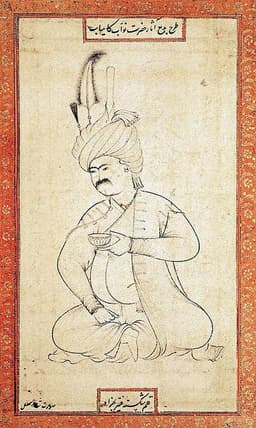
Ismail I
Emperor · Medieval
67.2Total
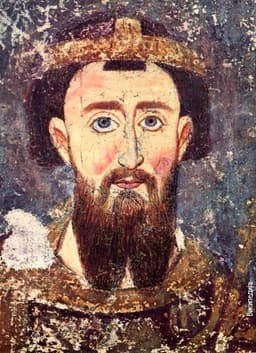
Stefan the First-Crowned
Emperor · Medieval
54.6Total
Basic Information
Born
1487
1165
Died
1524
1228
Era
Medieval
Medieval
Nationality
Persia
Serbia
Occupation
Emperor
Emperor
Civilization
Middle Eastern
Western
Score Comparison
Military (10%)
78.0
45.0
Political (20%)
78.0
68.0
Influence (20%)
40.0
55.7
Legacy (20%)
80.0
50.0
Leadership (15%)
72.0
64.0
Strategy (15%)
69.1
38.6
TOTAL
67.2
54.6
Ismail I — Complete Timeline
1501 AD
Proclamation as Shah of IranPolitical Action
Ismail I proclaimed himself Shah of Iran at Tabriz, founding the Safavid dynasty. He declared Twelver Shia Islam the state religion, a move that distinguished Iran from its Sunni neighbors and shaped its religious identity.
FoundingState ReligionShia Islam
Impact: regionalconstructive
1508 AD
Conquest of BaghdadWar◆ Major
Ismail I captured Baghdad from the Aq Qoyunlu confederation. This conquest extended Safavid control over Mesopotamia and secured the shrine cities of Najaf and Karbala, important Shia pilgrimage sites.
ConquestMesopotamiaShia Shrines
Impact: regional
1514 AD
Battle of ChaldiranWar
Ismail I's army was defeated by the Ottoman Empire under Sultan Selim I at Chaldiran. The Ottomans used superior artillery and gunpowder tactics, forcing Ismail to retreat and ending his expansion into Anatolia.
BattleOttoman-Safavid WarMilitary Defeat
Impact: regionaltragic
Stefan the First-Crowned — Complete Timeline
1217 AD
Coronation as first King of SerbiaPolitical Action
Stefan Nemanji
CoronationKingdom establishmentPapal recognition
Impact: regionalconstructive
1219 AD
Autocephaly of the Serbian ChurchPolitical Action
Stefan's brother Sava secured autocephaly for the Serbian Orthodox Church from the Patriarch of Constantinople in exile at Nicaea. Sava became the first Archbishop of the autocephalous Serbian Church. This event established an independent Serbian ecclesiastical hierarchy, strengthening national identity and reducing Byzantine influence.
Church autocephalyNational identitySava
Impact: regionalconstructive
1220 AD
Construction of the Žiča MonasteryCultural◆ Major
Stefan the First-Crowned founded the
Monastery foundationCoronation churchRoyal-ecclesiastical union
Impact: nationalconstructive
This comparison has not been analyzed yet.
One-time AI generation (~1 minute). Scores and timeline are already available below.
Rankings
🥇
Ismail ILeader
Mil: 78.0Pol: 78.0Inf: 40.0
67.2
🥈
Stefan the First-Crowned
Mil: 45.0Pol: 68.0Inf: 55.7
54.6
+12.6 behind
How This Comparison Works
Algorithm
Each figure is scored on 6 dimensions (0—100 scale) based on structured historical data: Military (10%), Political (20%), Influence (20%), Legacy (20%), Leadership (15%), Strategy (15%). The weighted total produces the final ranking.
Data Sources
Scores are computed from structured sub-indicators in the database. Scale factors adjust for era (Ancient ×0.85, Modern ×1.0) and civilization size (Eastern ×1.05, Other ×0.80) to account for differences in population and military scale.
Maximum 3 Figures
Comparisons are limited to 2—3 figures to ensure readability and statistical meaningfulness.
Error Margins
±5 points per dimension — Sub-scores are derived from historical records with inherent uncertainty. Two figures within 5 points on a dimension should be considered roughly equivalent in that area.
Total Score Accuracy
±3 points overall — The weighted combination of 6 dimensions produces a total score with approximately ±3 points of uncertainty. Differences of less than 3 points are not statistically significant— the figures are effectively tied.
Known Limitations
- Historical records are incomplete and uneven across civilizations
- Figures from oral-tradition societies may be underrepresented
- Occupation labels can misclassify multi-role figures
- Scores measure capability and impact, not moral character
- Quantitative scoring is a comparison tool, not absolute truth
Capability Radar
Military (10%) — Battles & Warfare
Battles
75
20
Win Rate
80
25
Expansion
80
30
Political (20%) — Governance & Reform
Reform
90
55
Diplomacy
65
60
Economy
60
40
Influence (20%) — Cultural & Global Reach
Cultural
85
45
Global
70
30
Legacy (20%) — Historical Impact
Historical
85
55
Longevity
80
50
Leadership (15%) — Power & Stability
Tenure
70
45
Stability
55
50
Strategy (15%) — Tactics & Innovation
Strategy
75
25
Tactics
70
20
Reform
85
15
Similar Comparisons
Comments & Discussion
No comments yet. Be the first to share your thoughts!