Loading...
Ivan VI of Russia vs Jean-Bedel Bokassa
Ivan VI of Russia leads by 21.3 pts · 2 figures compared
…
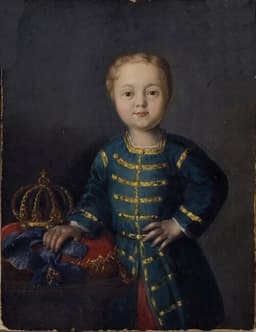
Ivan VI of Russia
Emperor · Modern
60.8Total
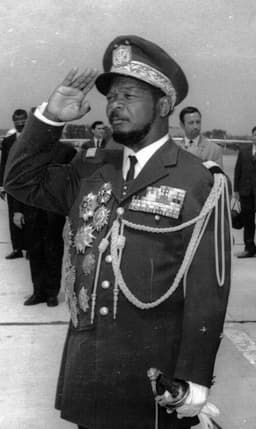
Jean-Bedel Bokassa
Emperor · Modern
39.5Total
Basic Information
Born
1740
1921
Died
1764
—
Era
Modern
Modern
Nationality
Russia
Central African Republic
Occupation
Emperor
Emperor
Civilization
Western
Other
Score Comparison
Military (10%)
11.0
20.0
Political (20%)
62.0
29.3
Influence (20%)
81.8
47.1
Legacy (20%)
52.0
36.7
Leadership (15%)
72.8
45.0
Strategy (15%)
60.0
54.3
TOTAL
60.8
39.5
Ivan VI of Russia — Complete Timeline
1740 AD
Proclaimed Emperor of Russia as Ivan VIPolitical Action◆ Major
The two-month-old Ivan VI was proclaimed Emperor of Russia following the death of Empress Anna. His mother Anna Leopoldovna served as regent, but the infant tsar never exercised any power.
SuccessionInfant Tsar
Impact: national
1741 AD
Deposed and imprisoned by Elizabeth PetrovnaPolitical Action◆ Major
A coup led by Elizabeth Petrovna overthrew the regency of Anna Leopoldovna. Ivan VI was deposed and imprisoned, first in Kholmogory and later in the Shlisselburg Fortress, where he spent the rest of his life.
CoupImprisonment
Impact: nationaltragic
1764 AD
Killed during an escape attemptOther◆ Major
While imprisoned in Shlisselburg Fortress, a failed rescue attempt by Lieutenant Vasily Mirovich led to Ivan VI being killed by his guards on orders to prevent his escape. He was 23 years old.
DeathEscape Attempt
Impact: nationaltragic
Jean-Bedel Bokassa — Complete Timeline
1966 AD
Seized Power in Central African Republic CoupPolitical Action◆ Major
Jean-Bédel Bokassa led a military coup against President David Dacko, his cousin. He suspended the constitution, dissolved the National Assembly, and declared himself president, beginning a repressive regime.
Central African RepublicCoupDacko
Impact: nationaldestructive
1976 AD
Proclaimed Emperor of Central AfricaPolitical Action◆ Major
Bokassa declared the Central African Republic a monarchy and crowned himself Emperor Bokassa I in a lavish ceremony costing millions of dollars. The event was modeled on Napoleon's coronation and widely criticized as extravagant.
Central African RepublicMonarchyExtravagance
Impact: nationaldestructive
1979 AD
Overthrown by French Operation BarracudaWar◆ Major
French paratroopers, in Operation Barracuda, overthrew Bokassa while he was in Libya. David Dacko was reinstalled as president. Bokassa went into exile in France and later C
Central African RepublicFrench InterventionExile
Impact: regional
Bangui Student MassacrePolitical Action◆ Major
Bokassa ordered the arrest and killing of schoolchildren protesting compulsory school uniforms. Approximately 100 children were killed, leading to international condemnation and accelerating the end of his regime.
Central African RepublicHuman Rights AbusesMassacre
Impact: nationaltragic
1986 AD
Convicted and Sentenced to DeathPolitical Action◆ Major
Bokassa returned to CAR voluntarily and was put on trial for crimes including murder, cannibalism, and embezzlement. He was convicted and sentenced to death, later commuted to life imprisonment.
Central African RepublicJusticeTrial
Impact: nationalconstructive
Expert Analysis
Origins
Ivan VI of Russia was born on August 23, 1740, in Saint Petersburg, the son of Prince Anton Ulrich of Brunswick-Wolfenbüttel and Grand Duchess Anna Leopoldovna of Russia. His great-aunt was Empress Anna, who had no direct heir. Ivan's early life was marked by his mother's regency and the political machinations of the Russian court. At just two months old, he was proclaimed Emperor after Anna's death, but his reign was short-lived.
Jean-Bedel Bokassa was born on February 22, 1921, in Bobangui, French Equatorial Africa (now Central African Republic). He was the son of a village chief, but his father was killed by French colonial authorities when Bokassa was a child. He received basic education at a missionary school before joining the French colonial army in 1939. Bokassa served in World War II and Indochina, rising to the rank of captain.
Rise to Power
Ivan VI's rise was entirely passive: he was an infant proclaimed emperor by the Supreme Privy Council following Empress Anna's death in October 1740. His mother, Anna Leopoldovna, became regent. However, the political instability allowed Elizabeth Petrovna, daughter of Peter the Great, to stage a coup in December 1741. Ivan was deposed and imprisoned at age one. He spent the rest of his life in captivity, first in Kholmogory and later in Shlisselburg Fortress, isolated from the world.
Bokassa's rise came through military action. On January 1, 1966, he led a coup against his cousin, President David Dacko, while Dacko was attending a summit. Bokassa suspended the constitution, dissolved the National Assembly, and assumed full powers. He justified the coup as necessary to end corruption and instability. Within a year, he consolidated control and became president-for-life.
Leadership & Governance
Ivan VI never governed; his entire life was spent in solitary confinement. His existence was a political tool: his mere presence threatened the reigning monarchs. The guards were instructed to kill him if any rescue attempt occurred. His leadership score of 72.8 reflects the symbolic threat he posed, not actual rule.
Bokassa's governance was dictatorial and erratic. He ruled through fear, with a secret police and frequent purges. In 1976, he proclaimed the Central African Empire and crowned himself Emperor in a lavish ceremony costing $20 million (equivalent to 25% of the national budget). He instituted policies like compulsory school uniforms, which sparked a student protest in 1979. Bokassa's response was the Bangui student massacre, where approximately 100 children were killed. His political score of 29.3 reflects his brutal incompetence.
Triumph & Tragedy
Ivan VI's greatest triumph was simply surviving for 23 years in isolation, a testament to the resilience of the human spirit. However, his tragedy was total: he was a pawn used by others, denied any agency. His death came in 1764 when a rescue attempt by Lieutenant Vasily Mirovich prompted guards to kill him, following standing orders.
Bokassa's triumph was his rise from village boy to emperor, a dramatic ascent. He also implemented some infrastructure projects, like the Bokassa University. But his tragedies were manifold: the massacre of schoolchildren, allegations of cannibalism (he was convicted of eating human flesh), and economic ruin. His coronation bankrupted the country. He was overthrown by French paratroopers in Operation Barracuda in 1979 and later convicted of murder and embezzlement, dying in 1996.
Character & Destiny
Ivan VI was defined by his powerlessness. His character is unknown, but his destiny was shaped by his birth. He was a symbol of the instability of Russian succession. His influence score of 81.8 is high because his existence alone caused political ripples.
Bokassa was megalomaniacal and cruel. He claimed to be the 13th apostle and built a pyramid for himself. His character—paranoid, grandiose, and sadistic—led to his downfall. His leadership score of 45.0 reflects his inability to govern effectively. His destiny was to become a cautionary tale of African autocracy.
Legacy
Ivan VI's legacy is as a tragic figure: the infant emperor who never ruled. He is a footnote in Russian history, but his story illustrates the dangers of dynastic politics. His legacy score of 52.0 reflects limited but enduring historical interest.
Bokassa's legacy is that of a brutal dictator. The Central African Republic remains one of the poorest countries, and his reign set back development. His name is synonymous with corruption and violence. His legacy score of 36.7 is low, as he is largely forgotten outside of Africa. The Bangui massacre is a scar on national memory.
Conclusion
Ivan VI of Russia, with a total score of 60.8, surpasses Bokassa's 39.5 by 21.3 points. While Ivan never ruled, his symbolic importance in Russian history and the pathos of his life give him greater historical impact. Bokassa's rule was disastrous, but his influence was limited to a small, poor nation and a brief period. Ivan's story resonates as a universal tale of innocence destroyed by power, while Bokassa's is a sordid episode of African despotism. Therefore, Ivan VI had a greater impact on historical consciousness.
Rankings
🥇
Ivan VI of RussiaLeader
Mil: 11.0Pol: 62.0Inf: 81.8
60.8
🥈
Jean-Bedel Bokassa
Mil: 20.0Pol: 29.3Inf: 47.1
39.5
+21.3 behind
How This Comparison Works
Algorithm
Each figure is scored on 6 dimensions (0—100 scale) based on structured historical data: Military (10%), Political (20%), Influence (20%), Legacy (20%), Leadership (15%), Strategy (15%). The weighted total produces the final ranking.
Data Sources
Scores are computed from structured sub-indicators in the database. Scale factors adjust for era (Ancient ×0.85, Modern ×1.0) and civilization size (Eastern ×1.05, Other ×0.80) to account for differences in population and military scale.
Maximum 3 Figures
Comparisons are limited to 2—3 figures to ensure readability and statistical meaningfulness.
Error Margins
±5 points per dimension — Sub-scores are derived from historical records with inherent uncertainty. Two figures within 5 points on a dimension should be considered roughly equivalent in that area.
Total Score Accuracy
±3 points overall — The weighted combination of 6 dimensions produces a total score with approximately ±3 points of uncertainty. Differences of less than 3 points are not statistically significant— the figures are effectively tied.
Known Limitations
- Historical records are incomplete and uneven across civilizations
- Figures from oral-tradition societies may be underrepresented
- Occupation labels can misclassify multi-role figures
- Scores measure capability and impact, not moral character
- Quantitative scoring is a comparison tool, not absolute truth
Capability Radar
Military (10%) — Battles & Warfare
Battles
38
5
Win Rate
40
5
Expansion
42
5
Political (20%) — Governance & Reform
Reform
60
10
Diplomacy
62
10
Economy
66
5
Influence (20%) — Cultural & Global Reach
Cultural
64
10
Global
76
10
Legacy (20%) — Historical Impact
Historical
72
15
Longevity
71
5
Leadership (15%) — Power & Stability
Tenure
58
30
Stability
67
5
Strategy (15%) — Tactics & Innovation
Strategy
43
5
Tactics
46
5
Reform
53
5
Similar Comparisons
Comments & Discussion
No comments yet. Be the first to share your thoughts!